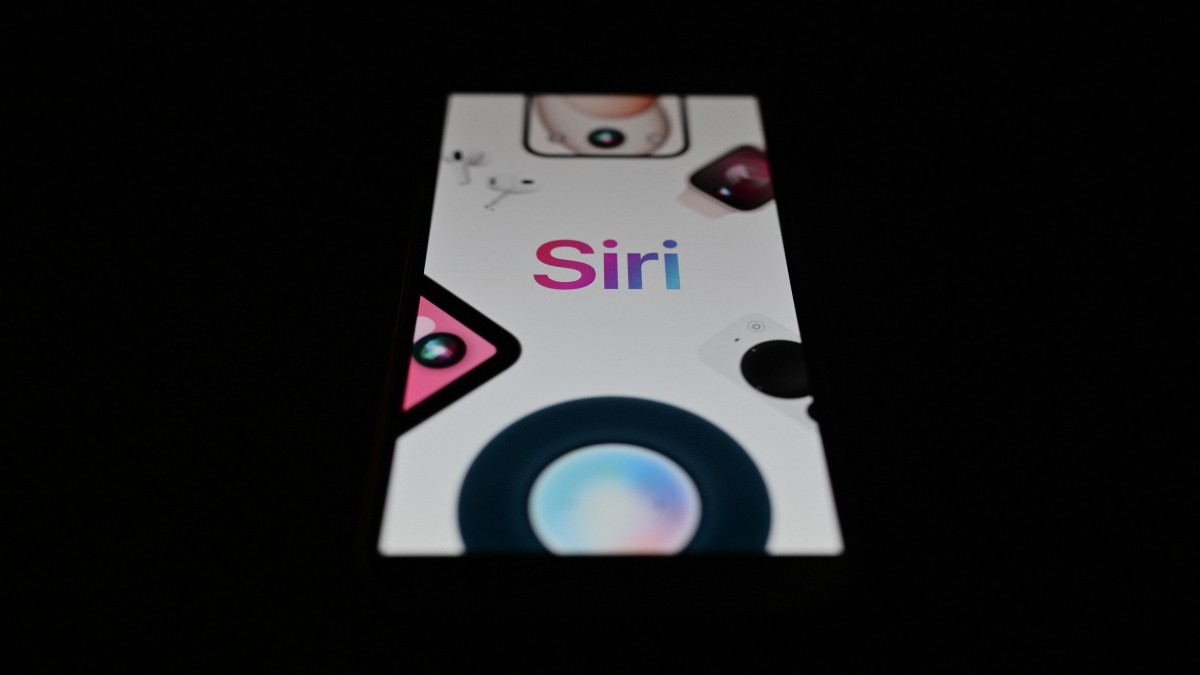
 "Apple’s most awaited AI-powered Siri may finally debut by April this year")
After months of testing, tweaking and teasing, Apple’s long-promised AI-powered Siri might finally be ready. The revamped voice assistant could start rolling out by late March or early April this year, reported by 9to5 Mac.
Users who were expecting the new Siri to arrive alongside the iPhone 16 last year were left disappointed when Apple decided to hold it back. The company blamed the delay on technical challenges and a desire to “get it right”. Now, while Apple is keeping it under wraps, the company may after all release the most-awaited Siri.
Apple’s AI-powered Siri may finally launch this year: What is it
When Apple first showed off the AI-powered Siri at WWDC 2024, it promised a major leap forward under its Apple Intelligence banner. Unlike the current version, which often feels more like a search interface with a voice, the new Siri aims to be far more personal, intuitive and helpful.
One of the key upgrades is personal context. This means Siri will be able to draw on information from across a user’s device, including messages, emails, notes and more, to provide more relevant answers. Instead of users having to recall where something is stored, Siri will do the remembering.
Then there’s on-screen awareness, a feature that lets Siri understand what’s currently displayed on your iPhone or iPad. So if you’re viewing a photo, an email or a message thread, Siri will know what you’re looking at and respond appropriately, without you having to spell out every detail.
The third pillar of the upgrade focuses on in-app actions. Instead of simply telling you how to do something, Siri will be able to perform tasks directly within apps, like scheduling meetings, sending photos or creating notes, without forcing you to jump between screens.
Together, these enhancements are designed to make Siri feel more human and less like a voice-activated shortcut. Essentially, Apple wants to turn Siri into something closer to a personal assistant that actually understands context, rather than a digital butler following rigid commands.
Quick Reads
View AllWhy the delay
The long delay in bringing this version of Siri to users wasn’t for lack of trying. Apple engineers reportedly had two separate versions of the new system architecture under development, with one already capable of handling basic features shown at WWDC 2024. However, the more advanced version, the one that truly showcased Siri’s new AI brain, wasn’t living up to Apple’s famously high standards.
During the WWDC 2025, Craig Federighi, Apple’s Senior Vice President of Software engineering, said that rather than rushing it out the door, the company decided to pull back and continue refining the feature. Internal testing reportedly showed that while the initial builds were promising, they weren’t reliable enough for everyday use. For a product as integral to the Apple ecosystem as Siri, that simply wouldn’t do.
The company’s approach to AI appears to mirror its general philosophy: it doesn’t want to be first, it wants to be best. That means waiting until the experience feels natural, consistent and polished, qualities that Apple customers have come to expect.
Now, after months of internal testing and fine-tuning, the tech giant is finally ready to unleash its Apple Intelligence era, though a little late to the race. The rollout is expected to start in phases, most likely beginning with US users, before expanding to other regions.
Apple’s strategy also aligns with its broader AI ambitions. Rather than copying rivals who rely heavily on cloud computing, Apple is building its system around on-device intelligence, ensuring user data stays private and secure. It’s a slow, meticulous approach, but one that fits Apple’s long-standing obsession with control and privacy.

 "Germany's Friedrich Merz in India: What will be the focus of this visit?")
 "US Fed Chair Jerome Powell says he is under criminal investigation by DoJ amid Trump's pressure")
 "'It's going down': After Venezuela, why is Trump threatening Cuba?")
 "Nervy, scrappy, but vital: Why Harshit Rana’s cameo in Vadodara is a good sign for Team India in the long run")
 "Germany's Friedrich Merz in India: What will be the focus of this visit?")
 "US Fed Chair Jerome Powell says he is under criminal investigation by DoJ amid Trump's pressure")
 "'It's going down': After Venezuela, why is Trump threatening Cuba?")
 "Nervy, scrappy, but vital: Why Harshit Rana’s cameo in Vadodara is a good sign for Team India in the long run")