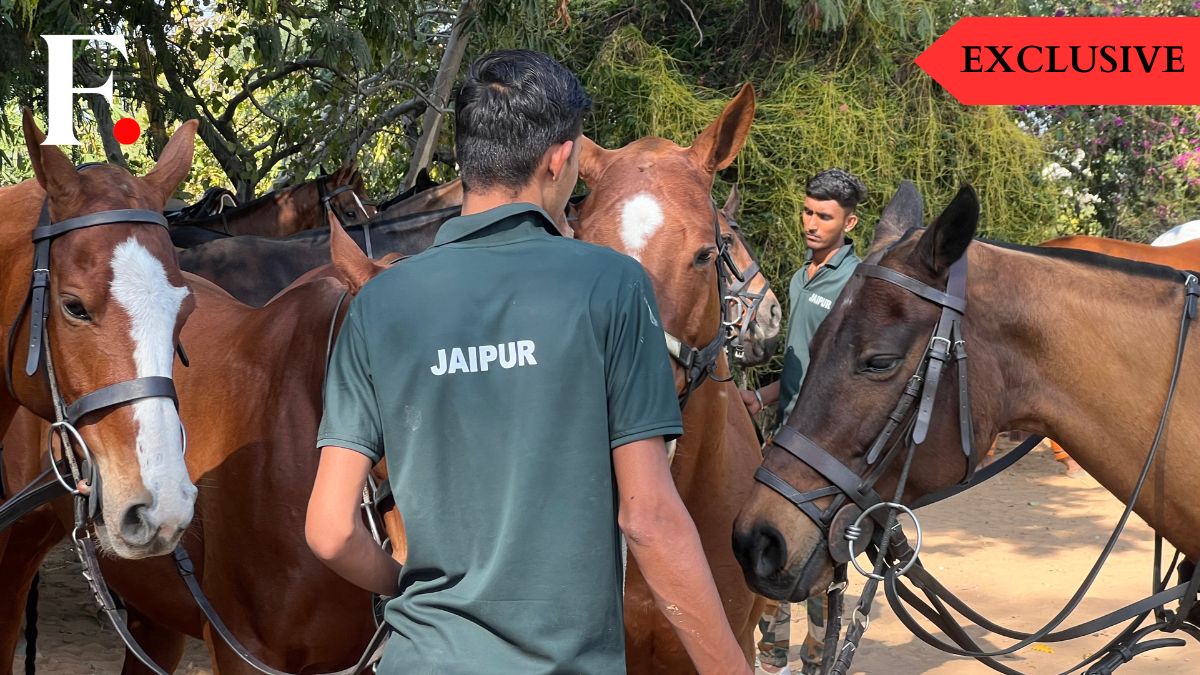
 "Exclusive | Jaipur Polo’s new era: Inside the future plans for horses, infrastructure, and outreach")
In the autumn of 2025, we began a journey to decipher the resurgence of the “Sport of Kings” in its most storied Indian bastion.
The first instalment of this trilogy explored the personal evolution and global influence of The Man — HH Maharaja Sawai Padmanabh Singh of Jaipur, fondly known as Pacho.
The second, traced The Flag — the vibrant Pachranga colours and the weight of a legacy that spans centuries.
Now, as the dust settles on the third and last leg of the 2025-26 Indian Polo Season in Jaipur, we arrive at the final chapter — The Machine.
If Pacho is the face and the Pachranga is the soul, then the “Machine” is the intricate network of infrastructure, horsepower, and grassroots systems that allow Jaipur to defy the downward trends seen in other Indian polo centres.
At the heart of this operation sits the Rajasthan Polo Club (RPC). On a crisp February afternoon, sitting in the shadow of the tree line of the RPC polo ground, the vision for what comes next became clear.
Third leg of the Jaipur Polo Season 2025-26
The third leg of the Jaipur Polo Season which ran from January 2026 to March 2026 probably saw the most consecutive matches witnessed in the city in the last few years, which only further highlighted how inviting the atmosphere has become for players and patrons alike.
We take a brief look at how the Jaipur Polo team performed in each tournament in this leg:
Rajmata Gayatri Devi Memorial Cup (06 Goals): January 20-25: Jaipur Polo exited in the league stage.
Kognivera Polo Cup (08 Goals) - January 27-February 1: Jaipur Polo defeated V Polo in the final.
The Leela Sawai Man Singh Polo Cup (08 Goals) - February 3-8: Jaipur Leela was defeated by V Polo in the semi-finals.
Raffles Sirmour Cup (14 Goals) - February 10-15: Jaipur Aravali defeated Carysil Suhana in the final.
Carysil Jaipur Open Championship (14 Goals) - February 17-21: Jaipur Aravali was defeated by Carysil Suhana in the final.
Rajasthan Tourism Polo Cup (06 Goals) - February 25-March 1: Jaipur Polo was defeated by V Polo in the semi-finals.
SMS Gold Vase (Out Of Hat) - March 4-8: Jaipur Polo defeated Krishna Polo in the final.
Shree Cement Cup (Out Of Hat) - March 10-15: Jaipur Polo defeated Nahargarh in the final.
RPC Cup (Out Of Hat) - March 16-21: Jaipur Polo was defeated by Jaigarh in the final.
RPC Cup (Out Of Hat) - March 25-28: Jaipur Polo defeated Jaigarh in the final.
The Jaipur Polo team also partnered with the formidable Achievers polo team for two of the high-goal tournaments in the Delhi Spring Season.
The team bagged the trophy at the Jindal Steel Open Championship while finishing runners-up at the BMC Advisors Northern India Polo Championship after a closely fought match against Naveen Jindal-led Jindal Panthers.
While the charge of the Jaipur Polo team was mostly led by HH Sawai Padmanabh Singh himself as well as South African national Lance Watson, the third leg also saw other players like Pratap Singh Kanota, Manuel Fernandez Llorente, Bhavani Singh Kalvi, Mirza Mohmmad Beig, Narendra Singh, Balbir Singh, Raghuram Hari, Yogendra Singh, Divyamaan Singh Dujod, Tarun Bilwal, Harshodaya Singh, Hemant Kasana and Pratap Singh Rathore take up the immense responsibility of being part of this coveted team in various tournaments.
The Rajasthan Polo Club model
To understand why Jaipur is thriving while other centres struggle, one must look at the administrative backbone. Digvijay Singh Shekhawat, the honorary secretary of the Rajasthan Polo Club, has witnessed the evolution of these grounds since his first match in 1967.
“The Rajasthan Polo Club has been on these premises since 1953,” Shekhawat notes, tracing a lineage of presidents from Maharaja Sawai Man Singh II to currently the Rajmata Padmini Devi, with Sawai Padmanabh Singh set to take the mantle in the near future.
But history alone doesn’t keep a club relevant.
“What we have done is, we re-laid the ground after 40 years,” Shekhawat explains to Firstpost, adding “after which we set a contract with a professional to take care of it. We also get one or two personnel from Argentina to come here and guide us twice a year, so it’s now run very professionally.”
This professionalisation has yielded seven to eight full-sized grounds in the Jaipur vicinity, including the polo grounds at the Patron’s Polo Club, creating a “critical mass” of infrastructure. While Delhi and Mumbai often grapple with limited access and deteriorating turf, Jaipur has created a sanctuary for the sport.
“We have many teams based in Jaipur — Achievers, Rajasthan, Jaipur Polo, Chandna, Bedla and many others. At any given time, we can have a six-goal tournament with four to six teams and run our own season,” says Shekhawat.
This self-sufficiency is the “Jaipur Model” — a community that doesn’t wait for the national calendar to dictate its pace.
‘A community, not a one-man show’
HH Sawai Padmanabh Singh is quick to deflect the credit for this “uptrend” away from his own persona.
“I like to think of Jaipur as a community rather than as a one-man show,” he tells Firstpost’s Anmol Singla. “The credit is due to the whole community — everybody who plays, everybody who participates, everybody who fields teams or keeps horses. All our sponsors and partners have an equal role.”
However, his influence is undeniable.
Under his guidance, the RPC is transitioning from a seasonal venue to a year-round high-performance centre. “Rajasthan is a Polo playing centre, Jaipur at the heart of it. It is now a fact that Jaipur is the capital of Polo when it comes to this part of the world,” Singh asserts.
The statistics back him up. Jaipur currently boasts the most fields, players, teams, horses, and tournaments in India. But the Maharaja is looking toward a future that involves “The Machine” operating 24/7.
“Our initiatives include new floodlights here, which will be the most advanced level of floodlights that you will ever see in a Polo ground,” Singh reveals. “That will mean we are able to play night Polo, which will attract larger crowds and be a huge incentive for players.”
Beyond the lights, two other massive projects are underway which are a polo veterinary centre, aiming to be India’s finest specialised hospital for polo ponies, and a covered all-weather arena, a facility that will allow riding and practice during the monsoon and the peak of the Rajasthani summer.
“The presence of no one person should be detrimental to the growth or survival of a sport,” Singh says, highlighting sustainability. “That only happens when you have systems and processes in place.”
The Argentine monopoly and the Indian dream
In polo, the “Machine” literally refers to the four-legged athletes. It is often said that a polo match is 80 per cent horse and 20 per cent rider. In the 2025-26 season, the “horse power” gap has become the defining factor of the sport.
“Like other teams, we are also importing our horses from Argentina,” Singh explains.
“Almost all the teams playing this tournament are entirely mounted on Argentine horses. The level of horse power in our country compared to five years ago is absolutely different. You can no longer get away with one bad horse or one bad chukker. If you’re not well mounted, you can’t hide. The other team will score four goals on you.”
The Jaipur Polo team currently maintains a string of 24 top-tier horses and is looking to acquire five to six more from abroad. However, both Singh and Shekhawat recognise that relying solely on Argentine imports is a financial ticking time bomb for the sport’s accessibility.
“I don’t see purchasing horses from Argentina and flying them over as a sustainable thing,” Singh admits.
“I see sustainability in the breeding of horses. We’ve started on a very small scale, but if that can take off, it will make horses more readily available and cost-friendly for junior players or people on a budget.”
Shekhawat echoes this concern, noting that the “import era” has widened the gap between elite patrons and amateurs.
“In Jaipur, we used to have six-goal tournaments where four players used to join hands and create a team… but now, a one-goal player who has got imported horses is different. You can’t match them.”
Loyalty over Luxury
A significant part of the Jaipur “Machine” is its unique approach to sponsorship. While other cities struggle with “fair-weather” brands that disappear after a single season, Jaipur has built a fortress of corporate loyalty.
“Sponsorship is not an issue. It’s stable,” Shekhawat explains.
“We have invested in sponsorship in the sense that we don’t change sponsors. Even if new ones pay us more, we can have an extra cup for them, but we can’t replace the old ones. We get loyalty.”
“We don’t even have to ask them; we just tell them their cup is on this date, we send the bill, and they pay,” he tells Firstpost with a hint of justified pride.
This “gentleman’s agreement” model provides a financial bedrock that allows for long-term planning. Unlike Delhi, where Shekhawat observes that “new brands come for a year or two and then go,” Jaipur is securing five-year renewals to build actual brand equity around the tournaments.
Training the next generation
For any machine to keep running, it needs new parts. In the world of Indian polo, those “parts” are being forged at the Sawai Man Singh Polo and Riding Academy in Jaipur as well as the stables of Mayo College in Ajmer.
Udaipur-born Shivan Singh Shaktawat, a 16-year-old student at Mayo and a rising star in the amateur circuit, represents the future.
“I think Mayo is one of the best schools for polo in India because we get to play polo six days a week,” Shivan tells Firstpost. With 68 horses at the school — 18 to 20 of which are dedicated polo ponies — Mayo serves as the primary nursery for the sport.
The challenge, however, remains the transition from school to the professional “Machine.” Shivan plans to continue through college, potentially looking at clubs in Bombay or Delhi, but the path is difficult without the kind of institutional support found in Jaipur.
“I’ll continue polo till college and I if I feel like playing later also, then I will continue playing with some other business, of course,” Shivan notes, **highlighting the pragmatic reality for young Indian players.**
Jaipur Polo as a global export
The final component of the “Machine” is its ability to operate outside its home base. The Jaipur Polo season doesn’t end in March; it simply relocates.
“We’ve got a busy off-season. We are actually planning to do a couple of international tours,” says Singh.
“The Jaipur Polo Trophy in the UK has become an incredible event at the Guards Polo Club. We are hoping to build on that in a couple of other countries. If we can have a Jaipur Polo event in three or four countries in the summer, it will really be a summer of Jaipur Polo — a great way for us to talk about our city, our culture, and everything that makes us unique on foreign shores.”
For Singh personally, the machine moves to France, where he has played for the last six years, continuing to hone the skills he brings back to the RPC every September.
The complete trilogy
As we close this Firstpost trilogy, the picture of Jaipur Polo is one of a sophisticated, self-sustaining ecosystem.
HH Maharaja Sawai Padmanabh Singh provides the vision and the global bridge.
The Pachranga provides the historical weight and the emotional connection for the fans
The RPC, the horses, and the sponsors provide the mechanical reality that allows the sport to survive in a modern, commercialised world.
Shekhawat remembers a time when “High Tea was in adjacent Rambagh… a table used to be made for polo players in the front lawns.” Today, that nostalgia has been replaced by blueprints for floodlights and veterinary hospitals.
The “Machine” is humming and is setting an example.
As Singh puts it. “We hope that other centres do also learn from Jaipur… the presence of no one person should be detrimental to the growth of a sport. It’s only then that a sport becomes sustainable.”
In the heart of Rajasthan, the sport of kings has finally found its modern rhythm. The trilogy is complete, but for Jaipur Polo, the game is only just beginning.
At Firstpost, we extensively covered Indian polo through the 2024-25 season, first focusing on the _origins of the sport,_ and then diving deep into the _role of the Indian Armed Forces in reviving polo_ as well as the _challenges the sport faces_ in the subcontinent.
Now we are in the middle of a new series of features focusing on the 2025-26 Indian polo season.

 "Iran Israel War Live News: Iran says second US aircraft downed after earlier fighter jet loss")
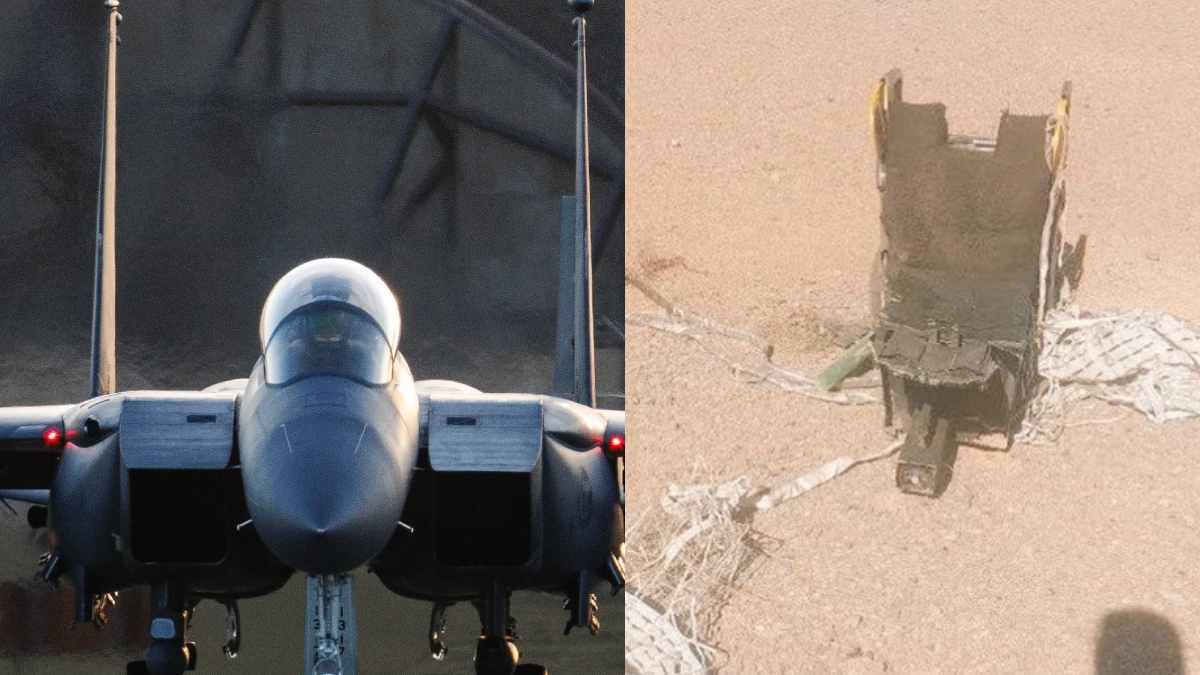 "One of two US crew members rescued after F-15E jet shot down over Iran, race to hunt second ongoing")
 "UK-US ties may be beyond repair, PM Starmer told as Trump mocks him over lack of support in Iran War")
 "Archbishop of US military condemns Iran conflict, says West Asia crisis does not meet 'just war' standard")
 "Iran Israel War Live News: Iran says second US aircraft downed after earlier fighter jet loss")
 "One of two US crew members rescued after F-15E jet shot down over Iran, race to hunt second ongoing")
 "UK-US ties may be beyond repair, PM Starmer told as Trump mocks him over lack of support in Iran War")
 "Archbishop of US military condemns Iran conflict, says West Asia crisis does not meet 'just war' standard")