by Anand Vasu Some are born great, some achieve greatness, and some have greatness thrust upon ’em. Rahul Dravid, if such a thing is possible, is all three. It’s safe to say William Shakespeare never wrote about cricket but Malvolio’s immortal line from Twelfth Night better sums up an international career spanning 16 years, in which more than 24,000 runs were painstakingly amassed than all the statistics you can dig up. In his India team blazer that fits him as perfectly at 39 as it did when he made his magical debut at Lord’s all those summers ago in 1996, hair neatly combed, the Board of Control for Cricket in India tie knotted to perfection, Dravid ushered in a hushed, mildly reverential silence as he read from a prepared statement, saving his best for last. Addressing the Indian fan, Dravid said, “The game is lucky to have you and I have been lucky to play before you. To represent India, and thus to represent you, has been a privilege and one which I have always taken seriously. My approach to cricket has been reasonably simple: it was about giving everything to the team, it was about playing with dignity and it was about upholding the spirit of the game.” That he was blessed is beyond debate, although some of his gifts are harder for us mere mortals to recognise – an affinity for hard work, extraordinary powers of concentration and a constant pursuit of excellence for excellence’s sake. No Indian wicket, not even Sachin Tendulkar’s has been valued so dearly by the opposition in Test cricket over the last decade and a half. [caption id=“attachment_239347” align=“alignleft” width=“380” caption=“Rahul Dravid announced his retirement from international cricket in Bangalore today. PTI”]
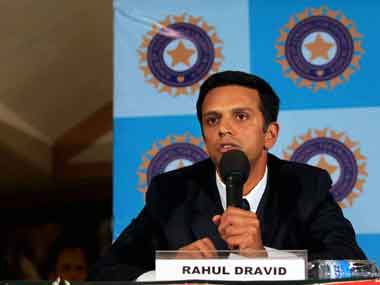 [/caption] We thrust the tag of greatness upon him every day, and Dravid knows he has achieved things on a cricket field that may never be matched and been part of truly great wins, but it’s not something he embraces. Tell him that he’s great, and he looks down at his feet, shifts his weight uncomfortably — as he did when a room of 200-plus media personnel broke into spontaneous applause at the end of Dravid’s short speech. Like everything else Dravid, nothing was left to chance even in the final farewell. The short presentation ceremony was staged on the outfield of the M Chinnaswamy Stadium, where Dravid received bouquets from one-time teammates Anil Kumble and Javagal Srinath, who now run the Karnataka State Cricket Association. It was a brief moment for the family relish. Vijeeta, who Rahul describes as having been “a virtual single parent," has done a remarkable job staying out of the limelight and shielding the kids from the glare of the media. Even on Rahul’s big day, she was quick to scoop the younger son Anvai, with Samit in tow and leave the room when the constant jostling of cameras began to grate. N Srinivasan, president of the BCCI, a man known to be ruthless and hardnosed, choked more than once in the course of a heartfelt goodbye in which he called Dravid “actually irreplaceable” and sincerely meant it. Kumble, whose baritone voice and steely eye give an unfair impression of sternness, welcomed his old friend to the other world, life after cricket, and suggested only half in jest that Dravid’s “ability to say no will be challenged like never before because of the unprecedented demands on his time.” That Dravid was nearer the end than ever before was not in doubt, but the fact that several people were asking why — rather than why not — showed that he got the timing of his retirement just right. Dravid was repeatedly asked what he would do next, but like bowlers who have probed unsuccessfully outside the off stump, reporters were left despairing. “I’ve not thought about it yet,” was all he would say, quickly adding, “I have lived a cocooned life for the past twenty years, had a set routine. Now my wife says it’s time to get me into a fresh routine.” Bangaloreans better keep their eyes peeled when they’re shopping for vegetables at the neighbourhood supermarket; the guy with the bag of potatoes at the check-out counter might just be Dravid. At the hour-long press conference gentle half-volleys were compactly dealt with: Who were the best bowlers he’d faced? “Wasim Akram, Waqar Younis, Curtly Ambrose, Courtney Walsh, Shane Warne, Muttiah Muralitharan …” Which was his best innings? “It’s hard to choose between your sons.” In a recent conversation, Dravid told this writer just how much he loved batting in the nets: “It’s great playing international cricket, but the pressure is huge. It’s not always fun. But in the nets, it’s totally different. You’re taken back to why you began playing the game, for the sheer love of hitting the ball. In some ways it’s the most pure enjoyment of the game for me.” As he took a final bow, Dravid confirmed that a year from now, you couldn’t rule out the possibility that he’d quietly slip into the Chinnaswamy Stadium late at night to have a bat in the indoor nets. Dravid might have said goodbye to international cricket, but his love for the game will always remain undiminished, invincible. Anand Vasu is managing editor of the soon-to-be-launched
Wisden India
website.
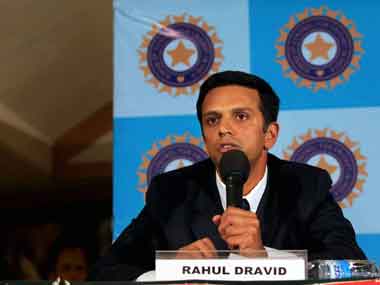
[/caption] We thrust the tag of greatness upon him every day, and Dravid knows he has achieved things on a cricket field that may never be matched and been part of truly great wins, but it’s not something he embraces. Tell him that he’s great, and he looks down at his feet, shifts his weight uncomfortably — as he did when a room of 200-plus media personnel broke into spontaneous applause at the end of Dravid’s short speech. Like everything else Dravid, nothing was left to chance even in the final farewell. The short presentation ceremony was staged on the outfield of the M Chinnaswamy Stadium, where Dravid received bouquets from one-time teammates Anil Kumble and Javagal Srinath, who now run the Karnataka State Cricket Association. It was a brief moment for the family relish. Vijeeta, who Rahul describes as having been “a virtual single parent," has done a remarkable job staying out of the limelight and shielding the kids from the glare of the media. Even on Rahul’s big day, she was quick to scoop the younger son Anvai, with Samit in tow and leave the room when the constant jostling of cameras began to grate. N Srinivasan, president of the BCCI, a man known to be ruthless and hardnosed, choked more than once in the course of a heartfelt goodbye in which he called Dravid “actually irreplaceable” and sincerely meant it. Kumble, whose baritone voice and steely eye give an unfair impression of sternness, welcomed his old friend to the other world, life after cricket, and suggested only half in jest that Dravid’s “ability to say no will be challenged like never before because of the unprecedented demands on his time.” That Dravid was nearer the end than ever before was not in doubt, but the fact that several people were asking why — rather than why not — showed that he got the timing of his retirement just right. Dravid was repeatedly asked what he would do next, but like bowlers who have probed unsuccessfully outside the off stump, reporters were left despairing. “I’ve not thought about it yet,” was all he would say, quickly adding, “I have lived a cocooned life for the past twenty years, had a set routine. Now my wife says it’s time to get me into a fresh routine.” Bangaloreans better keep their eyes peeled when they’re shopping for vegetables at the neighbourhood supermarket; the guy with the bag of potatoes at the check-out counter might just be Dravid. At the hour-long press conference gentle half-volleys were compactly dealt with: Who were the best bowlers he’d faced? “Wasim Akram, Waqar Younis, Curtly Ambrose, Courtney Walsh, Shane Warne, Muttiah Muralitharan …” Which was his best innings? “It’s hard to choose between your sons.” In a recent conversation, Dravid told this writer just how much he loved batting in the nets: “It’s great playing international cricket, but the pressure is huge. It’s not always fun. But in the nets, it’s totally different. You’re taken back to why you began playing the game, for the sheer love of hitting the ball. In some ways it’s the most pure enjoyment of the game for me.” As he took a final bow, Dravid confirmed that a year from now, you couldn’t rule out the possibility that he’d quietly slip into the Chinnaswamy Stadium late at night to have a bat in the indoor nets. Dravid might have said goodbye to international cricket, but his love for the game will always remain undiminished, invincible. Anand Vasu is managing editor of the soon-to-be-launched
Wisden India
website.
In the end, Dravid got his timing just right
FP Archives
• March 9, 2012, 17:09:38 IST
A year from now, you can’t rule out the possibility that he’d quietly slip into the Chinnaswamy Stadium late at night to have a bat in the indoor nets. But for now, he’s done.
Advertisement
 "In the end, Dravid got his timing just right")