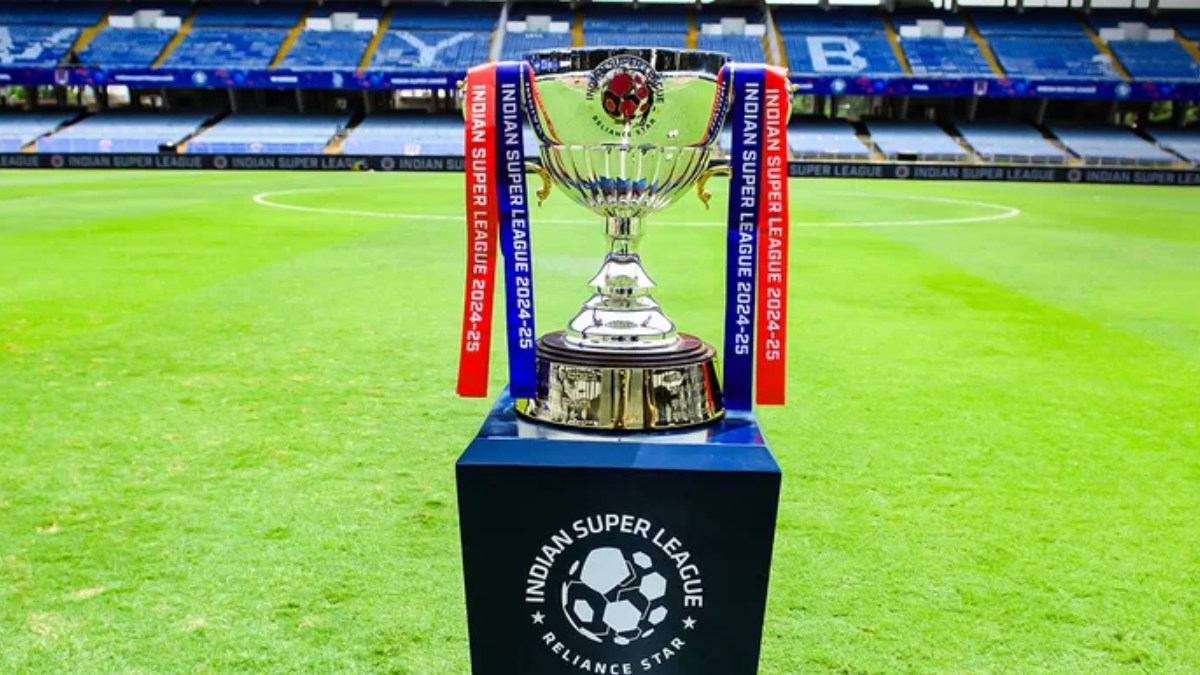
 "The 12th season of the Indian Super League is scheduled to get underway on 14 February, as per an announcement by Sports Minister Mansukh Mandaviya. Image credit: ISL")
It was the best of times, it was the worst of times, …. it was the spring of hope, it was the winter of despair.
There perhaps could not be a better way to describe the manner in which things unfolded in the Indian Super League (ISL) 2025-26 season. After a prolonged delay, followed by increasing worry that the entire domestic season of club football may go to waste for the first time in Indian football history, the dramatic and mighty intervention of the all-powerful Ministry of Youth Affairs and Sports finally settled the issue .
Also Read | ISL 2026 Explained: How AIFF is planning to host it, venue, budget, possible dates & more
For the record, if everything goes right, a 14-team double-leg ISL will kickstart in the second week of February, with the I-League too being played in between. Well, the happy days are here again; the die-hard fans of Indian football may start singing in chorus, but lots of unanswered questions still remain to be addressed. They are bound to tumble out of the cupboard in the next few weeks or months, however hard one tries to sweep them under the carpet, at least for the time being.
The restart: at gunpoint or willing participants?
The biting cold of the capital notwithstanding, it looked like a feel-good time, at least on face value, when the sports minister, Mansukh Mandaviya, on Tuesday, January 6, 2026, Tuesday, held a press conference to announce the ISL would finally start in the next five weeks and all teams have agreed to play.
A similar feeling of bonhomie was not there in the three-corner meeting between the ministry, the AIFF, and the clubs earlier in the day, if the insiders are to be believed.
According to one official present in the meeting, a stern and firm stand taken by the ministry turned the issue in its favour. “A senior official of the ministry said he was not too pleased by the “repeated roadblocks” put up by the clubs to the attempt to start the ISL. When a few club officials said they were not sure about the financial model prepared by the AIFF and they would need a few days to go back and consult with respective owners, the ministry official said the participation would have to be confirmed in the next half an hour when the meeting would be reconvened.
“Till then, only two clubs, Northeast United FC and debutants Inter Kashi FC, confirmed their unconditional willingness to play. The rest fell in line when the meeting was reconvened and the sports minister joined it. All clubs, one by one, agreed to play,” the official said.
What exactly transpired in the meeting was leaked out almost immediately and was all over social media long before the official press conference was held. It naturally attracted some sympathisers, but not exactly in the AIFF circle, to be sure.
An AIFF Executive Committee member, who did not want to be named, said there was perhaps no other way to make the clubs play. “At least three to four clubs were trying to scuttle this year’s ISL with a different agenda in mind,” he alleged. “Every time a fresh proposal was tabled, they came up with new demands impossible to meet. Some of the clubs were not willing to pay the participation fee either. A strong stand was essential for the better of Indian football,” he said.
A silent third-party intervention
The quick deal that was struck by the sports ministry in starting the ISL was a welcome sign for Indian football but also exposed the weakness within the system.
The AIFF, being the parent body of Indian football, struggled for nearly six months to bring the clubs on board and find a solution to the ISL problem that would have been acceptable to all. It finally had to run to the court, and the government had to get involved (albeit reluctantly) to see that Indian football is not shamed any further. Though not said in as many words, it was an apparent case of third-party intervention that the FIFA would never like to approve. It is evident that the present committee in the AIFF, led by Kalyan Chaubey, was a complete failure at solving its problems and had to knock on the doors of the ministry to see the game in India return to normalcy.
The government, according to sources, also took strong exception to the way some of the senior footballers conducted themselves by taking to social media during this crisis. It told the clubs that their players did not exactly do any favour to Indian football when they uploaded a video to highlight their problems because of a stalled ISL .
“The government is very much perturbed about the image because of the 2036 Olympics. The clubs were told that the players had no business shaming Indian football in this manner,” one of the officials, who was part of the meeting, said.
The unanswered questions
First of all, can the effect of arm-twisting last for long? Or is it only a temporary treatment that would leave one numb for a while? This is certainly no answer to a problem that needs to be solved with a 20-year deal.
What exactly is going to happen if no one lands up in the AIFF’s lap to bid for being the broadcast/commercial partner for the 2025-26 season (January 25 is the last day for bidding)? What happens if the ISL is left empty-handed on the night of January 31, the last day for having a partner? The clubs will bleed more; the AIFF, which is already running on a deficit budget, will find their reserves being further eroded. That’s not a welcome situation for Indian football.
The story doesn’t end here. If the proposal submitted by the AIFF is to be believed, then the deadline for submission of 20-year agreement is March 20; the finalisation of the longtime commercial partner is on March 31. Will the clubs sign on the dotted lines on March 20 if there is no prospect of a commercial partner on board?
The Indian football boat has been rocked. And rocked badly. It needs to be docked for serious repairs. What so far has been achieved is stopgap mending. It is now left to the AIFF to do the needful. Because it can’t expect the government to come to its rescue every time.