 "Why Quraishi is wrong about exit polls")
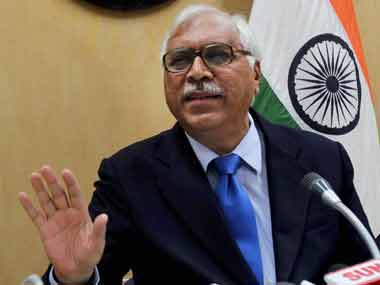
“Opinion and exit polls should best be on entertainment channels!” So said Dr SY Quraishi, Election Commissioner of India, in his status update on Twitter last evening. And the exclamation mark, too, is part of the quote! Quraishi’s statement can be interpreted in many ways, and it is difficult to know precisely what he had in mind. However, here are a few possible provocations that might have let to his opinion: 1. That he does not believe that exit polls are required as they serve no purpose What makes news and does not make news is a matter of editorial opinion. Theoretically, this opinion is formed based on a news outlet’s understanding of what the readers/viewers would want to read/watch. Quraishi might believe that publishing/broadcasting of polls serve no purpose, but audiences and editors do not agree, as is evidenced by the readership/viewership. Over a period of time, research agencies build their reputations on a track record of accuracy in polls – as do the media houses that commission the research. [caption id=“attachment_234173” align=“alignleft” width=“380” caption=“Dr Quraishi had said exit polls of the recent polls should be on entertainment channels. PTI”]
 [/caption] At the heart of the need to publish/air the polls is the media house’s simple need to address consumer appetite to ‘know the future’ before someone else does. 2. That he believes that the polls are just made-up and fake No. The polls are not fictional, and there is every effort to ensure that the polls tend to be truly predictive in nature. Content based on and derived from the exit poll and other post-poll survey studies are not shows, and are not choreographed. The kernel for the programming, the research, is an exercise that involves significant investments and significant planning and co-ordination. The accuracy of the findings is important from the perspective of the media houses which first commission and then publish (or air) the findings. 3. That he believes that the polls are inaccurate, and, therefore, akin to ‘entertainment’ as opposed to news The results may be less accurate than Mr. Quraishi might like them, but that is a result of the complications of such polling in India thanks to the lack of homogenous, predictable behaviour. Budgets, too, play a part, not allowing media houses the funds to increase the sample size, which would definitely improve the accuracy. Even with these limited budgets, most polls commit an error factor which is not more than +/- 5 per cent. If accuracy is an issue, it would be time to shut down the business news channels and the pink papers – when was the last time they predicted the movements of the stock markets, the commodities markets, etc, with any level of accuracy? Should stock market previews be on the entertainment channels? There are commercial reasons to commission (and air/publish) exit or post-poll surveys. Viewers and readers consume them and advertisers pay for such audiences. While the polls themselves may not be 100 percent accurate, it’s important to look at the programming which is created around the data thrown up by the polls. The debates on the interpretation of the data, the analysis of the various factors that voters judge before making a decision and the complexities of the demographics make for educational and thought-provoking content – and this content, certainly, consumes more time/space than the raw data. The findings are not fictionalized, they’re the result of investments, back-breaking data collection, analysis by psephologists, and, finally, the packaging into a show or into columns by media professionals. If the shows entertain, that is a bonus – and congratulations to all who made dull data entertaining. Is this news? Should such programs be aired? The jury will be forever out on this, as they will in the case of whether Aishwarya’s daughter’s name is news or whether Dev Anand’s passing should have made the front pages.
Anant Rangaswami was, until recently, the editor of Campaign India magazine, of which Anant was also the founding editor. Campaign India is now arguably India's most respected publication in the advertising and media space. Anant has over 20 years experience in media and advertising. He began in Madras, for STAR TV, moving on as Regional Manager, South for Sony’s SET and finally as Chief Manager at BCCL’s Times Television and Times FM. He then moved to advertising, rising to the post of Associate Vice President at TBWA India. Anant then made the leap into journalism, taking over as editor of what is now Campaign India's competitive publication, Impact. Anant teaches regularly and is a prolific blogger and author of Watching from the sidelines.