Which way would the Congress go in Uttar Pradesh — the BSP or the SP? Union minister Beni Prasad Verma has shot his mouth off again and said the Congress is better off partnering the BSP. Verma is an over-hyped leader who enjoys importance disproportionate to his political weight in the state. He is known to make indiscreet utterances which land the party in embarrassment. But, for a change, let’s not discard him. He could be articulating a sensible proposition for the party. How? The challenges for the Congress at the moment are two-fold — one, to secure the support of either the BSP or the SP to counter the crisis of numbers in Lok Sabha; two to get the growth momentum in Uttar Pradesh going. Assuming the party bags around 55 seats and stays in a position where it could have a say on the formation of the government, it has to keep these challenges in mind. Trinamool Congress leader Mamata Banerjee has turned into a troublesome ally. She is in total disagreement with the Congress on crucial policy issues and has virtually taken up the role of the opposition within the UPA. With 19 MPs at her command, she could torpedo any move that the government proposes. The UPA, which is desperate to kick start the stalled reforms process to dispel the general perception that it is stuck in policy paralysis, has to look for the numbers to offset Mamata either in the SP or the BSP. [caption id=“attachment_233905” align=“alignleft” width=“380” caption=“The challenges for the Cong at the moment are two-fold — one, to secure the support of either the BSP or the SP to counter the crisis of numbers in Lok Sabha; two to get the growth momentum in Uttar Pradesh going. PTI”]
 [/caption] The SP has 22 members and the BSP 21. The Congress could do either of the two. It has alliance of convenience with both – they have bailed it out in difficult situations a number of times. While the SP appears to be a more of a natural ally, given that it has a political agenda similar to that of the Congress, the BSP could be more crucial to the growth of the party in the state. If the party is looking for a good tally in Uttar Pradesh in 2014 general elections, it will need to plan its moves carefully. The party which is likely to end at the bottom of the seats table this time, curiously, is in a position to make choices. The Congress expects to secure 70-80 seats in the elections. Party sources say they would be satisfied with a tally of 60. But even if it bags around 50 – which is a realistic assessment — it would still be a decent achievement for a national outfit which bagged just 22 seats in 2007 and had a vote share of eight percent. For a party which has virtually no organisation in the state and no local leaders, the important issue is to keep the momentum going. From 22 seats in the Lok Sabha in 2009 to a position of reckoning in 2012 assembly polls — there is little doubt that the party has revived itself. Its immediate challenge is not to lapse into inactivity again. A lot depends on how it decides to go about its alliance. The party wants to regain its Dalit and Muslim vote bank. If it allies with the SP, it loses the Muslim plank. Moreover, it is not likely to make inroads into the core OBC votes — Yadav votes in particular — of the former. If it props up a BSP government, assuming Mayawati’s party comes that close, it wins the goodwill of the Dalits. Also, it gets ample scope to pursue its anti-Dalit-anti-Picchad-Muslim game plan. With so many corruption cases and the disproportionate assets case against her, Mayawati would be easier to handle – the Congress at the Centre could manipulate the CBI to keep her in control. The party does not have the same advantage in case of the SP. Mulayam Singh is a much smarter operator than Mayawati, the Congress realises that. [caption id=“attachment_233912” align=“alignright” width=“380” caption=“With so many corruption cases and the disproportionate assets case against her, the BSP supremo would be easier to handle – the Congress at the Centre could manipulate the CBI to keep her in control. Reuters”]
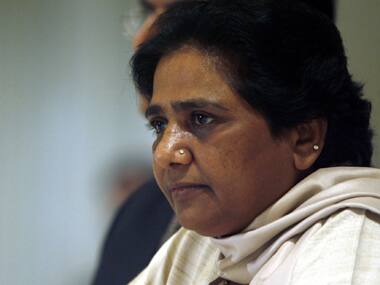 [/caption] There’s a distinct possibility that the party won’t support either of the regional outfits. It would like to be in opposition to further its game plan. When senior leaders of the party talk of governor’s rule in UP, it has to be seen as more than a slip of the tongue. The BJP has already announced that it won’t support the BSP; it won’t support the SP either given the fundamental ideological differences. The SP and BSP won’t come together. If the Congress decides not to support any party, governor’s rule is a fait accompli — this assuming that no party gets a clean majority or in the striking distance of forming the government. It won’t mind another election in a year. The exercise would keep the party machinery active and in the running. The Congress seems to have braced for a situation where the biggest party is short of at least 40-50 seats. In this case, it gets into a position from where it can bargain. The party’s call would be interesting to watch.
UP alliance: Why Congress could go with BSP
Akshaya Mishra
• March 5, 2012, 12:14:25 IST
The party cannot dismiss Beni Prasad Verma’s suggestion simply because it makes political sense.
Advertisement
 "UP alliance: Why Congress could go with BSP")
End of Article