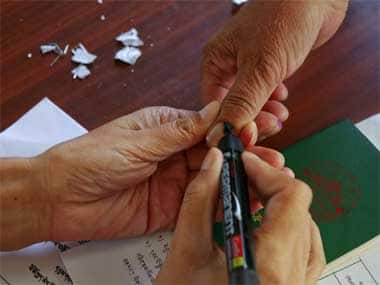
As Delhi gears up for the state assembly polls on 4 December, political parties get ready to woo voters. But the task of carrying out safe and more importantly fair elections in India’s capital rests with the office of Delhi’s Chief Electoral officer. Firstpost spoke to Vijay Dev, the chief electoral officer for Delhi and the person who will handle most of the operations in this years election process. Edited excerpts from the interview. First, which are the sensitive polling booths that the EC office in Delhi has marked out? Also how is a booth declared sensitive? What preparations are taken to ensure safe and fair elections here? We define sensitive polling stations in each area and the details of these are kept secret. 600 critical polling stations have been identified in this election. We have undertaken a detailed security plan in areas as well. These 600 locations will be catered to in a concentrated manner where deployment of security forces is concerned, compared to normal polling stations. There are a few key factors that determine why a booth is put in the sensitive or ultra-sensitive category. If the place has a history of violence, if it is sensitive in terms of communal situation, or has too much caste divide. Areas fielding candidates with a history of political violence are also marked as sensitive polling booths. [caption id=“attachment_1231215” align=“alignleft” width=“380”]
 Reuters[/caption] How has the voter registration drive been this year? Has your office targeted a particular section of the population for voter registration? The number of voters goes up after each election. We will be releasing the final numbers soon after the last date of nominations in Delhi which is 16 November. By 20 November, the final number of voters should be out. In any case the number of voters we are expecting will be 1 crore and 17 lakh. ( In the previous election
Delhi had
One crore, 7 lakh voters) We have concentrated on enrollment of deficient categories, which are women, homeless persons, youth (aged 18 and 19 in particular ) and transgender. In the 18 to 19 years age group (first time voters) we had only 98,000 registered when we started our registration drive. Now we have more than 3,80,000 youth registered. We started our campaign in all colleges, schools (for class 11th and 12th) and we chose campus ambassadors from both students and faculty to help increase registration in this group. Youth, we have been able to register quite substantially. Gender ratio in Delhi’s electoral roll had been quite bad, some 788 women per 1000 males. In some areas it was even lower at 600 women voters per 1000 males. We started a major drive for this as well by identifying areas with low female voter registration. We set up all women staff camps to help women voters get comfortable as some did not want to deal with male staff. The gender ratio has increased to 808 per 1000 males. This is the first time in the history of Delhi that the electors gender ratio has crossed 800. In the homeless category, we had only 62 persons registered at the beginning. Again our drive in streets, footpaths, etc helped and we have over 8000 homeless people registered. In transgender we started with nil but now we have 500. We have the category of ‘other’ available as well, but sometimes they want to be registered as females or males so it’s a hit and miss at times. How will the EC deal with the menace of bogus voting? We are taking extensive surveys via door-to-door campaign. We’ve removed names of those who’ve passed away, some duplicate voters, those who have moved out of Delhi. Close to 14 lakh voters have been taken off the rolls for this election. [caption id=“attachment_1231127” align=“alignleft” width=“380”]
Reuters[/caption] How has the voter registration drive been this year? Has your office targeted a particular section of the population for voter registration? The number of voters goes up after each election. We will be releasing the final numbers soon after the last date of nominations in Delhi which is 16 November. By 20 November, the final number of voters should be out. In any case the number of voters we are expecting will be 1 crore and 17 lakh. ( In the previous election
Delhi had
One crore, 7 lakh voters) We have concentrated on enrollment of deficient categories, which are women, homeless persons, youth (aged 18 and 19 in particular ) and transgender. In the 18 to 19 years age group (first time voters) we had only 98,000 registered when we started our registration drive. Now we have more than 3,80,000 youth registered. We started our campaign in all colleges, schools (for class 11th and 12th) and we chose campus ambassadors from both students and faculty to help increase registration in this group. Youth, we have been able to register quite substantially. Gender ratio in Delhi’s electoral roll had been quite bad, some 788 women per 1000 males. In some areas it was even lower at 600 women voters per 1000 males. We started a major drive for this as well by identifying areas with low female voter registration. We set up all women staff camps to help women voters get comfortable as some did not want to deal with male staff. The gender ratio has increased to 808 per 1000 males. This is the first time in the history of Delhi that the electors gender ratio has crossed 800. In the homeless category, we had only 62 persons registered at the beginning. Again our drive in streets, footpaths, etc helped and we have over 8000 homeless people registered. In transgender we started with nil but now we have 500. We have the category of ‘other’ available as well, but sometimes they want to be registered as females or males so it’s a hit and miss at times. How will the EC deal with the menace of bogus voting? We are taking extensive surveys via door-to-door campaign. We’ve removed names of those who’ve passed away, some duplicate voters, those who have moved out of Delhi. Close to 14 lakh voters have been taken off the rolls for this election. [caption id=“attachment_1231127” align=“alignleft” width=“380”]
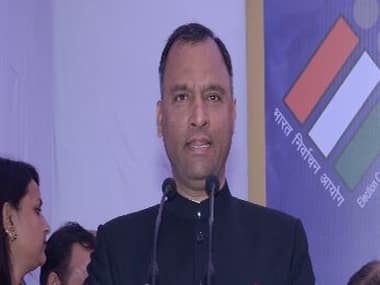 Vijay Dev: Image courtesy Delhi election office[/caption] What about the NOTA option? What happens in an area with a majority of NOTA votes? None of the Above (NOTA) option will be there in Delhi elections. We are making people aware of NOTA at all our awareness drives. Delhi faced this urban apathy because of which there is often low voter turnout and people would stay at homes saying that only criminals are contesting. Now we are telling people there is no excuse for not voting, you must come out and vote. The current legal position is that the votes under NOTA are of no consequence. Whoever gets the maximum remaining votes, even if most votes are under NOTA, will win. But the positive side of NOTA is that this a big stepping stone towards major reforms. We could see later on that if the majority of votes are NOTA, people could go to SC and file a writ asking for re-election. As of today this provision is not there, but tomorrow it can happen. This is also an experimental stage for us, we don’t know how much votes NOTA we will get, but we will keep a track of them. How will the Delhi election office monitor social media accounts of parties? The Media Certification and Monitoring Committee (MCMC) will primarily be dealing with this and they will form teams to look at social media. Our main concern will be to look at social media accounts of both political parties and candidates. We will look at the expenditure and content that is posted. They have to get all content pre-certified. Whatever has political significance should ideally get a pre-certification from us, even if it is a tweet. We will go on a complaint basis and if we find that the model code of conduct is violated, then we will act. Forty eight hours before the election all campaigning from mass SMSing to online campaigning will have to stop. Can you talk about the model polling stations that the Delhi election office plans to setup? Another reason we found for urban voter apathy was the condition of the polling booth in general. Voters had to stand in long lines with no facilities such as drinking water, or toilets, and no one to help them out. So in this election we have decided that all booths will have most of the basic facilities such as drinking water, toilets etc. We have chosen to create some model poll stations, 9 in total where we will provide upgraded facilities. We hope to give a better ambience to ensure a good experience for the voter. In each district, we will choose one location. The shortlist will be decided later. The infrastructure in these locations will be improved along with queue management. Also someone will here to talk to voters and help them out.
Social media, NOTA and more: Delhi prepares for a 'different' poll
Shruti Dhapola
• November 15, 2013, 09:58:43 IST
Firstpost spoke to Vijay Dev, the chief electoral officer for Delhi and the person who will handle most of the operations in this years election process
Advertisement
 "Social media, NOTA and more: Delhi prepares for a 'different' poll")
End of Article