It was supposed to be a revolutionary piece of legislation. The Right to Information Act, 2005, promised to bring transparency into the opaque and secretive world of the government and the bureaucracy. It empowered the common citizen to demand information, seek the truth out and satisfy himself. That so many scandals, including the 2G spectrum scam, and corruption cases of various shapes and sizes are in the public domain now, is a contribution of the Act. It’s a game changer, certainly. Shady facts can no longer stay buried in files, bureaucrats can no longer hide behind the Official Secrets Act – to a large extent, that is — to deny information to the citizens. But there’s a flip side to it. RTI Act is fast turning out to be a nuisance, an obstructionist force in the smooth functioning of the government. The unique power vested with the citizens is under the threat of being hijacked by a class of entrepreneurs, which has been eliciting information through RTI applications with dubious motives, either of their own or of their hidden clients. The aim is to harass the honest, delay governmental work and bring in unnecessary suspicion into every decision that the government takes. [caption id=“attachment_92533” align=“alignleft” width=“380” caption=“Corporate Affairs Minister Veerappa Moily, on Sunday, called for a national debate on the scope of the RTI Act, saying it “transgresses into the independent functioning of the government”.”]
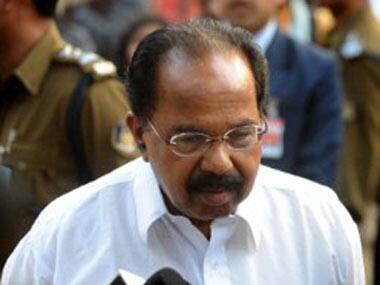 [/caption] The courts have spoken out strongly against the practice and have variously penalised the culprits. But there has been no stop to it. Motivated applications keep digging out ’truth’ which is open to interpretations and keep building malicious arguments around it. The finance ministry note, purportedly cleared by Pranab Mukherjee himself, which says the ministry, then headed by P Chidambaram, went back on its original suggestion to auction 2G spectrum and could have cancelled the allocations made by the then Telecom Minister A Raja, is a case in point. It has been interpreted as a ploy by Mukherjee to paint Chidambaram in negative light since both don’t enjoy a healthy vibe. It is also being interpreted as the latter being the equal partner in crime as Raja. Both could be either true or false. But the basic question in the 2G scam is not whether the government should have taken the auction or the first-come-first-served route. It is the government’s prerogative. If auction were the yardstick, then the NDA government would also be in the dock. The real question is the manipulation and criminality involved in the execution of whatever policy the government adopted – the first-come-first-served policy in this case. What if the policy adopted by Raja was fair and transparent? Would there still be the 2G scandal? Obviously not. The issue is not the policy but its implementation. The letter does not leave us any wiser here. Corporate Affairs Minister Veerappa Moily is understandably piqued about the RTI application that dug out the letter. On Sunday, he called for a national debate on the scope of the RTI Act, saying it “transgresses into the independent functioning of the government”. “We call it argumentative India. Every person or ministry has the right to express views but you cannot interpret it as differences…(between ministers). In the context of RTI exposures, people are misreading things. Transparency, yes, but it cannot scuttle the independence of individuals and ministries expressing difference of opinion. It’s time for a national debate on this issue,” Moily told The Sunday Express. “Just because there is exchange of views on administrative matters, one cannot call it infighting. In a democratic process that our Cabinet system follows, there is free exchange of views to arrive at a correct decision. Even at the prime minister’s level, we express our differences. How can democracy function otherwise? But RTI obtain some extracts of such exchange of views and attribute motives to them. If this continues, no officer or minister will discuss anything. Even the judiciary should appreciate it. Time has come to re-visit the Act…” he added. Moily might be trying to protect the senior ministers and the government but he has a point. But let’s come back to the abuse of RTI part. Every decision of the officials and the government could be argued to be wrong in hindsight on the basis of findings in the RTI applications. This could discourage bureaucrats from taking decisions, since each decision is fraught with the risk of being interpreted in a different way. For some months after the Adarsh scandal broke out in Maharashtra, bureaucrats were loathe to taking a call on files. These would simply marked by the noting ‘for clearance by the minister’. That left the ministers bewildered and ultimately caused inordinate delay in clearance of projects. The officials were scared that their decisions would be subject to questions later on the basis of RTI applications. A situation like this is the prescription for disaster. In Maharashtra, a section of MLAs has asked the government to examine the feasibility of modification in the RTI Act since it was being widely misused. The Supreme Court is also not amused by the antics of the RTI entrepreneurs. “The (Right to Information) Act should not be allowed to be misused or abused, to become a tool to obstruct the national development and integration, or to destroy the peace, tranquility and harmony among its citizens. Nor should it be converted into a tool of oppression or intimidation of honest officials striving to do their duty,” said an apex court bench last month. The judgment said, “The nation does not want a scenario where 75 percent of the staff of public authorities spends 75 percent of their time in collecting and furnishing information to applicants instead of discharging their regular duties.” The solution is to keep the non-serious RTI applicants out of the picture through heavy penalties and other disincentives. The government would have to find a solution soon. It cannot let a powerful instrument with the ordinary citizen be abused this way.
RTI: How the noble Act has now become a nuisance
Akshaya Mishra
• September 26, 2011, 16:33:33 IST
The unique power vested with the citizens is under the threat of being hijacked by a class of entrepreneurs, which has been eliciting information through RTI applications with dubious motives, either of their own or of their hidden clients.
Advertisement
 "RTI: How the noble Act has now become a nuisance")
End of Article