 "Riding an elephant into the sunset? The cautionary tale of Mayawati")
The symbolism of the change of guard is clear. The first television image of Mulayam Singh Yadav’s return to power in UP was a giant chhapan bhog ki laddoo his followers had brought for their leader. Contrast this to Mayawati’s 52nd birthday celebration as described by Time Magazine in a profile of the Queen of the Dalits.
It was an image dripping with symbolism – and cake crumbs. When Mayawati Kumari, Chief Minister of the Indian state of Uttar Pradesh, turned 52 in January, aides and civil servants took turns to finger-feed her scoops of a 115 pound chocolate birthday cake at a party in the state capital Lucknow. The image of mostly high-caste men feeding a Dalit woman was an incredibly powerful one.
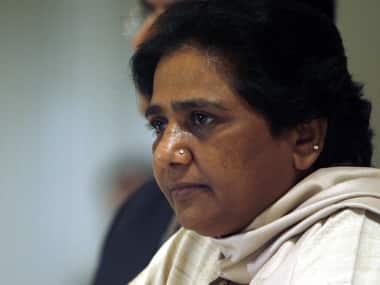
In the end Mayawati’s defeat could be seen as a defeat of her politics of symbolism. She had always hoped that her outsized personality would be enough to dazzle the voters, especially her base. Her flashy clothes, handbags and jewellery were projected as the symbols of Dalit aspiration, if not empowerment. While Mamata Banerjee claims the Gandhian space with her austere white saris and rubber slippers, Mayawati’s clothes and diamond-laden birthday bashes signaled that she was occupying the anti-Gandhian space, just as BR Ambedkar was always in western suits. Political theorist Aditya Nigam sees Mayawati’s “ostentatiousness” and her dress style as a “symbolic countermove” that mocks Gandhi’s attempts at representing poverty. Gandhi, the bania, had to display the poverty he never experienced in life writes Monobina Gupta. Mayawati, who actually knows what it is to be poor and dispossessed, can afford to ridicule loincloth politics by her wardrobe. [caption id=“attachment_236228” align=“alignleft” width=“380” caption=“In the end, Behenji could not live up to her own symbols. Tanushree Punwani/Reuters”]
 [/caption] The problem for Mayawati is that the politics of symbolism work best on the way to power. But once you are in power, real issues take over – lawlessness, corruption and land scams for instance. A phalanx of concrete elephants can hardly provide any answers to that. “What appears to be a shift in caste voting is driven by issues of governance and development,” writes
writes
Yogendra Yadav in Outlook. “Simply put, the BSP is losing support across the social spectrum because it does not offer good governance and development to anyone but its committed Dalit voters.” “Earlier, the emphasis was caste, and development through caste,” political scientist Anil Verma
tells
the New York Times. “But now the shift is to development, not caste.” That’s not to say, caste is not a factor. But the electorate is not content to just marvel at the symbols of someone’s rise, they want their share of the fruits of economic growth. To put it bluntly, what’s the point of electing someone of your caste as the middleman if he cannot deliver results? This strategy of ‘if they cannot have bread, let them eat symbols’ stopped working even for large chunks of her base. Open Magazine’s
cover story
on Behenji says party cadres have been chafing for a while now at what they see as Mayawati’s betrayal of Kanshi Ram’s vision. Kanshi Ram had wanted land reform. Mayawati delivered statues. Kanshi Ram wanted power for Dalits as a people, not just for an individual. For Mayawati power is the end, not the means. So under her, Bahujan became Sarvajan where everyone could “come ride the elephant.” Kanshi Ram wanted real debate within the cadre camps. Mayawati wants a rubber stamp. Most unforgiveable for her Jatav subcaste is that she failed to deliver while commanding 205 seats in the Assembly. Many had never been happy about this woman whom Kanshi Ram had plucked from obscurity and then anointed as his successor. Some see her humiliation as the best thing that could have happened to the BSP. “Fear of Mayawati’s wrath may have kept most of them quiet through her tenure as UP’s Chief Minister, but behind the scenes they have been sniffing the powder for an all-out attack on her leadership – should she lose power,”
writes
Dhirendra K Jhan in Open. “Their tactical line, pitting Saheb (Kanshi Ram) against Behenji and vowing to rediscover Saheb and draw the BSP back to his gameplan, is well in place.” Mayawati sensed the discontent and tried to reclaim her Kanshi Ram roots. When Rahul Gandhi said he “respected” Kanshi Ram, Mayawati was quick to lash out. “These words of sympathies are like thorns,” she
scoffed
saying the Congress did not even offer two words of condolence when he died. She sacked ministers and admitted that “bad elements” had gotten the party. But it was too late. She was much to wedded to the drama of symbolism. She just kept dishing out more symbols of what The Guardian
called her “zero to hero” story – plans for a shopping mall next to the Taj Mahal, a $100 million park, statues and elephants. The international media also was enamoured by the romance of the story of the chamar girl who tended her family’s buffaloes becoming UP’s youngest chief minister and the audacity of her hope – “nobody can stop me from becoming prime minister.” Even her proposal this year to carve UP into four states was seen in that light. When an empress wants to carve up her own empire, it can only mean she has a bigger crown in mind, political pundits theorized. A New Statesman
profile
by Maxine Lloyd rhapsodized “It’s a long way from the chamar mohalla to the prime minister’s office. But if this Dalit ki beti did take power, the hopes and aspirations of millions of Indians would shift irrevocably.” That assessment was also about Mayawati, the symbol, not Mayawati the administrator or even Mayawati, the politician. In the end, Behenji could not live up to her own symbols, some of which the Election Commission insisted needed to be draped during the election campaign. Now at least those elephants can feel the sun on their pink faces again even though they stand as a sort of forlorn farewell guard for their patron-in-chief as she leaves the stage.
[/caption] The problem for Mayawati is that the politics of symbolism work best on the way to power. But once you are in power, real issues take over – lawlessness, corruption and land scams for instance. A phalanx of concrete elephants can hardly provide any answers to that. “What appears to be a shift in caste voting is driven by issues of governance and development,” writes
writes
Yogendra Yadav in Outlook. “Simply put, the BSP is losing support across the social spectrum because it does not offer good governance and development to anyone but its committed Dalit voters.” “Earlier, the emphasis was caste, and development through caste,” political scientist Anil Verma
tells
the New York Times. “But now the shift is to development, not caste.” That’s not to say, caste is not a factor. But the electorate is not content to just marvel at the symbols of someone’s rise, they want their share of the fruits of economic growth. To put it bluntly, what’s the point of electing someone of your caste as the middleman if he cannot deliver results? This strategy of ‘if they cannot have bread, let them eat symbols’ stopped working even for large chunks of her base. Open Magazine’s
cover story
on Behenji says party cadres have been chafing for a while now at what they see as Mayawati’s betrayal of Kanshi Ram’s vision. Kanshi Ram had wanted land reform. Mayawati delivered statues. Kanshi Ram wanted power for Dalits as a people, not just for an individual. For Mayawati power is the end, not the means. So under her, Bahujan became Sarvajan where everyone could “come ride the elephant.” Kanshi Ram wanted real debate within the cadre camps. Mayawati wants a rubber stamp. Most unforgiveable for her Jatav subcaste is that she failed to deliver while commanding 205 seats in the Assembly. Many had never been happy about this woman whom Kanshi Ram had plucked from obscurity and then anointed as his successor. Some see her humiliation as the best thing that could have happened to the BSP. “Fear of Mayawati’s wrath may have kept most of them quiet through her tenure as UP’s Chief Minister, but behind the scenes they have been sniffing the powder for an all-out attack on her leadership – should she lose power,”
writes
Dhirendra K Jhan in Open. “Their tactical line, pitting Saheb (Kanshi Ram) against Behenji and vowing to rediscover Saheb and draw the BSP back to his gameplan, is well in place.” Mayawati sensed the discontent and tried to reclaim her Kanshi Ram roots. When Rahul Gandhi said he “respected” Kanshi Ram, Mayawati was quick to lash out. “These words of sympathies are like thorns,” she
scoffed
saying the Congress did not even offer two words of condolence when he died. She sacked ministers and admitted that “bad elements” had gotten the party. But it was too late. She was much to wedded to the drama of symbolism. She just kept dishing out more symbols of what The Guardian
called her “zero to hero” story – plans for a shopping mall next to the Taj Mahal, a $100 million park, statues and elephants. The international media also was enamoured by the romance of the story of the chamar girl who tended her family’s buffaloes becoming UP’s youngest chief minister and the audacity of her hope – “nobody can stop me from becoming prime minister.” Even her proposal this year to carve UP into four states was seen in that light. When an empress wants to carve up her own empire, it can only mean she has a bigger crown in mind, political pundits theorized. A New Statesman
profile
by Maxine Lloyd rhapsodized “It’s a long way from the chamar mohalla to the prime minister’s office. But if this Dalit ki beti did take power, the hopes and aspirations of millions of Indians would shift irrevocably.” That assessment was also about Mayawati, the symbol, not Mayawati the administrator or even Mayawati, the politician. In the end, Behenji could not live up to her own symbols, some of which the Election Commission insisted needed to be draped during the election campaign. Now at least those elephants can feel the sun on their pink faces again even though they stand as a sort of forlorn farewell guard for their patron-in-chief as she leaves the stage.