 "Masterclass: What our feuding netas can learn from Suu Kyi")
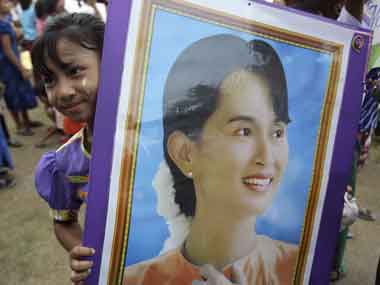
India prides itself as a multi-party democracy — the world’s largest, no less. That even as a low-income country we embraced universal suffrage and empowered every adult citizen with the right to vote also occasions much chest-thumping. In many ways, it was a unique experiment — and India’s uninterrupted record of democratic rule (except for two years in the 1970s) and peaceful changes of government has inspired a few countries around the world. But beneath the outer crust of being a democracy in its most elemental form, the Indian model is, truth to tell, rotting at the core, and is far less of an inspiration to democratising countries even in our neighbourhood. While a certain feisty rivalry perhaps marks the essence of any vibrant democracy, political parties in India have reduced this to a blood feud – quite literally. The recent episode involving a Kerala politician’s public admission of the manner in which his party cadres mowed down political opponents may have shocked us for the brazenness of the ‘confession’, but deep down we’ve always known that our politics abounds in maut ka saudagars. Even when it isn’t dripping blood, Indian democracy and politics is characterised by an excess of corruption – with everyone from MPs to ordinary citizens ready to sell their vote for money in a way that makes a mockery of democracy. The recent instances of brazen big-money corruption in high places, and our failure to build robust institutions to uphold good governance at every level, reflects poorly on the principle of accountability that underlies any democractic framework. [caption id=“attachment_329203” align=“alignleft” width=“380” caption=“Suu Kyi uses her platform to solicit ‘responsible’ investments into her country, and urges investors to abide by the highest governance standards.What a striking contrast to the situation back home. AP”]
 [/caption] And although we pride ourselves on our heritage of Gandhian non-violence, our confrontational politics today is overrun by violence of both action and words. Our ruling parties unabashedly unleash the intimidatory arms of the state on their political opponents, and the Opposition parties too in turn conduct themselves irresponsibly – with excessive parliamentary disruptions and by burning buses and intimidating people on Bharat Bandh days. On prime-time television, talking heads representing parties locked in political rivalry routinely resort to mutual mud-slinging that borders on venomous hatred for each other. In other words, even though India may nominally be the only long-standing democracy in a particularly rough neighbourhood where democracy stands little chance, it is a deeply flawed template that does not inspire anyone else in the neighbourhood. For instance, among pro-democracy activists in Myanmar, there is little enthusiasm about the Indian model of democracy.
The Hindustan Times reports
, quoting David Mathieson of Human Rights Watch that among Opposition leader Aung San Suu Kyi’s political followers, “there is surprisingly little mention of India.” A Yangon-based journalist too says, that in her interactions with Suu Kyi’s party, the National League for Democracy, “no one was against India but not one was for India either”. They just didn’t see India as a force for democratic change. Suu Kyi herself has in the past noted that she was saddened by India’s failure to support the pro-democracy movement in Myanmar and its excessive eagerness to accommodate the interests of the ruling military Generals (when she was being held under house arrest). In a bizarre sort of way, on the other hand, Myanmar’s experience of taking baby steps towards democracy — and the manner in which its rulers and the Opposition, who were at loggerheads until recently, conduct themselves today — may offer lessons for our constantly feuding netas, who appear to have forgotten the essence of democratic principles. Suu Kyi was in Bangkok earlier today — on her first visit abroad in 24 years, much of which she spent under house arrest. And at the invitation of the World Economic Forum, she made her first public speech since her release. Yet, she didn’t use the platform to make polemical points against Myanmar’s rulers — or about her own experience of long years in captivity. Instead, with statesman-like grace, she became a spokesperson for Myanmar, and made a strong pitch to investors to help Myanmar overcome its developmental challenges. In particular, she said, Myanmar needed investments that would create jobs. “Please don’t think about how much benefit will come to those who are investing,” she said. “I understand investors invest because they hope to profit from ventures — I agree with that — but our country must benefit as much as those who invest.” Equally forcefully, she told investors that they would be conducting themselves irresponsibly if they fed oligopolies in Myanmar. “Whatever investments, governmental agreements, whatever aid might be proposed, please make sure that this is transparent,” she said. “Otherwise we may find the benefits go to one particular group or one particular person even.” Here’s a woman who had been robbed of an election in 1990 — and had been kept under house arrest for much of 22 years. She could perhaps have been justified in nursing the kind of visceral hatred that we see back in India — even for the low-intensity political rivalry between our parties. Yet, she uses her platform to solicit ‘responsible’ investments into her country, and urges investors to abide by the highest governance standards and to use their investments as a leverage to push for the rule of law in Myanmar. What a striking contrast to the situation back home, where our netas — both in government and in opposition — carry on as if they are settling ancient blood feuds, with no consideration for doing what’s best for the country. In her own dainty way, Suu Kyi is offering a lesson in democracy to our rulers — on how to elevate governance — and to our Opposition parties — on how to conduct themselves responsibly and in the larger national interest.
[/caption] And although we pride ourselves on our heritage of Gandhian non-violence, our confrontational politics today is overrun by violence of both action and words. Our ruling parties unabashedly unleash the intimidatory arms of the state on their political opponents, and the Opposition parties too in turn conduct themselves irresponsibly – with excessive parliamentary disruptions and by burning buses and intimidating people on Bharat Bandh days. On prime-time television, talking heads representing parties locked in political rivalry routinely resort to mutual mud-slinging that borders on venomous hatred for each other. In other words, even though India may nominally be the only long-standing democracy in a particularly rough neighbourhood where democracy stands little chance, it is a deeply flawed template that does not inspire anyone else in the neighbourhood. For instance, among pro-democracy activists in Myanmar, there is little enthusiasm about the Indian model of democracy.
The Hindustan Times reports
, quoting David Mathieson of Human Rights Watch that among Opposition leader Aung San Suu Kyi’s political followers, “there is surprisingly little mention of India.” A Yangon-based journalist too says, that in her interactions with Suu Kyi’s party, the National League for Democracy, “no one was against India but not one was for India either”. They just didn’t see India as a force for democratic change. Suu Kyi herself has in the past noted that she was saddened by India’s failure to support the pro-democracy movement in Myanmar and its excessive eagerness to accommodate the interests of the ruling military Generals (when she was being held under house arrest). In a bizarre sort of way, on the other hand, Myanmar’s experience of taking baby steps towards democracy — and the manner in which its rulers and the Opposition, who were at loggerheads until recently, conduct themselves today — may offer lessons for our constantly feuding netas, who appear to have forgotten the essence of democratic principles. Suu Kyi was in Bangkok earlier today — on her first visit abroad in 24 years, much of which she spent under house arrest. And at the invitation of the World Economic Forum, she made her first public speech since her release. Yet, she didn’t use the platform to make polemical points against Myanmar’s rulers — or about her own experience of long years in captivity. Instead, with statesman-like grace, she became a spokesperson for Myanmar, and made a strong pitch to investors to help Myanmar overcome its developmental challenges. In particular, she said, Myanmar needed investments that would create jobs. “Please don’t think about how much benefit will come to those who are investing,” she said. “I understand investors invest because they hope to profit from ventures — I agree with that — but our country must benefit as much as those who invest.” Equally forcefully, she told investors that they would be conducting themselves irresponsibly if they fed oligopolies in Myanmar. “Whatever investments, governmental agreements, whatever aid might be proposed, please make sure that this is transparent,” she said. “Otherwise we may find the benefits go to one particular group or one particular person even.” Here’s a woman who had been robbed of an election in 1990 — and had been kept under house arrest for much of 22 years. She could perhaps have been justified in nursing the kind of visceral hatred that we see back in India — even for the low-intensity political rivalry between our parties. Yet, she uses her platform to solicit ‘responsible’ investments into her country, and urges investors to abide by the highest governance standards and to use their investments as a leverage to push for the rule of law in Myanmar. What a striking contrast to the situation back home, where our netas — both in government and in opposition — carry on as if they are settling ancient blood feuds, with no consideration for doing what’s best for the country. In her own dainty way, Suu Kyi is offering a lesson in democracy to our rulers — on how to elevate governance — and to our Opposition parties — on how to conduct themselves responsibly and in the larger national interest.
Venky Vembu attained his first Fifteen Minutes of Fame in 1984, on the threshold of his career, when paparazzi pictures of him with Maneka Gandhi were splashed in the world media under the mischievous tag ‘International Affairs’. But that’s a story he’s saving up for his memoirs… Over 25 years, Venky worked in The Indian Express, Frontline newsmagazine, Outlook Money and DNA, before joining FirstPost ahead of its launch. Additionally, he has been published, at various times, in, among other publications, The Times of India, Hindustan Times, Outlook, and Outlook Traveller.