Amid sporadic violence across districts protesting the proposed bifurcation of Andhra Pradesh and a power blackout that could get worse in some parts of Seemandhra, related sectors have taken a body blow too, causing losses to industry, untold inconvenience to citizens and rising prices for consumers. Sand prices in Hyderabad and in other large towns in Andhra Pradesh have hit the roof, leading to rising construction costs. Supplies from coastal Andhra have all but dried up in the past few days, after having already slowed over the past two months.
A Times of India report
quoted dealers as saying sand prices were up by about 50 per cent, from Rs 1,100 per tonne to Rs 1,600 per tonne. “In Hyderabad, at least 500 big to mid-sized projects have been affected due to the transport strike and the rising costs of raw materials,” the report said. With construction schedules and delivery deadlines to adhere to, most builders have preferred to absorb the additional cost, it said [caption id=“attachment_116201” align=“alignleft” width=“380”]
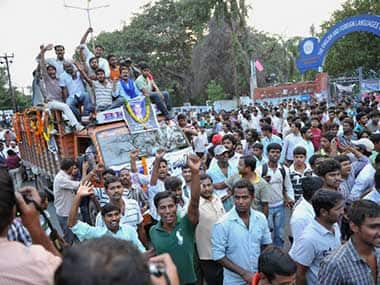 An earlier protest in Telangana. AFP[/caption] The direct impact on construction cost has been about an additional Rs 20 per sq ft, according to the report. Other reports said the state’s agricultural marketing department had taken a hit too – with the transport sector striking work and roads blocked in some parts of the state. Supply lines for vegetables and fruits were choked, leading to prices of essential commodities rising. Onions were sold at Rs 70 a kg in Hyderabad this week. Some parts of Seemandhra were hit by a serious fuel shortage too. While there were reports of a violent mob at a petrol pump in Guntur, in Anantapur district, with no power to operate fuel tanks at petrol pumps, there was no petrol or diesel at almost all reflling stations. This meant diesel-run generators, a staple for thousands of households, offices, hospitals, shops and other establishments, also lay defunct. Wherever there was fuel still available, long queues of panic-hit consumers waited to stock up. Even as fuel tankers made their way to the affected districts, a report in Hindu said black-marketing was rampant. “Cashing in the situation, some people continue to making hay by black-marketing the petrol and diesel. It is learnt that most of the hospitals bought diesel at Rs 100 per litre to sustain operations while motorists bought petrol at close to Rs 150 per litre. It is learnt that the situation further worsened with the employees of HPCL and IOC fuel stations at Guntakal going on a strike,” the report said. In addition to surgeries being called off in operation theatres hit by the blackout and neo0-natal wards’ incubators falling defunct, kidney patients on daily dialysis suffered too as government hospitals they visited regularly turned them away and reports of private clinics overcharging them emerged. According to a
report in the Times of India,
hospitals spending more on operating dialysis machines with diesel-run generators said they were helpless. One hospital was charging Rs 2,000 per sitting, twice the regular fee. The government-run Arogyasri insurance scheme was also of little use since private hospitals using diesel-run generators cited higher operating costs to hike fees for various treatment procedures including dialysis. Most patients on dialysis need a sitting every alternate day. “We hurriedly bought a 180 kv generator on rent of Rs 10,000 per day. We are spending nearly Rs 40,000 on fuel. It may not be possible to provide services for all patients as we have only eight dialysis units,” Dr Ramakrishna, a nephrologist at a private hospital told TOI.
An earlier protest in Telangana. AFP[/caption] The direct impact on construction cost has been about an additional Rs 20 per sq ft, according to the report. Other reports said the state’s agricultural marketing department had taken a hit too – with the transport sector striking work and roads blocked in some parts of the state. Supply lines for vegetables and fruits were choked, leading to prices of essential commodities rising. Onions were sold at Rs 70 a kg in Hyderabad this week. Some parts of Seemandhra were hit by a serious fuel shortage too. While there were reports of a violent mob at a petrol pump in Guntur, in Anantapur district, with no power to operate fuel tanks at petrol pumps, there was no petrol or diesel at almost all reflling stations. This meant diesel-run generators, a staple for thousands of households, offices, hospitals, shops and other establishments, also lay defunct. Wherever there was fuel still available, long queues of panic-hit consumers waited to stock up. Even as fuel tankers made their way to the affected districts, a report in Hindu said black-marketing was rampant. “Cashing in the situation, some people continue to making hay by black-marketing the petrol and diesel. It is learnt that most of the hospitals bought diesel at Rs 100 per litre to sustain operations while motorists bought petrol at close to Rs 150 per litre. It is learnt that the situation further worsened with the employees of HPCL and IOC fuel stations at Guntakal going on a strike,” the report said. In addition to surgeries being called off in operation theatres hit by the blackout and neo0-natal wards’ incubators falling defunct, kidney patients on daily dialysis suffered too as government hospitals they visited regularly turned them away and reports of private clinics overcharging them emerged. According to a
report in the Times of India,
hospitals spending more on operating dialysis machines with diesel-run generators said they were helpless. One hospital was charging Rs 2,000 per sitting, twice the regular fee. The government-run Arogyasri insurance scheme was also of little use since private hospitals using diesel-run generators cited higher operating costs to hike fees for various treatment procedures including dialysis. Most patients on dialysis need a sitting every alternate day. “We hurriedly bought a 180 kv generator on rent of Rs 10,000 per day. We are spending nearly Rs 40,000 on fuel. It may not be possible to provide services for all patients as we have only eight dialysis units,” Dr Ramakrishna, a nephrologist at a private hospital told TOI.
How the battle over Telangana has affected the citizens of AP
FP Staff
• October 9, 2013, 18:52:48 IST
Related sectors are bearing the brunt of the power industry strike in Seemandhra.
Advertisement
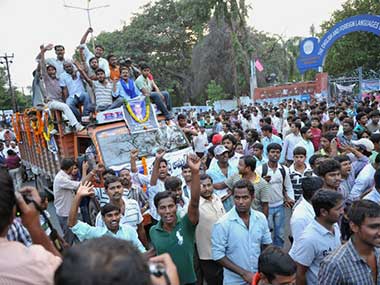 "How the battle over Telangana has affected the citizens of AP")
End of Article