Much of what Arvind Kejriwal revealed today is an aggregation of stories that were always in the public domain. But what he did differently was to weave a big theme - the corporate-political class nexus - and turned that into a nice package for popular consumption. Nobody minds that. This nexus has damaged the moral core of the principle of governance and there is no harm if the country is reminded of that repeatedly. Kejriwal leaves a lot of blank spaces in his narrative about the Reliance-government nexus. The issues he raises have been debated threadbare earlier in the government and media circles. There have been forceful arguments and counter-arguments on why the firm should charge more for the gas it produces from the Krishna-Godavari basin. As usual with such issues, there are no clear answers as yet. Such issues are never as black and white as Kejriwal would like his target audience to believe. [caption id=“attachment_510233” align=“alignleft” width=“380”]
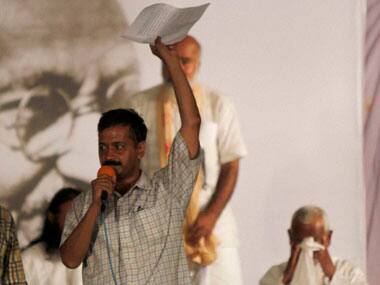 Kejriwal leaves a lot of blank spaces in his narrative about the Reliance-government nexus. Reuters[/caption] Reliance reduced and hoarded gas to create shortages and put pressure on the government, he said. The NDA government, which signed the initial agreement with the company, left it deliberately flawed to allow RIL to dictate the price at which it would sell gas to the government. “This is the first time a deal like this has been signed - that if costs go up, profits will also go up,” he added. The firm kept demanding more money per unit of gas - from $2.5 to $4.25 to $14.25 - and the government seemed willing to oblige, he alleged. The fault with Kejriwal and his colleagues is that they have a simplistic-legalistic understanding of the government’s decisions which call for a more nuanced appreciation of the circumstances and the prevailing dynamics, market and otherwise. But again, let’s not blame them too much for that. The nexus between corporate entities and political players is no secret - the recent controversy over BJP President Nitin Gadkari and Congress President Sonia Gandhi’s son-in-law Robert Vadra - are cases in point. It is only proper that it should be brought out of the silent cocoon of conspiracy in the power circles and thrown open to public discussion. Kejriwal exhuming a part of the Radia tapes, which recorded an alleged conversation between Ranjan Bhattacharya, foster son-in-law of former Prime Minister Atal Behari Vajpayee, and former corporate lobbyist Niira Radia, highlights the environment of connivance prevailing in the corridors of power and the convergence of interests among powerful players in all sectors. He had done that while exposing the DLF-Vadra land deals and the Gadkari-NCP cooperation. He said Reliance owner Mukesh Ambani was “running the country” and alleged that he was powerful and connected well enough to change ministers not conducive to his business interests. Jaipal Reddy was removed as petroleum minister in the last reshuffle as he refused to play ball with RIL and did not increase the cost of gas to $14.25 per unit of gas, Kejriwal alleged. Mani Shankar Aiyar had met a similar fate earlier for standing up to the company. “Who runs this government? The Tatas appoint the telecom minister, Reliance appoints the petroleum minister. Whether it’s the Congress or the the BJP, the decisions are taken by the corporates,” he said. As mentioned earlier, all his allegations fall in grey areas and cannot be proved easily but these need to be discussed for the sake of public awareness. The Radia tapes had brought into the open the shady role played by corporates in the selection of ministers and how politicians of all shades shamelessly worked at their behest. The role of the nexus became clearer in the 2G spectrum scam and the coal allocation scandal. It is important to keep discussing these issues since public memory is notoriously short and the nexuses have been benefitting from that for a long time. So let’s forgive Kejriwal if he is a bit short on hard facts and real proof. He is throwing the spotlight on the right issues.
Forget Kejriwal’s intent, it’s the issue he highlights that matters
Akshaya Mishra
• October 31, 2012, 20:17:28 IST
Kejriwal leaves a lot of blank spaces in his narrative of the Reliance-government nexus.
Advertisement
 "Forget Kejriwal’s intent, it’s the issue he highlights that matters")
End of Article