

 "Collapse of SP-BSP alliance signals end of Mandal politics; Opposition must reimagine its approach to counter BJP")
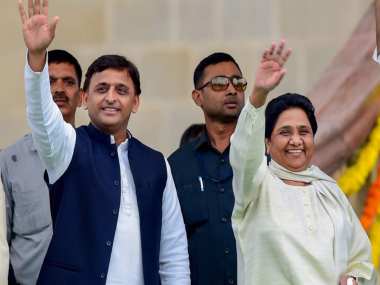
Mayawati’s decision to walk out of gathbandhan (for now) is probably the best thing to have happened in Indian politics. The statement needs context. The so-called grand alliance between arch-rivals Samajwadi Party and Bahujan Samaj Party was billed as the final bulwark against another saffron sweep in Uttar Pradesh. Leaders such as Mayawati, Akhilesh Yadav and even Mamata Banerjee in the east were hopeful that these rigid caste-based polarisations will trump BJP’s attempts at larger consolidation of Hindu votes and stall the Narendra Modi juggernaut in its tracks. [caption id=“attachment_5879771” align=“alignleft” width=“380”] File image of Akhilesh Yadav and Mayawati. PTI[/caption] Their expectations were not unfounded. The role of ‘Mandal’ politics in thwarting a unification of Hindu identity along religious lines has been stellar and well-documented since the early 1990s. It is widely accepted that the BJP had been unsuccessful in engineering a larger Hindu identity despite its attempts in using the Ram Janmabhoomi movement as an emotive issue to bridge the caste divide only because caste identity-based politics proved an insurmountable obstacle in its path. And how did this politics of ‘social justice’ manage to successfully thwart a larger Hindu consolidation based on a Hindu grievance narrative (that was) stitched on the motif of the Babri Masjid demolition? One answer could be that regional caste-based parties such as SP, BSP or Lalu Prasad Yadav’s RJD tapped into the need for social justice among lower castes who were only now coming to terms with the empowerment that democracy brings.
The clamour for social justice, redistribution of power and demand for equality and respect among the most backward castes in India found expression through these parties that promised representation of their grievances and demanded loyalty in return. In real terms, these regional political outfits were riding piggyback on movements for social justice. This was a cast-iron rule in Indian politics from the late 1980s through to the new millennium and even a decade into the 21st Century.
The problem started when leaders such as Mulayam Singh Yadav, his son Akhilesh, Mayawati and Lalu began treating the electorate as their captive vote banks. Social justice politics and caste-based alliances were going to work as long as their “captive vote banks” stayed loyal to them. This loyalty, which was a reality for over two decades since the early 1990s, was taken for granted. The power of the Mulayams or Mayawatis to challenge the unification of larger Hindu identity and thwart BJP’s rise depended on their ability to commandeer these monolithic vote banks and transfer them when need arose for alliances based on identity politics. The SP, BSP and other caste-based outfits did that successfully for a while — their iron grip over regional politics is a testimony of that. In Uttar Pradesh, for instance, power interchanged between SP and the BSP till Modi arrived an changed the equation. But Modi, as I have noted in an earlier piece , had also benefitted from being at the right place at the right time. The churn against politics of caste that signified the ‘Mandal’ era had started well before Modi came into the national picture, and the churn was caused as much by extraneous circumstances as the hubris of the regional chieftains. If the economic liberalisation of the 1990s brought to the fore a neo middle class and pulled out more and more people from poverty, it saw a simultaneous, inevitable clamour for social mobility among the lowest castes who, despite the apparent dominance of Mandal politics, remained disempowered and subjugated.
Where Mandal politics failed was that instead of being truly representative and acting as the vehicle for empowerment of the subalterns, it created a creamy layer and reflected a microcosm of the very structure that oppressed the socially deprived for decades.
As professor Prashant Trivedi of Giri Institute of Development Studies is quoted, as
saying in a News18 article, “The (Mandal) politics started with the aim of social justice of castes. It gradually turned into identity politics and finally reached a point where it will be more convenient to see them as pressure groups of certain sub-castes…. This moral degradation gradually led to a situation where a large section of these socially deprived felt left behind. And, in turn, these castes left behind gradually moved towards the BJP against the perceived hegemony of the certain sub-castes, such as the Yadavs among the OBCs and the Jatavs among the Dalits.” To BJP’s credit, in Modi and Amit Shah, the party had two leaders who had foreseen this shift in “captive vote banks” ahead of their peers. Analysts, commentators and pollsters may have noticed it too, but often confirmation bias interferes with analysis and makes neutral assessment difficult. [caption id=“attachment_6409851” align=“alignright” width=“380”] File image of Narendra Modi and Amit Shah. PTI[/caption] In numerous interviews before the Lok Sabha elections, Shah had pointed out that BJP’s fortunes in Uttar Pradesh won’t take a dip despite the potentially game-changing ‘caste-and-community-based’ alliance between SP and BSP because voters have become more empowered and have developed an agency on their own. In one such interview,
published in LiveMint, Shah had said, “Most… analysts in the country, including journalists, are living with the mindset of the 1980s. That era where two leaders sitting in an air-conditioned room in Delhi shake hands then all the voters would line up behind them. Voters decide on their own. In Uttar Pradesh, you can see for yourself (when the results come) that the BJP is fighting for 50 percent vote share. So we will return an improved performance in UP too.”
As it happened, the BJP may have seen a marginal dip in its seat count but managed to increase its vote share. Along with ally Apna Dal, the BJP bagged 64 out of 80 seats in Uttar Pradesh (down from 73 in 2014) but its vote share rose from 42.3 percent to nearly 50 per cent (49.6 percent) in 2019. Shah wasn’t far from truth.
When one political party wins around 50 per cent of popular votes, then rival alliance formulations become meaningless. The collapse of the SP-BSP alliance, therefore, may signify that India has finally reached a post Mandal-Kamandal era where a combination of various factors — including urbanisation, progress of technology, low price of Internet data, aspirational social groups, Modi’s personal appeal and his success in ensuring last-mile delivery of welfare schemes targeted at the poor — has upended the caste hierarchies and disempowered the regional chieftains such as a Mayawati who had nothing to offer except reliance on caste alliances. As Ashoka University vice-chancellor Pratap Bhanu Mehta told The New Yorker magazine in an interview, “One hope was that a lot of caste-based parties or region-based parties will never let a consolidated Hindu majoritarianism emerge. I think one of the striking things about this result is how it completely throws that hope out with the bathwater. It is very clear that the salience of traditional ways of thinking about caste are declining, and it is allowing the BJP to mobilise a fairly wide cross-section of Indians across different castes into a larger Hindu narrative.” This is good news for Indian politics because it will force the Opposition to abandon its two-decade old social arithmetic, compel it to come to terms with new realities and reimagine its politics. The sooner politicians stop treating people as “monolithic vote banks” the better. Democracy deserves a strong Opposition. That may become a possibility only when BJP‘s rivals internalise the truth that their lazy ideations based on identity politics are no longer working.

 "Israel targets top Hamas leaders in Doha; Qatar, Iran condemn strike as violation of sovereignty")
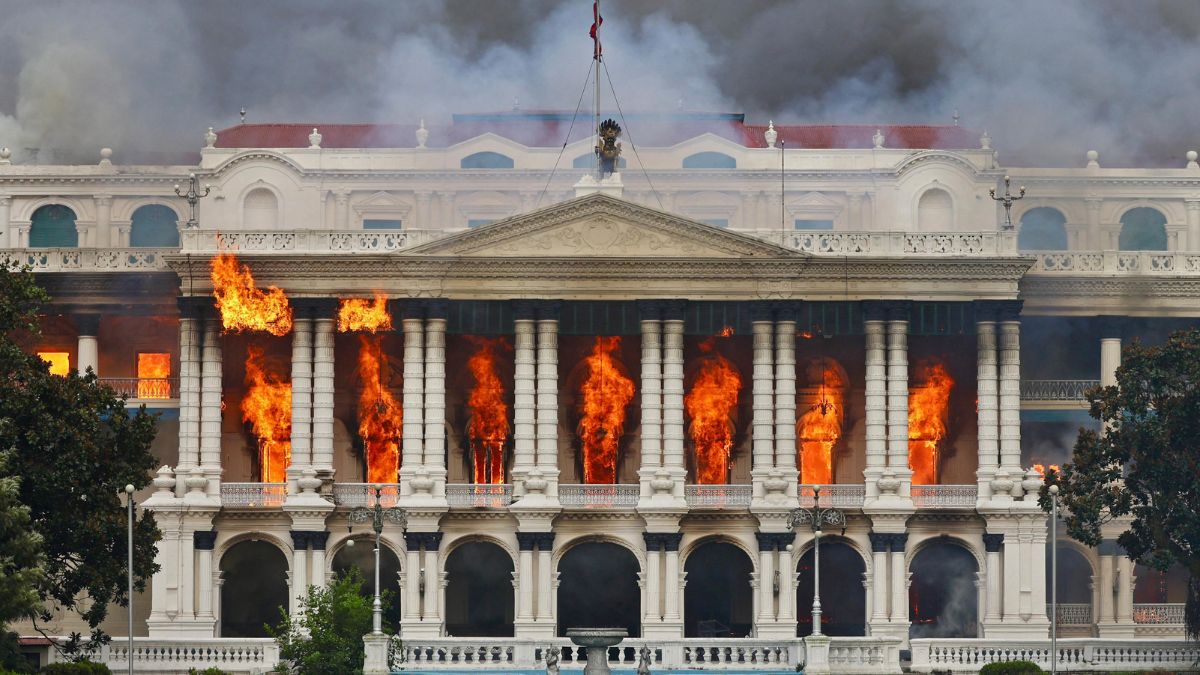 "Nepal: Oli to continue until new PM is sworn in, nation on edge as all branches of govt torched")
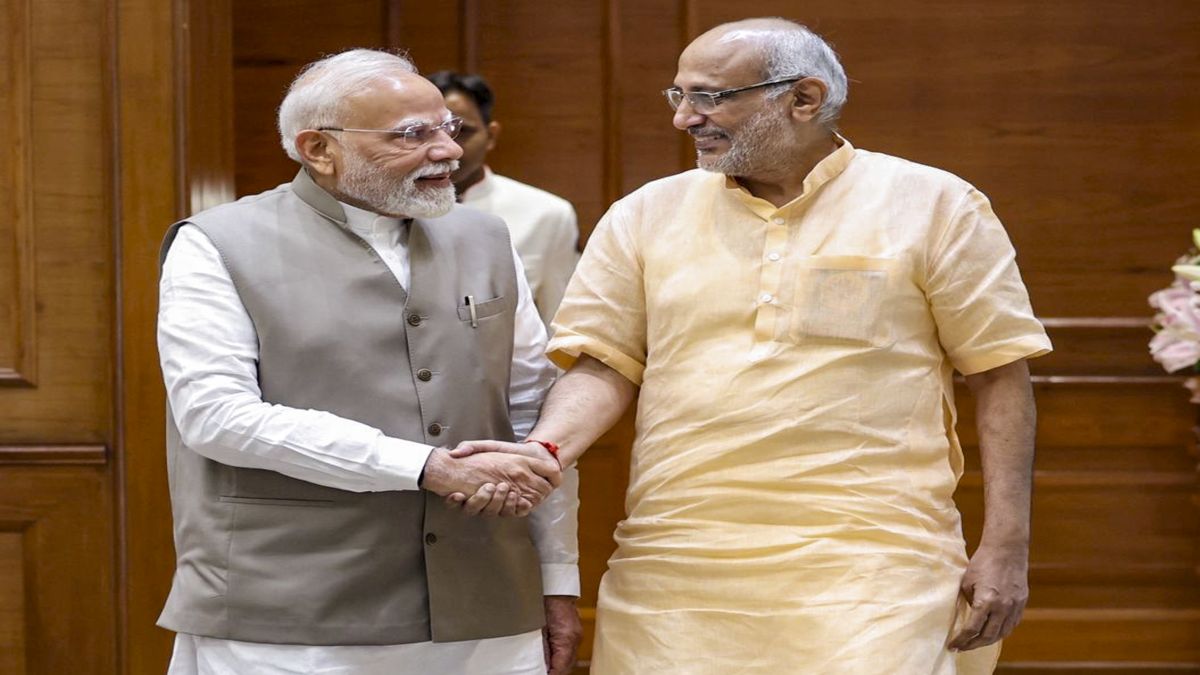 "Who is CP Radhakrishnan, India's next vice-president?")
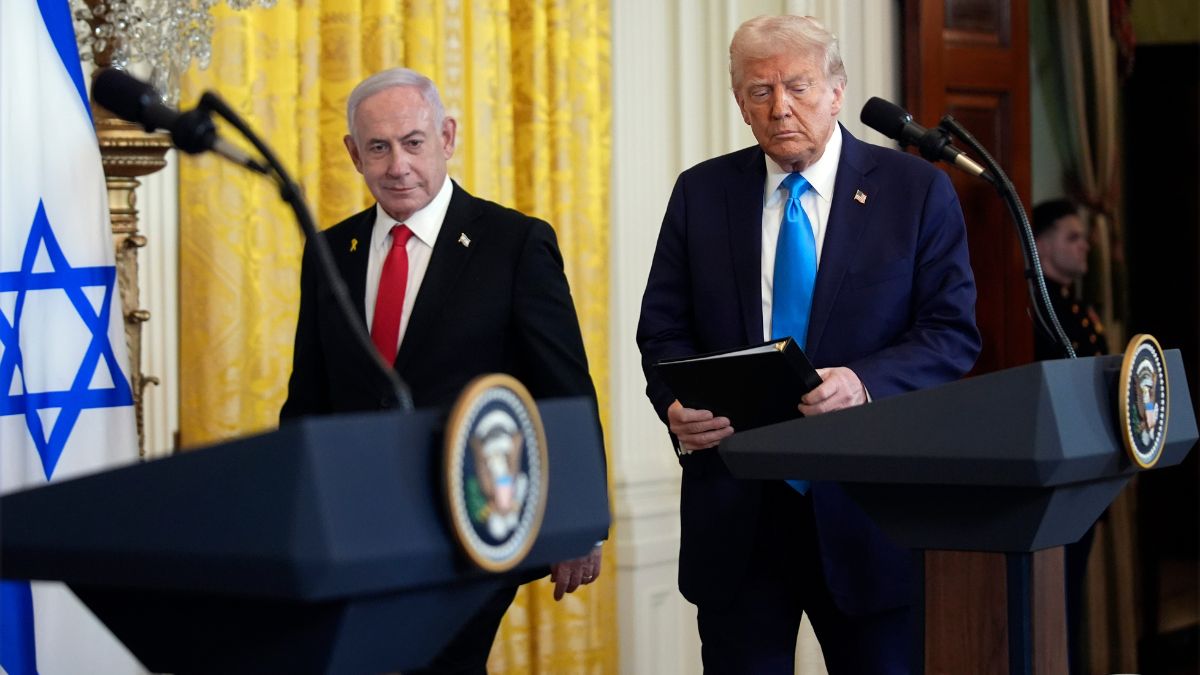 "Israel informed US ahead of strikes on Hamas leaders in Doha, says White House")
 "Israel targets top Hamas leaders in Doha; Qatar, Iran condemn strike as violation of sovereignty")
 "Nepal: Oli to continue until new PM is sworn in, nation on edge as all branches of govt torched")
 "Who is CP Radhakrishnan, India's next vice-president?")
 "Israel informed US ahead of strikes on Hamas leaders in Doha, says White House")



