Narendra Modi led the BJP to a stunning 282 seats in the Lok Sabha elections — the strongest showing by a political party in India since 1984. Together with its allies in the NDA, the BJP won more than 330 seats, which means that it will need no post-poll allies to form a stable government. The White House welcomed the overwhelming victory of Narendra Modi and BJP, offering its congratulations to the BJP on its “historic” win and assuring, “We look forward to working with [the new Indian government] once formed to advance our partnership.” [caption id=“attachment_1528761” align=“alignleft” width=“380”]
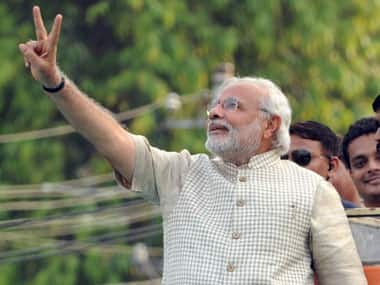 Narendra Modi after addressing the crowd in Vadodara. AFP[/caption] Many other world leaders, including Israel’s Benjamin Netanyahu and Australia’s Tony Abbott reportedly called Modi to personally congratulate him as well. Make no mistake, this was a world event. Modi’s triumph has been greeted with a mixture of awe, fear and excitement in the foreign media. It was the top story on many websites — highlighting just how big the elections were. They weren’t exactly sure of what the future holds for India — or conversely, what India’s future means for them. The Guardian
wrote about how through ’the sheer aggression of the BJP campaign, the threats to the Election Commission – Modi made sure India felt his presence.’ The article further added: “The BJP’s economic programme for India has thus far been short of specifics. But if the experience of Modi’s rule in Gujarat is anything to go by, it will involve crony capitalism that promotes and incentivises big business through all sorts of explicit and implicit subsidies, keeping wages low and suppressing any workers’ action, repression of popular movements and cracking down on dissent. The human costs of this kind of growth are enormous, as are the human costs of achieving communal ‘peace’ through fear.”
The New York Times’s Ellen Barry
wrote about how India’s young voters were unmoved by the decade-old history of the Gujarat riots. “Mr. Modi seemed to benefit from changes in the electorate. Nearly 100 million new voters were registered ahead of this vote, including a vast influx of young people, and turnout broke all previous records, hitting 66.4 percent,” said the article. “Compared with their elders, these young voters were unmoved by the decade-old history of the Gujarat riots, which had prompted many Western governments, including the United States, to impose visa bans on Mr. Modi. They also proved far less emotionally bound to the Nehru-Gandhi dynasty, which has served as the backbone of the Congress party since India won its independence, surviving the wrenching assassinations of two of its members.” The Washington Post
mulled the economic challenges that Modi faces. “On the stump, Modi promised a new India, with an efficient government free of corruption. He pledged to build bullet trains, hydroelectric power plants, manufacturing hubs and dozens of cities, enabling India to rival China, the economic powerhouse next door. A lover of technology, Modi even addressed several rallies as a holographic image. But critics and supporters alike say the state leader dubbed “Development Man” may face challenges implementing his agenda nationwide,” said the article. Meanwhile, the BBC
website pondered whether this India election shattered old orthodoxies. “Some argue, Narendra Modi was able to able to attract votes cutting across caste, class and gender lines, leading to what is turning out to be a sensational win for his BJP. The party has also succeeded in picking up both urban and rural votes at a time when parties like the outgoing Congress maintained that the key to power in Delhi mainly depended on the rural vote. BJP spokesperson Nirmala Sitharaman says she would like to believe that the results had “destroyed established paradigms of Indian politics” and changed the way we look at Indian politics.” The
CNN website
, on the other hand, wrote about the ‘Hindu nationalist Modi’ and the change he will bring. “Analysts predict his arrival in India’s top office will bring a marked change in direction for the world’s most populous democracy, a nation whose modern character has been defined by the defeated Indian National Congress Party, which has been dominant since the country’s independence in 1947.”
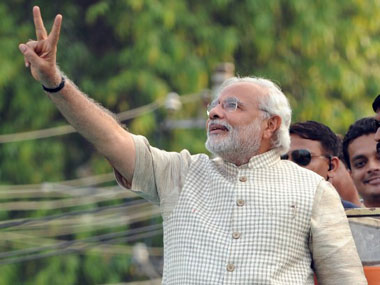
Narendra Modi after addressing the crowd in Vadodara. AFP[/caption] Many other world leaders, including Israel’s Benjamin Netanyahu and Australia’s Tony Abbott reportedly called Modi to personally congratulate him as well. Make no mistake, this was a world event. Modi’s triumph has been greeted with a mixture of awe, fear and excitement in the foreign media. It was the top story on many websites — highlighting just how big the elections were. They weren’t exactly sure of what the future holds for India — or conversely, what India’s future means for them. The Guardian
wrote about how through ’the sheer aggression of the BJP campaign, the threats to the Election Commission – Modi made sure India felt his presence.’ The article further added: “The BJP’s economic programme for India has thus far been short of specifics. But if the experience of Modi’s rule in Gujarat is anything to go by, it will involve crony capitalism that promotes and incentivises big business through all sorts of explicit and implicit subsidies, keeping wages low and suppressing any workers’ action, repression of popular movements and cracking down on dissent. The human costs of this kind of growth are enormous, as are the human costs of achieving communal ‘peace’ through fear.”
The New York Times’s Ellen Barry
wrote about how India’s young voters were unmoved by the decade-old history of the Gujarat riots. “Mr. Modi seemed to benefit from changes in the electorate. Nearly 100 million new voters were registered ahead of this vote, including a vast influx of young people, and turnout broke all previous records, hitting 66.4 percent,” said the article. “Compared with their elders, these young voters were unmoved by the decade-old history of the Gujarat riots, which had prompted many Western governments, including the United States, to impose visa bans on Mr. Modi. They also proved far less emotionally bound to the Nehru-Gandhi dynasty, which has served as the backbone of the Congress party since India won its independence, surviving the wrenching assassinations of two of its members.” The Washington Post
mulled the economic challenges that Modi faces. “On the stump, Modi promised a new India, with an efficient government free of corruption. He pledged to build bullet trains, hydroelectric power plants, manufacturing hubs and dozens of cities, enabling India to rival China, the economic powerhouse next door. A lover of technology, Modi even addressed several rallies as a holographic image. But critics and supporters alike say the state leader dubbed “Development Man” may face challenges implementing his agenda nationwide,” said the article. Meanwhile, the BBC
website pondered whether this India election shattered old orthodoxies. “Some argue, Narendra Modi was able to able to attract votes cutting across caste, class and gender lines, leading to what is turning out to be a sensational win for his BJP. The party has also succeeded in picking up both urban and rural votes at a time when parties like the outgoing Congress maintained that the key to power in Delhi mainly depended on the rural vote. BJP spokesperson Nirmala Sitharaman says she would like to believe that the results had “destroyed established paradigms of Indian politics” and changed the way we look at Indian politics.” The
CNN website
, on the other hand, wrote about the ‘Hindu nationalist Modi’ and the change he will bring. “Analysts predict his arrival in India’s top office will bring a marked change in direction for the world’s most populous democracy, a nation whose modern character has been defined by the defeated Indian National Congress Party, which has been dominant since the country’s independence in 1947.”
Awe, fear, excitement: How world reacted to Modi's triumph
FP Staff
• May 17, 2014, 09:44:31 IST
Modi’s triumph has been greeted with a mixture of awe, fear and excitement in the foreign media. It was the top story on many websites — highlighting just how big the elections were. They weren’t exactly sure of what the future holds for India — or conversely, what India’s future means for them.
Advertisement
 "Awe, fear, excitement: How world reacted to Modi's triumph")
End of Article