 "Why US intervention in Iran would be a mistake")
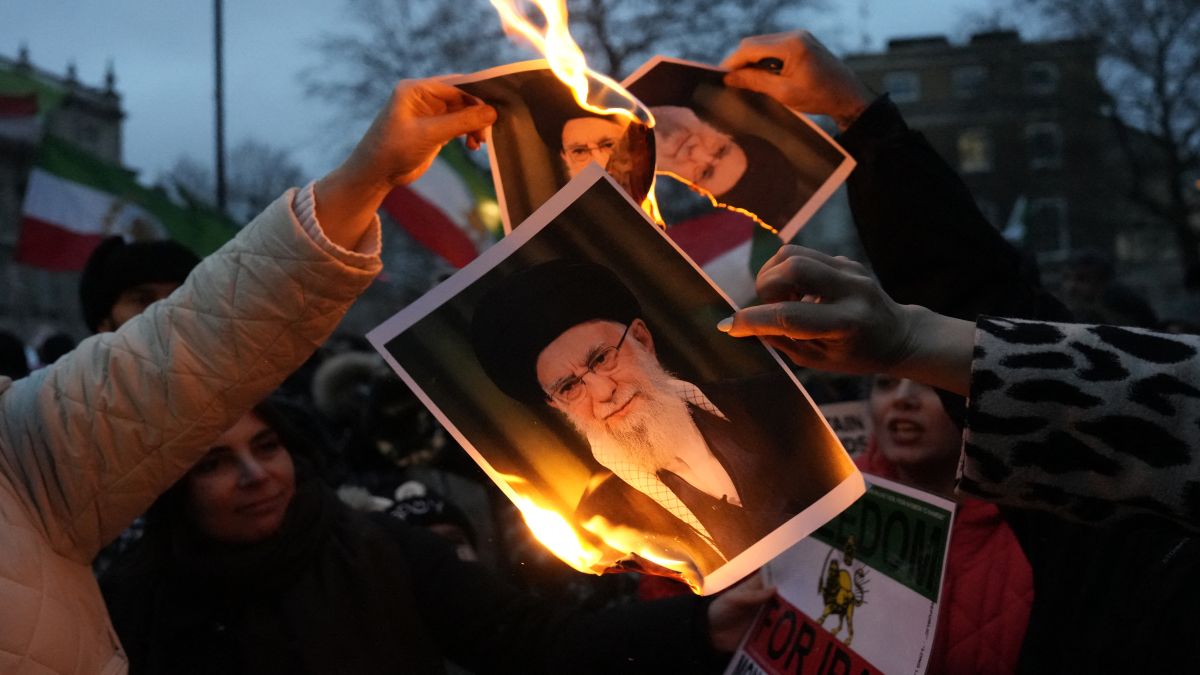
Running into their Golden Jubilee might be a difficult proposition for the Islamic regime of Iran led by the Ayatollahs, as the recent protests have averted. No doubt there has been a genuine domestic problem, mainly socio-economic, feeding into political discontent, but equally and even more important have been the external factors, influences and interests which have compounded the crisis.
The crippling Western sanctions for decades have deteriorated the economic situation with spiralling prices and prohibitive cost of living and steep devaluation of the local currency. Proposed high taxes further dent the purchasing power of ordinary citizens. The Pezeshkian government acknowledged, accepted and acted to address the highly delicate and difficult economic situation.
It is not easy to put the genie back into the bottle in record time. Economic reforms and measures take time to percolate. But Iranians are losing patience and are disenchanted with mismanagement, alleged corruption and elite privileges shrouded in religious dogmas, and hence the regime itself has become the target.
Iran has a high level of educated youth whose aspirations are bold and natural. They expect things done yesterday or at least universally don’t subscribe to the status quo, especially when the writing of despondency is written on the wall in bold letters.
Social media, with its informational and disinformation warfare, creates greater confusion and potential for conflict with the state and its institutions. This further gets vitiated by the geopolitical designs of the rival powers, which work overtime to indulge in a regime change agenda by fomenting more trouble and challenges to the extant regime.
When I looked at the recent protests in Iran due to the severe economic stress and exceptional disinformation campaign by the US and its allies and overt statements supporting protesters and threatening the Islamic regime against any precipitate action, I was reminded of the playbook in Libya, which is still suffering the consequences of the doctrine of ‘Responsibility to Protect’ ‘R2P’ invoked by the West against Gaddafi to undertake the military action to pursue their regime change agenda, which has been validated again and again in the last 15 years.
Quick Reads
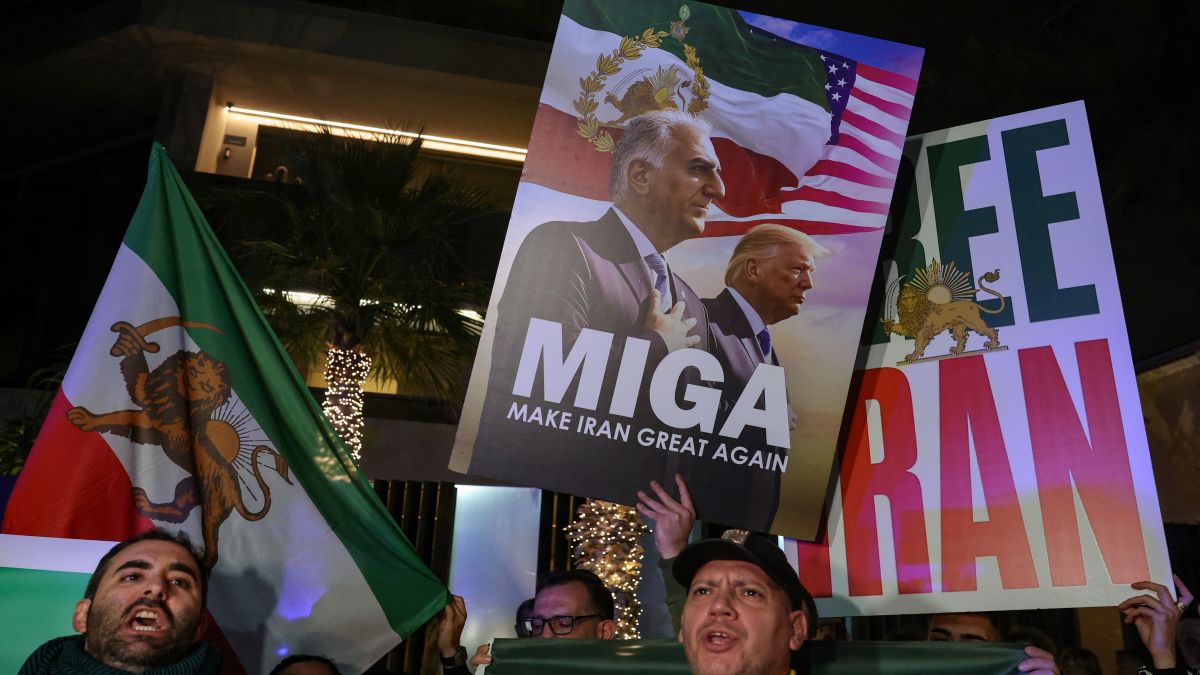
View AllThere is no plan for the day after. The disgruntled Iranian diaspora and media organisations joined the Western chorus against the conservative Islamic regime as US President Donald Trump promised that ‘Help is on the way,’ as if by bombing Iran from 30,000 feet they can effect any credible change except causing more mayhem and destruction.
Iranians understand it, as they have many examples of failed and disrupted states before them, from Iraq and Syria to Lebanon, Libya, Sudan and Yemen. They do understand the pitfalls of the foreign intervention and its aftermath.
Secondly, as long as the Iranian Revolutionary Guards (IRGC), Basij Army (Artesh) and Police (Faraja) stand behind the regime with a significant population not wanting utter chaos and destabilisation, the regime will be able to coast through. But excessive violence against people and hanging the protesters will surely be a recipe for disaster and further coagulation of opposition and the Iranian street against the regime, let alone give the pretext for foreign intervention.
In any case, after these unprecedented events in the past two weeks, the regime would be thinking of some critical changes, as continued hostility with the West may be directly proportional to trouble at home. Some way to narrow the differences between the US and Europe and a reduction in the intensity of Mutually Assured Destruction (Mad) syndrome between Iran and Israel will be necessary.
Changes in the governance architecture and redistribution of powers between clergy and the other institutions, along with policy reforms, might appease the people, lest this frustration get reignited yet again in the not-too-distant future.
President Trump led a certain section of the protesters to the garden path, knowing too well that any excessive action, as surmised by most, was not tenable. Pressure and crisis were maintained with more sanctions, which will further hit the ordinary Iranians resorting to the ‘revolt by starvation’ tactic. Often such stunts fail in civilisational states or have little success. There was no crystallised opposition or a viable leader or cracks in the ranks of the security outfit in Iran.
Even Trump did not appear to approve of their own guy – the exiled Shah’s son, Reza Pahlavi. Locally in Iran, the jury is still out on him. Trump may have delayed strikes, or it may be a ruse for strategic reasons, but results will only be bad if any foreign intervention occurs.
This time round Iranians made it clear to their Arab brethren that if Iran is attacked, the US bases in any country in the region would be a fair target. Hence, Saudi Arabia, Qatar, Oman, Pakistan and Turkey, some of whom are Nato/non-Nato, etc, told the US in no uncertain terms that they will not allow their airspaces to be used against Iran. Indeed a difference from the past. The largest US airbase, Al Udeid, near Doha, which was hit by Iran in June 2025, was vacated. Reports, however, indicate that the US is again redeploying its strike carriers and other assets in the region.
Russia and China have also upped the ante by providing arms and equipment, including beefing up their air defences, to Iran, while directly confronting and advising the US against another misadventure since this will destabilise the whole region and disrupt the supply chains and maritime trade given the control of the Strait of Hormuz and the Red Sea by Iran and the Houthis.
Russian President Vladimir Putin has also been speaking to Prime Minister Benjamin Netanyahu and Iranian leaders and offered to mediate and apparently sought an understanding on no first strike by either on the other. But it will be a miracle to sustain such flimsy understandings for long, if at all.
India and Iran relations have been growing despite the Caatsa and other limitations. New Trump tariffs of 25 per cent on trading with Iran are yet another nuisance. India had recommitted to Chabahar port (sanction waiver until April 2026) as well as the INSTC (International North-South Transport Corridor), also in view of improving strategic ties with Afghanistan and outreach to Central Asia. Hopefully, momentum under pressure will not be compromised; otherwise, the implications could be far-reaching in times to come.
Diplomacy is on a high as Indian Minister of External Affairs S Jaishankar conferred with his Iranian and US counterparts, seeking and hoping for the calm to return. Instability and insecurity in Iran or West Asia can have serious implications for India’s energy security, maritime trade and diaspora welfare. But peace and chances of stability remain fungible.
(The author is the former Indian Ambassador to Jordan, Libya and Malta and is currently a Distinguished Fellow with Vivekananda International Foundation. Views expressed in the above piece are personal and solely those of the author. They do not necessarily reflect Firstpost’s views.)

 "Iran protests revive the 2011 Arab Spring question: Does regime change improve livelihoods?")
 "The Nobel meet: Trump gets the medal not honour, Machado has the title not power")
 "Trump appoints Rubio, Kushner & 'contentious' Blair to Gaza ‘board of peace’")
 "Trump officials warn that Canada will regret EV deal with China, blocking vehicles from entering US")
 "Iran protests revive the 2011 Arab Spring question: Does regime change improve livelihoods?")
 "The Nobel meet: Trump gets the medal not honour, Machado has the title not power")
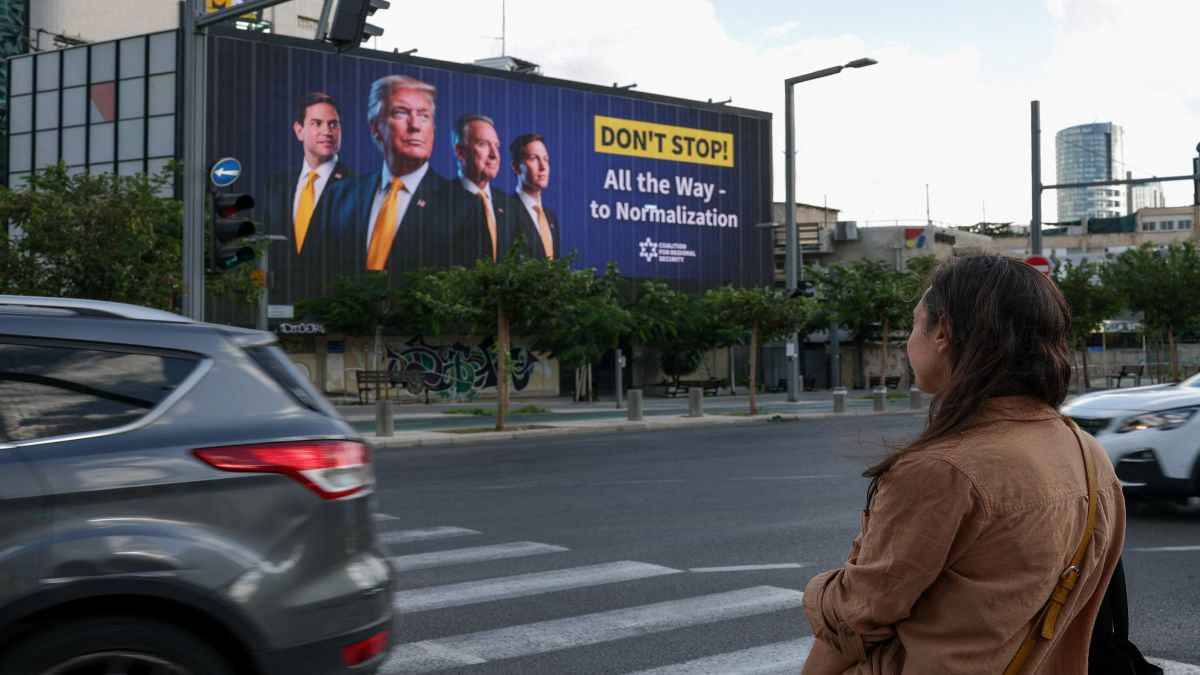 "Trump appoints Rubio, Kushner & 'contentious' Blair to Gaza ‘board of peace’")
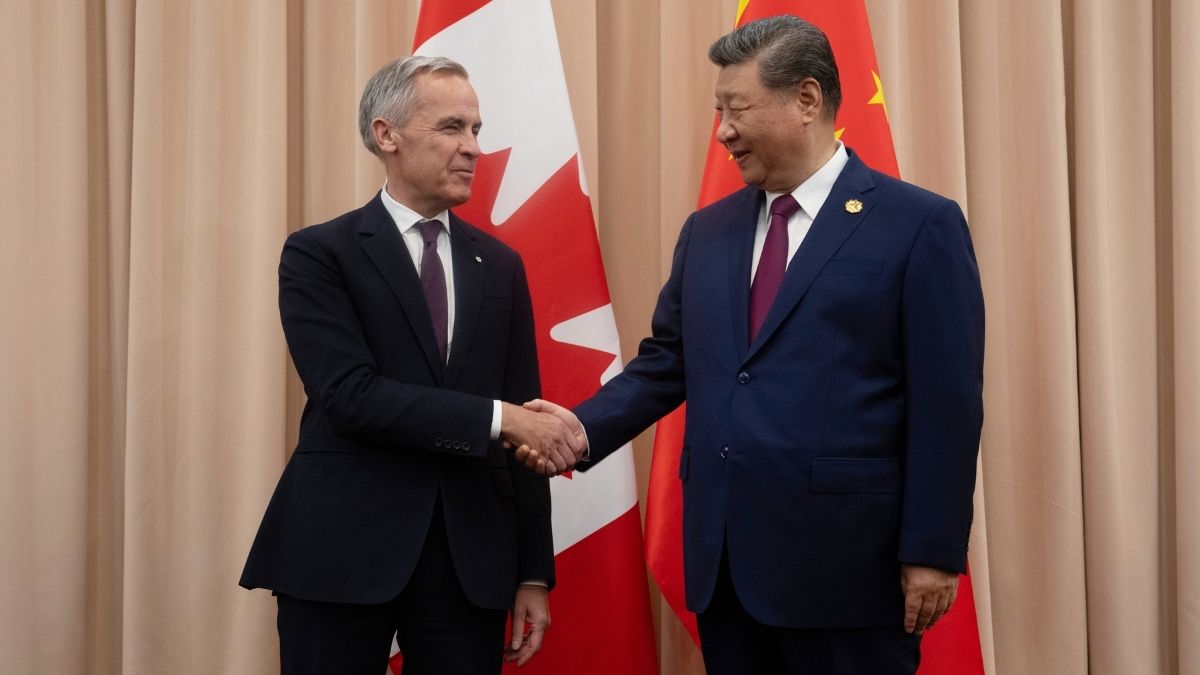 "Trump officials warn that Canada will regret EV deal with China, blocking vehicles from entering US")