"The Greenland shock: How Trump’s tariff threat to European allies rewrite the logic of alliance partner")
US President Donald Trump’s decision to threaten tariffs on eight European allies unless they acquiesce to the sale of Greenland represents a structural shift in how economic power is exercised within alliances. For Europe, and for other US allies watching closely, the episode clarifies a hard truth: trade agreements with Washington no longer function as stabilising commitments when tariffs can be imposed at will for non-trade objectives.
For Europe, the central implication is the collapse of the commitment function of trade agreements. In standard models of trade cooperation, agreements mitigate a time-inconsistency problem by binding governments ex ante, reducing policy uncertainty and stabilising expectations. Even when enforcement is weak, reputation, reciprocity, and institutional constraints sustain cooperation. The Greenland episode demonstrates that these mechanisms fail once a hegemon retains unilateral, discretionary tariff authority.
First, the episode shows that trade concessions do not purchase insulation from coercion. The EU-US trade arrangement concluded last year (already asymmetric) was justified as a stability-preserving equilibrium: Europe accepted higher residual tariffs in exchange for predictability. That equilibrium has broken down. Tariff caps proved non-binding, ratification politically untenable, and implementation reversible. In expected-value terms, the agreement ceased to function as a contract and reverted to a revocable political understanding.
Second, the episode destroys issue separability, a necessary condition for trade agreements to remain self-enforcing. Tariffs were imposed not in response to trade behaviour, but to punish security coordination and sovereign refusal. Once market access becomes conditional on compliance across unrelated domains, trade agreements are no longer incomplete contracts sustained by reciprocity; they become generalised leverage instruments.
Third, Europe confronts a severe institutional asymmetry. The US executive can re-price market access instantaneously; Europe must respond through collective decision-making, parliamentary consent, and legal thresholds. This asymmetry sharply lowers the credibility of any future trade bargain whose enforcement depends on US restraint rather than mutual constraint.
Quick Reads
View AllIf Europe treats this episode as episodic misbehaviour rather than a regime shift, it will misdiagnose the problem. The response must therefore be structural.
One, reclassify US trade commitments as contingent, not binding. Europe should explicitly internalise discretionary tariff risk in its trade strategy. Agreements with the US should be treated as politically contingent arrangements, not as stability-anchoring contracts. Freezing ratification and implementation is analytically consistent with this reassessment.
Two, activate deterrence, not appeasement, via the Anti-Coercion Instrument. The Anti-Coercion Instrument was designed for precisely this class of behaviour: trade measures used to influence sovereign policy choices. Failure to operationalise it would render the instrument non-credible and invite further coercion. Deterrence becomes the dominant equilibrium strategy.
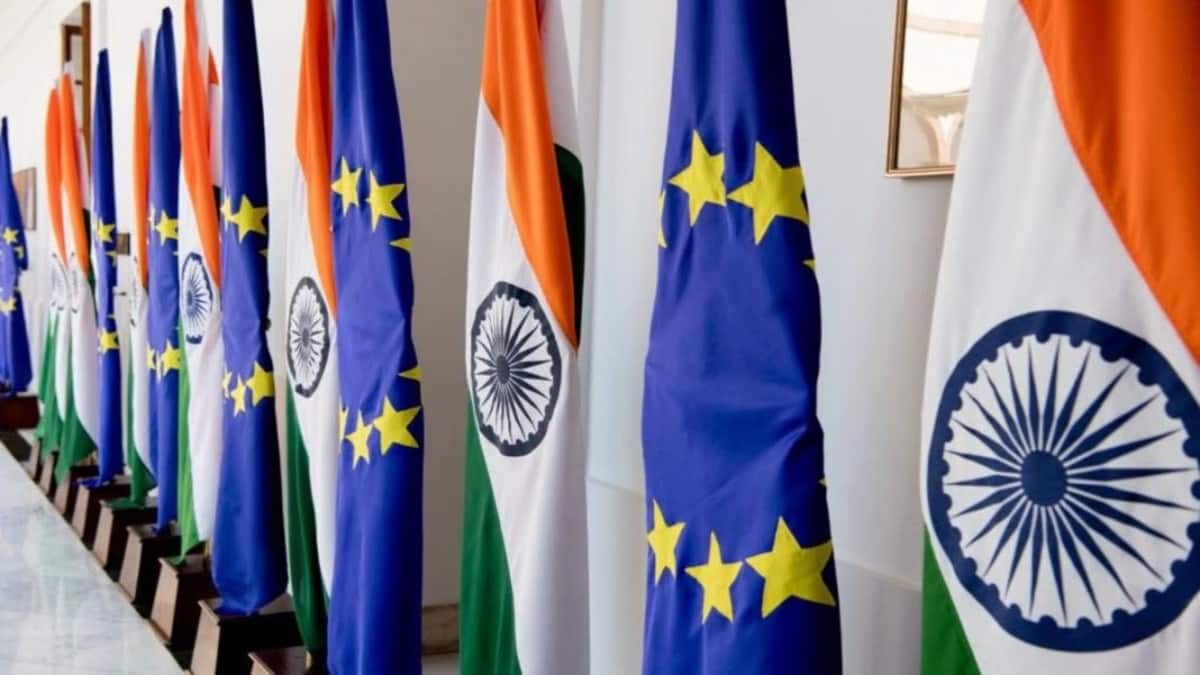
Three, reduce exposure to discretionary tariff risk through diversification. Europe must accelerate geographic and sectoral diversification, not on efficiency grounds but on policy-risk-minimisation grounds. Under discretionary tariff regimes, concentration in the US market carries a geopolitical risk premium that firms will increasingly price in. The European Union and Mercosur signed a major trade deal after 25 years of negotiations. The EU is also about to sign a trade deal with India.
Four, integrate trade retaliation into alliance governance. Once tariffs are used to discipline alliance behaviour, trade disputes can no longer be treated as bilateral commercial issues. Europe should embed trade retaliation logic within broader alliance coordination, raising the systemic cost of unilateral economic coercion.
Five, redesign future trade agreements to internalise non-trade retaliation risk. Future agreements must assume the possibility of politically motivated tariff suspension. This implies built-in suspension clauses, automatic retaliation triggers, and recognition that trade peace is no longer the default equilibrium.
For other US allies, the Greenland episode carries three theoretical implications.
First, it demonstrates that alignment does not guarantee policy predictability. Even close allies face tariff risk unrelated to trade conduct. This undermines the insurance value of preferential trade agreements and weakens their investment-anchoring role.
Second, it transforms trade agreements from commitment devices into options held by the hegemon. When one party retains unilateral exit without penalty, the agreement no longer constrains behaviour and cannot support cooperative equilibria.
Third, it accelerates hedging behaviour. Allies will increasingly treat US market access as structurally unstable, prompting diversification of supply chains, regional trade agreements, and reduced reliance on US-centric trade architecture.
At a systemic level, this alters alliance structure itself. When economic integration becomes conditional on political compliance, alliances drift from reciprocal cooperation towards hierarchical enforcement, sustained through economic leverage rather than shared rules.
The Greenland tariffs clarify a fundamental point: trade agreements derive value only insofar as they bind future policy choices. Once tariffs can be imposed at will for non-trade objectives, agreements lose their welfare-enhancing function. They neither reduce uncertainty nor stabilise expectations.
For Europe, and for US allies more broadly, the challenge is how to operate in an international system where discretionary economic power replaces contractual restraint. In such a system, trade policy ceases to be a domain of cooperation and becomes an instrument of statecraft—one that must be managed, deterred, and hedged against, rather than trusted.
(The author (X: @adityasinha004) writes on macroeconomic and geopolitical issues. Views expressed in the above piece are personal and solely those of the author. They do not necessarily reflect Firstpost’s views.)

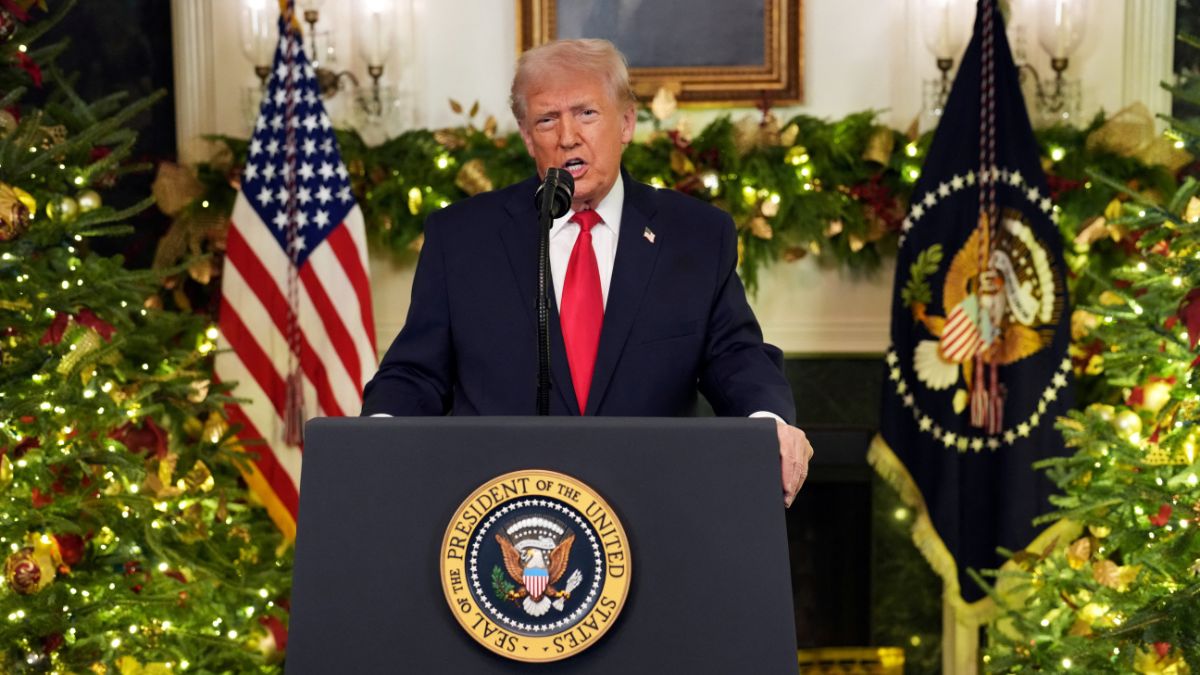 "Trump’s Greenland push could spell 'end of Nato', warns Eurasia Group's chief Ian Bremmer")
 "Watch | PM Modi welcomes UAE president, gifts him Indian artefacts including wooden swing, pashmina shawl & saffron")
 "A champion by choice, not chance: The quiet authority of Sadio Mane")
 "Afghanistan: Several killed in blast in Kabul's Shahr-e-Naw, one of city’s most secure areas")
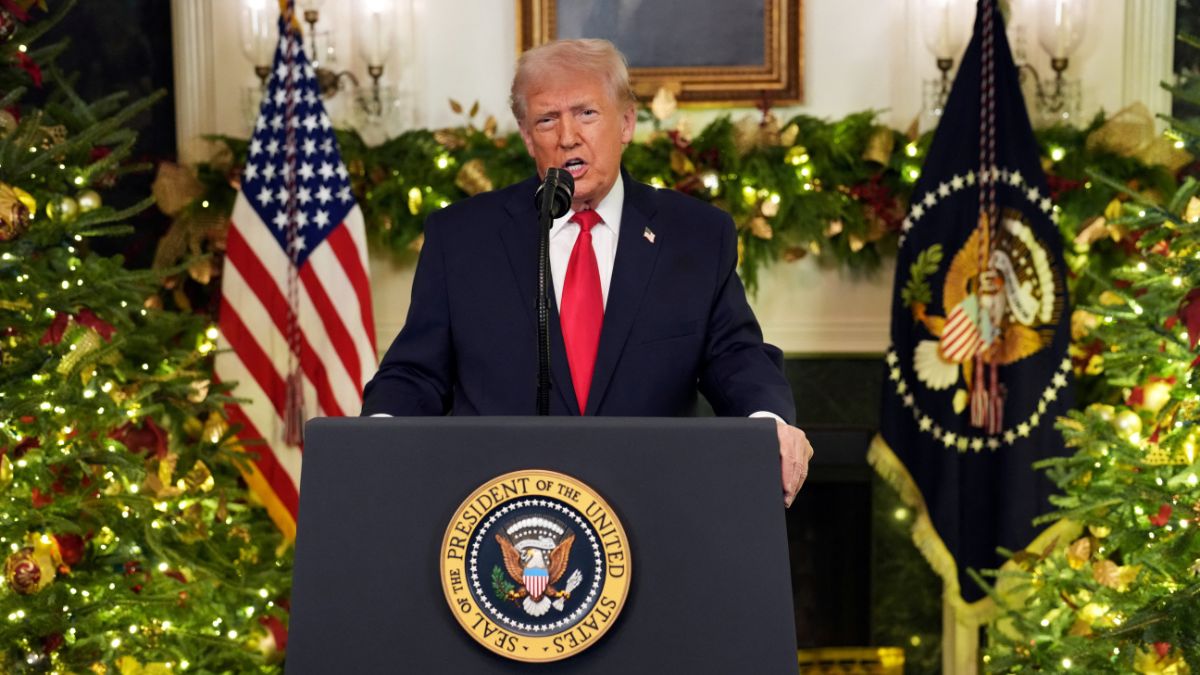 "Trump’s Greenland push could spell 'end of Nato', warns Eurasia Group's chief Ian Bremmer")
 "Watch | PM Modi welcomes UAE president, gifts him Indian artefacts including wooden swing, pashmina shawl & saffron")
 "A champion by choice, not chance: The quiet authority of Sadio Mane")
 "Afghanistan: Several killed in blast in Kabul's Shahr-e-Naw, one of city’s most secure areas")