

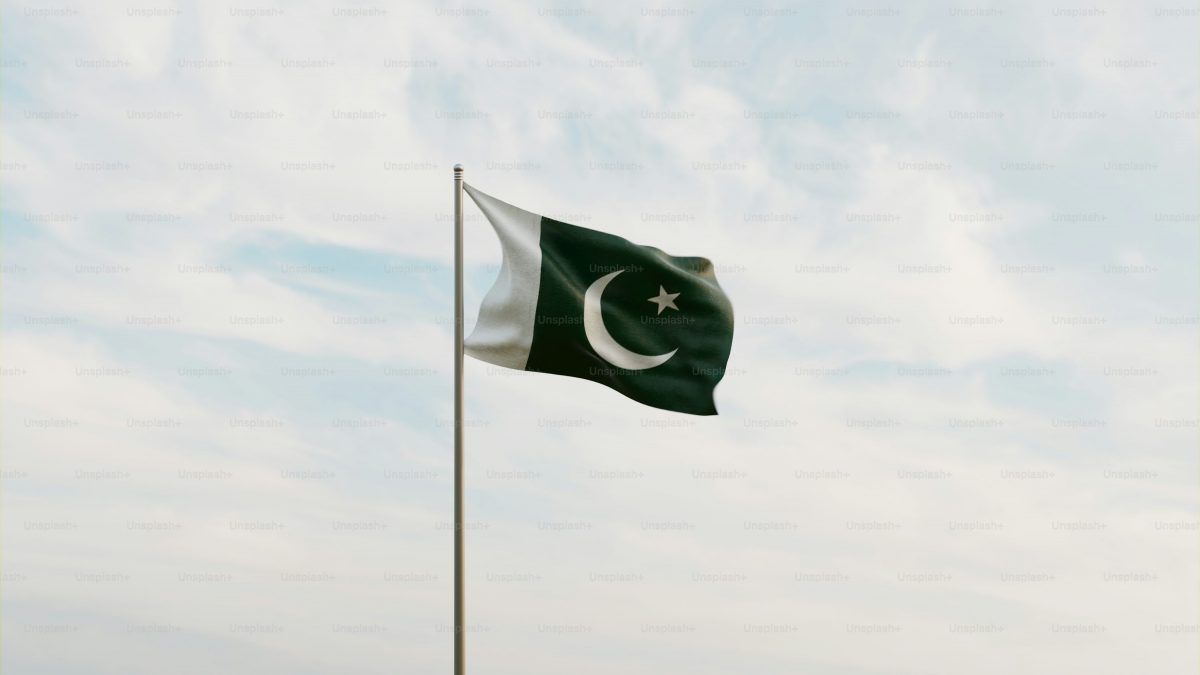
 "Pakistan’s forgotten genocide: If Gaza deserves attention, so does Balochistan")
A monthly report compiled by the Human Rights Council of Balochistan mentions that this year alone there have been almost 1,300 enforced disappearances, carried out by Pakistan’s Frontier Corps and the army. It adds that, in addition, around 550 innocents have been killed in custodial deaths, extrajudicial executions, fake encounters and targeted attacks by state-backed death squads. The document covers names, dates, places and the nature of each incident.
The report also mentions that a systematic pattern of violence, including military action, communication blackouts, as well as crackdowns on activists and peaceful protesters, is ongoing. It paints a grim picture of repression of innocents. Pakistani courts have regularly asked the Frontier Corps to produce missing Baloch, but to no avail. Not one security personnel has ever been charged for atrocities committed.
A statement submitted to the UN General Assembly by ‘The International Humanitarian Society for Development Without Borders’ in April mentions, ‘Pakistan’s policies in Balochistan amount to crimes against humanity. Entire villages have been razed to the ground, families displaced, and thousands of Baloch citizens have been forcibly disappeared. Extrajudicial killings have become a daily reality, with bodies of victims routinely found in mass graves or dumped in remote areas. The Pakistani military, paramilitary forces and intelligence agencies operate with complete impunity, perpetuating a climate of fear and silence.’ Yet the world remains a mute spectator.
Balochistan was annexed by Pakistan in 1948 through military intervention. The region was compelled to capitulate. Since then, five insurgencies have occurred, each bloodier than the last. The current phase of the uprising, ongoing since 2005, is the deadliest, forcing the Pakistani army onto the back foot. Not a single day passes without reports of losses of Pakistani troops. The uprising is a fallout of Pakistan’s atrocities on locals, as well as its exploitation of the region.
Balochistan is Pakistan’s largest and most resource-rich province, as well as its least developed. Among its resources are the Sui gas fields, one of Pakistan’s largest. They fuel households and industries across Pakistan, except in Balochistan, where people still use wood for household needs, with electricity being rare. Reko Diq is believed to be one of the world’s largest undeveloped copper and gold mines. The US Export-Import Bank recently provided Pakistan with a $1.25 billion loan for its development, the produce of which will be shared with the US.
Quick Reads
View AllAnother mine, run by the Chinese, extracting copper and gold, is the Saindak mine. Gwadar, the hub of the CPEC, is in Balochistan and under Chinese control. Local fishermen are banned from fishing in waters close to Gwadar, and their livelihoods are threatened by Chinese deep-sea trawlers. Balochistan remains Pakistan’s poorest province, with the highest unemployment rate (33 per cent). Its resources are extracted and its people exploited. It is to safeguard their territory from further exploitation that the Baloch are forced to act.
Major groups fighting for the freedom of Balochistan include the Balochistan Liberation Army (BLA), Balochistan Liberation Front and the Balochistan Republican Guard. These operate under a common umbrella termed the Baloch Raaji Aajohi Sangar (BRAS). They largely target Pakistani security forces, government officials, Chinese nationals and CPEC projects through suicide attacks, ambushes, hijackings and the capture of government assets. In return, innocents are killed by the Pakistani army.
China has been unhappy with Pakistan’s handling of the Baloch movement. Incidents in the recent past have raised concerns about the security of the CPEC. This has added to costs, as China has been compelled to hire security personnel for the protection of its nationals employed in various projects. Pakistan has also raised two divisions known as the Special Security Divisions South and North for securing Chinese workers employed on CPEC projects. Yet attacks continue.
The world largely maintains silence on Pakistani atrocities in Balochistan, despite being aware of them. This is partially because of the information blackout in the region, as well as because Pakistan has pushed nations, including the US and UK, to designate the BLA as a terrorist organisation.
Another reason is that demands for a ‘Free Balochistan’ impact three countries—Pakistan, Iran and Afghanistan. Hence, there is concern that supporting the movement in Pakistan would instigate similar uprisings in others, though the armed struggle remains confined to Pakistan. Finally, the suffering of the people does not impact major global powers, as visibility is low. Hence, what happens within remains within.
Thus, world support remains restricted and people continue to die. Human rights bodies and the UN regularly raise concerns during ongoing sessions, but these do not translate into diplomatic pressure. This results in Pakistan continuing its genocide with little concern.
The Baloch have been requesting global support, but the same is not forthcoming. Their diaspora protests against the Pakistani army and ongoing atrocities outside various UN headquarters, but these are ignored. If figures of casualties over the years are taken into account, they could be comparable to what Gaza has endured in recent times; however, the isolation of Balochistan works against it.
With the world ignoring them, the Baloch have begun turning to India for support. In 2016, Prime Minister Modi raised the subject in his Independence Day speech from the ramparts of the Red Fort. Since then, there was general silence. However, there has been a marked change this year, especially post Operation Sindoor.
At the SCO Defence Ministers’ Summit in June this year, India refused to endorse the joint statement because it condemned Baloch insurgent strikes while ignoring Pahalgam. India also raised concerns about the ongoing genocide in Balochistan at the UN General Assembly session in September. The Indian representative accused Pakistan of committing ‘atrocities’ and ‘genocidal campaigns’ against its own citizens in Balochistan, as well as employing air power against them.
In May 2025, Baloch nationalist leaders symbolically declared the formation of the ‘Republic of Balochistan’ and appealed to the UN for recognition and to India for diplomatic support. Last week, it declared recognition of Israel, following Israel’s recognition of Somaliland, adding to anger within Pakistan.
While this is a start, there is much more that India can do. New Delhi must consider providing political, diplomatic and moral support to the Baloch. After all, Pakistan officially claims it is providing the same to Kashmiris, while in reality it supports terrorist groups against India.
India is also the nation with the requisite diplomatic clout to raise awareness among Western powers about the ongoing genocide, compelling them to push Pakistan to stop its military atrocities. The people of Balochistan are as important as those of Gaza or other global trouble spots where brutal suppression is ongoing. They deserve protection, their voices against the killing of innocents raised forcefully, and Pakistan sanctioned if it does not act.
(The author is a former Indian Army officer, strategic analyst and columnist. Views expressed in the above piece are personal and solely those of the author. They do not necessarily reflect Firstpost’s views.)


 "Did fireworks on champagne bottles trigger deadly blaze in Swiss ski resort bar?")
 "India-Bangladesh Ganga Water Sharing Treaty expiring in 2026: Will New Delhi renew pact? Talks kick off")
 "Mamdani pledges to usher in 'new era' for New York City in his first address as mayor")
 "China's 'war games' around Taiwan 'unnecessarily' raise tensions: US")
 "Did fireworks on champagne bottles trigger deadly blaze in Swiss ski resort bar?")
 "India-Bangladesh Ganga Water Sharing Treaty expiring in 2026: Will New Delhi renew pact? Talks kick off")
 "Mamdani pledges to usher in 'new era' for New York City in his first address as mayor")
 "China's 'war games' around Taiwan 'unnecessarily' raise tensions: US")



