 "Murder in August: Pakistan’s covert role in Sheikh Mujibur Rahman’s assassination")
The birth of Bangladesh in 1971 cannot be reduced to a mere civil war. It was the culmination of decades of political, cultural, and emotional alienation between West Pakistan and the Bengali-speaking population of the East.
From the very beginning, Pakistan’s ruling elite viewed the Bengali identity—with its distinct language, heritage, and democratic aspirations—as a threat to their Urdu-centric, militarized state structure. India’s recognition and military support during the Bangladesh Liberation War sealed Pakistan’s defeat but did not diminish its ambitions to control or destabilize the region.
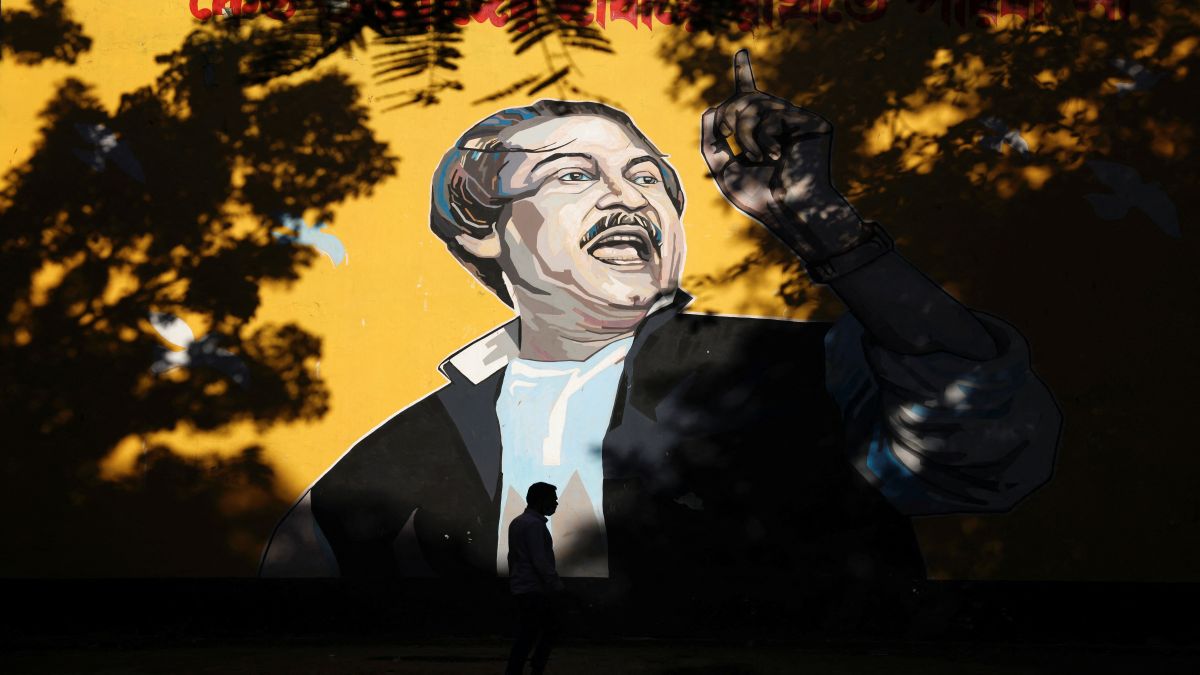
The assassination of Sheikh Mujibur Rahman on August 15, 1975, barely four years after Bangladesh’s independence, marked a grim turning point in the country’s history. It bears the fingerprints of both internal betrayal and external orchestration.
This year, as we observe the golden jubilee of Sheikh Mujibur Rahman’s assassination, we revisit the deep-rooted tensions, the language-based suppression, and the geopolitical motives that suggest Pakistan never stopped seeing Bangladesh as a province that slipped away—and Mujib as the man who made it happen.
The Oppression of East Pakistan
Before 1971, East Pakistan (now Bangladesh) endured relentless discrimination under West Pakistan’s political and military establishment, culminating in one of the darkest chapters of South Asian history.
Despite Bengalis being the demographic majority, they faced systemic marginalization, economic exploitation, and cultural suppression—including the infamous attempt to impose Urdu as the sole state language, which triggered the 1952 Language Movement and the killing of unarmed students in Dhaka.
Quick Reads
View AllThe crisis deepened when Sheikh Mujibur Rahman’s Awami League won a decisive majority in the 1970 general elections, but West Pakistan’s leadership refused to hand over power, sowing the seeds of rebellion.
Horrors of Operation Searchlight
On March 25, 1971, the Pakistan Army launched Operation Searchlight, a coordinated campaign of mass murder, rape, and terror in Dhaka and other cities. International media, including The New York Times and The Sunday Times (London), reported horrifying scenes of bodies piled in the streets and widespread accounts of atrocities, including brutal sexual violence against women and even young girls.
A 1971 report by Time magazine described Dhaka University as “a slaughterhouse,” where students and professors were executed in large numbers. In the face of this genocide, Sheikh Mujibur Rahman became the unwavering voice of Bengali resistance, embodying the spirit of liberation and unity.
Resistance, Liberation, and Refugees
The brutal crackdown by the Pakistan Army in 1971, marked by mass killings and systematic oppression, ignited a nationwide resistance movement and a full-scale liberation struggle.
As violence escalated, millions of Bengali refugees fled into India, triggering a massive humanitarian crisis. Under Prime Minister Indira Gandhi, India extended political, military, and moral support to the Bengali freedom fighters—the Mukti Bahini.
On December 3, 1971, after Pakistan launched pre-emptive airstrikes on Indian airbases, India formally entered the war. In just 13 days, Indian forces, in joint operations with the Mukti Bahini, overwhelmed the Pakistani military. On December 16, 1971, 93,000 Pakistani soldiers surrendered in Dhaka—one of the largest mass capitulations in modern military history.
This decisive victory shattered Pakistan’s oppressive regime in the East and gave birth to an independent Bangladesh, fulfilling the long-cherished dream of a sovereign Bengali nation.
Saddled with Humiliation
After its humiliating defeat in the 1971 Liberation War, Pakistan was reluctant to recognise Bangladesh as an independent nation and continued to view it as a “lost province.” Driven by vengeance and bitterness over global embarrassment, Pakistan delayed formal recognition until 1974 and remained hostile even afterward.
Sheikh Mujibur Rahman, the architect of Bangladesh’s independence, became Pakistan’s prime target. Determined to destabilize the young nation, Pakistan is believed to have orchestrated a covert plan to eliminate Mujib, working through pro-Pakistan elements within the Bangladesh Army, including officers ideologically aligned with Islamabad.
This conspiracy culminated in the brutal assassination of Mujib and most of his family members on the dark morning of August 15, 1975. It was far more than a political killing—it was an attack on the very soul of Bangladesh, intended to erase the legacy of its founding father and plunge the nation into uncertainty.
The Legacy of Bangabandhu
Revered as Bangabandhu (“Friend of Bengal”) and the Father of the Nation, Sheikh Mujibur Rahman led the oppressed people of East Pakistan through decades of exploitation, poverty, and unspeakable atrocities, including mass killings and systematic sexual violence by the West Pakistani regime.
Through unshakable determination, Mujib united a broken and victimized region, transforming it into an independent Bangladesh in 1971. His vision, courage, and compassion made him a beacon of hope for the Bengali people.
His assassination on August 15, 1975, sent shockwaves not only across Bangladesh but around the world. The global community mourned the loss of a leader who symbolised justice, freedom, and dignity for the oppressed.
Islamabad at Odds with Reality
Pakistan has never fully accepted Bangladesh’s independence, and its actions since 1971 prove it remains a persistent adversary of the country’s sovereignty. The assassination of Sheikh Mujibur Rahman and his family in 1975 was Pakistan’s first hidden victory in its long-term strategy to destabilise Bangladesh.
That conspiracy, executed through pro-Pakistani officers within Bangladesh’s own military, silenced the very voice that gave birth to the nation.
Decades later, Pakistan’s shadow looms again—this time allegedly supporting unrest, funding misinformation, and fomenting student uprisings against Sheikh Hasina, Mujib’s daughter and the current Prime Minister.
The recent political upheaval and shifts in power can be seen as Pakistan’s second strategic success in weakening Bangladesh from within. As citizens of a free nation—born out of blood and sacrifice—it would be a betrayal to forget Sheikh Mujibur Rahman’s leadership, vision, and ultimate sacrifice.
To neglect his legacy is to deny our identity. To ignore Pakistan’s ongoing interference is to risk losing the very sovereignty that was won at such immense cost.
Lt Gen Dushyant Singh (Retd) is the Director General of the Centre for Land Warfare Studies (CLAWS). Views expressed are personal and do not necessarily reflect Firstpost’s views.


 "'PM Modi a fantastic man... we're going to have a good deal': Trump tells Moneycontrol | Watch")
 "Greenland unveils 'crisis' guidelines as Trump renews call for talks on taking island")
 "Is Canada preparing for a US invasion as Trump unsettles allies? Report says...")
 "Trump says Ukraine war deal ‘reasonably close’, plans Zelenskyy meeting in Switzerland")
 "'PM Modi a fantastic man... we're going to have a good deal': Trump tells Moneycontrol | Watch")
 "Greenland unveils 'crisis' guidelines as Trump renews call for talks on taking island")
 "Is Canada preparing for a US invasion as Trump unsettles allies? Report says...")
 "Trump says Ukraine war deal ‘reasonably close’, plans Zelenskyy meeting in Switzerland")