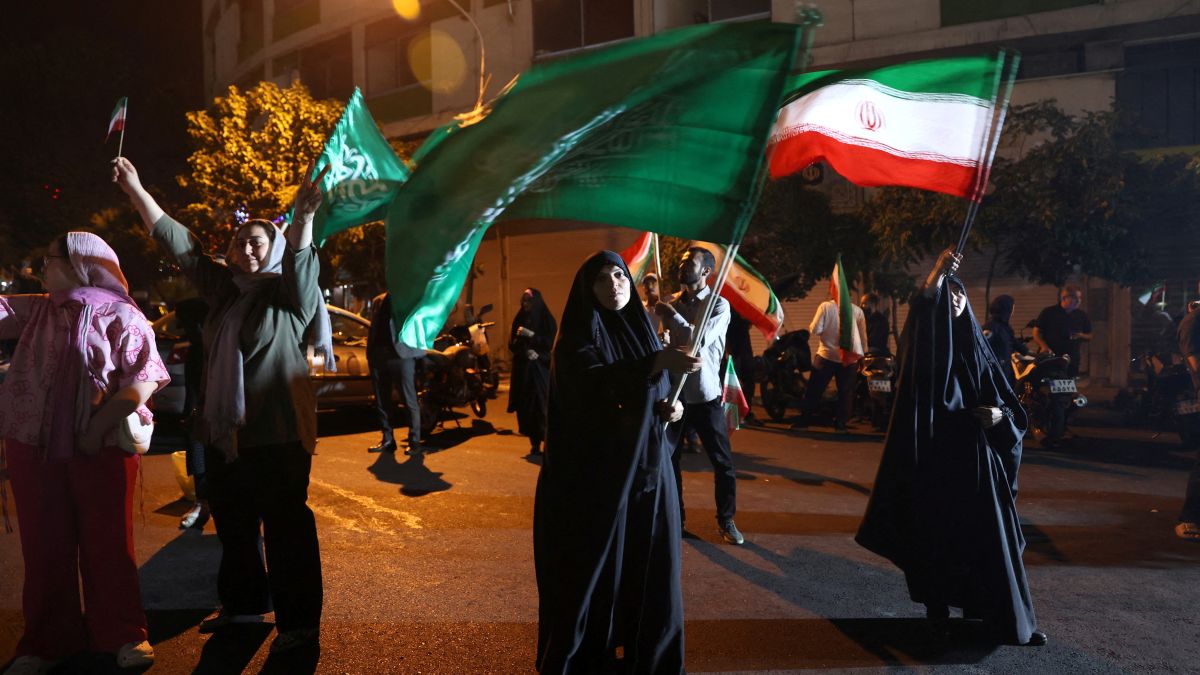
 "Israel-Iran ‘12-days war’: How West Asia is on a strategic reset")
West Asia has witnessed over a dozen major conflicts since World War II due to the contentious nature of its security dynamics, attributed largely to the interplay of external, regional and domestic factors. The recent skirmish between Israel and Iran amply vindicated the above intricacies.
The sudden eruption of recent hostilities leading to a full-scale war was the result of simmering belligerence between Tel Aviv and Tehran since the 1979 Islamic Revolution. Iran’s strategy to prosecute a proxy war without getting entangled in a conventional conflict with Israel was finally challenged.
On June 13, 2025, Israel launched Operation ‘Rising Lion’ against Iran in a preemptive effort to prevent Tehran from acquiring nuclear capabilities and avert an ’existential threat’. In the massive aerial strike, Israeli fighter jets pounded around 100 sites across Iran, primary targets being nuclear sites at Fordow, Natanz and Isfahan, besides key military installations.
Iran was caught by surprise, and as per the experts estimate, lost almost 15 per cent of its missile arsenal and crucial air defence systems. Several Iranian top military commanders were also killed. Iran’s retaliation came a day later by way of large-scale drones and ballistic missile strikes against Israel.
The initial strikes were followed by intense exchanges of missile barrages by both sides. Having achieved complete air domination, Israel was able to inflict colossal damage on Iran’s war-fighting machinery. On the other hand, Iran’s retaliation was confined to waves of missile strikes, as its air force, being weak, was missing in action. This notwithstanding, Iran’s hypersonic missiles were able to penetrate the Israeli air defence and cause considerable damage to the infrastructure.
Given the lack of strategic depth and doctrine of fighting swift, short wars, the war of attrition was proving unaffordable for Israel, costing hundreds of millions of dollars a day. Iran, on the other hand, was well poised to sustain a longer conflict, as around two-thirds of its missile arsenal (estimated to be around 3,000) was still intact after a week of fighting.
Quick Reads
View AllTen days into the conflict, there was a major escalation when the US joined Israel in the fight against Iran by launching Operation ‘Midnight Hammer’ in the wee hours of June 22, 2025. The aerial strikes were undertaken by a package of seven B2 bombers, wherein Iranian nuclear sites at Fordow, Natanz and Esfahan were struck with GBU-57 deep penetrating, bunker buster bombs. President Donald Trump declared that all three nuclear sites had been completely obliterated. Iran vowed to avenge the American aggression, which it did the following day in the form of a symbolic missile strike on the US air base at Al Udeid in Qatar, but there was no damage or casualties.
On June 23, Trump, with mediation from Qatar, announced a phased ceasefire between Israel and Iran, declaring that the “12-Day War” was over. There were few truce violations before Israel and Iran accepted the ceasefire, which came into effect on June 24 and has held on so far. The stage appears to be now set for the next phase – diplomatic duels at the negotiation table, as talks are expected to resume in the near future.
The wars are fought to be won, with precise politico-military aims. In this case too, both Iran and Israel claimed to be winners, having attained their respective objectives. Iran declared national victory over the Jewish regime and America. Concurrently, the Israeli foreign ministry also strongly claimed that Israel has not only achieved all objectives in the war but also killed hundreds of terrorists in Iran. Tel Aviv also announced that the outcome of the war has placed Israel in the ranks of the world’s leading powers.
Well, Israel did succeed in degrading Iran’s nuclear capability significantly, albeit with American assistance. Israel did demonstrate its ability to dominate the airspace and operate deep inside Iranian territory, thus taking a heavy toll on Iranian military installations. While Iranian nuclear installations have suffered considerable damage, as per Rafael Grossi, the head of the UN nuclear watchdog, “It would be too much to assert that Iran’s nuclear has been wiped out after the Israeli-American campaign.” Israeli Ambassador to France Joshua Zarka has stated that 14 key Iranian nuclear scientists were killed, implying a serious setback to Tehran’s nuclear programme. In the Israeli attacks, as per Iran’s Health Ministry, 627 of its citizens were killed and 4,870 were wounded.
Iran, despite taking heavy losses and having an adverse air situation, was able to cause damage to Haifa port, Ben Gurion airport and a few military bases. 29 Israelis were reported to be killed and 3461 injured during the Iranian strikes. This did have considerable impact, causing fear of psychosis amongst the civilians. Iranian proxies’ militias Hamas, Houthis and Hezbollah kept a low profile, as these militias have been considerably weakened by the Israelis sustained operations over the years.
The global polity favoured diplomacy and dialogue. Whereas the US was actively involved in the conflict, Russia and China – Iran’s close allies – only extended diplomatic support. While Moscow advocated restraint and offered mediation, Beijing supported negotiation and projected an image of neutral peacemaker. Given the apprehensions of an oil crisis manifesting, renewed calls for negotiations and support for Qatar and Oman in mediation did accelerate the efforts for de-escalation and ceasefire. The Islamic world stood factionalised, keeping in view their national interests. The Arab nations, especially the Gulf countries, evidently are not in control of their foreign policies.
The future geopolitical and security architecture of the Middle East is in for a makeover. The superpower rivalry is bound to intensify with the US deepening its role as a security guarantor for Israel and Gulf states. China will leverage its economic influence to expand its mediation role and align with Russia to ensure regional stability. Russia will strive to adopt a balanced role, supply military technology to Iran and simultaneously cultivate ties with Israel and Arab states. Turkey will continue with its quest for regional dominance and project itself as a balancing force vis-à-vis Iran and Israel, as well as consolidate its position in Syria and Iraq. India, given its immense strategic and economic interest in the region, will need to be proactive given the prevailing fluid situation. Stable West Asia is in India’s interest to progress its key initiatives like the ‘India Middle East Europe Economic Corridor’ (IMEEC) project and Chabahar port.
The new security framework of the region is in the making, wherein Israel and Iran would be engaged in a mutual threat containment regime, with heavy reliance on precision weapon systems. Tehran will retain the ability to reactivate ‘non-state’ proxies and is unlikely to give up its nuclear ambitions easily. Gulf states could be working towards evolving ‘integrated regional defence systems’ while engaging in deeper defence cooperation with the US and Israel, besides consolidating their role as mediators. The Abraham Accord tent is expected to get wider as more nations are likely to join in for security insurance. This will weaken the Palestine cause. Will the Arabs allow Tehran to take the lead? It is a moot question, given today Hamas’s main backer is Iran. The salient strategic trends indicate the likelihood of weaponisation of energy infrastructure and militarisation of sea lanes of communication around the Red Sea. The global polity will be working to obviate this situation by seeking diversification of the energy supply lines.
Like all the major conflicts, the “12-Days War” leaves behind a trail of destruction and demolished geopolitical structures, leading to major strategic shifts. The future geopolitical landscape of West Asia will be multipolar in nature, with global powers and regional players recalibrating their strategies accordingly. The general environment is likely to remain highly fragile, marked by intense competition and confrontations fuelled by religious, ideological and identity politics, with the possibility of conflict looming large. Given the overarching complexities, the West Asia region is set to remain in a state of flux, lasting peace being a distant possibility.
The writer is a war veteran, currently Professor of Strategic and International Relations. Views expressed in the above piece are personal and solely those of the author. They do not necessarily reflect Firstpost’s views.

 "'PM Modi a fantastic man... we're going to have a good deal': Trump tells Moneycontrol | Watch")
 "Is Canada preparing for a US invasion as Trump unsettles allies? Report says...")
 "‘Rules-based order is fading’: When Carney responded to Trump challenge in Davos | Full text")
 "Davos 2026 Live Updates: Trump says he won’t use force to take Greenland, warns Europe is ‘not heading in the right direction’")
 "'PM Modi a fantastic man... we're going to have a good deal': Trump tells Moneycontrol | Watch")
 "Is Canada preparing for a US invasion as Trump unsettles allies? Report says...")
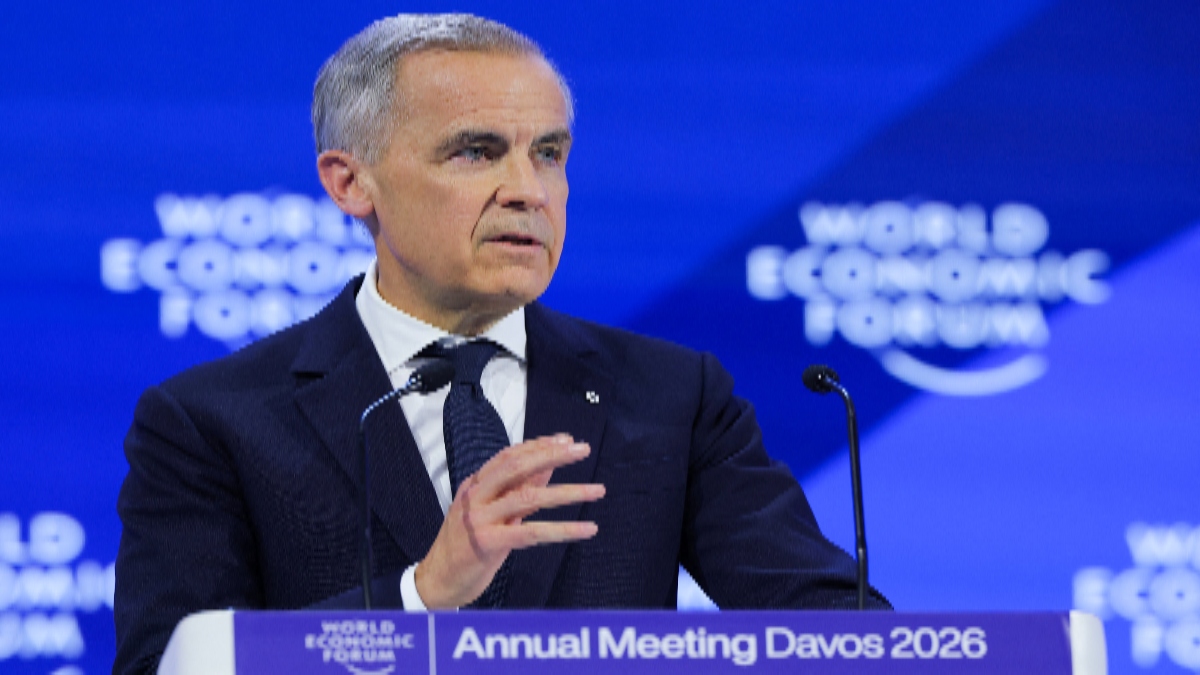 "‘Rules-based order is fading’: When Carney responded to Trump challenge in Davos | Full text")
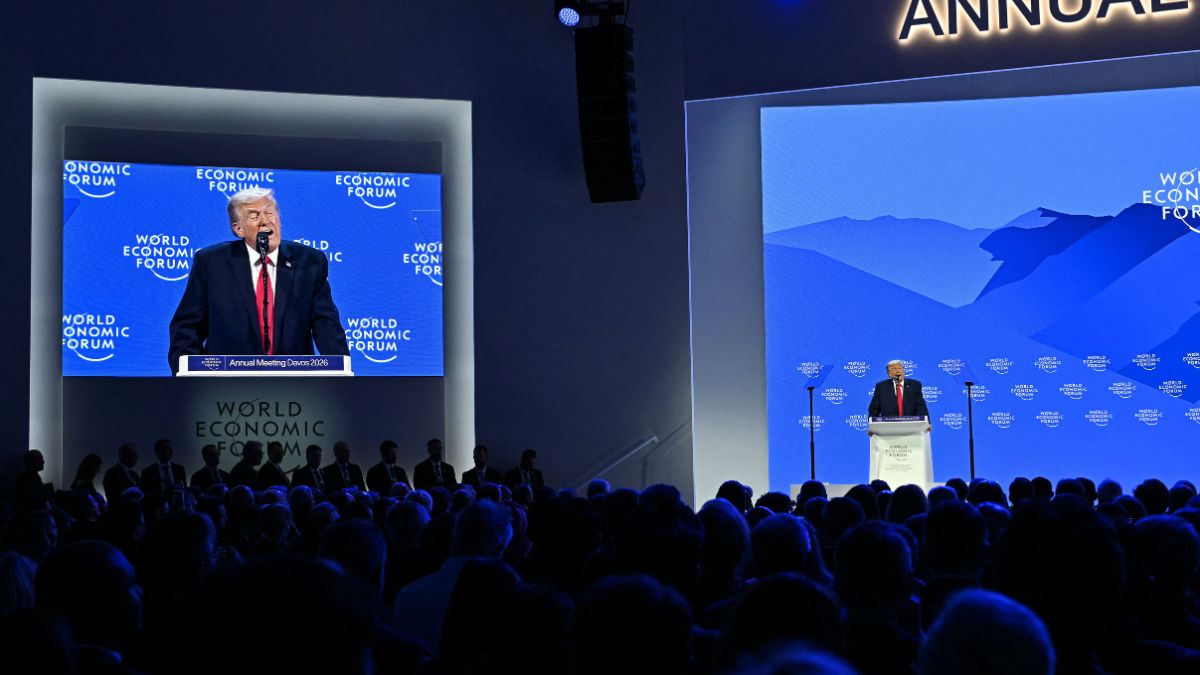 "Davos 2026 Live Updates: Trump says he won’t use force to take Greenland, warns Europe is ‘not heading in the right direction’")