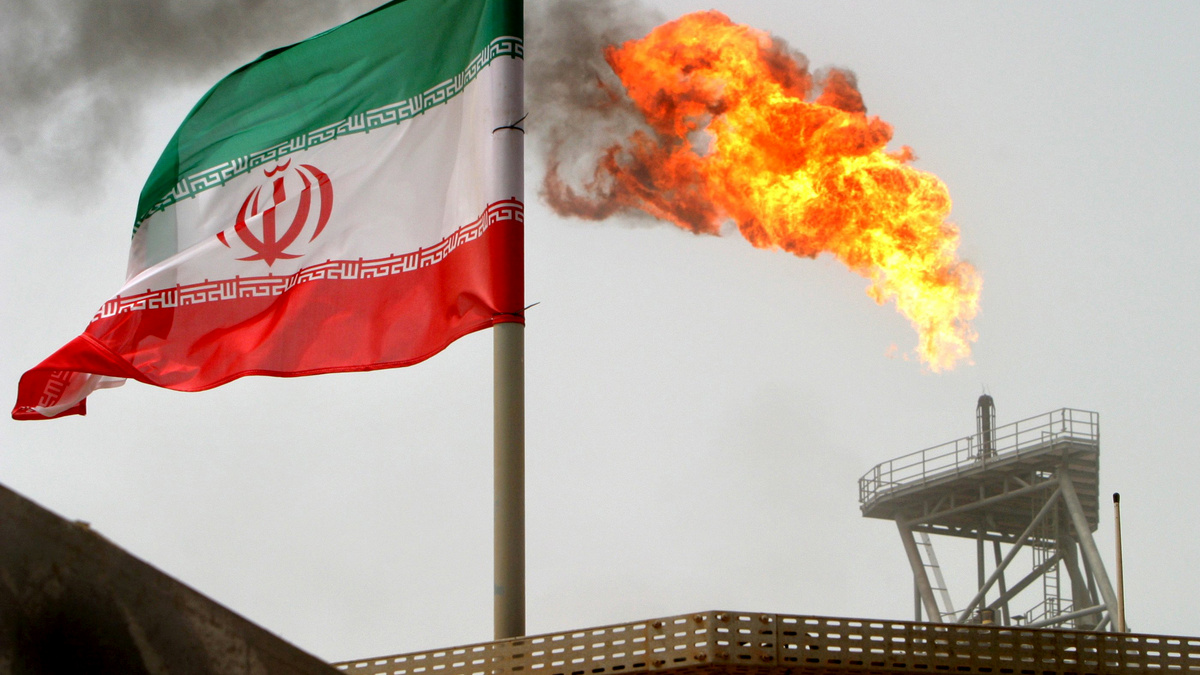
 "The Iran war reflects a deeper struggle—where Shia-Sunni tensions intersect with a broader civilisational clash shaping West Asia’s future. Representational image")
On March 5, 2026, five days after the US-Israeli forces attacked Iran, a group of nearly 20 Christian pastors and evangelical leaders laid hands on President Donald Trump’s shoulders in his Oval Office at the White House, offering prayers for “divine wisdom", “protection”, and “guidance” during escalating tensions in the Middle East (West Asia). They prayed for strength, favour, and “supernatural turning toward peace".
Their religious session also featured calls for national unity and blessings in the name of Jesus Christ. “We pray your heavenly blessing upon him, in Jesus’ name.” Amen.
Donald Trump, having German Protestant ancestry—his grandfather, Friedrich Trump, was born and raised in a Lutheran household, and father Fred Trump attended a Presbyterian Church—identifies himself as a nondenominational Christian, not formally affiliated with traditional, established denominations like Baptist or Methodist. While raised as a Presbyterian, Trump declared in October 2020 that he no longer identified with that denomination.
Then why did he seek divine help from Jesus?
Because the nondenominational Christians emphasise a direct relationship with God and generally hold that salvation is through faith in Jesus Christ alone, the Trinity, and the inerrancy of the Bible, especially in the New Testament.
Israeli Prime Minister Benjamin Netanyahu, of course, is a devout Jew and has been invoking the Old Testament’s belief for the expansion of his nation into Greater Israel.
That’s where the Christian-Jewish geodynamics merge: the Christians, who lost nine Crusades against Muslims to recapture Jerusalem, outsourced the Holy City’s security to the resettled Jews in 1948.
Quick Reads
View AllThe current war against Iran in the Middle East is part of this overall, undeclared, Tenth Crusade, launched by Napoleon Bonaparte in the early 19th century to dismantle the Ottoman Empire and other Islamic kingdoms that controlled Old Jerusalem, which is also home to the Al-Aqsa Mosque, the third holiest site in Islam. Napoleon, a nominal Catholic (like Adolf Hitler!), paved the way for the Jewish diaspora’s return to Israel, which they did after the Second World War.
For over 2,000 years, Jerusalem has been the fulcrum of Eurasian and then global geopolitics.
In our time, Israel declared Jerusalem its capital in 1949, establishing control over West Jerusalem (East Jerusalem, captured by Israel in 1967, has a largely Palestinian population). The Knesset (parliament) soon moved there, and in 1950, it was formally designated as the capital. In 1980, Israel passed the “Jerusalem Law", declaring a “complete and united” Jerusalem its capital, although many countries still recognised Tel Aviv as the capital and retained their embassies there. The US moved its embassy to Jerusalem in 2018, during Donald Trump’s first presidency.
With this, Israel’s next move, to expand itself into “Greater Israel", commenced.
What the Catholics could not achieve in nine Crusades in three centuries—evict Muslims from Jerusalem—the Protestants are attempting in the tenth…
The Nine Crusades
The mediaeval Crusades were a series of religious and military campaigns, primarily between the 11th and 13th centuries, launched by European Christians (all Catholics) to reclaim the Holy Land (Jerusalem and surrounding areas) from Muslim control. While there were many smaller campaigns, historians generally identify eight major Crusades between 1096 and 1291.
The Ninth Crusade (1271–1272), led by Prince Edward of England (later Edward I), was a minor military campaign intended to aid the failing Crusader States against the Mamluk Sultan Baibars. After the death of Louis IX, Edward brought a small force to Acre, successfully defending Tripoli, but ultimately securing a truce before returning home.
Initiated by the Pope, the primary goal of the First Crusade was to secure Christian access to holy sites in Jerusalem, which had come under Muslim control. Participants were driven by religious zeal, promises of spiritual rewards (indulgences, Heaven), and the prospect of land or wealth on Earth. Primarily Western European Christians (knights, nobles, and peasants) fought against various Islamic caliphates in the Middle East. Although Jerusalem was lost again in 1244, the fall of Acre in 1291 is generally considered the end of the Crusader states in the Holy Land. Minor clashes, however, continued.
How did the First Crusade begin?
Catholics v/s Sunnis
Deus vult—God wills it! —The frenzied, mobilised mob cried when Pope Urban II preached the “Holy War” at Clermont, France, on November 27, 1095. He claimed he had a request from Constantinople (now in Turkey) to save Christianity from Sunni Turk Muslims who controlled Jerusalem.
In the First Crusade (1096-99) that followed, the Pope ordered the pious Christians: “Wear a cross upon your brow or breast.” Thus came the word ‘Crusade’ from the Spanish root ‘cruzada’, or ‘marked with/wearing the Cross’. For two years, he preached the Crusade, rounding up the gullible, illiterate European Catholic Christians. It fired them up, radicalised, mobilised, and ignited an unprecedented religious frenzy on the Continent. Thousands of Crusaders marched on Asia via Turkey.
Unlike the professional, battle-hardened Turk-led Muslim armies, who waited for them patiently, the Christians stumbled into Turkey like a motley crowd of heterogeneous, unruly crowds. Some of them had even brought along their families. Many died along their 3,000-miles-long arduous road to Jerusalem; some carved out their own tented fiefs to enjoy the fruit of labour. The remainders reached the Holy City in 1099, killing both sets of in-house infidels—the Jews and Muslims.
Upon capturing Jerusalem on July 15, 1099, the First Crusaders started a systematic, brutal, days-long massacre of the city’s Muslim and Jewish inhabitants, killing thousands. Driven by religious zeal, they also converted sacred sites like the Al-Aqsa Mosque into Christian shrines, established the “Kingdom of Jerusalem", and, despite their mass slaughter, viewed their actions as a holy victory.
After this bloodbath, the Crusaders claimed to be pilgrims, often marching barefoot to the city and later praying at the Church of the Holy Sepulchre, their legs soaked in blood as they marched through the rotting corpses.
Liberating Jerusalem and camping in the unfamiliar country for a few decades, they returned to Europe. This gave the waiting Muslims breathing space to recapture Jerusalem. The Crusaders returned. Thus began the Second Crusade (1146-1148)… And so, the religious wars to flush out both sets of infidels continued until the last of these conflicts collapsed in 1291. There was even a Children’s Crusade in 1212, when a chaotic crowd of kids, adolescents, women, and even the elderly and the poor tried to march from Germany.
The Crusades’ collapse disillusioned many Christians about the alleged ‘invincibility’ of Christianity, and many turned Protestant. Europe witnessed reforms, reconstruction, and renaissance.
As Islamic empires declined, the zealous Christians tried another shot against Muslims. The Tenth Crusade began with Napoleon Bonaparte empowering the Jews and his technologically upgraded army poaching the Ottoman Empire in Egypt and Syria. It is still simmering in hits-and-misses. The ongoing US-Israeli war against Iran is part of it with new signboards for old companies.
Did the Crusades really collapse? No, they only brought in an uneasy truce between prolonged wars. Europe would try to outgrow Christianity but resume these hidden ‘religious’ wars by other means: colonisation, the White Man’s Burden, slave trade, and new weapons in the coming decades and centuries to dismantle the Muslim empires and reinstate the Jews in what would be a resurrected Israel.
Protestants v/s Shias
The Catholic Crusaders’ objective was to ‘liberate’ Jerusalem from Muslim control. Old Jerusalem is where Christianity’s most sacred site, the Church of the Holy Sepulchre, is believed to be the location of Jesus’ Crucifixion (Golgotha) and burial/resurrection (the Holy Tomb).
After the Second World War, although the Christian power shifted from Europe’s Catholics to America’s Protestants, the objectives have remained the same: liberating Jerusalem from Muslim control. This they can do only by supporting the Greater Israel move to absorb some of the Islamic countries around.
The Shia-majority Iran, led by its well-entrenched theocracy, believes that the Caliphate-freed Sunnis weakened and got aligned with the Jewish-Christian duo, and it is now Tehran’s responsibility to carry out the First Jihad against all “infidels”, including the Sunnis. That’s why, despite Iranian President Masoud Pezeshkian apologising to the Sunni Arabs, the Islamic Revolutionary Guard Corp (IRGC) has continued attacks on several countries.
After the Catholics’ loss of power—despite their numbers—most Christians may have ‘exonerated’ the Jews of the charge of Jesus’ Crucifixion. In a quid pro quo, the Jews, who still don’t consider Jesus their Messiah, are protecting the Church of the Holy Sepulchre.
Those who think this is all disconnected history should think again.
After the Muslim terrorists attacked the US landmarks in 2001, for example, then President George W. Bush, also a Republican like Donald Trump, reacted the way he was programmed into. Bush is a Protestant, specifically identifying as a United Methodist. His faith is characterised by a “born-again” experience, deeply influencing his personal life and presidency. He frequently spoke about his reliance on prayer, daily Bible reading, and his belief that his faith provided guidance in his decision-making.
So, after 9/11, he promptly announced a war on terror. Initially, he named it Operation Infinite Justice; when told that only Allah’s justice is considered infinite in Islamic theology, he renamed it Operation Enduring Freedom.
The West has since been careful in naming its intermittent mini-crusades. Israel called its wars on Iran Operation Rising Lion (2025) and Operation Roaring Lion (2026). And Trump’s ongoing war against Iran is called Epic Fury.
“What’s in a name?” Shakespeare would have lamented in our time had he learnt that Donald Trump, who renamed the US Department of Defence as the Department of War, also chased a Nobel Peace Prize!
Faith as Fuel
On the day Christian priests blessed Donald Trump, a Muslim civil rights organisation, the Council on American-Islamic Relations (CAIR), condemned the Pentagon’s use of this rhetoric, deeming it “dangerous” and “anti-Muslim”.
US watchdog Military Religious Freedom Foundation (MRFF) said it has received emailed complaints that US service members were told the war with Iran is meant to “cause Armageddon”, or the biblical “end times", Al Jazeera reported.
An unnamed non-commissioned officer wrote in an email to MRFF that a commander had urged officers “to tell our troops that this was ‘all part of God’s divine plan’, and he specifically referenced numerous citations out of the Book of Revelation in the New Testament, referring to Armageddon and the imminent return of Jesus Christ.”
The officer claimed the commander had told the unit that Trump “has been anointed by Jesus Christ to light the signal fire in Iran to cause Armageddon and mark the Christ’s return to Earth.”
In February 2026 itself, Mike Huckabee, the US Ambassador to Israel, told conservative US commentator Tucker Carlson that it would be “fine” if Israel took “essentially the entire Middle East” because it was the Bible’s Promised Land for the Jews.
In a Pentagon news briefing, US Secretary of War Pete Hegseth said, “Crazy regimes like Iran, hell-bent on prophetic Islamic delusions, cannot have nuclear weapons.” In a statement, CAIR said that Hegseth’s words are “an apparent reference to Shia beliefs about religious figures arising near the end times”.
“Mr Hegseth’s derisive comment about ‘Islamist prophetic delusions’, an apparent reference to Shia beliefs about religious figures arising near the end times, was unacceptable. So are US military commanders telling troops that war with Iran is a biblical step towards Armageddon?"
“References to the ‘end times’, the Book of Revelation, or biblical enemies are not incidental; they activate a cultural script already present in American political theology.”
Netanyahu and other Israeli officials have used the term “Amalek” before in reference to Palestinians in Gaza during Israel’s war in Gaza.
Historically, during wars or military confrontations, US presidents and senior officials have also routinely invoked the Bible or used Christian theological beliefs.
President George W Bush, on September 16, 2001, said, “This crusade, this war on terrorism, is going to take a while.” The White House later tried to distance Bush from the word “crusade” to clarify that he was not waging a war against Muslims.
And US Secretary of State Marco Rubio just said Iran is being run by “religious fanatics”.
Really?
(The author is a senior journalist. Views expressed in the above piece are personal and solely those of the author. They do not necessarily reflect Firstpost’s views.)