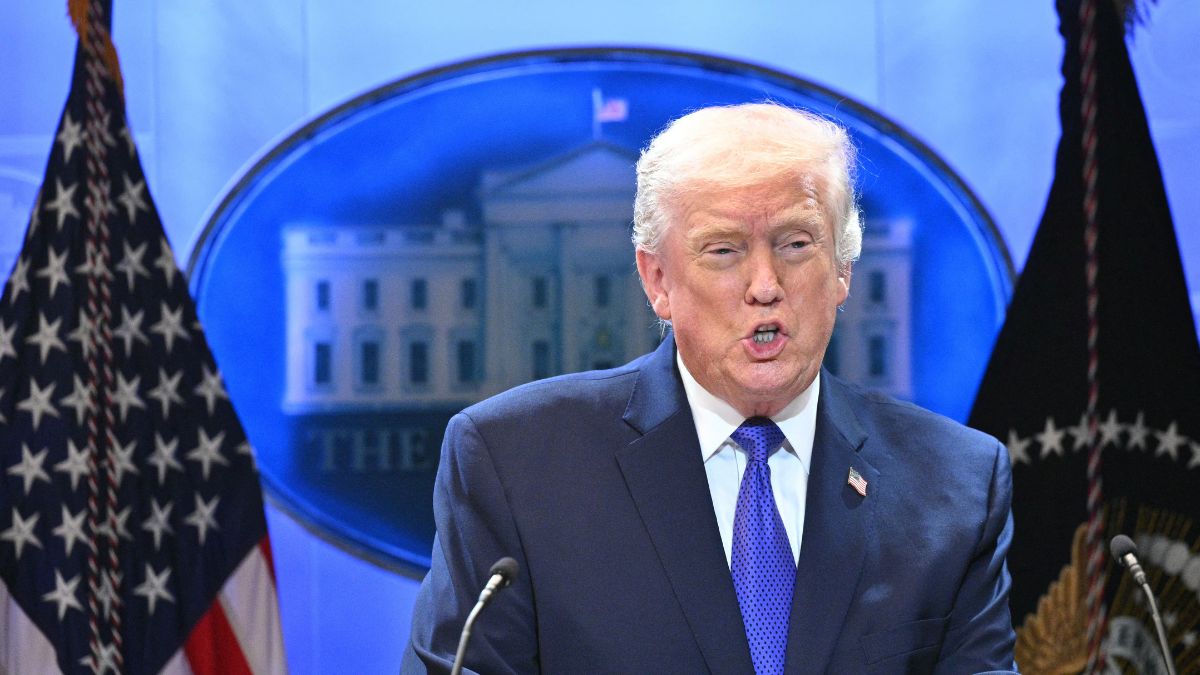
 "If Trump delivers on a regime change, he will re-order the Middle East by removing a murderous tyranny and creating an ally. For that alone, he will be the most consequential president in living memory. AFP File")
Since the beginning of January in the heart of the Middle East, the Iranian regime has been unravelling like a frayed rope under too much strain. Right now, the Islamic Republic faces its most existential crisis since the 1979 revolution. Nationwide protests that ignited in late 2025 have morphed into a full-throated demand for regime change, met with a savage crackdown that’s left tens of thousands dead. I have been contacted by many Iranian protestors these past six weeks, and their stories are truly heartbreaking.
Human rights groups paint a grim picture: over 43,000 civilians massacred in January and February alone, with security forces gunning down demonstrators in the streets of Tehran, Mashhad, and beyond. On top of the death toll, 350,000 have been injured and 10,000 blinded. (Source: International Centre for Human Rights).
Universities like Tehran Polytechnic have become flashpoints, where students burn regime flags and chant “Long Live the King,” referring to the Pahlavi monarchy as a symbol of lost freedoms. This isn’t unrest; it’s a revolution in slow motion, fuelled by a collapsing economy, rampant inflation, a bankrupt financial system, and a tyrannical government.
The Mullahs, led by the ageing Supreme Leader Ali Khamenei, are desperately clinging to power with brute force. Khamenei, now 86 and reportedly hiding deep in bunkers, has rejected US demands to halt uranium enrichment and curb ballistic missiles, calling them “essential” for deterrence. Meanwhile, Iran’s proxies—depleted by Israeli strikes in 2025—still stir trouble across the region, from Yemen to Lebanon. This is a terrorist government, and it faces extinction.
Quick Reads
View AllThe regime’s nuclear ambitions persist, with satellite images showing frantic repairs to sites bombed in last year’s 12-day war with Israel and US forces. Economic sanctions have bitten deep, slashing oil exports and emboldening hardliners who see war as a twisted path to survival.
All of which brings us to President Trump, now firmly back in the White House and facing this Middle Eastern powder keg. Nuclear talks in Geneva, resumed in mid-February, are stalling. Trump’s team demands zero enrichment, missile limits, and an end to proxy support—red lines Tehran won’t cross without massive concessions.
An unnamed Trump adviser leaked to Axios that there’s a “90 per cent” chance of US military action in weeks, describing a potential joint US-Israeli campaign as “massive” and “existential” for the regime. The US has amassed unprecedented airpower in the region since the 2003 Iraq invasion, with carriers like the USS Gerald R Ford and Abraham Lincoln poised in the Persian Gulf. Iran, in turn, has conducted live-fire drills in the Strait of Hormuz, threatening to sink U.S. warships. But Iran is a mouse compared to the US elephant.
People rightly ask why Trump should intervene and topple the mullahs. Let me explain.
First off, the humanitarian imperative. The regime’s crackdown isn’t just suppression; it’s a massacre. Death sentences are being handed down without fair trials, like those for protester Mohammad Abbasi and his daughter. Trump famously promised “help is on the way” to Iranians, and standing idle now would betray that pledge to those people. Intervening will protect civilians and empower the pro-democracy movement, which yearns for a secular, free Iran under figures like Reza Pahlavi. Iranians are not Muslims; they are Persians, and they demand freedom. Only President Donald Trump can provide it.
Secondly, national security. Iran’s nuclear programme, even battered, is racing underground. If the mullahs get the bomb, it’s game over for regional stability. They’ve enriched uranium to near-weapons grade before, and talks are a stalling tactic. Trump’s first term saw the killing of Qasem Soleimani; now, with the regime weakened by protests and prior strikes, it’s the moment to finish the job. A decapitating strike could dismantle nuclear sites, missile stockpiles, and leadership bunkers, preventing a nuclear-armed sponsor of terror. If this happens, and I believe that it must, Iranians will finish the job!
Finally, the ripple effects on global terrorism. Iran funds Hamas, Hezbollah, and the Houthis, fuelling conflicts from Gaza to the Red Sea. Bringing down the mullahs would starve these groups, easing pressure on Israel and US allies. Pressure from Israel is intense; Netanyahu’s government is prepping for war, viewing a joint op as essential. Regional powers like Saudi Arabia and Jordan once lobbied for containment, but many now see a weakened Iran as an opportunity.
Of course, critics warn of traps: a protracted war, regional escalation, or regime collapse leading to chaos like post-Saddam Iraq. Khamenei threatens a “hellish” conflict, and Iran’s asymmetry in proxies could drag in the whole Middle East. But doing nothing risks something way worse: an emboldened nuclear Iran, protests crushed, and terrorism unchecked. That’s unthinkable!
Trump’s maximum pressure has worked before; now, with the regime at its weakest—economy in ruins, popularity nil—intervention isn’t just viable, it’s vital to make the world a safer place.
History shows us that all brutal regimes have expiry dates. The mullahs’ is here. I hope that Trump will honour his word and act decisively: support the Iranian people, neutralise the nuclear threat, and reshape the Middle East. If Trump delivers on this, he will re-order the Middle East by removing a murderous tyranny and creating an ally. For that alone, he will be the most consequential president in living memory.
Mr President – tear down that regime!
(David Vance is a political commentator and author. Views expressed in the above piece are personal and solely those of the author. They do not necessarily reflect Firstpost’s views.)