

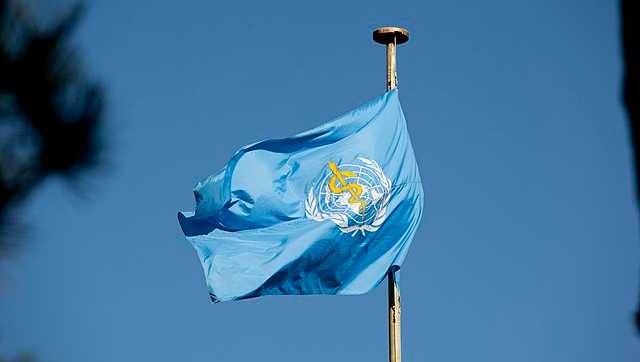
 "India seeks to strengthen and reform WHO: Here’s why")
India, in the second global Covid virtual summit held recently, suggested strengthening and reforming the World Health Organisation (WHO) for creation of a stronger and more resilient global health security architecture. The question is why there is need for its reform and which are the key areas to be reformed and strengthened for enhancing resilient global health architecture. There is no denial of the fact that effective implementation of public policies is strongly dependent on good governance at both global and national levels. Definitions by experts justifies the fact that “global governance is “doing internationally what governments do at home”. Lancet (2009) defines inter alia global health as the area of study, research and practice that places a priority on improving health and achieving equity in health for all people worldwide. It emphasises transnational health issues, determinants and solutions, facilitates inter and multi-disciplinary collaboration within and beyond health sciences and is a synthesis of population-based prevention and individual-level clinical care. Global health governance could be defined as the formal and informal institutions, norms and processes which govern or directly influence global health policy and outcomes and, in this context, three key areas for study from WHO perspective include: (a) global health challenges and key players; (b) sound and sustainable policies for health (national and global); and, (c) implementation of policies through good governance. The WHO constitution came into force on 7 April 1948 with its mission focused on the attainment by all people of the highest possible level of health. Currently, there are 194 Member States grouped according to regional distribution constituting The World Health Assembly, with its elected Executive Board consisting of 34 technically qualified persons from Member States, for a three-year term. The WHO currently has 148 offices in countries, territories and areas, six regional offices and headquartered in Geneva to support its 194 Member States and two Associate Member States (Puerto Rico and Tokelau) with a total strength of around 8,000 staff. The comparative advantages of WHO stems from its normative function (set standards, best practices, guidelines), direct reach into ministries of health to provide technical support to countries, its independence, impartiality, neutral broker, convenor and coordinator, political legitimacy and technical credibility, global reach (regional and country offices) and finally it gives a voice to, and champions the health of poor people. In this context, a participant in the WHO Research Strategy Dialogue 2007 said, “WHO is uniquely placed as the only organisation where the voice of the Maldives (population of 306,000) has the same weight as the voice of the United States (population of 306,000,000).” However, this comparative advantage may need to be converted to well-coordinated action to arrive at best results for resilient global health architecture. The WHO funding source may be relevant for understanding its organisational structure and functions much better. The total budget of WHO was $4.3-4.4 billion during the period 2016-17 to 2018-19. Out of its total resources, 28 per cent are assessed contributions from Member States and the rest 72 percent are voluntary contributions. The assessed contributions are a percentage of a country’s GDP which is agreed by the United Nations General Assembly. Thus, if we analyse WHO budget for the years 2016-17 to 2018-19, we could understand that the US contribute 22 per cent of its budget followed by Japan (10 per cent), China (7.9 per cent), Germany (6.4 per cent), France (4.9 per cent), UK (4.5 per cent), Brazil (3.8 per cent) and so on. India contributed 0.8 per cent of its budget and South Africa, 0.4 per cent during this period (WHO). For more clarity, if we analyse the main contributors to WHO in the year 2012, $271.2 million is contributed by Gates Foundation, $237.5 million by the US, $131.7 million by the UK, $99.6 million by Canada, $92.6 million by Gavi, the vaccine alliance and $289.2 million by others (Institute of Health Metrics and Evaluation). Further, if we analyse the programme budget of WHO for the year 2018-19, out of its $4.4 billion, $3.4 billion goes for its base programmes with highest allocation for communicable diseases followed by corporate services/enabling functions. The remaining $1 billion goes for polio and special programmes. Also, more than one-fourth of its spending is done by its headquarters. This expenditure trend is continued with negligible growth in budget over the years which may require reconsideration. The challenges of WHO are derived/broadly classified into internal and external factors. The internal factors include biomedical versus social medicine health approaches and the debate between vertical and horizontal approaches of WHO, inadequate resources (zero real/nominal growth in its budget), unclear priorities among a multitude of programmes by a plethora of health funding agencies and weak leadership and accusations of waste and corruption within the organisation. The biomedical or the vertical approach by WHO, being a specialised one, is executed by health workers and may not be successful unless there are permanent health services in specific regions for its monitoring. The horizontal approach of WHO, like mass campaigns, involves a significant proportion of population and the same is essential for its success, which is indeed in both approaches, lacking. The external factors contributing to WHO are varied. The prime concern is the declining commitment to multilateral action/United Nations after the end of the Cold War and in the current geopolitical climate of rising nationalism and deglobalisation. The primacy of international financial institutions like the World Bank addressing multidisciplinary requirements is another major factor. The political pressure exerted by powerful member states and corporate interests, due to their major contribution in the budget may not result in a level-playing field for other member countries. Also, there is a growing call for social justice amid accelerating economic globalisation. Thus, the four biggest challenges of WHO are resources, organisational structure, governance and finally ‘not the only kid in the block’. Surjith Karthikeyan serves as Deputy Secretary, Ministry of Finance and Jijimol Suvarna is an Officer from an Indian PSU. Views expressed are personal.
Organisational structure of WHO, its governance, resources, and plethora of health funding players are key challenges
Advertisement
End of Article


 "Russian drones over Poland: Trump’s tepid reaction a wake-up call for Nato?")
 "As Russia pushes east, Ukraine faces mounting pressure to defend its heartland")
 "Why Mossad was not on board with Israel’s strike on Hamas in Qatar")
 "Turkey: Erdogan's police arrest opposition mayor Hasan Mutlu, dozens officials in corruption probe")
 "Russian drones over Poland: Trump’s tepid reaction a wake-up call for Nato?")
 "As Russia pushes east, Ukraine faces mounting pressure to defend its heartland")
 "Why Mossad was not on board with Israel’s strike on Hamas in Qatar")
 "Turkey: Erdogan's police arrest opposition mayor Hasan Mutlu, dozens officials in corruption probe")



