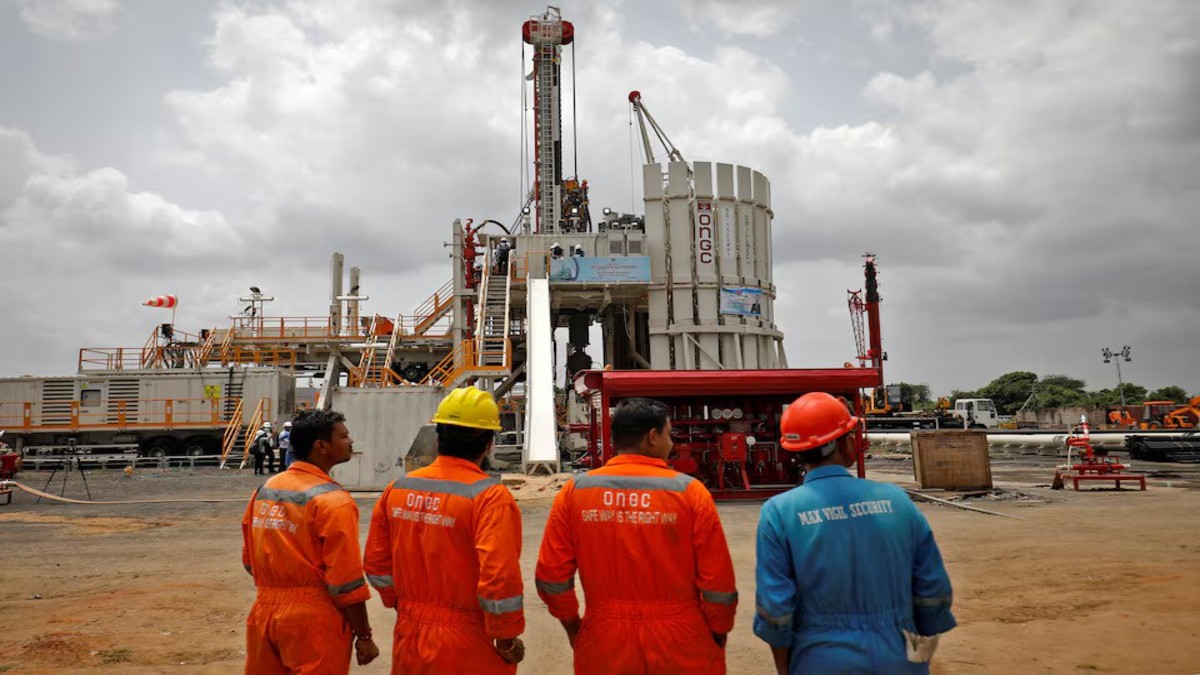
 "Experts note that while India’s near-term supply is secure, the immediate impact of the West Asia tensions will likely be reflected in higher crude prices and broader macroeconomic pressures. Representational image: Reuters/Amit Dave")
Oil and gas prices continue to spike as war expands in West Asia. (Though Tuesday marked a plunge in oil prices, but how far this is sustainable is yet to be seen.) Global oil markets were already anticipating an upward price shock as Tehran called to close the Strait of Hormuz. The US says the “hardest hits” on Iran are “yet to come”. Conflict is no more just the United States and Israel against Iran. Explosions were seen across Qatar, the UAE, and Kuwait as Iran’s retaliatory strikes continue. Iran’s drones hit Aramco Oil Refinery Ras Tanura, one of Saudi Arabia’s key refining hubs, adding to fears of broader disruption in the region’s energy infrastructure, albeit the current damage is limited and contained.
Tehran’s attacks on oil and gas infrastructure in Qatar are also having their impact. QatarEnergy announced it would cease production of liquefied natural gas (LNG) and associated products at its operating facilities in Ras Laffan Industrial City and Mesaieed Industrial City. An Iranian official has warned the country will “set fire” to any ships trying to pass through the Strait of Hormuz, a crucial oil and gas route.
France has declared it is “ready” to take part in the defence of Gulf nations and Jordan against potential attacks, amid a significant escalation in regional conflict. UK PM Starmer says the US can use UK bases for “defensive strikes” on Iran. Meanwhile, Israel kills 31 in a Beirut strike following a Hezbollah rocket attack. Russia and China continue to support Iran with strike weapons and air defence systems. Clearly the war is expanding.
The Strait of Hormuz accounts for approximately one-fifth of the global crude oil flow. Analysts at S&P Global Commodities at Sea (CAS) had noted that activities in the strait had fallen by 40-50 per cent since February 28. Brent Crude futures (for May) were trading more than 8.6 per cent higher at $79.18 per barrel, nearly breaching a more than one-year high. In fact, intraday, the futures had briefly jumped about 12 per cent to $81.5 for every barrel. Maritime analytics provider Kpler noted that “Asian energy security is most exposed, with India and China facing acute supply risks across crude, LPG, and LNG”. It held India and China as the “dominant buyers” of the crude transiting from the route. Both China and India started switching back to increasing crude from Russia.
Quick Reads
View AllHowever, as of Tuesday, the price of oil - which had surged past $100 a barrel on Monday - has dipped closer to $90, following US President Donald Trump’s statements indicating that the conflict with Iran could soon come to an end.
Anyways, the real impact will emerge only about a month from now, as most countries keep reserves. Europe is also significantly affected, since it replaced Russian gas with that from Doha following the former’s actions in Ukraine. Relatively insulated US oil and gas companies saw shares going up.
Global Oil Reserves and Supplies
For the last decade there has been no addition to known oil reserves. Major countries with a percentage of reserves are Venezuela (18.2 per cent), Saudi Arabia (16.2 per cent), Canada (10.4 per cent), Iran (9.5 per cent), Iraq (8.7 per cent), Kuwait (6.1 per cent), the UAE (5.9 per cent), Russia (4.8 per cent), Libya (2.9 per cent), the US (2.1 per cent), China (1.5 per cent), India (0.29 per cent), and Pakistan (0.021 per cent), among many others.
Global oil supply is heavily driven by the Americas and Opec+ production, reaching approximately 106-108 million barrels a day (mb/d) in 2025–2026, creating a potential market glut. While US production remains dominant, geopolitical tensions in West Asia and Russia continue to introduce volatility and affect market prices. In 2025 significant output came from the United States (strong shale output), totalling around 15 mb/d, and top producers like Saudi Arabia (10 mb/d), Russia (10.7 mb/d), Canada (4-4.8 mb/d), Iraq (4-5 mb/d), and China (4.9 mb/d). Iran was producing around 3-4 mb/d in 2025.
Global oil supplies were considered comfortably balanced, with non-OPEC supply growth, particularly from the US, Brazil, and Canada, expected to offset some OPEC+ adjustments. Emerging high-volume producers will benefit from post-conflict recovery and investment. Brazil (approximately 3.1 mb/d) is increasing offshore output, notably in the Santos Basin. Kuwait (approximately 2.5-2.8 mb/d) is focused on modernising mature fields to maintain output.
Main Oil and Gas Importers
China, the United States, and India are the world’s largest importers of crude oil. Key demand drivers include massive industrial demand in Asia and high consumption in the US. Primary sources for these nations are West Asia (Iraq, Saudi Arabia, and UAE) and Russia. China is the world’s largest importer of crude oil and liquefied natural gas (LNG), with roughly half of its crude sourced from West Asia, while significantly increasing purchases from Russia. It is also set to become the top importer of piped natural gas. The United States, despite being a top producer, remains a major importer with high daily consumption. India, the third-largest consumer of crude oil, imports primarily from Russia, Iraq, Saudi Arabia, and the UAE. Other major importers are South Korea, Japan, and European nations (including Belgium and Spain), which are significant importers, particularly for natural gas.
While West Asia remains the dominant supplier for Asian giants (China and India), with countries like Iraq, Saudi Arabia, and the UAE providing a significant portion of their needs. Russia has become a major supplier to India and China, especially following geopolitical shifts in 2024–2025. China is the top LNG importer, with a growing reliance on West Asia and Russian supply. Major importers are increasing strategic reserves and, in the case of India, diversifying suppliers to manage high global prices and supply risks.
Indian Oil and Gas Import Sources
In 2025–26, India maintained a high dependence on imported energy, sourcing approximately 88 per cent of its crude oil and 51 per cent of its gas needs from overseas. In the first 10 months of FY 2025-26 (April-January), India imported 206.3 million tonnes of crude oil, a nearly 3 per cent increase year-on-year. Russia remained the top supplier, while total imports from April-December 2025 were valued at $105.1 billion, despite a slight decrease in the import bill due to lower prices.
While Russia remained a top supplier, import diversification efforts intensified due to geopolitical risks, with significant volumes also sourced from West Asia, particularly, Iraq and increasing imports from the US. Russian oil made up over 35 per cent of imports in November 2025; volumes dipped to a 38-month low in December 2025 and January 2026, falling below 25 per cent share. In February 2026, Russia remained the largest supplier of crude to India, and Saudi Arabia narrowed the gap and emerged as a close second.
Major suppliers in late 2025 and early 2026 included Russia, Iraq, Saudi Arabia, the UAE, and the U.S. India imports roughly 80 per cent of its Liquefied Petroleum Gas (LPG) from Qatar, followed by the UAE, Saudi Arabia, and Kuwait. Following geopolitical tensions, India is diversifying by increasing purchases from the US (up 31 per cent in Dec 2025) and exploring more from Venezuela. As of early March 2026, amid rising West Asian tensions, India is actively securing oil availability to manage affordability. High reliance on the Strait of Hormuz for 80 per cent of its LPG makes supply chain security a priority.
India among Top Global Refiners
The United States, China, Russia, India, and South Korea are the world’s top oil-refining nations, with the US and China leading in total capacity. These nations dominate global refining due to massive infrastructure. India is home to the world’s largest single-site refinery (Jamnagar) and a top-five global refining hub.
While the global energy market is expected to grow at a slow pace, and several refineries worldwide are facing closure, India stands out as a bright spot, projected to contribute nearly 30–33 per cent of global energy demand growth in the coming decades. He pointed out that India’s refining capacity currently stands at about 258 million metric tonnes per annum (MMTPA) and is on track to reach around 310 MMTPA by 2030, with long-term plans to scale further to 400–450 MMTPA. This expansion will consolidate India’s position among the top three refining hubs globally, as around 20 per cent of existing global refining capacity, over 100 refineries, faces potential closure by 2035.
Data Centres and Energy
Data centres currently consume around 3 per cent of global electricity, a figure projected to more than double by 2030, driven by AI and cloud growth to potentially over 945–1,000 TWh. Large hyperscale facilities often require 100 MW or more, equivalent to the demand of 350,000+ homes. Data centre power demand grew at 12 per cent annually over the last 5 years, with accelerated computing for AI significantly increasing energy intensity. AI, which represented 5-15 per cent of power usage in recent years, could account for 35-50 per cent of data centre electricity by 2030.
Global Strategic Petroleum Reserves
Petroleum products continue to be strategic assets that are still the drivers of all transportation, significant electricity production and many industrial processes. The world consumes roughly 108 million barrels of crude oil per day. This translates to 39.5 billion barrels a year. The proven global oil reserves currently are nearly 1,650 billion barrels, and that will last nearly 45 years. Petroleum and gas reserves are nature’s blessing to only a few select regions of the world. Most large economies of Europe, China, Japan, and India, among others, are major importers of petroleum products. Strategic Petroleum Reserves (SPR) refer to crude oil inventories (or stockpiles) held by the government of a particular country, as well as private industry, to safeguard the economy and help maintain national security during an energy crisis. SPR are intended to be used to cover short-term supply disruptions.
The Ukraine war and now the West Asia crisis have once again emphasised the need for logistic supply chain management and how disruptions can upset any country’s strategic and tactical intentions. They also impact the day-to-day living of the citizens.
The International Energy Agency (IEA), a group of 31 countries, requires members to hold strategic reserves equal to 90 days of the previous year’s net imports, though commercial stockpiles can be included in that total. Only net-exporter members of the IEA are exempt from this requirement. The forward commercial storage agreements allow oil-exporting countries increased flexibility on commercial storage and allow petroleum to be stored within an oil-importing country. Such reserves remain technically under the control of the oil-exporting country. The US, China (a non-IEA member), and Japan are leading crude oil consumers and maintain the largest SPR. Many other non-IEA countries have started work on their own SPR.
The US SPR is the world’s largest, with an authorised maximum capacity of 727 million barrels. The reserves are kept in salt caverns located at different locations along the Texas and Louisiana Gulf Coasts. China currently holds roughly 511 million barrels in SPR, which corresponds to less than 50 days of Chinese petroleum imports.
Simultaneously, China is rapidly shifting to electric vehicles and is not only building lithium stocks for batteries but has also acquired processing facilities and mines, including overseas. The European Union (EU) countries are expected to maintain 90 days of SPR. Japan held SPR equivalent to 133 days of crude oil imports. Singapore maintains an SPR of about 32 million barrels of crude oil and 65 million barrels of refined petroleum products. South Korea’s oil stocks at their peak have been for 240 days (124 days of government stocks and 117 days of industry stocks). Taiwan’s oil refinery operators and importers are required to maintain an oil security stockpile of no less than sixty days of supply. The government maintains an oil security stockpile of no less than 30 days. Taiwan is also looking at factoring in the possible blockade by China.
Because of proximity and friendship with West Asian nations, Pakistan had not looked at SPR seriously. Pakistan’s Oil and Gas Regulatory Authority (OGRA) has decided to evaluate and plan increasing SPR from the current around 30-day emergency reserve. Joint Staff Headquarters (JSHQ), Ministry of Defence, has proposed that SPR should be established underground to avoid damages in case of a terrorist attack and enemy aerial strikes. Pakistan has announced plans for a 20-day emergency reserve initially, but the work has still to begin.
Indian Strategic Reserves
India is the world’s fourth biggest refining hub, with a refining capacity of 523 million barrels per year, after the United States, China and Russia. India has been working on expanding its SPR capacity to hedge against global supply disruptions and price spikes.
Indian Strategic Petroleum Reserves Ltd (ISPRL) is responsible for managing strategic reserves. India’s three existing SPRs have a combined capacity of 36.7 million barrels. The storage sites are at Mangalore, Karnataka (10.5 million barrels); Padur, Karnataka (17.53 million barrels); and Visakhapatnam, Andhra Pradesh (9.33 million barrels). As per the IEA, India’s oil stocks, including SPR volumes, were enough to meet about 74 days of consumption. All the storage is made full when international crude prices drop, and when prices shoot up, the government releases SPR to mitigate market volatility. Expanding oil storage capacity would also help India join the IEA, which requires its members to hold a minimum of 90 days of oil consumption.
India plans to build its first privately managed SPR by 2029-30, granting the operator the freedom to trade the stored oil, the chief executive of ISPRL, LR Jain, said. The model will be like the ones in Japan and South Korea, which allow private lessees, mostly oil majors, to trade the crude. The two proposed private SPRs will be at Padur, Karnataka, with an 18.3 million barrel storage cavern, and the second in Chandikhol, Odisha, will store 29.3 million barrels. The stores will be linked to oil import ports through pipelines. The Padur SPR will cost around Rs 55 billion ($659 million), and the central government will invest 60 per cent of it. These two will take India’s total SPR to 84.3 million barrels. The government will have the first right to the oil in the event of a shortage. The eventual plans are to one day increase the crude reserve capacity to 132 million barrels.
Way Ahead India
Energy supply security is becoming more important as global spare capacity has been uncomfortably low. In addition, India’s ageing oil wells are struggling to keep their domestic oil production steady amid growing oil demand. India is looking at diversifying the sources of crude oil. The government has approved a proposal to invest $1.6 billion to develop an oil block in Brazil in an attempt to procure equity oil overseas. India has been stepping up cheap Russian oil purchases in recent months despite sanctions from the West on oil trade with Russia after the conflict in Ukraine.
The IEA predicts that India could well be the largest oil importer, increasing the country’s vulnerability to threats of physical supply disruptions leading to sharp price fluctuations. The government has approved fiscal incentives to attract investments and technology to improve recovery from oil fields worth Rs 50 lakh crore in the next twenty years. India is looking for more energy sources abroad.
The Oil Ministry plans to set up bio-CNG (compressed natural gas) plants and allied infrastructure to promote the use of clean fuel. 90 per cent of Indian oil imports are through foreign-owned ships. This has its own dynamics and risks. India needs to acquire its own oil tankers. Ultimately India must hasten building SPR capacities quickly.
Amid escalating US and Israeli strikes on Iran and reports of a temporary closure of the Strait of Hormuz, Indian officials have reassured that the country is unlikely to face immediate physical disruptions in crude oil or fuel supplies. Indian refiners maintain inventories sufficient to meet 10-15 days of crude demand, while fuel stocks cover an additional 5-7 days, providing a strong buffer against short-term supply shocks. Experts note that while India’s near-term supply is secure, the immediate impact of the West Asia tensions will likely be reflected in higher crude prices and broader macroeconomic pressures.
(The writer is former Director General, Centre for Air Power Studies. Views expressed in the above piece are personal and solely those of the author. They do not necessarily reflect Firstpost’s views.)