

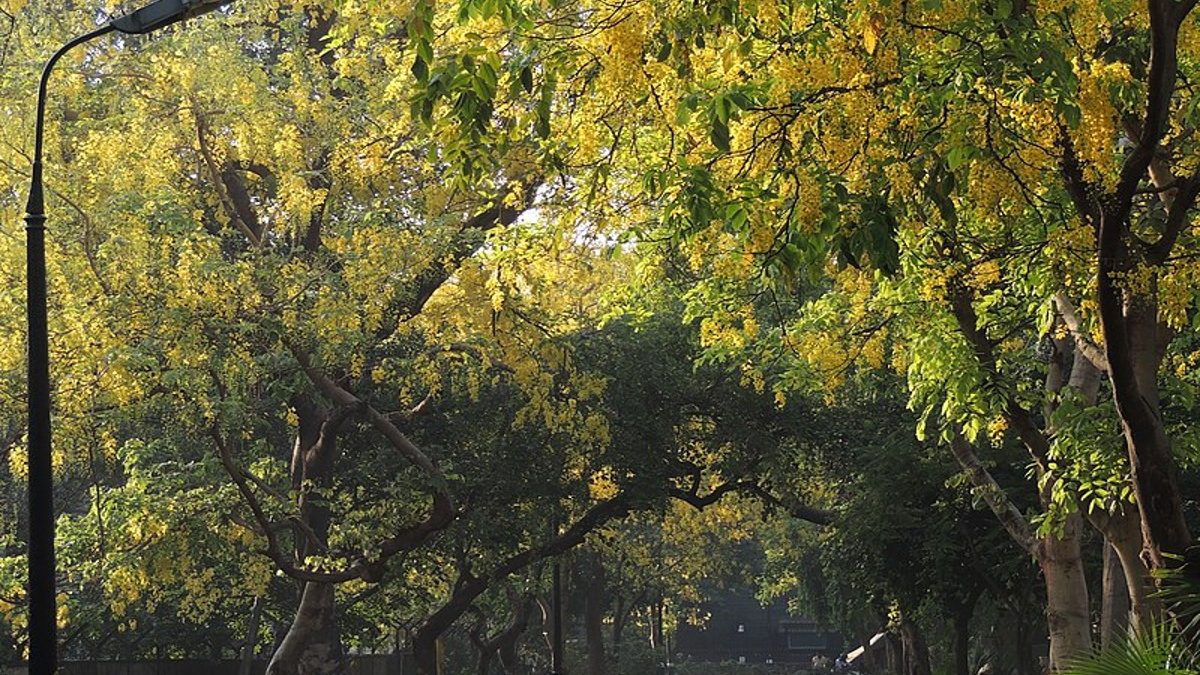
 "How planting trees is a simple solution to counter air pollution")
As Delhi grapples with yet another harrowing bout of air pollution caused by Ghazipur landfill fires, the city, especially its eastern part, finds itself ensnared in a blanket of toxic smog, pushing its air quality index to alarming levels again. With readings skyrocketing to several times the World Health Organization’s recommended limit, the severity of the situation has prompted drastic measures, including school closures and restrictions on construction activities.
This onslaught of pollution not only poses immediate health risks but also casts a long shadow over the residents’ quality of life, with projections suggesting a staggering reduction of 10 years in life expectancy.
Health experts equate breathing this hazardous smog to smoking a staggering 14 cigarettes every day. Laden with nanoparticles capable of infiltrating the lungs and bloodstream, this lethal smog poses a grave threat, fueling respiratory ailments and health complications. In the face of this crisis, the urgent need for effective solutions to combat air pollution has never been more evident.
It is no news that the scourge of pollution has seeped into every facet of our lives - the water we drink, the soil we rely on for sustenance, and the very air we breathe. This dire reality confronts millions in bustling metropolises across the globe, where densely packed populations are disproportionately exposed to harmful contaminants. As these pollutants infiltrate our environment, they accumulate, magnifying in intensity as they ascend the food chain. ]
With urbanisation advancing at breakneck speed and our demands on natural resources escalating, we stand close to tainting the very essence of our existence. Clean air to fill our lungs, uncontaminated food to nourish our bodies—these are not luxuries, but fundamental necessities for our survival. Can we, in good conscience, stand idly by as our cities succumb to this relentless march of degradation? The time for action is now.
Impact Shorts
More ShortsWhat is pollution?
Before we unpack why pollution occurs or how to mitigate it, it is vital to ask, what do we exactly mean by pollution in our cities. Pollution occurs when high concentrations of substances persist in the environment due to human activities or natural events, which have harmful effects to the environment. The World Health Organization (WHO) identifies six main air pollutants: particulate matter, ground-level ozone, carbon monoxide, sulfur oxides, nitrogen oxides, and Volatile Organic Compounds (VOCs). For instance, when vehicles burn gasoline, they emit VOCs, which react with oxygen in the atmosphere to form harmful VOCs. However, despite the prevalent focus on vehicle emissions and agricultural practices like hay burning, it is crucial to recognize that construction activities play an even more important role in contributing to air pollution. Dust and emissions generated from construction sites are major sources of pollution, often overshadowed by the attention given to other sources. Diesel or gasoline-powered machinery used in construction sites release nitrogen oxides (NO2) and fine particles known as particulate matter (PM), with sizes ranging from PM2.5 to PM10 micrometers. These pollutants result from activities of various construction vehicles, such as earthworks, demolition, and material processing, contributing to both local air quality issues and wider environmental impacts
How cities around the world have battled air pollution
London’s Policy Effort
On December 5, 1952, London, England, was engulfed in a thick smog that triggered respiratory illnesses, leading to the Great Smog, a deadly event lasting nearly a week and claiming between 4,000-10,000 lives. A 2010 study estimated that long-term exposure to PM2.5, a major pollutant, causes around 4,300 deaths annually in London. In response, strict measures were taken to address pollution. It included the implementation of green infrastructure to mitigate coarse pollution, stricter emission standards for construction vehicles to reduce idling, and the replacement of local power generators with electric alternatives. Practices such as water recycling on site, prohibiting material burning, and revegetation of exposed areas due to earthwork were adopted. Site operators were encouraged to install green walls and vegetation to minimize dust and pollution impact, enhancing the local environment. Compliance with emission standards, such as Euro IV for PM for HGVs and Euro 3 for heavier vans and mini-busses, was enforced within the London Low Emission Zone.
Policy Transformations in New York
Yet another instance of a city reversing the tide on pollution was seen in New York. New York City has seen a remarkable 40% decrease in fine particulate matter pollution over the past two decades. Back in the 1960s, smog was pervasive, with deaths from chronic bronchitis and pulmonary emphysema on the rise, attributed to both the dirty air and widespread smog. In 1966, the situation reached a critical point, with visibility severely reduced and the air dense enough to prompt officials to advise vulnerable individuals to stay indoors until the smog cleared. The haze led to an alarming number of deaths, with researchers identifying an increased death rate of approximately 24 per day during the smog-covered period.
President Lyndon B. Johnson responded to this crisis by working with Congress to enact federal legislation regulating air pollution. This resulted in the passage of the 1967 Air Quality Act and the landmark 1970 Clean Air Act, which established federal standards for mobile sources of air pollution and hazardous air pollutants. In parallel, initiatives like tree planting programs were launched by the Environmental Protection Agency (EPA) in the 1960s to address environmental conservation. These efforts focused on reforestation, afforestation of degraded lands, and urban tree planting to enhance green spaces and combat pollution.
Delhi has done it before!
In India, the prospect of achieving clear skies is not only out of reach, but also possible- most recently illustrated during the pandemic. The COVID-19 lockdown in 2020 provided a glimmer of hope as within 8 weeks, there was a significant improvement in air quality. Delhi, along with other cities, witnessed a drastic reduction in air pollution during the lockdown period. Encouraged by this positive change, several cities around the globe initiated measures to address pollution at its source. For example, Bogota, Colombia, is transitioning to electric buses and metro systems to reduce air pollution by 10 percent by 2024, while also promoting bicycle usage with one million daily trips recorded in 2020. Similarly, Seoul, South Korea, announced a ban on diesel cars from the public sector and mass transit by 2025. They also unveiled plans to plant trees along rivers and roads to create wind paths that would direct cleaner air into the city center. Seoul also aims to increase green space by 30 percent by 2030. The Green Bangkok 2030 project aims to enhance green space in the city, with plans to open eleven parks and a 15km greenway to reduce reliance on private transportation. Paris has taken bold steps by banning polluting vehicles and repurposing road space for trees, pedestrians, and bike lanes, contributing to efforts to combat pollution. What measures are we planning to take?
Diffusing greens into urban core
Planners and designers are reimagining cityscapes with verdant green corridors and tree-lined boulevards, weaving greenery seamlessly into the urban fabric. The High Line in New York City is a testament to this vision, transforming an old rail line into a vibrant greenway that breathes life into Manhattan’s concrete jungle, while the underline in Miami is reactivating the space under the metro with lush greenery and nodes for activities. Meanwhile, sustainable neighborhoods like Freiburg’s Vauban District prioritize green infrastructure, blending tree-lined streets with pedestrian-friendly design principles rather than prioritizing cars and additional asphalt roads. Iconic public spaces like Chicago’s Millennium Park showcase the beauty of urban forestry, with sprawling gardens and shaded groves inviting visitors to reconnect with nature in the heart of the city.
Landscape infrastructure takes center stage in initiatives such as Seoul’s Cheonggyecheon Restoration Project, where neglected urban streams are reborn as vibrant green corridors. Here, nature is reintegrated with the urban built environment, This landscape revitalizes the natural performance of the river and remediates pollution, providing habitat for aquatic life, local flora, and fauna while providing residents with serene retreats amidst the urban sprawl. In the quest to cultivate greener, healthier urban environments, cities worldwide are embracing innovative strategies to integrate green infrastructure and increasing tree canopy into their bustling urban cores. From policy initiatives to architectural innovations, each facet of urban planning interventions plays a crucial role in fostering symbiotic urbanscapes infused with landscapes, a wholistic ecological way of living.
Back to traditions
Ancient traditions and sacred texts such as the Vedas and Upanishads have always emphasized living in harmony with nature. They teach us that we are not separate from nature but an integral part of it. Ecology wasn’t just a concept in our past; it was intertwined with our very existence. One such sacred practice from our tradition is Vanmahotsav, a tree-planting ceremony dating back thousands of years. Showcasing the importance of tree planting and increasing canopy cover in the past. These ancient scriptures from 5000 years ago, mention the sacredness of certain species and their role in purifying the air. For instance, the fragrance of Guggul (Commiphora mukul) is believed to cleanse the air and cure diseases (A.V. 19.38.1). The peepal tree (Ficus religiosa) holds great significance in our tradition, particularly regarding the cleansing of the environment. Our ancestors approached nature and human settlements with a holistic perspective, showing gratitude and emphasizing coexistence with the natural world, and honoring the ecosystem, which we are a small part of. . As the Brhadaranyaka Upanishad states, “The God who exists in the universe lives in the air, water, fire, and also in trees and herbs. Men should have reverence for them."
Nature’s very own purifiers
In India, rapid urbanization has led to increased density of the built environment, massive land engineering, overexploitation of resources, and population growth, resulting in alarming levels of pollution in the air, water, and soil.
Trees, the unsung heroes in the battle against pollution, play a crucial role in mitigating environmental degradation. They aren’t just passive players in this ecological exchange By harnessing the potential of nature’s own recycling system, we can leverage trees and plants to mitigate pollution and restore the health of our environment in surprisingly rapid ways.
Phytoremediation, the use of plants to clean up contaminated soil and water, or phylloremediation to clean polluted air, are well-researched, sustainable, and cost-effective solutions to combat pollution. This process embodies the symbiotic relationship between plants and microbes, highlighting the intricate ways in which nature works to heal itself from the harm caused by human activities. Planting certain species, like the Ixora spp and tecoma stans, one can create a natural air purifying barrier, absorbing harmful substances like hydrocarbons and aromatic compounds. Even everyday favorites like mango and neem trees, along with humble crops like maize and safflower, play crucial roles in cleansing our air. Recent studies have shown that plants rich in ascorbic acid, like the mighty pipal and mango trees, are particularly effective at combating the adverse effects of pollution.
Plant roots also play a crucial role in breaking down toxins, transforming harmful pollutants into less detrimental forms. While microbes within the root system perform this essential task in the soil, the foliage of plants provides a thriving habitat for a diverse community of microorganisms known as the phyllosphere. This often-overlooked dynamic ecosystem possesses remarkable capabilities to absorb and degrade pollutants from the air. Drawing inspiration from nature’s self-healing mechanisms, we must develop refined patterns of urban growth that allow us to grow while being less destructive. Instead of exacerbating pollution, we can learn from nature’s resilience and adaptability, adopting strategies that promote environmental restoration and sustainability.
Way Ahead
By harnessing the natural capabilities of trees and vegetation, we can take significant strides towards safeguarding public health and environmental sustainability. While government initiatives and city-wide landscape projects play a crucial role in promoting green infrastucture efforts on a large scale, individual action is equally important in making a tangible impact on the environment.The responsibility to combat pollution doesn’t solely rest on cities, public spaces, or the government; it’s a duty that falls on each of us.
Taking the initiative to plant trees ourselves empowers us to contribute directly to greening our surroundings and combating issues like air pollution, habitat loss, and climate change. Consider this: a single mature tree acts as a powerhouse, absorbing carbon dioxide and replenishing life-sustaining oxygen through the miracle of photosynthesis. Whether it’s planting trees in our backyard, neighborhood, or local parks, every tree we plant can make a difference in improving the quality of our environment, providing habitat for wildlife, and enhancing the overall well-being of our ecosystems.
Imagine, one tree can provide enough oxygen for four people in a day, while also absorbing over 48 pounds of carbon dioxide annually. It’s an incredible symbiosis, crucial for sustaining not just us but the entire ecosystem. With each breath we take, we owe a debt of gratitude to these silent guardians of our atmosphere. Given India’s staggering population of 1.4 billion, the simple act of planting just one tree in our lifetime can dramatically enhance our immediate environment. So, let’s not wait for others to act; let’s take it upon ourselves to plant and nurture trees, ensuring a cleaner, healthier future for all.
The author is the founder of Studio Arth, an award-winning landscape architecture firm based in Coconut Grove, Miami. The views expressed in the above piece are personal and solely those of the author. They do not necessarily reflect Firstpost’s views.


 "Russian drones over Poland: Trump’s tepid reaction a wake-up call for Nato?")
 "As Russia pushes east, Ukraine faces mounting pressure to defend its heartland")
 "Why Mossad was not on board with Israel’s strike on Hamas in Qatar")
 "Turkey: Erdogan's police arrest opposition mayor Hasan Mutlu, dozens officials in corruption probe")
 "Russian drones over Poland: Trump’s tepid reaction a wake-up call for Nato?")
 "As Russia pushes east, Ukraine faces mounting pressure to defend its heartland")
 "Why Mossad was not on board with Israel’s strike on Hamas in Qatar")
 "Turkey: Erdogan's police arrest opposition mayor Hasan Mutlu, dozens officials in corruption probe")



