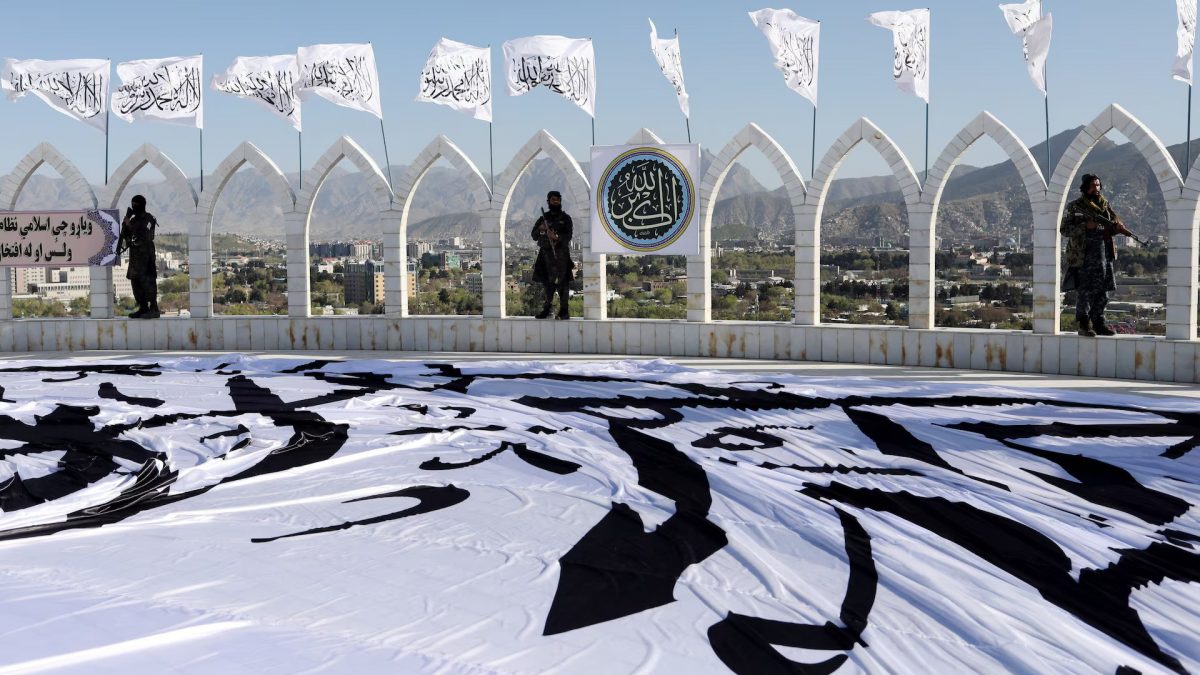
 "How India’s Taliban outreach can offset China-Pakistan’s hold on Afghanistan")
New Delhi’s evolving relationship with the Islamic Emirate of Afghanistan (Taliban) marks India’s realist foreign policy approach, ushering in a new era of developing ties between the two countries. India and Afghanistan share a rich, millennium-old cultural and trade relationship, dating back to the Indus Valley civilisation.
While the US withdrawal and the Taliban’s return to power in 2021 briefly strained India’s relationship with Afghanistan, India’s recent high-level engagement with the Taliban has revived their dormant ties and marked a major geopolitical shift in the region.
Contemporary Aspects
From a geostrategic perspective, the deepening relationship between India and Afghanistan, amid rising border tensions between Afghanistan and Pakistan, has been a success for India’s evolving foreign policy. The successful high-level talks between Indian Foreign Secretary Vikram Misri and Afghanistan’s acting Foreign Minister Mawlawi Amir Khan Muttaqi signal a possible future of increased bilateral talks.
After the Taliban’s takeover of Afghanistan in August 2021, India had almost abandoned its hopes of re-establishing a strong presence in Afghanistan. However, recent discussions between Foreign Secretary Misri and Minister Muttaqi have rekindled hope for the revival of India’s long-held strategic projects in the country.
In his meeting, Minister Muttaqi thanked India for its significant humanitarian assistance and urged India to expand its investment in Afghanistan’s development. While India lags behind China in investment in the region, this request should be seen as an opportunity for India to increase its presence and investment in Afghanistan, a gateway to Central Asia. Should India overlook this, China could capitalise on the opportunity and further strengthen its economic ties with Pakistan, especially through the China-Pakistan Economic Corridor (CPEC).
India’s investment and development programs in Afghanistan could offer an alternative to the International North-South Transport Corridor (INSTC), positioning the region as a critical trade route connecting India to Central Asia, Europe, and Russia.
Quick Reads
View AllThe China Factor
CPEC is gradually losing its sheen, as it has been facing significant resistance from the local people of the Sindh and Balochistan regions (these two provinces make up 44 percent of the total landmass of Pakistan). The resistance has deepened to the extent that they have started targeting Chinese workers and engineers. We saw attacks on Chinese officials and engineers. We have recently seen in the news the attacks on some Japanese engineers working at the site of the CPEC project, as these engineers looked like Chinese. This clearly shows the depth of hatred and resistance to this project in the region. Therefore, China may look for an alternative to its CPEC and Gwadar port, whereas India, with the help of Chabahar port, has been taking a lead over China in this Persian Gulf region.
In light of this resistance, China may seek an alternative route to bypass Pakistan’s volatile regions. The Wakhan Corridor, which passes through Afghanistan and Pakistan-Occupied Kashmir (POK), could be a key link in China’s strategy to connect to the Persian Gulf. However, such a move could increase China’s influence in Afghanistan and overshadow India’s presence, especially if China successfully garners Afghanistan’s support for infrastructure projects in the region.
Despite these challenges, the border conflict between the Taliban and Pakistan offers India a strategic advantage. These tensions may prevent China from extending CPEC projects to Afghanistan, which could, in turn, allow India to maintain and expand its influence in the region.
India’s De Facto Support and Regional Gains
Afghanistan’s mineral wealth, valued at around $1 trillion, has attracted significant Chinese interest, particularly in oil and lithium reserves. However, India has focused on infrastructure development, roads, and connectivity, setting itself apart from China. India’s approach emphasizes long-term development over short-term mineral extraction, a contrast to China’s resource-centric strategy.
The rise of the Islamic State Khorasan Province (ISKP), a militant group that opposes the Taliban’s cooperation with China, has indirectly benefited India. ISKP’s consistent attacks on Chinese personnel and projects in Afghanistan align with India’s interests by hindering Chinese operations in the region. In contrast to China, India has been engaged in providing humanitarian assistance and focusing on infrastructure development, which strengthens India’s role as a responsible regional partner.
By positioning itself as a development partner, India enhances its influence among the Afghan populace, building goodwill while countering Pakistan’s and China’s regional dominance.
Iran’s Neutral Stance and Opportunities
Although Iran has had a strained relationship with the Taliban, its recent setbacks in Syria have rendered it largely neutral on the instability in Afghanistan. This could provide India with a green light to accelerate the Chabahar-Zahedan connectivity project, further boosting India’s regional trade prospects.
India’s deepening ties with the Taliban also align with Russia’s recent decision to remove the Taliban from its list of terrorist organisations. This shift reflects shared geopolitical interests between Russia and India, strengthening the bilateral relationship and encouraging further collaboration in the region.
Navigational Dilemma
While India may face criticism from the West for engaging with the Taliban, listed as a terrorist organisation by many Western countries, India’s geopolitical presence in the region could counterbalance Chinese influence. India’s strategic interests in the region might allow it to avoid significant backlash, as its growing influence is essential in curbing China’s expansion in Central Asia.
However, India must remain cautious of the Taliban’s historical stance on Kashmir, which has often been hostile to Indian interests. The Taliban’s past commitment to supporting Kashmir’s “freedom” and its destruction of the Bamiyan Buddha — a cultural symbol of ancient India — must not be forgotten. India’s direct engagement with the Taliban may neutralise some anti-India sentiments from other militant factions, but it should remain vigilant in navigating these delicate relationships.
In conclusion, India’s deepening ties with Afghanistan, despite the challenges, offer significant strategic advantages. By engaging with the Taliban and pursuing development and humanitarian efforts, India positions itself as a key player in the region, capable of countering Pakistan’s influence while limiting China’s foothold in Afghanistan. Ultimately, India may need to make difficult decisions, but the benefits of a strong, strategic relationship with Afghanistan could outweigh the risks.
The author is a doctoral candidate, Centre for West Asian Studies, School of International Studies, Jawaharlal Nehru University, New Delhi. The views expressed in the above piece are personal and solely those of the author. They do not necessarily reflect Firstpost’s views.


 "'PM Modi a fantastic man... we're going to have a good deal': Trump tells Moneycontrol | Watch")
 "Is Canada preparing for a US invasion as Trump unsettles allies? Report says...")
 "‘Rules-based order is fading’: When Carney responded to Trump challenge in Davos | Full text")
 "Davos 2026 Live Updates: Trump says he won’t use force to take Greenland, warns Europe is ‘not heading in the right direction’")
 "'PM Modi a fantastic man... we're going to have a good deal': Trump tells Moneycontrol | Watch")
 "Is Canada preparing for a US invasion as Trump unsettles allies? Report says...")
 "‘Rules-based order is fading’: When Carney responded to Trump challenge in Davos | Full text")
 "Davos 2026 Live Updates: Trump says he won’t use force to take Greenland, warns Europe is ‘not heading in the right direction’")