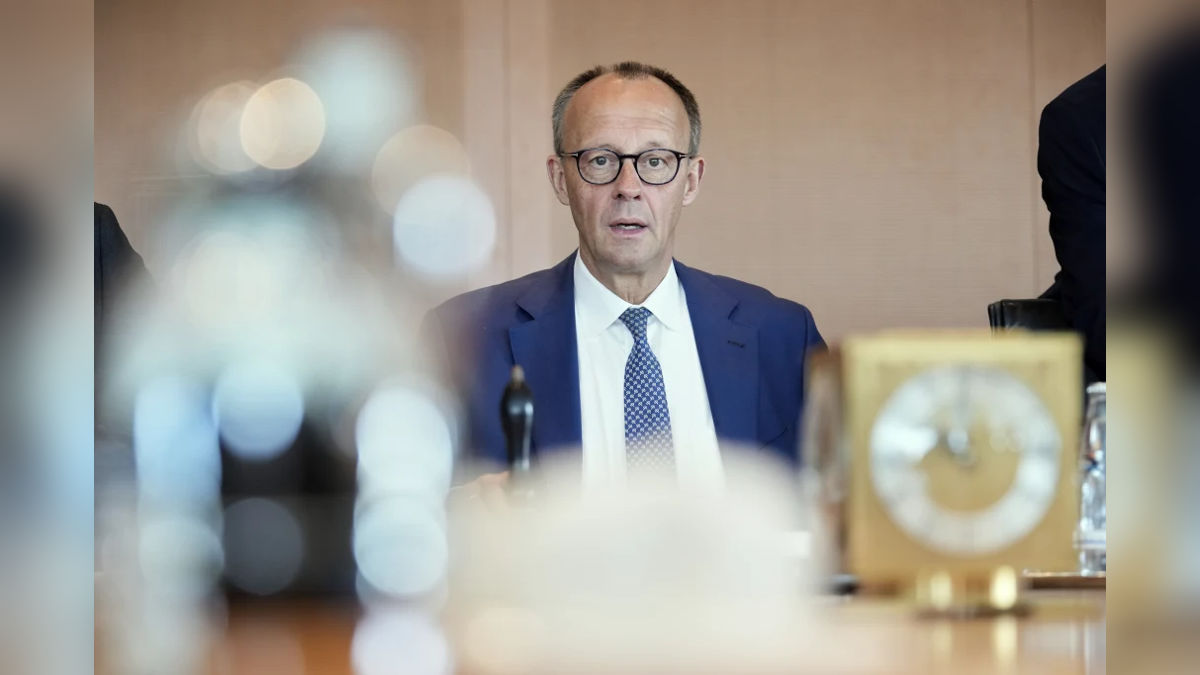
 "Germany recognises the China challenge — but still hesitates")
Germany’s decision to establish an expert commission to examine economic dependence on China is welcome, overdue, and deeply revealing. Welcome, because Berlin is finally acknowledging what many in industry and security circles have warned for years. Overdue, because the risks have been visible for a long time. Revealing, because it exposes how hard it still is for Europe’s largest economy to turn strategic awareness into political action.
The Bundestag-approved commission, expected to meet for the first time in February, has a broad mandate: assess dependencies, evaluate risks to critical infrastructure and supply chains, and recommend policy responses. Its members include representatives from business associations, trade unions, and leading research institutes. The stated goal is to align economic realism with geopolitical reality and move towards a more coherent China policy.
All of this sounds sensible. The danger is that sensibility becomes a substitute for urgency.
Germany has lived through this story before. Its long-standing energy dependence on Russia was justified for years in the language of pragmatism, interdependence, and mutual benefit. When the geopolitical reckoning came, the costs were immediate and severe. As journalist Georg Mascolo has warned, many of the same misjudgements are now repeating themselves in Germany’s approach to China, on a larger scale. China is not just an energy supplier; it is embedded across German industry, from automobiles and machinery to chemicals, batteries, and green technologies.
The commission exists because Germany still does not fully perceive the depth of these dependencies. That admission alone is striking. But the more troubling reaction is the sense of relief that seems to accompany its creation, as if setting up an expert body were itself a form of progress. There is a real risk that politicians and industry leaders will now pause, waiting for recommendations, while structural vulnerabilities continue to grow.
Business voices themselves are uneasy. Ferdinand Schaff of the Federation of German Industries has warned that the China challenge is often misunderstood. It is not only about what Germany does in or with China but also about how competitive it remains at home. Chinese state-subsidised competition now confronts almost every sector in which Germany once enjoyed global leadership. According to estimates cited by the Rhodium Group, delays in protecting European industry cost hundreds of manufacturing jobs each day. The precise numbers may be debated, but the direction is evident.
Quick Reads
View AllFrom an Indian perspective, Germany’s dilemma feels familiar and instructive. India, too, spent years separating economics from geopolitics in its dealings with China. That illusion collapsed abruptly in 2020 after the border crisis in Ladakh. India’s response was not perfect, but it was decisive: tighter scrutiny of Chinese investment, bans on Chinese digital platforms, and a renewed push for supply-chain diversification. The lesson was blunt but clear: economic dependence is a strategic vulnerability.
Germany’s approach has been more cautious, shaped by export dependence and coalition politics. Yet the underlying reality is similar. When supply chains, critical infrastructure, and future technologies are dominated by a strategic competitor, economic policy becomes national security policy, whether governments admit it or not.
There is also a European dimension. While Berlin hesitates, momentum has shifted to Brussels. The European Commission’s economic security doctrine, the upcoming RESourceEU raw materials hub, and proposals such as the Industrial Accelerator Act reflect a new willingness to think in strategic terms, even to borrow elements of industrial policy once associated with Beijing. Germany risks becoming a follower rather than a driver of this shift.
For India, this matters. A Germany that moves decisively to diversify supply chains could become a powerful partner in reshaping global manufacturing and technology networks. India positions itself as a trusted alternative in areas ranging from electronics and pharmaceuticals to green energy. That opportunity depends on clarity in Berlin. Strategic ambiguity helps China, not diversification.
There is also a cautionary lesson here for India itself. Expert committees and task forces are attractive because they defer hard choices. But resilience is not built through reports alone. It requires investment, coordination, and political willingness to absorb short-term costs for long-term security. Germany’s experience shows how easily expertise can become a substitute for decision-making.
Germany’s China commission does not have to fail. It can still play a useful role in clarifying risks and challenging outdated assumptions, only if it accelerates action rather than postpones it. The real test is not whether Germany understands its dependence on China, but whether it acts on that understanding before the next shock arrives.
In today’s geopolitical environment, realism delayed is realism denied. Germany learnt that lesson the hard way with Russia. The question now is whether it has learnt it in time with China.
(The writer is a former ambassador to Germany, Indonesia, Ethiopia, Asean, and the African Union, and the author of ‘The Mango Flavour: India & Asean After 10 Years of the AEP’. The views expressed in the above piece are personal and solely those of the author. They do not necessarily reflect the views of Firstpost.)


 "The good and the not-so-good part of India-EU trade talks")
 "‘When India succeeds, world is more secure’: EU chief Ursula says ‘two giants’ deliver win-win deal")
 "India-EU agree on FTA, but the deal isn’t signed yet. Here’s why")
 "Kristi Noem faces public and political wrath over Alex Pretti's shooting")
 "The good and the not-so-good part of India-EU trade talks")
 "‘When India succeeds, world is more secure’: EU chief Ursula says ‘two giants’ deliver win-win deal")
 "India-EU agree on FTA, but the deal isn’t signed yet. Here’s why")
 "Kristi Noem faces public and political wrath over Alex Pretti's shooting")