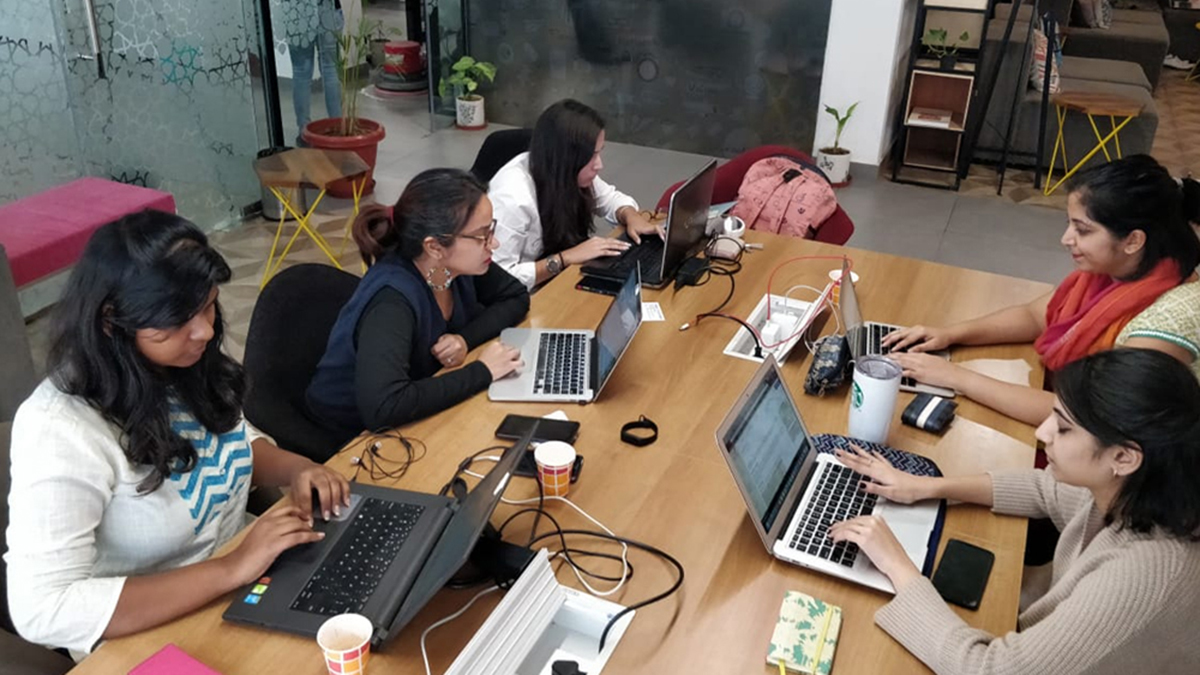
 "The conundrum of liberal feminism. Image courtesy Wikimedia Commons")
DINK - Double Income No Kids is the new cool. Married young women often throw around this label under the garb of feminist choice, asserting their desire to enjoy their freedom and pursue their careers without any hindrances. In this article, I do not intend to question women’s ability to choose, but I do want to provoke them to delve deeper into the societal structures that have made this choice attractive. Especially in the current context of falling birth rates in many parts of the world. We are facing a dire reality, the world is losing the ability to reproduce itself. It is about time that we pause and question, what is going on? Why are increasing numbers of women today, particularly those with economic resources, unwilling to have children?
The cost of liberal feminism
Growing up as a young Indian woman in Dubai and Canada in the late 1990s and early 2000s I was not expected to learn to cook, clean and demonstrate any maternal inclinations. From an early age, I defied gender norms in the clothes I wore, choosing to play tennis at a young age when most girls around me were not playing any sport, and chomping down shawarmas not caring about putting on weight. I was by no means unique in my preferences. But at the time, I was one of the few girls in my social circle who had the luxury of navigating unconventional choices. The liberal feminist discourse of (individualistic) choice was still new and only more available to me due to parents who were intent on being progressive. As with any social shift, while allowing me immense privilege and freedom, this came with unintended consequences: I grew up believing the world was “my” oyster, and there were no limitations or costs associated with pursuing what I wanted. I just had to do the hard yards and get there. Little did I know.
I am telling you this because the aberration of my childhood is now the norm in well-to-do urban parts of the world. Young women are told it is okay and even desirable to operate based on their individualistic preferences, needs, and wants, often outsourcing the costs of their choices to an amorphous other. They abhor any checks or hindrances on their self-expression and are quick to silence these attempts with the tag of patriarchal oppression. They are growing up with the dangerous idea that modifying one’s decisions in line with social expectations or suppressing one’s desires to uphold a collective unit (i.e. marriage) is oppressive. They feel morally sanctioned (given the aeons of oppression against women) to pursue their individualistic goals often at the cost of upholding collective practices like marriage, cultural norms, and raising children. What repercussions does this have for society and heterosexual relations that are the cornerstone of reproducing society?
Childless by choice
The demographic dividend that countries like India and Nigeria are currently reaping making them the biggest source of labour for the world has an expiry date. As many developing countries such as India get richer, more women will join the workforce (in fact there is increasing advocacy around increasing women’s workforce participation). But as trends from developed countries show - as women join the workforce in increasing numbers the costs of raising a child will increasingly outweigh the benefits.
Impact Shorts
More ShortsThe choice to not have children does not occur in a vacuum. There are many aspects to the context of this choice, including the challenge of balancing demanding careers with raising children and the difficulty in finding reliable partners during prime childbearing years. While a lot is said about improving workplace policies and facilities to enable women with children to continue participating in the formal workforce, there is a resounding silence on the role of socialization in shaping women’s decision-making.
When you switch on any show on the OTT platforms consumed avidly by young women the female protagonist invariably does all or some of the following: privilege her convenience and/or own interests over others, pursue her career over and above the demands of a relationship/marriage/family, associate sexual liberation with freedom and attempt to defy social expectations. This is the message that is consumed and internalized as aspirational by a wide range of young women. If you don’t believe me or the marketing of liberal feminism, ask a woman from rural India about her aspirations. She is likely to articulate individualistic and market-driven aspirations for employment, consumption, “ability to wear what she likes” and an impatience with social norms. Social mores that value parenthood and child-rearing, are chided as being regressive and anti-women. Young women perceive their value in so far as they are performing the role of a consumer and productive member of the workforce. Any other choice amounts to “giving in” to societal pressures and reproducing patriarchy. It forecloses the possibility of any collaborative good-faith interaction with men and other women who choose to pursue their reproductive and caregiving roles.
As a collective culture, we feel better about ourselves when we deconstruct the structures that subjugate and oppress poor women. It is time to look inward, how do well-to-do women navigate choices in a culture intent on telling them what to desire and aspire towards? If the plummeting birth rates are not alarming, the brainwashing that young women are subject to should concern you. The fear of archetypal patriarchal oppression has turned young women into puppets of an oppressive ideology that has very little to do with their everyday struggles. This is not feminism. It is a shoddy ideology that pits women against each other and makes them vulnerable to loneliness and anxiety. Young women today are dealing with some real challenges such as greater vulnerability to mental health issues (than men), bullying on social media platforms, pressure to sexualize themselves, and juggling their desire to have a family life and career. But we can only truly address these issues when we lift the fog of liberal feminism that engulfs our vision and prevents women from productively working together.
The author is Associate Professor, School of International Affairs, OP Jindal Global University. Views expressed in the above piece are personal and solely that of the author. They do not necessarily reflect Firstpost’s views.