

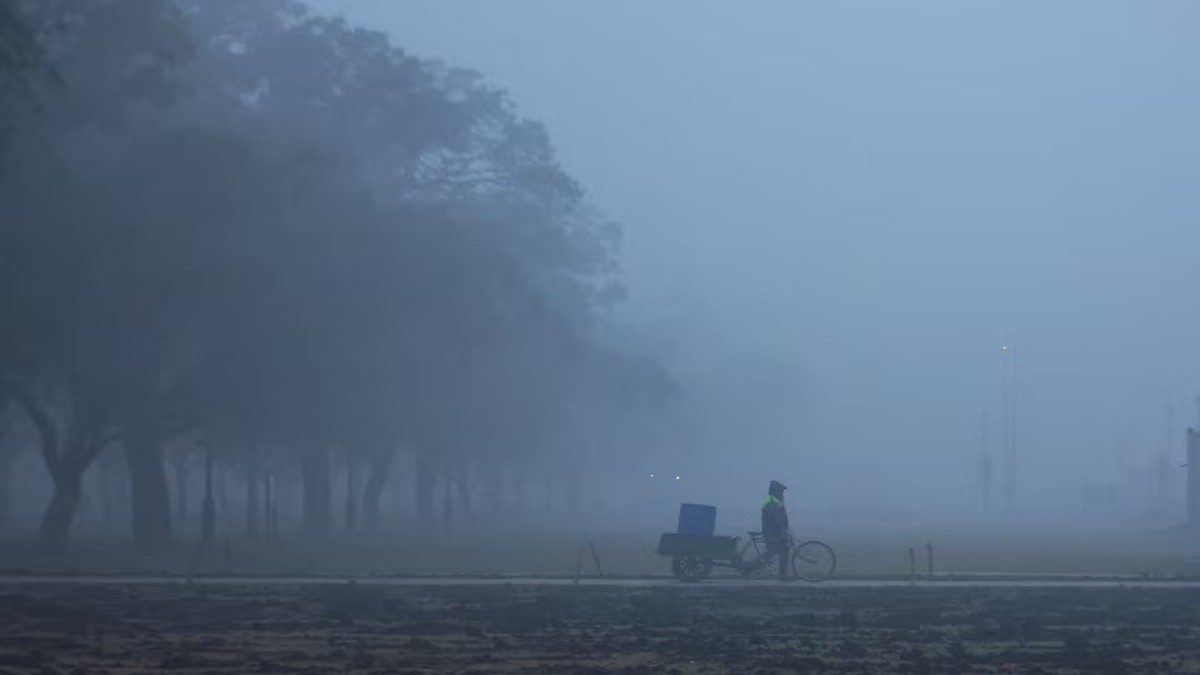
 "Delhi-NCR becoming gas chamber: Nudging farmers to opt for super seeders, organic farming")
As grey, sooty clouds engulf Delhi again, the Yamuna river is frothing with poisonous foam. It is not only the farmers or vehicular pollution to blame, but rather it’s proof that our ecological thinking has taken a leave of absence a long time ago. With our air and water extremely polluted, Delhi citizens are paying the price of unsound policy decisions based on the exploitation of nature. And not cooperating with her.
Let’s begin by talking about the dropping air quality in Delhi. Before each winter season, the pollution is visible, and the entire city dreads going into the winter. The reasons, of course, are vehicular pollution, unchecked industrial pollution, dust, and construction activities, and then comes the episodic source of stubble burning.
When we look at the year-long air quality data, we find that Delhi’s air quality is bad most of the year, barring a few rainy days, and it gets to be extremely toxic during the winter months. The causes have been known for over a decade now; meanwhile, each year our government spends hundreds of crores on cleaning the air. In the budget speech we hear of ambitious goals of cleaning air in the National Capital Region, many politicians make tall claims, yet no action appears to yield the desired results.
While the stubble burning emissions are more or less of a similar proportion, Delhi vehicular emissions are ever increasing. Politicians are slinging mud on each other. The scapegoats are the paddy farmers.
Impact Shorts
More ShortsNow some responsibility lies with the farmers for burning their stubble. But the fault is not theirs alone. It was the government that forced farmers to grow paddy in the first place. Rice is not a staple in Punjab; most of the paddy grown fills the food reserves of the country. Once Punjab was producing bumper crops, the government introduced the minimum support price to ensure more farmers got the fair price. Overtime paddy cultivation spread to a larger area in Punjab and Haryana with the “Green Revolution” seeds, agri-chemicals, and combined harvesters.
To make the pollution pie sooty, the government, under the water conservation programme, asked farmers in Punjab to shift the paddy sowing season from April to June. Rice being a 120-day (average) crop once shifted to June, had to be harvested days before Rabi sowing (October-end or November-early). Sometimes farmers don’t get a week to harvest their paddy, clear the field, and sow the wheat.
Then came the next problem: the shift from indigenous paddy varieties like Basmati to Green Revolution seeds made the paddy stalks inedible for cattle due to high silica content. With the cattle rendered ineffective in removing the residue wastes, new machines were needed.
The removal of manual harvesting also added to the problem, as the combined harvesters couldn’t remove the residue stubble while harvesting the paddy fields. Newer technology was needed to remove the remaining straw residues. Over time, the policymakers suggested massive subsidies for super seeders and other heavy machinery, which over the years have turned out to be ineffective due to higher horsepower requirements and incompatibility with the current tractors operated by the farmers in these regions.
When we follow the money, first we find that some portion of it is left unused over the years by state governments. And the portions have been wasted on fake solutions like superseeders, creating clusters, and promoting new stubble-based ecosystems. And don’t get me wrong, all these solutions have potential to change the ground situation, but bad implementation has caused the money pumped into these programmes to go up smoke along with the stubble. If these programmes had worked, we would have seen less stubble smog enter our homes and cities.
The Way Out of Soot
As time has shown us, most of the solutions proposed by our policymakers have failed. It’s time for direct action. This means dealing with one problem at a time.
Let’s look at the stubble programme because it is an episodic source and can be tackled with a direct financial incentive. If we give the paddy farmers Rs 2,500/acre through a direct benefit transfer, we can achieve our goal in one year. For this the government has to start a volunteer registration programme where all paddy growing farmers selling to the Mandis have to register with them. Upon registering, they will get an advance of Rs 1,000 per acre. Then, at the time of paddy harvest, using an app-based monitoring system combined with GPS-linked Super Seeders, they can verify that their paddy field has been cleared without burning. Upon confirmation, the remaining 1,500 can be transferred into the accounts of the farmers. Through this two-way approach, farmers will receive the incentive to promote ecology.
With almost Rs 200 crore, we can cover 8 lakh paddy farmers in the region and solve the stubble problem in a short time period. As a longer-term solution, the government must promote organic farming in the region in an aggressive way so farmers, soil, and the rural economy can grow at a steady pace.
The author is an independent agri-policy analyst and former director – Policy and Outreach, National Seed Association of India. He tweets at @Indrassingh. Views expressed in the above piece are personal and solely those of the author. They do not necessarily reflect Firstpost’s views.


 "Russian drones over Poland: Trump’s tepid reaction a wake-up call for Nato?")
 "As Russia pushes east, Ukraine faces mounting pressure to defend its heartland")
 "Why Mossad was not on board with Israel’s strike on Hamas in Qatar")
 "Turkey: Erdogan's police arrest opposition mayor Hasan Mutlu, dozens officials in corruption probe")
 "Russian drones over Poland: Trump’s tepid reaction a wake-up call for Nato?")
 "As Russia pushes east, Ukraine faces mounting pressure to defend its heartland")
 "Why Mossad was not on board with Israel’s strike on Hamas in Qatar")
 "Turkey: Erdogan's police arrest opposition mayor Hasan Mutlu, dozens officials in corruption probe")



