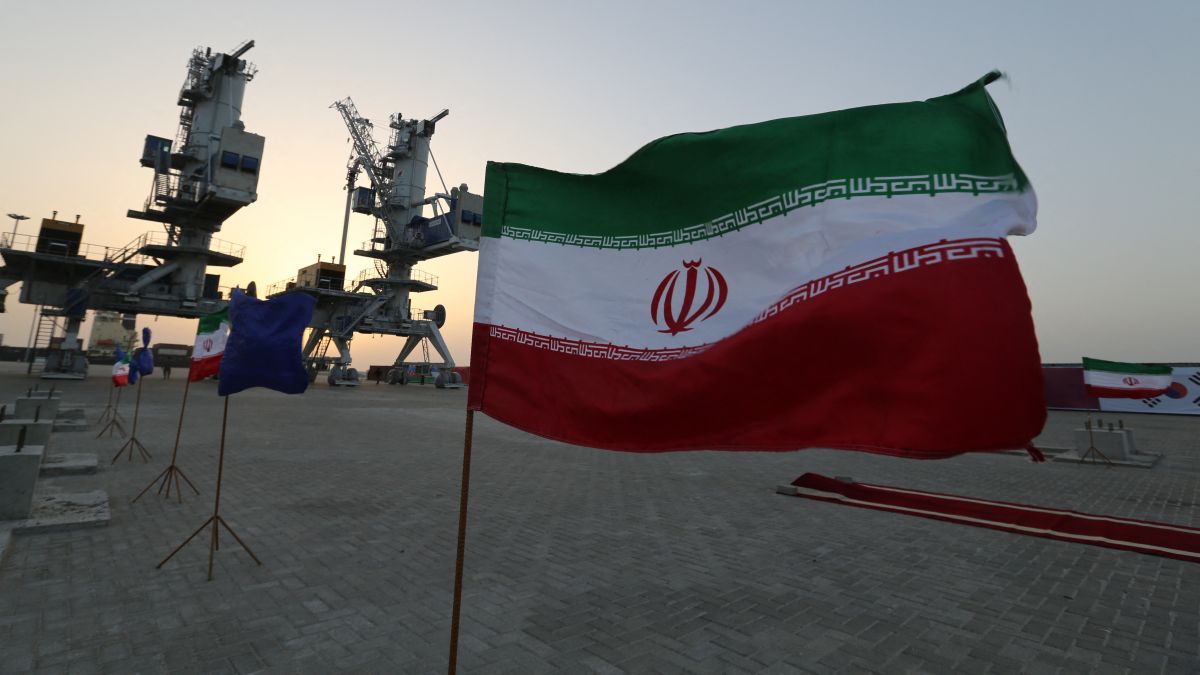
 "How Chabahar is India’s first test of strategic resolve in 2026")
The capture of the Venezuelan President Nicolás Maduro and Iranian protests dominated the global headlines in the first week of 2026. With threats of direct military action, the US kept the Iranian regime and the entire West Asian region on tenterhooks till multiple media reports on January 16 suggested that President Donald Trump has decided not to attack Iran right now, but the diplomatic and economic pressure continues. As a part of this strategy, Trump had already announced on January 12 that any country doing business with Iran will face additional 25 per cent tariffs.
For India, this presented the possibility that the tariffs by the US on Indian goods could increase from the existing 50 per cent (as a punishment for buying crude oil from Russia) to a massive 75 per cent! Most analysts opined that since Indian exports to Iran were merely 0.5 per cent of total Indian exports, stopping trade with Iran would not hurt India much. For the financial year 2024-25, India-Iran bilateral trade was pegged at $1.68 billion, with Indian exports at around $1.24 billion and imports merely at $0.4 billion. However, on January 17, a report suggesting that India may be forced to pull out of its Chabahar port deal in Iran shook the diplomatic circles in the country.
Why is this report so alarming? Why is Chabahar Port in Iran so important? How does it affect the trajectory of future foreign policy decisions for India, under American pressure? And finally, if this is the effect of US pressure on India at the start of 2026, how will the rest of the year pan out? These and many more related questions seek deeper understanding of the issue before we get some clear answers.
Importance of Chabahar
Chabahar Port in Iran has been the centrepiece of bilateral engagement in India-Iran ties for over a decade now. Its strategic location provides easy and short access to India from its Kandla and Mumbai ports. It also insulates India’s seaborne trade from any threat of closure of sea lanes due to conflicts in the Persian Gulf region, as it is located outside the Strait of Hormuz. With a direct land route to Central Asia via Pakistan an unlikely possibility due to strained relations, Chabahar Port provides direct access for India to access the Central Asian countries as well as Afghanistan.
Quick Reads
View AllIn many instances, humanitarian aid and supplies to Afghan people have travelled through Chabahar Port. To facilitate smoother connectivity, a railway link of 700 km between Chabahar and Zahedan city was also being fast-tracked, to be later connected to the railway network of Iran. A further road link from Zahedan to Zaranj in Afghanistan could provide seamless connectivity aid from India to Afghanistan.
Chabahar also has the potential of becoming a crucial link in the International North-South Corridor (INSTC). The INSTC, which was initiated by India, Iran, and Russia in September 2000, was aimed at boosting connectivity with landlocked Central Asian Republics. The current route moves goods from Mumbai to Bandar Abbas (Iran) by sea, from Bandar Abbas to Bandar-e Anzali by road, from Bandar-e Anzali to Astrakhan, a Caspian port in Russia, by ship, and from Astrakhan further into Europe by Russian railways. The INSTC was operationalised in June 2022 when the first cargo left Russia’s Caspian Sea port zone of Solyanka in Astrakhan and reached Jawaharlal Nehru Port near Mumbai, India’s largest container port.
With India getting contractual access to the Chabahar Port, it was hoped that an additional land link from Chabahar to link up with INSTC in Iran could prove beneficial to India in its quest to have multiple connectivity routes across the region to Europe.
During his first term when President Trump imposed sanctions on Iran in May 2018 after revoking the nuclear deal, although India stopped oil imports from Iran completely after May 2019 (after getting a one-year grace period), the Chabahar port was kept out of the sanctions ambit, giving India crucial elbow room.
In May 2024, India and Iran further cemented the deal on Chabahar by signing a 10-year contract for the operation of the Shahid Beheshti terminal at the port with a committed investment of $370 million. Under the agreement, Indian Ports Global Ltd (IPGL) was to further develop the Chabahar Port for the next 10 years, providing India operational control over the cargo and container terminal for its own exports, with an option for renewal. It was hoped that this ten-year deal would not only expedite the long overdue infrastructure development at Chabahar Port but also give a crucial foothold to ensure the free flow of trade with Central Asia and Afghanistan.
What has happened in Chabahar now?
In September 2025, as a part of a strategy of continued pressure on Iran, the Trump Administration withdrew the Chabahar-specific sanctions exemption it had granted India in 2018. It may be recalled that this was also a period of trade tensions between India and the US, as the US had imposed 50 per cent tariffs on Indian imports wef August 27, 2025. Going forward, on October 28, 2025, the US Department of Treasury issued a letter outlining the details, giving India a conditional sanctions waiver valid till April 26, 2026, to allow India six months to wind down its operations.
As per details now emerging, India had already transferred US $ 120 million back to Iran last year, the money it had committed to develop the Chabahar Port, thereby liquidating all its financial commitments and liabilities. Also, soon after the reimposing of sanctions in September 2025, all the Indian government directors on the board of IPGL resigned, and the website of IPGL too was taken down to “insulate everybody associated with the port from potential sanctions”.
Options for India
While the Ministry of External Affairs statement on January 17 says that India is engaged in talks with the US on the issue, it is very unlikely that India will get any waiver on Chabahar again, especially at a time when the US is ‘locked and loaded’ to take down the Iranian regime. Some source-based reports are suggesting that India is looking at a ‘middle path’ on Chabahar while talking to the US! What this middle path can be is anybody’s guess. However, it goes without saying that it will ask India to compromise on issues elsewhere with the US.
India had succumbed to pressure from the US in May 2018 and had stopped oil imports completely from Iran. This, India admits, was a strategic mistake. It not only soured its relations with Iran but also gave a free run to China to import crude oil from Iran at exclusive terms and cheap rates. If the Chabahar Port exemption was considered a consolation victory, the withdrawal now from Chabahar will add to the strategic mistake of 2018 and make India look very weak. Plus, with Chabahar gone, the direct and dedicated access to Central Asia and Afghanistan would again become perilous.
It also raises fundamental questions on the trajectory of India’s foreign policy going forward. If India could resist American pressure on Russian oil imports, why can’t it do the same in the face of US sanctions on Chabahar? In fact, it provides India an excellent opportunity to restate its priorities towards securing its national interests and not only continue with Chabahar but also commence oil imports from Iran, slowly and steadily. After all, where do sanctions from the US end, and how much can India compromise?
It may be recalled that the US House of Representatives had passed a legislative amendment in July 2022 to grant India a waiver from Caatsa (Countering America’s Adversaries Through Sanctions Act) for purchasing the Russian S-400 missile system, recognising India’s strategic importance and need to counter China. What if the Trump Administration now decides to revoke it, invoking his emergency powers, citing national security? Will India then stop the procurement of S-400 and other critical weapon platforms from Russia because the US threatens sanctions?
Conclusion
The Chabahar issue can emerge as a blessing in disguise for India. Only if India sees Chabahar not as an independent issue but as a part of its strategy to exercise only those options which serve and secure its national interests. With the US pulling out of 66 UN organisations, threatening to take over Greenland, dis-inviting South Africa from the G-20 presidency this year, which it is chairing, threatening military and coercive actions against many more Latin American countries after Venezuela, openly courting India’s adversary Pakistan over the past year, and overall trampling over the ‘rules-based world order’ that has served the world well for 80 years since the end of World War II, there can be no assurances of ‘this and no more’.
Tomorrow, there could be another threat of sanction on some other issue where India will find itself at a critical decision point. What will India then do? These are crucial questions that India needs to find answers to soon. Chabahar Port is not merely an infrastructure project but a symbol of India’s strategic requirements in the extended neighbourhood and a symbol of India’s strategic autonomy. India cannot afford to look weak and relent under pressure.
(Col Rajeev Agarwal is a West Asia expert and a Senior Research Consultant at Chintan Research Foundation, New Delhi. His X Handle is @rajeev1421. Views expressed in the above piece are personal and solely those of the author. They do not necessarily reflect Firstpost’s views.)

 "From Starmer to Macron: European leaders fume over Trump's Greenland tariffs")
 "‘Why are Americans paying for AI in India?’ Trump aide Navarro’s fresh rant over US-funded ChatGPT use abroad")
 "India vs New Zealand Live Score 3rd ODI at Indore: Rana sends back Young to break third-wicket partnership")
 "EU pauses trade talks with US after Trump links new tariffs to Greenland push")
 "From Starmer to Macron: European leaders fume over Trump's Greenland tariffs")
 "‘Why are Americans paying for AI in India?’ Trump aide Navarro’s fresh rant over US-funded ChatGPT use abroad")
 "India vs New Zealand Live Score 3rd ODI at Indore: Rana sends back Young to break third-wicket partnership")
 "EU pauses trade talks with US after Trump links new tariffs to Greenland push")