

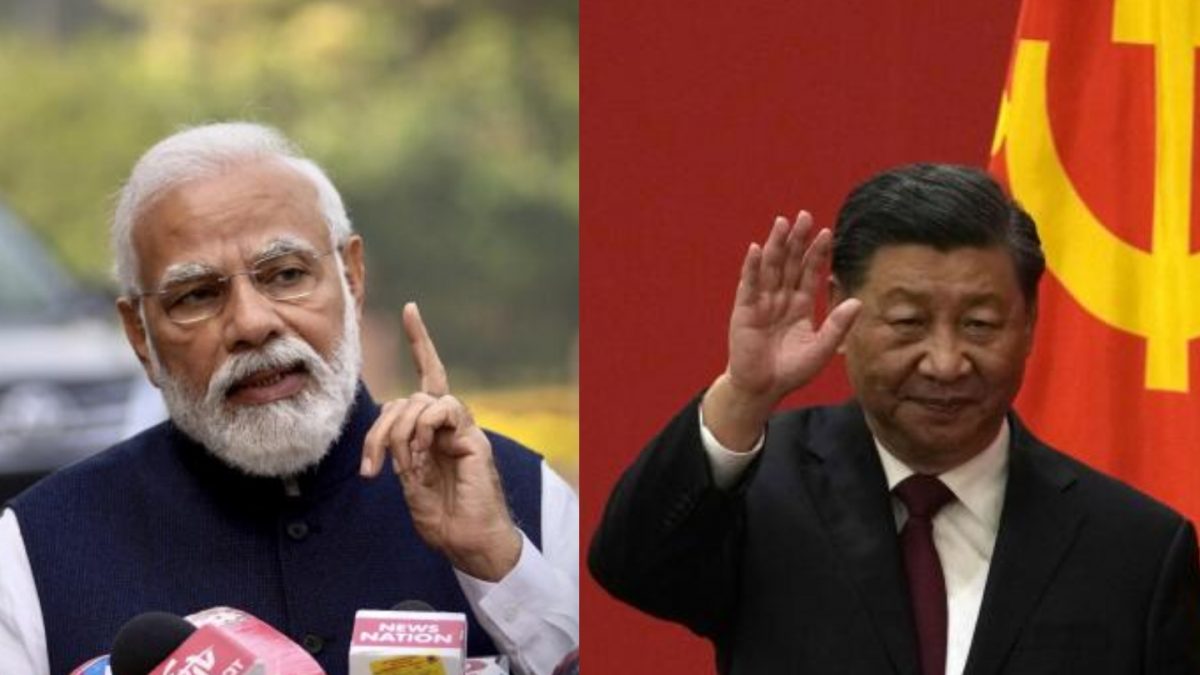
 "Can a backchannel via Moscow help India address the China challenge?")
After swearing in as India’s prime minister for the third time, Narendra Modi’s first foreign visit was to Russia. Not quite unexpected; however, the visit was viewed with serious concerns, curiosity, and optimism in geopolitical quarters across the world. Besides the routine bilateral issues of energy, connectivity, trade payments systems, and health and defence cooperation, this time Modi’s visit was expected to focus on a highly critical and sensitive factor in discussions—China.
China’s strengthening ties with Moscow, strategic partnership with Azerbaijan, and expanding influence and clout in the Shanghai Cooperation Organisation and BRICS is indeed a matter of concern for India due to its frictions with China.
Post-Galwan, the bilateral equations between Delhi and Beijing have spiralled downward, and the current phase continues to be strenuous. However, India, at this stage, prefers to resolve the boundary issues through negotiations and diplomacy. In my previous article, I discussed the merits and demerits of aligning with the West to address the China challenge.
Another window that India can explore is through opening a backchannel dialogue route to Beijing through Moscow. Perhaps Modi’s Moscow visit offers an excellent opportunity to explore the Moscow backchannel. Adding more weight to my argument is NSA Doval’s recent visit to Russia, where he met Chinese foreign minister Wang Yi. Though the media circles were dominated by the narrative of India’s mediation in the Russia-Ukraine war, the real import of this visit is India’s China outreach through Moscow.
Impact Shorts
More ShortsAt a cursory glance, this looks very uncertain and pessimistic, given the emergence of Russia and China as strategic partners, particularly after the Ukraine war. With the Ukraine war, divisions in the world order are clear. With its support for the Ukrainian resistance, the US has pushed Russians entirely into the Chinese fold. Amidst sanctions from the West, they depend on China for the oil revenues.
China is also their key ally against the West and an important pillar in their vision of a multipolar world order, which is a challenge to the US-led Western world order. Hence, it is highly unlikely that they would be able to support India against China in the event of a war between the two.
If this is viewed against the backdrop of the enhancement of India’s relationship with the Western World, particularly after 2014, it becomes even more difficult for Russia to stand with India despite the historic, special, and privileged partnership between New Delhi and Moscow.
However, closer analysis shows that the Moscow channel is worth exploring. Firstly, it must be realised that it is important to think of a post-invasion scenario; however, having discussed the limitations of the various stakeholders in the post-invasion scenario, one can explore what can be done in the pre-invasion phase—how can the worst, ie, the mid-size war between the Himalayan nuclear powers, be nipped in the bud and prevented through diplomacy and dialogue much before things come to crunch?
In the post-invasion scenario, there is not much besides the high-altitude battles and alternating embarrassment for both China and India; however, a lot can be done in the pre-invasion space.
As mentioned earlier, today’s India is not the India of 1962. Its situation is not so weak that China can unilaterally dictate its terms. Its strategic autonomy, geographical location, technological prowess, robust military, large market, rapidly growing economy, Modi’s strong political leadership, and flourishing democracy make it a strong and credible geopolitical actor.
It is constantly wooed by the opposing powers, be it Russia and the West, Iran and Israel, and the countries of the Global South. India has a unique stature in world politics, enabling it to engage China in tough negotiations and hard diplomatic bargaining from the position of strength. And in this initiative, Moscow can play a quintessential role.
Before exploring the Moscow channel, it must be understood that Moscow has major stakes in avoiding the India-China war. Firstly, the India-Russia friendship is historical and civilisational. It is based on trust. It has been smooth and firm over the last 75 years. Russia is a trusted ally in public perception and among national security and diplomatic circles.
In 2019, after the abrogation of Article 370, when Russia supported India’s decision, PM Modi said that both countries do not believe in interfering in each other’s internal matters. More recently, amidst the souring India-US relations over India’s buying of Russian oil, the killing of Sikh terrorist Hardeep Sing Nijjhar, and the US concerns about so-called ‘democratic backsliding’ and India’s minorities, on the sidelines of the Munich Security Conference, India’s foreign minister Jaishankar, while defending India’s decision to buy Russian oil, stated that “Russia has never hurt India’s interests”.
Further, he continued, “The relations of powers like Europe, the US, China, or Japan with Russia have all seen ups and downs. We have had a stable and always very friendly relationship with Russia. And our relationship with Russia today is based on this experience.” India has not given in to the Western pressure and refused to condemn Russia for the Ukraine war. India refused to back Western sanctions and continues to buy Russian oil against Western sanctions.
Furthermore, in the wake of the recent Islamic State-Khorasan Province (ISKP) attacks in Russia, the Russia-India ties are going to strengthen on the counter-terrorism front. Undoubtedly, Moscow values this friendship; however, if China invades India and a mid-size war ensues, Putin will not be able to support India against China.
For some time, it may stay neutral; however, given Russia’s dependence on Beijing, it will not be able to sustain its neutrality. In that case, it may have to stop selling oil and defence equipment to India, which will be a big setback to its economy, which is already under duress by Western sanctions. Besides, it will lose India as an ally that has largely supported Russia on critical geopolitical issues such as Ukraine. India will be left with no option except to bolster its ties with the West, and India’s complete shift to the US camp will be detrimental to Russia.
Also, in Russia’s vision of the multipolar world order, India constitutes an independent pole as a civilisational state. India’s clear shift to the Western camp will jolt Russia’s vision of a multipolar world. Notably, Russia’s eminent philosopher and reportedly the brain behind Putin, Alexander Dugin, has written, “We are vitally interested in settling relations between these two great powers because if conflict breaks out between them (as the West is indeed pushing for), the prospects for a multipolar world will be indefinitely delayed.”
Besides, with China, Russia has a history of boundary disputes and war. In Central Asia and Eurasia, China is agreeably Russia’s geopolitical rival. China’s expansion in these areas, traditionally Russian political and cultural space, is indeed a matter of concern for Moscow. For Moscow, India can be instrumental as a counterweight to China; however, losing India to the West will shatter those prospects, making Russia even more vulnerable and dependent on China. Having India as a strategic partner and neutral state ensures a certain degree of pressure on China, which can be useful in keeping Beijing in check.
Lastly, Russia, being a ‘civilisational state’ as Dugin describes it, is in a much better position to understand and reach out to Beijing, another civilisational state. Many Indian diplomats told me that routing diplomacy through Washington may provoke China and add to its insecurities. However, if Russia takes the lead in the backchannel, it will be a more credible effort without raising undue insecurities and suspicions, as China understands the historic friendship between Russia and India well.
India’s old Russia hands can play a critical role in this initiative. Besides, the current Russian Putin-led political set-up guided by the ideas of tradition, opposition to Western universalism and value-hegemony, civilisational states, and multipolar world order aligns well with the current RSS-BJP-led Indian political system, which also places a high premium on Sanatan civilisational identity, religious and cultural wisdom, and multipolar world order.
Hence, ample scope exists for synergising the efforts; however, the Indian security and foreign policy establishment remains highly sceptical and despondent about such out-of-the-box ideas. The policy masterminds have strong apprehensions that Russia’s shift towards China is complete and final, and secondly, that Russia is too occupied with the Ukraine effort to either take the India-China border issue seriously or make efforts to achieve any breakthrough at the cost of Chinese support in its Ukraine effort.
There is also a sense of suspicion that Beijing could use Russia for its anti-India influence operations executed through backchannel dialogues due to Moscow’s dependence on Beijing. Such influence operations could be used to mislead India, keep it complacent with the progress of negotiations, and, in the meantime, buy more time to prepare for the war so that when the real invasion happens, India is caught unawares and the Chinese get all the advantages of the element of surprise.
Besides, there are internal ruptures in the Indian establishment. Think tanks and experts are divided. Some of them with robust penetration in the Ministry of External Affairs are staunchly against Russia and openly advocate alignment with the US as the only way to counter China. Even within the government, allegedly, the diplomatic side is sceptical of engagement with Russia and toe a pro-US line; however, the security-intelligence side is realistic and slightly more positive about engaging China through the Moscow channel.
Conclusion
All said and done, it is reasonable to conclude that presently, there is complete ambivalence, lack of direction, and vision in India’s understanding of China and its policy to address the China challenge in the Himalayan borders.
Alarming predictions of the India-China war made by astrologers and strategic analysts alike worsen India’s fears. Hence, the question remains: what should India do? However, instead of focussing on what should be done, the focus must shift to what can be done.
There are no lasting solutions in geopolitics; the problems can only be managed until the circumstances change. Hence, in the short run, managing this conflict with the fundamental premises of conflict avoidance and escalation containment is the best strategy.
This can be achieved through nuanced external balancing to prevent any hegemon from dominating. While pursuing it, New Delhi’s strategy can be a good mix of soft and coercive diplomacy and psy-ops. Instead of completely aligning with one block, India must pursue multi-alignment and enhance its weight in global politics. New Delhi must engage with Western powers on the technological, climate change, development, defence, and economic front on equal terms through multilateral forums like the Indo-Pacific without getting bracketed with them.
No doubt, China brings huge investment opportunities to Europe; however, there are fundamental fault lines and ruptures over the issue of Ukraine, dumping of Chinese goods, China’s intelligence operations, etc, which India must leverage to its strategic advantage.
In South Asia and East Asia, Japan can be the most crucial link to counter China. At the same time, India should maintain a vital presence in the affairs of the Middle East, Africa, and the Global South and continue strengthening its civilisational and geostrategic engagement with Moscow.
China’s debt traps and Belt and Road Initiative projects are viewed with scepticism and alarm in several developing countries of the Global South, which in turn widens the strategic space for India, provided New Delhi can capitalise on that.
However, in this exercise, the focus should not be on the optics of being seen as a global leader. China will most likely perceive it as a threat to its global eminence and its vision of Asian unipolarity, as it did when Jawahar Lal Nehru became the poster boy of the Non-Aligned Movement and the de facto leader of the third world, and attacked India in 1962 to humiliate Nehru.
Instead, India must harness these global multilateral engagements to secure real and hard strategic leverage, which could be used to pressure China and discourage Beijing from pursuing its military adventuring against India.
At the same time, the long-term goal should be to strengthen the economy and border infrastructure and enhance technological, defence, space, cyber, and asymmetric capabilities so that the power differential does not widen.
For the US, it is also best to prevent the escalation of conflict between the Himalayan neighbours. If the war happens, India will have to make a complete shift to the Western camp, which means worsening its ties with Russia as the latter will not be able to support India.
Hence, if the US wants to sustain India as a credible and confident neutral voice, a much-needed geostrategic shock absorber in this highly polarised world order, Washington should focus on preventing the conflict escalation instead of coercively convincing India to go belligerent against China.
Shortsighted targets of securing India’s absolute tilt in the Western camp will further propel Russia into the Chinese fold, the relationship that is fast transforming into a strategic alliance. The US has already done that blunder of pushing Moscow into Chinese arms with the Ukraine war. If rationality prevails, it would not like to repeat it, effecting a complete break between Russia-India ties by orchestrating India’s total shift towards the West.
Lastly, even Beijing must consider the conflict avoidance option seriously because if a military face-off with Indians in Himalayan territory leads to an embarrassing defeat, it will be a major blow to its image as a global power.
The author is a Cornell University graduate in public affairs, bachelors from St Stephen’s College, Delhi. He is a policy analyst specialising in counterterrorism, Indian foreign policy and Afghanistan-Pakistan geopolitics. The views expressed in this article are those of the author and do not represent the stand of this publication.

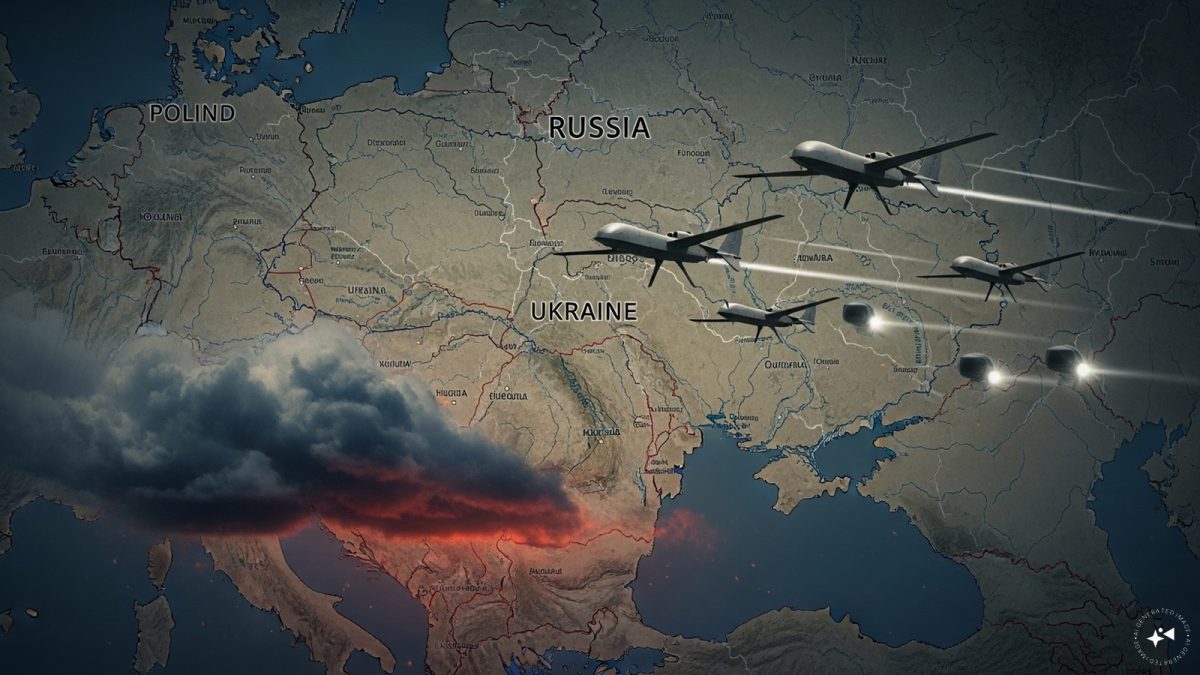 "Russian drones over Poland: Trump’s tepid reaction a wake-up call for Nato?")
 "As Russia pushes east, Ukraine faces mounting pressure to defend its heartland")
 "Why Mossad was not on board with Israel’s strike on Hamas in Qatar")
 "Turkey: Erdogan's police arrest opposition mayor Hasan Mutlu, dozens officials in corruption probe")
 "Russian drones over Poland: Trump’s tepid reaction a wake-up call for Nato?")
 "As Russia pushes east, Ukraine faces mounting pressure to defend its heartland")
 "Why Mossad was not on board with Israel’s strike on Hamas in Qatar")
 "Turkey: Erdogan's police arrest opposition mayor Hasan Mutlu, dozens officials in corruption probe")



