 "Black diamond: Why there is an urgent need to increase India’s investment in R&D in coal technologies")
The economy of any country is stoked by its energy supplies. Rather than consider energy as an input into the economy, it would be more appropriate to recognise energy as the economy itself. Since the advent of civilisation on the planet, humanity has organised its economic activities to optimise the growth and utilisation of primary energy. Truly, energy is life itself and living standards are defined by how much energy is available, used and exploited.
The fairly intricate energy supply chain networks that unite all segments of the economy is a necessary aspect of modern geopolitics. The crisis between Russia and Ukraine has demonstrated the havoc that energy shocks can cause to economies. The reliance of European industry on cheap Russian gas was a vital component that allowed it to withstand exorbitant labour expenses and high taxes for a long time. European industry could maintain a reasonable level of competitiveness because of easy access to this highly valued raw material.
In thinking that Russia was nothing more than a petrol bunk with a country attached, the West has made the fundamental mistake of treating energy as an input into economic activity, considering its contribution to gross domestic product (GDP) as being no different from other measurable goods and services. This inability to understand the identity of energy and economy has led to amusingly naive calls to end dependence on fossil fuels, as in the recent Conference of the Parties to the UN Framework Convention on Climate Change (COP28} meeting in Dubai. Such events make for good copy and fuel shoptalk like sustainability, nuclear fusion and carbon footprint, but they are little grounded in economic realities especially for growing economies like India.
Fundamental to the energy scenario in the world during the rest of this century is that fossil fuels are not going away anywhere anytime soon. Ever since the oil crisis of 1973, industry has constantly adjusted itself to political upheavals worldwide and developed new oil and natural gas fields with appropriate new technologies. It has identified shale deposits with concomitant progress in research in chemical and petroleum engineering, including methods such as fracking and undersea mining of natural gas. Despite Malthusian pessimism that Saudi Arabia will run out of its oil and natural gas supplies or that America will not develop its shale reserves, or that the days of peak cheap oil are well and truly over, world consumption of fossil fuels keeps rising inexorably. By 2021, 77 per cent of global energy was sourced from coal, oil, and gas.
Quick Reads
View AllThere are sufficient reserves of fossil fuels to last humankind for an extended period of time. Pessimists frequently underestimate the rate of technical advancement in the energy sector.
The Al-Jafurah shale gas field in the Arabian desert has an estimated 200 trillion cubic feet of wet gas. The Saudis intend to invest over $100 billion in the coming years to commercialise Jafurah’s abundant energy resources. This is part of their larger goal of raising the nation’s natural gas output by over 50 per cent by 2030. Such production levels are expected to be sustained for a number of decades, and additional investment has not been ruled out. Technological development that was deemed too expensive or impossible a few years ago has become commonplace over time. Similarly, the progress made by Qatar and Turkmenistan in collecting and storing their Liquefied Natural Gas (LNG) reserves is mind-boggling.
India has made considerable progress in identifying new offshore oil reserves in the Bay of Bengal off the Krishna Godavari Deep-Water Block 98/2. There is also a report of exploration offshore from the Andamans. Most of what makes our existing reserves expensive is not due to lack of supply but rather to political decisions. Any ruling elite, who might try and prevent primary energy growth elsewhere, would be quickly exposed in the case of a serious supply chain crisis. Finally, any hydrocarbon that finds its way to a refinery can, in principle, be converted into a useful form of energy using the latest R&D advances in the chemical sciences. In the end, and this is the bottom line, when the price of oil is measured in absolute terms, say relative to gold, there is little divergence during the last 50 years. To summarise, all is well with respect to fossil fuels and India.
It is in such a context that India’s own energy priorities need to be analysed vis-à-vis Russia, China and America. Each of these four hegemons is trying to do its best to secure its own energy interests that are derived largely from their respective geographies. India’s impressive economic growth and rising prosperity is underpinned by the steady provision of affordable energy, which allows for competitive industrial activity, increase in consumption, and effective logistics. Thus, electricity generation has grown in step with the overall economy, at an annualised rate of 7.5 per cent over 2011-2021.
India’s per capita income is around Rs 1.72 lakh, a full double from the number in 2014-15, and has been rising steadily. Naturally, the demand for energy will only increase for India as it gets richer. India’s per capita energy consumption has ample space to grow—as of 2021, it was 6,992 kWh, compared to 30,711 kWh for China, and 76,634 kWh for the US. However, despite efforts to develop new technologies (solar, hydro, hydrogen economy, nuclear) there is little doubt that India is tremendously dependent on fossil fuels for energy and that too, on the oldest and most reliable form of fossil fuel—King Coal. It is truly Black Diamond.
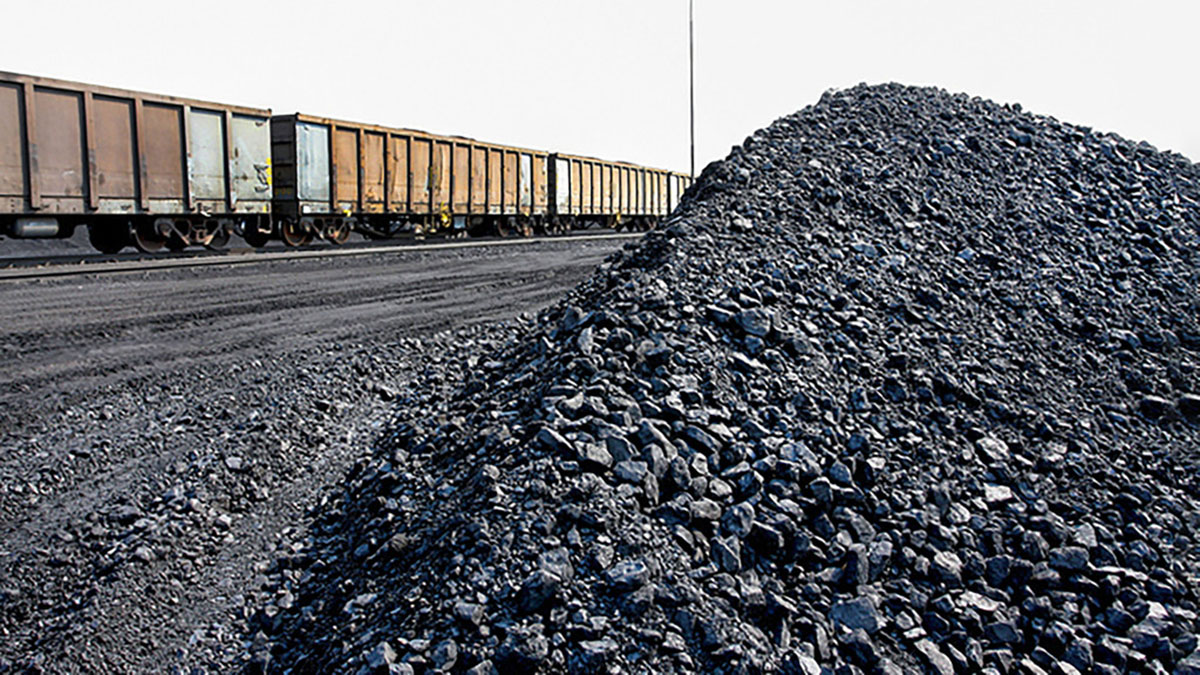
Coal is cheap, reliable, and easily stored indefinitely. It is abundant all around and its supply and availability cannot be controlled by one nation against another. Thermal power plants that utilise coal as a fuel have established reliable technologies. Due to the continued high demand in rising and developing nations, the world’s coal utilisation hit a record high in 2023 despite its reputation as the ‘dirtiest’ source of energy. India produced 893 million tonnes of coal in the fiscal year that ended in March 2023; an increase of approximately 15 per cent over the previous year. From January to November of 2023, China produced 2.9 per cent more raw coal than it did during the same time in 2022. Experts therefore predict that the need for coal will continue to grow.
Currently, India’s energy mix, namely its portfolio of energy sources is heavily skewed towards the use of fossil fuels: a whopping 56.7 per cent of India’s primary energy consumption requirements were met through coal alone, followed by 26.55 per cent for oil, and 6.32 per cent for gas. Thus, almost 90 per cent of India’s primary energy requirements are served by fossil fuels.
A McKinsey estimation of India’s future fuel mix shows that by 2030, the situation is unlikely to change—a full 60 per cent of India’s energy demand is expected to be met by coal with liquid fuels contributing just under 25 per cent, and gas limited to a notch below 7.5 per cent. Just the sheer capacity installed to use fossil fuels implies that they are here to stay as an irreplaceable component in India’s energy mix.
India is a net importer for all of the major fossil fuels, including coal, and does not have enough production to meaningfully substitute imports. In 2010, 31 per cent of India’s primary energy requirements were met by imports. By 2030, it is expected that import dependence will go up to 51 per cent. Our dependence on imports arises from the fact that India’s coal is of a poor grade. We have sizable coal reserves of 352.13 billion tonnes, but it is of a generally bad quality, with ash content of up to 45 per cent and low calorific value. Imports also cannot be reduced much for coking coal, the quality of which cannot be relaxed because of its use in the making of steel.
At the world level, the Global South, after years of being lectured to about the need to forgo fossil fuels, watched with gleeful interest as Germany burned coal in copious amounts in 2023 to get through its self-created emergency following the Ukraine war. Such actions would almost certainly lead to a global coal renaissance. Faced with the choice between a guaranteed calamity today or increasing the risk of one in the distant future, Germany opted for coal instead of sparking a new and risky path for itself in the energy panorama.
All things considered, there is an urgent need to increase our investment in R&D in coal technologies and in identifying new sources, domestic and overseas, of this invaluable commodity. Undoubtedly coal is here to stay.
The author is an Emeritus Professor in the Indian Institute of Science, Bengaluru and is the author of Bharat: India 2.0 published in 2021. He has an H-index of 104. Views expressed in the above piece are personal and solely that of the author. They do not necessarily reflect Firstpost’s views.


 "'Indian food, our pride': $200k settlement in Palak Paneer case a moral victory against racism in the west")
 "India’s air dominance in Operation Sindoor forced Pakistan to seek ceasefire, European report says")
 "How Pakistan’s support may have led Bangladesh towards a very costly mistake")
 "India vs New Zealand Live Score 3rd T20: Samson bowled on very first ball by Henry")
 "'Indian food, our pride': $200k settlement in Palak Paneer case a moral victory against racism in the west")
 "India’s air dominance in Operation Sindoor forced Pakistan to seek ceasefire, European report says")
 "How Pakistan’s support may have led Bangladesh towards a very costly mistake")
 "India vs New Zealand Live Score 3rd T20: Samson bowled on very first ball by Henry")