

 "Bangladesh: How Yunus regime’s mobocracy has weaponised the persecution of minorities")
The lynching of Dipu Chandra Das, a 27-year-old Hindu garment worker, did not take place in the shadows. It unfolded in public on a highway, before a crowd, in full view of a state that chose not to intervene.
Accused on the basis of an unverified rumour of blasphemy, Dipu was dismissed from his job, briefly detained by police, and then handed back to a mob. He was beaten to death. His body was hung from a tree or pole along the Dhaka–Mymensingh road and set on fire. Videos of the burning corpse circulated freely, not as evidence to be feared, but as a spectacle.
Subsequent investigations confirmed what should never have required confirmation: there was no proof of blasphemy. Yet Dipu was dead. His wife was widowed. His infant child was left fatherless. And the state, now captured by Muhammad Yunus, was once again absent.
Dipu’s murder was not an isolated atrocity. It was the most visible expression of a political order that had been taking shape since August 2024, an order in which mobs, not law, became the primary instrument of governance. And this is not the first incident of such violence. In 2024, a teenager in Khulna named Utsav Mondal faced a similar mob attack while being in police custody. In another incident, a youth named Ridoy Paul was arrested and beaten in public by the army on false accusations of blasphemy.
From Regime Change to Communal Terror
The overthrow of the democratically elected Awami League government under Sheikh Hasina on August 5, 2024, through a regime-change operation following weeks of meticulously designed riot and mayhem, was presented internationally as an uprising against authoritarianism. What followed, however, was not democratic renewal but a rapid collapse of public order and of state protection for Bangladesh’s most vulnerable citizens.
Quick Reads
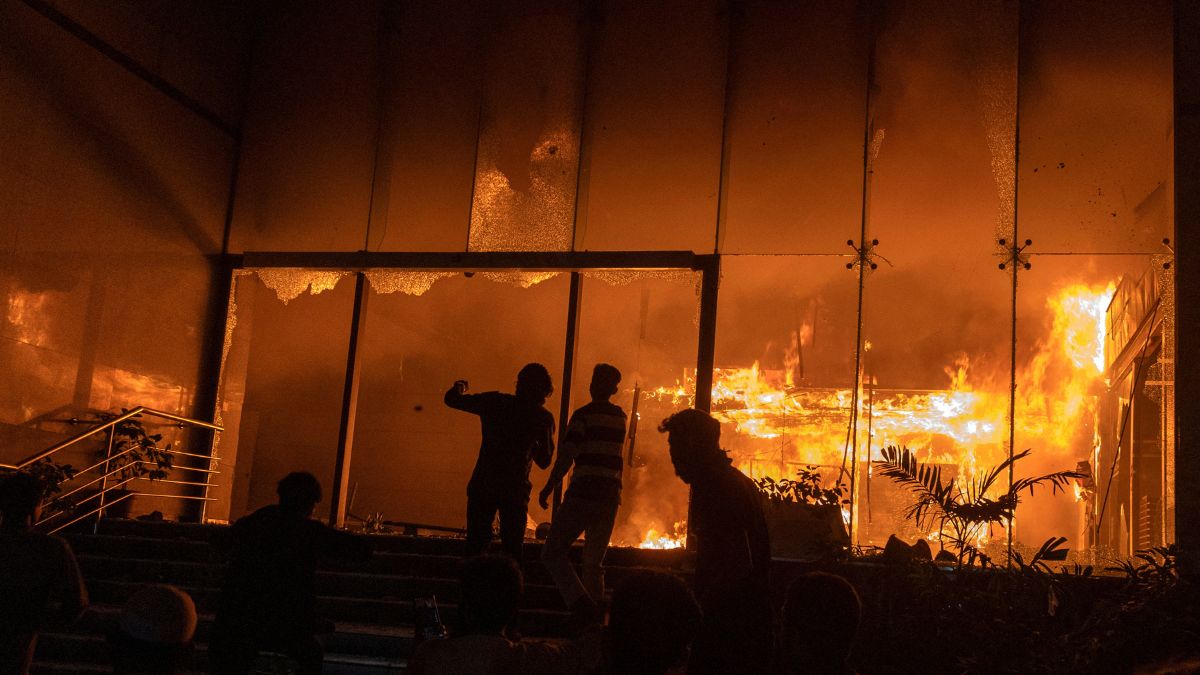
View AllWithin days of the power vacuum, minority neighbourhoods across Bangladesh came under attack. Bangladesh witnessed a surge of violence against religious minorities, particularly Hindus, alongside Buddhists and Christians, as well as ethnic minorities, driven by widespread mob attacks, arson, intimidation and collective punishment.
Between August 4 and 20, 2024, minority organisations documented 2,010 separate incidents of violence across 68 districts, resulting in 9 deaths, 4 reported rapes, and the destruction or looting of 915 houses and 953 minority-owned businesses, along with attacks on 69 temples and places of worship. Independent media further recorded 1,068 damaged homes and businesses and at least 22 additional temple attacks during the same period.
Violence did not end with the August wave. From August 2024 to June 2025, the Bangladesh Hindu-Buddhist-Christian Unity Council reported 2,442 total incidents targeting minorities, of which 2,010 incidents (over 80 per cent) occurred within the first 16 days after August 5, and 258 incidents took place in January–June 2025, indicating continued vulnerability.
Immediately after August 5, 2024, expelled school teacher named Billal Hossain, father of July-August Mayhem’s lead figure and Yunus cabinet adviser Asif Mahmud Shojib Bhuiyan, led a mob to physically assault, abuse and humiliate the assistant head teacher of the school, Shikha Rani, by parading her in the streets in order to forcibly compel her resignation.
In Bagerhat, school teacher Mrinal Kanti Chakraborty was brutally murdered, his throat slit; his wife and daughter were left critically injured. In Rangpur, Narayan Roy, a city councillor and president of the Metropolitan Puja Udjapan Parishad, was murdered along with two others.
In Meherpur, an Iskcon temple was vandalised and set on fire. In Dinajpur, at least five temples, including Kali temples, were attacked and desecrated. In Kuakata, the Radha-Gobinda temple was vandalised, followed by attacks on nearby Hindu homes.
Across Khulna, Satkhira, Jashore, Magura, and Gazipur, the pattern repeated itself: minority-owned homes and businesses looted and burnt; Unity Council leaders targeted; women assaulted; cremation grounds forcibly occupied. In Gazipur, the residence and business of Sanjit Mallick, a senior Unity Council leader, were attacked and set ablaze. In Satkhira, the homes of multiple district-level minority leaders were torched.
The highest concentration of violence against minority communities was recorded in the Khulna Division, which documented 295 incidents of arson, looting, vandalism and attacks on homes, businesses and temples. Within this region, districts such as Khulna, Bagerhat and Jashore were repeatedly identified in reports as major hotspots, where Hindu neighbourhoods and temples came under coordinated mob assaults.
The Rangpur Division experienced the second-highest number of cases, with 219 incidents, including widespread attacks across Rangpur and Dinajpur districts, as well as targeted assaults in areas such as Gangachara Upazila, where multiple minority families were affected.
In the Mymensingh Division, monitors recorded 183 incidents, reflecting a severe concentration of intimidation and property destruction in both urban and rural minority settlements. The Rajshahi Division followed with 155 incidents, where scattered but frequent assaults occurred across rural districts with significant Hindu populations.
In the central region, the Dhaka Division reported 79 incidents, mostly smaller-scale but recurring attacks in peri-urban and semi-rural districts surrounding the capital. Meanwhile, the Barishal Division documented 68 incidents, including major cases in Patuakhali, Kuakata and Kolapara, where homes, temples and minority-owned properties were burnt or vandalised. Lower but still significant levels of violence were recorded in Chattogram Division (45 incidents) and Sylhet Division (25 incidents), where communal targeting remained present but on a comparatively smaller scale.
In several districts, orchestrated mobs announced their plans in advance and operated for hours without intervention. Yet the interim administration led by Yunus responded not with accountability but with denial, providing international cover for repression. Communal violence was reframed as “political disputes/retributions”. Organised pogrom-like attacks were dismissed as exaggerations. When scrutiny intensified, the response hardened into a calculated refrain: “Indian fake news”.
Denial as Policy
This denial was not accidental; rather, it was strategic. The July-August unrest that enabled Yunus’s rise was driven by a coalition that included radical Islamist networks, revisionist civil-society actors, and groups openly hostile to Bangladesh’s religious minorities and to the legacy of the Liberation War of 1971. Their mobilisation was indispensable. Confronting them would have jeopardised the authority of an unelected interim regime with no constitutional mandate.
So, the state looked away. Rather, when faced with journalistic scrutiny, the Yunus regime and its allies brushed away these violences as legitimate political retribution.
By refusing to acknowledge the communal nature of the violence, the Yunus administration sent a clear signal: mobs would not be restrained. Blasphemy accusations became instruments of terror. Extortion flourished. Forced displacement followed predictable patterns: intimidation, threats and violence.
Dipu Chandra Das’s lynching did not occur despite this environment. It occurred because of it.
Mobocracy Laid Bare
Dipu’s killing unfolded amid renewed instability following the death of Sharif Osman Hadi, a controversial figure whose anti-India rhetoric consistently targeted Bangladesh’s historical foundations. His death triggered coordinated violence bearing the marks of advanced mobilisation.
Mobs stormed and torched the offices of ‘Prothom Alo’ and ‘The Daily Star’ in Dhaka, trapping journalists inside. Mobs again attacked the already vandalised Dhanmondi 32, the place from where the Liberation Movement of Bangladesh was led. They attacked Chhayanaut and Udichi Shilpi Goshthi, both pillars of secular Bengali culture. Indian diplomatic missions across Bangladesh were assaulted in parallel, including the residence of the Deputy High Commissioner in Chattogram.
These acts followed the same logic as the attacks on temples and minority homes: demonstrations of impunity and proof that violence could be directed at minorities, media, culture, and diplomacy alike without consequence.
Yunus, himself, has been seen in the media, chillingly urging the mobs to purge anyone associated with the Awami League. In a country where religious minorities have historically supported the Awami League for its secular and non-communal politics, such rhetoric carried an unmistakable message.
The Nobel Shield
Internationally, Yunus continues to benefit from the moral prestige of his Nobel ‘Peace’ Prize. Domestically, that prestige has functioned as a shield, deflecting scrutiny while enabling repression.
A government that rules without an electoral mandate, tolerates vigilante justice, and systematically delegitimises victims while appeasing extremists is not a neutral caretaker. It is an authoritarian fascist arrangement sustained through mobocracy.
To dismiss documented atrocities as foreign propaganda is not mere rhetorical evasion. It is complicity. Each denial emboldens perpetrators. Each minimisation deepens impunity.
A Regional Warning
For India and neighbouring South Asian countries, this crisis is neither abstract nor distant. Their persecution of minorities under the Yunus regime carries immediate human costs and long-term strategic consequences.
A regime that normalises blasphemy lynchings, temple burnings, cultural vandalism, and diplomatic intimidation does not remain an internal problem. It becomes a source of regional instability, empowering extremist currents that threaten South Asia as a whole.
Dipu Chandra Das did not die because of a rumour. He died because a state decided that accountability could wait and that mobs were useful.
A Verdict History Will Not Soften
Bangladesh was born from a liberation struggle against genocide and exclusion. To watch it slide quietly, methodically into the justification of terror through denial is not only tragic. It is a warning.
History will not judge this period by the slogans used to excuse violence, but by the lives destroyed while the state looked away.
(The author is president, Bangladesh Students’ League. Views expressed in the above piece are personal and solely those of the author. They do not necessarily reflect Firstpost’s views.)

 "Trump announces 25% tariff on Iran’s trading partners. How India may be affected")
 "India, US to resume BTA talks after 5 months as Gor pushes for trade deal with 'real friends'")
 "ICC sources rubbish Bangladesh sports adviser’s sensational claim of BCB being asked to drop Mustafizur")
 "Jerome Powell: The 'Fed chair with a spine' taking on Trump")
 "Trump announces 25% tariff on Iran’s trading partners. How India may be affected")
 "India, US to resume BTA talks after 5 months as Gor pushes for trade deal with 'real friends'")
 "ICC sources rubbish Bangladesh sports adviser’s sensational claim of BCB being asked to drop Mustafizur")
 "Jerome Powell: The 'Fed chair with a spine' taking on Trump")



