

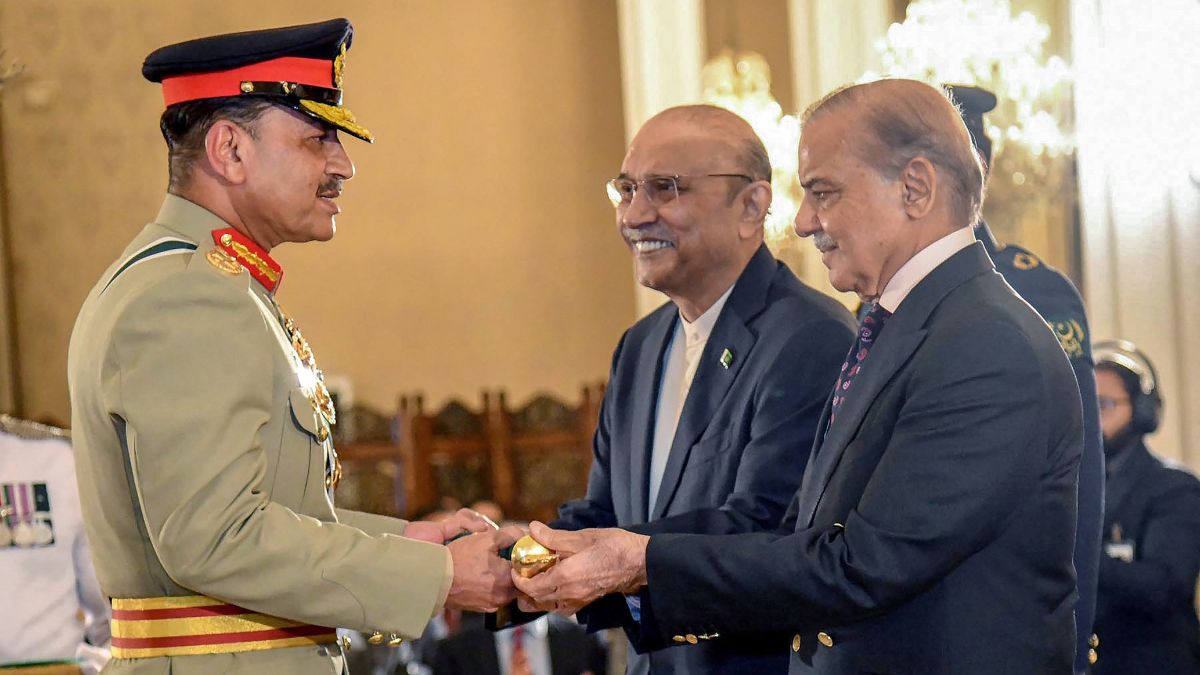
 "Asim Munir’s constitutional coup exposes the hollowness of Pakistan’s democracy")
If you expect a coup to arrive with tanks and curfews on national television, you’re still living in the 20th century. What Pakistan suffered this week was a 21st-century coup. Wannabe elegant, paper coated and, unfortunately for Pakistan, thoroughly legalised. Pakistan’s parliament has just rewritten their rules so the man in uniform now sits above the state.
Field Marshal Asim Munir has been elevated into a constitutionally protected super post with sweeping powers and near total immunity, with barely an opposing whimper from his new friends in the West. Basically, in Pakistan now, khaki has been put on life support for the civilian polity after Pakistan’s National Assembly on Thursday amended the army law, paving the way for the appointment of Munir as the coup-prone nation’s first-ever Chief of Defence Forces.
So how has Munir, already the most visible figure in Pakistan’s military apparatus after heading both Military Intelligence and ISI, managed to make this unwholesome political power grab look like governance?
Firstly, he didn’t need to overplay with force; he already had political patronage willing to do the legislative heavy lifting. Also, a distracted and fractured opposition and a ridiculously weak and pliant parliament that was ready to rubber-stamp changes in a hurry. The result is a new amendment that creates a new top-of-the-military position, centralises control over services and curtails judicial power. All of this is neatly framed as “reform” and “national security”.
This isn’t the same kind of coup that plunged Pakistan into direct military rule in the past. It’s worse. It’s more subtle and nuanced, difficult to reverse and socially corrosive. If you compare it to previous interventions, Ayub Khan and Zia-ul-Haq have both used overt martial law, generals on the radio and long nights of custody; Munir’s new position is a much more lethal constitutional coup. He has changed the law and changed the balance. It’s simple: make the writ of the army permanent, and you don’t need curfews; you have judges who will be forced to look the other way, and you replace tanks with tenure.
Quick Reads
View AllConstitutionally, Pakistan has traded fragility for ossification. The new amendment strips meaningful checks from the judiciary and places lifetime legal shields around the top military office. It is like a poison chalice for future civilian rule. For a country that officially calls itself a democracy, whatever last fragments of republic and self-government it had, it has now officially blown into the wind.
Democracies survive because institutions can push the pack, when those institutions are hollowed out and become executive-dependent, the only check left is the market for international censure. Of course none of these are reliable. On paper, Pakistan laughably remains a parliamentary republic. In practice, it has introduced a legal firewall that protects military prerogatives from any kind of accountability whatsoever.
Socially and morally the damage is caustic. Pakistani civil society, from lawyers and journalists to students, has long paid the price for a military that constantly renegotiates the boundaries of politics. The message now is unmistakable. Contest the army at your own peril. This will obviously imprint an even worse culture of fear, stifle dissent and normalise impunity than the one that already exists. When the state’s so-called guardians claim moral exceptionalism while being answerable to none, you don’t find stability, just a fragile and brittle status quo that breaks under stress.
Pakistani cheerleaders of this new development who are celebrating a strong hand now after their “external crises”, will in time find that those same hands will also strangle civilian politics and accountability. We have seen history repeat itself time and again when it comes to Pakistan and their leadership.
For India, of course, this isn’t great news. A Pakistan that chooses to institutionalise military dominance is not any more predictable than before. Since it is more regimented, they will likely respond to crises with even more exaggerated mono-institutional logic rather than any sort of plural deliberation. Decision-making will be faster and narrower. India loses an interlocutor who can be reliably engaged through civilian channels, the kind of engagement that makes crisis management messy but survivable.
Economically and diplomatically also, Pakistan will pay. Investors and creditors have a disdain for concentrated power that cannot be held to account. The veneer of legality will not paper over the underlying risk. Aid and trade partners will have to decide whether to bankroll a polity that has written immunity into its constitution. International pushback will be diplomatic at first, with the usual statements, sanctions and conditionalities, which will of course hit ordinary Pakistani citizens. When economic pain intensifies, the social contract frays, which makes military custodianship look to some like an attractive temporary fix. This only completes the vicious circle.
There is also an irony in Munir’s personal arc. A man elevated to field marshal after failing miserably in the May conflict with India now sits institutionally above the very polity he was supposed to protect.
New Delhi, of course, will maintain their cool, clear strategy. Increase strategic deterrence where and when necessary, keep military-to-military channels open to prevent miscalculations, and double down on diplomatic coalitions that keep pressure for democracy and its norms alive.
Let’s not confuse pessimism with fatalism. Pakistan’s political culture has always been odd and surprising. Courts have reasserted themselves before, and popular movements can be combustible. Unfortunately a constitution that immortalises military dominance makes that resistance so much harder. For India, a stable neighbourhood would require, of course, Pakistan to reclaim civilian primacy instead of policy being carved out in a parliamentary backroom and stamped at lightning speed.
Munir might have won the institutional battle for now. But history and the long-suffering people of Pakistan will judge whether this was truly for the nation or merely for a man in uniform who bullied lawyers and politicians to turn back the clock on constitutionalism, democracy, and the will of the people. For India, it is yet another headache gifted to us by our neighbours that’s going to keep hurting for a while.
(The author is a freelance journalist and features writer based out of Delhi. Her main areas of focus are politics, social issues, climate change and lifestyle-related topics. Views expressed in the above piece are personal and solely those of the author. They do not necessarily reflect Firstpost’s views.)


 "UN Security Council approves US-backed Gaza plan")
 "India–Russia ties a 'factor of stability' in international relations, says Jaishankar in meeting with Lavrov")
 "Iran ends visa-free entry for Indians after rising cases of trafficking and kidnapping")
 "US colleges see 17% drop in new international students, Indian enrollments lead decline: Report")
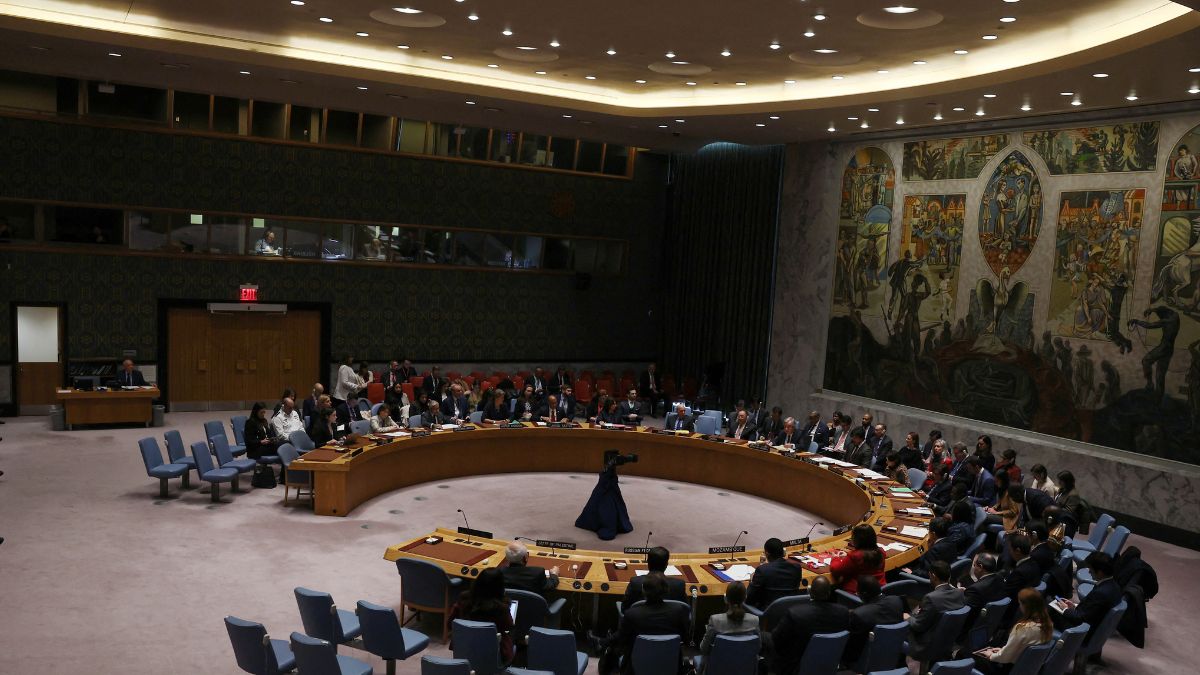 "UN Security Council approves US-backed Gaza plan")
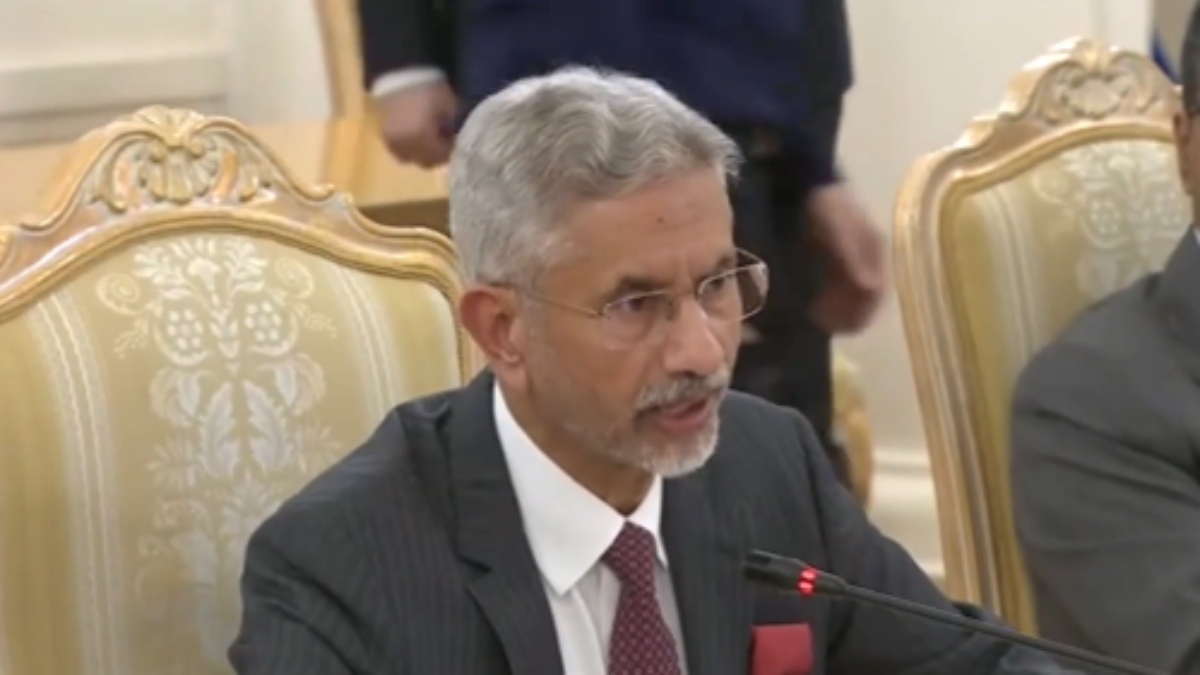 "India–Russia ties a 'factor of stability' in international relations, says Jaishankar in meeting with Lavrov")
 "Iran ends visa-free entry for Indians after rising cases of trafficking and kidnapping")
 "US colleges see 17% drop in new international students, Indian enrollments lead decline: Report")



