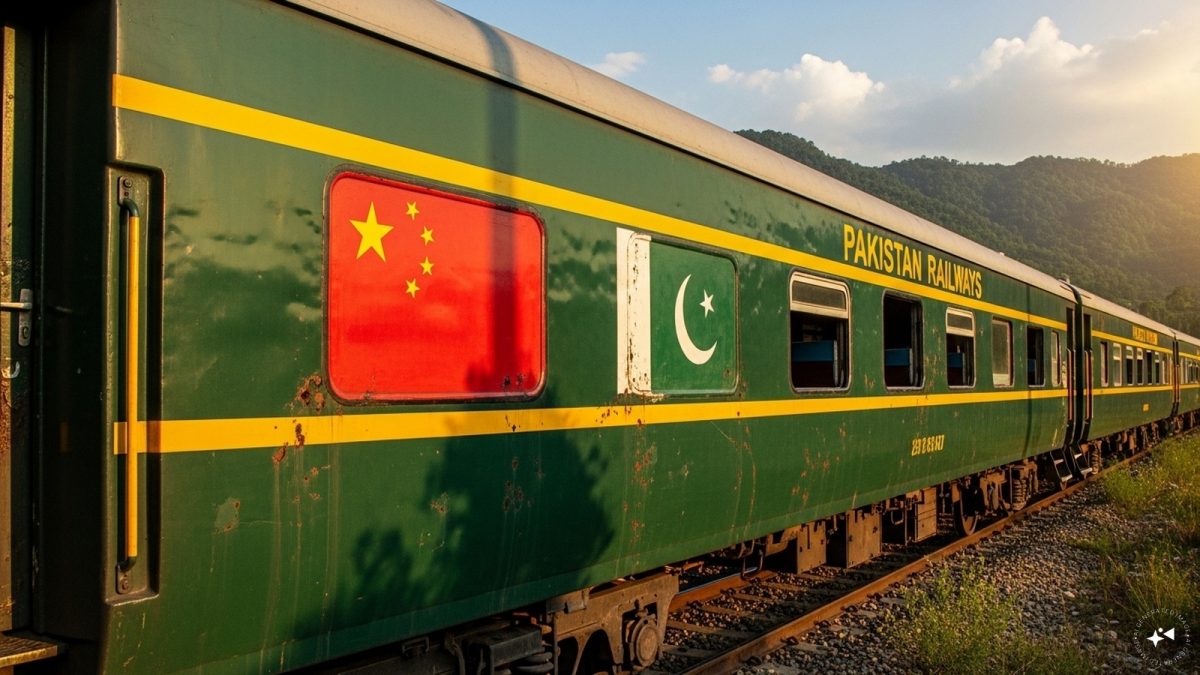
 "Critics argue that deeper embedding of Chinese monitoring mechanisms narrows Pakistan’s decision-making autonomy, Representational image.")
For nearly a decade, Beijing has relied on Islamabad’s assurances that Chinese nationals and infrastructure linked to the China-Pakistan Economic Corridor (CPEC) would receive comprehensive protection. Pakistan responded by raising dedicated security formations, strengthening convoy systems and repeatedly declaring CPEC a national priority. Yet persistent attacks, particularly in Balochistan, steadily exposed weaknesses in that security architecture. What was initially described by the Pakistan military as an isolated challenge gradually evolved into a recurring pattern and eventually turned into a full-blown internal security crisis for Pakistan that has jeopardised the entire China-Pakistan relationship.
Following the escalation of coordinated insurgent attacks under Hefof 2.0, Chinese officials reportedly pressed Islamabad hard to establish a more tightly integrated security framework specifically for Chinese nationals and CPEC assets. In response, Pakistan reluctantly last month approved the formation of the Special Protection Unit (SPU), a dedicated force designed to operate in close operational coordination and intelligence synchronisation with Chinese counterparts. While this does not amount to a formal deployment of PLA combat troops on Pakistani soil, the arrangement reflects Beijing’s insistence on deeper oversight and real-time visibility into security planning after concluding that earlier Pakistan-led mechanisms have failed to mitigate risk.
The creation of the SPU must therefore be understood as more than an administrative adjustment. It signals a structural recalibration in the China-Pakistan relationship. Beijing is now less focused on announcing ambitious new investments and more concerned with safeguarding the capital it has already deployed. It’s a shift shaped by security concerns, financial caution and gaining strategic leverage.
A Corridor That Redefined the Bilateral Relationship
When CPEC was launched, it was presented as a transformative initiative. Stretching from Gwadar Port on the Arabian Sea to China’s Xinjiang region, the corridor was designed to include highways, rail links, power plants and special economic zones. It quickly became one of the most visible components of China’s Belt and Road Initiative (BRI) and was dubbed the crown of BRI.
Quick Reads
View AllFor Pakistan, CPEC offered infrastructure modernisation at a scale that was rarely accessible through traditional multilateral lenders. Energy projects were intended to ease chronic electricity shortages, road networks to improve connectivity, and Gwadar to emerge as a future commercial hub.
For China, the corridor carried strategic weight. It offered overland access to the Arabian Sea, reduced reliance on maritime routes passing through the Strait of Malacca and deepened Beijing’s geopolitical footprint in South Asia.
However, much of CPEC’s footprint lies in Balochistan, Pakistan’s largest and least developed province, long affected by insurgency and political grievances. Separatist groups such as the Baloch Liberation Army have consistently opposed Chinese-backed projects, arguing they marginalise local populations while benefiting the federal government and external actors.
Over time, attacks on Chinese engineers, convoys and affiliated facilities became a persistent concern. Even when projects continued uninterrupted, each major incident reinforced the perception that security arrangements were reactive rather than preventive.
The Limits of Militarised Protection
In 2016, Pakistan raised a dedicated CPEC Security Division under the army, reportedly comprising around 15,000 personnel. This was an extraordinary allocation of manpower for protecting a single economic initiative. Additional paramilitary and police units were mobilised to guard key installations.
The security model relied heavily on static protection with fortified perimeters, armed escorts, layered checkpoints and coordinated intelligence. Initially, this approach reduced vulnerabilities around major sites.
However, insurgent groups adapted and changed tactics. Instead of confronting the heavily defended facilities, they shifted the focus towards softer and symbolic targets. Urban centres were regularly targeted. The objective appeared less about halting projects outright and more about imposing reputational and psychological costs, and it was largely achieved.
For Beijing, the persistence of such attacks suggested that the challenge extended beyond troop numbers. It raised questions about intelligence effectiveness, local political grievances and the sustainability of a model centred primarily on military deployment.
Security lapses also carried financial consequences as the insurance premiums rose, project timelines slowed and operational costs increased. Each disruption affected the corridor’s commercial viability.
Financial Exposure and China’s Growing Caution
Security concerns converged with financial stress. Over the past year, China has shown no enthusiasm for launching major new CPEC projects. Expansion announcements have dried up, while discussions increasingly became focused on security stabilisation, restructuring debt, resolving arrears and stabilising existing ventures.
Pakistan’s recurring balance-of-payments crises have complicated the environment. Chinese-backed power producers have faced delayed payments due to Pakistan’s circular debt problem in the energy sector. Repayment schedules required renegotiation, raising concerns about sovereign risk, and in some cases Chinese energy companies packed up, leaving Pakistan reeling with an energy shortage.
For Beijing, CPEC was always expected to generate financial returns. Chinese banks, state-owned enterprises and provincial stakeholders were not operating on strategic symbolism alone. As payment delays accumulated and macroeconomic instability persisted, caution became unavoidable.
China’s reluctance to inject substantial new capital reflects this reassessment. Rather than expanding exposure amid uncertainty, Beijing appears focused on consolidation by protecting existing infrastructure and enforcing repayment discipline. In this context, the SPU is not solely about physical security; it is also about safeguarding the sunk capital.
The Special Protection Unit: Institutionalising Oversight
The SPU represents a shift in how China looks into structuring security going forward. Earlier arrangements relied primarily on Pakistani command systems. The new unit is expected to function with deeper coordination between Pakistani forces and Chinese security and intelligence counterparts associated with CPEC projects.
This coordination includes expanded information sharing, closer monitoring frameworks, joint operational mechanisms and greater transparency in threat assessment. While Pakistan has not formally acknowledged any expansion of foreign operational authority, the arrangement provides Chinese officials with increased visibility into how security risks are managed.
In effect, the relationship is moving from assurance-based trust toward oversight-based verification. Pakistan has historically resisted overt foreign security presence, and the SPU does not put Chinese combat troops directly on the ground. However, it embeds Chinese monitoring more directly into operational processes, reflecting Beijing’s emphasis on demonstrable performance.
Hefof 2.0: A Strategic Trigger
The recent coordinated attacks by Balochistan Liberation Army (BLA) insurgents as Hefof 2.0 appear to have accelerated this recalibration. These incidents demonstrated improved planning and targeted messaging aimed at foreign-linked infrastructure.
Thus, for Beijing, continued attacks undermined the narrative of CPEC as a stable investment platform and heightened concerns about operational sustainability. They also increased domestic scrutiny within China regarding overseas ventures perceived as high-risk.
The SPU can therefore be viewed as a mechanism to set clearer expectations. It signals that China expects measurable improvements and is prepared to embed itself more closely in oversight structures to secure them.
Consolidation as Policy
CPEC has entered a consolidation phase. China’s reduced appetite for large new commitments reflects lessons drawn from security disruptions and financial delays. Instead of expanding exposure, Beijing is prioritising stabilisation, repayment security and risk mitigation.
This approach mirrors broader adjustments in China’s Belt and Road strategy, where new lending has slowed in favour of restructuring and sustainability.
Pakistan’s case carries particular weight because of the scale of Chinese exposure and the symbolic importance of CPEC. A visible failure would carry reputational costs beyond bilateral ties and into the heart of the CCP.
Sovereignty and Strategic Conditioning
The SPU thus raises questions about Pakistan’s sovereignty and leverage. Pakistan’s economic fragility has increased reliance on Chinese financial support, including loan rollovers and deferred payments. In that context, Beijing’s insistence on enhanced oversight is difficult to resist.
Critics argue that deeper embedding of Chinese monitoring mechanisms narrows Pakistan’s decision-making autonomy, while the supporters view it as pragmatic cooperation necessary to maintain investor confidence. But what is evident is that the balance of influence has shifted. China is demanding structural adjustments tied to performance benchmarks rather than relying solely on strategic rhetoric.
A Defining Moment for CPEC
CPEC was initially marketed as an expansive and open-ended partnership. It now appears to be transitioning into a more risk-managed and disciplined phase. The SPU embodies that transition. It is aimed at addressing security lapses while also serving as a financial safeguard. China’s priority has shifted from rapid expansion to protecting existing assets and limiting additional exposure.
If the SPU stabilises the security environment and restores confidence, it may reinforce the partnership while preserving Pakistan’s operational role. If disruptions persist, Beijing may seek further involvement through expanded contractor roles or more formalised oversight mechanisms that might include getting boots on the ground.
Ultimately, this development also underscores a broader reality that strategic partnerships are shaped by risk assessments as much as political declarations. In recalibrating its approach, China is seeking to tighten its grip to insulate prior investments from future instability. The extent to which Pakistan accommodates this recalibration will shape not only the future of CPEC but will also define the shrinking contours of its sovereign space within the partnership.
(Raja Muneeb is an independent journalist and columnist. He tweets @rajamuneeb. The views expressed in this article are personal and solely those of the author. They do not necessarily reflect the views of Firstpost.)