

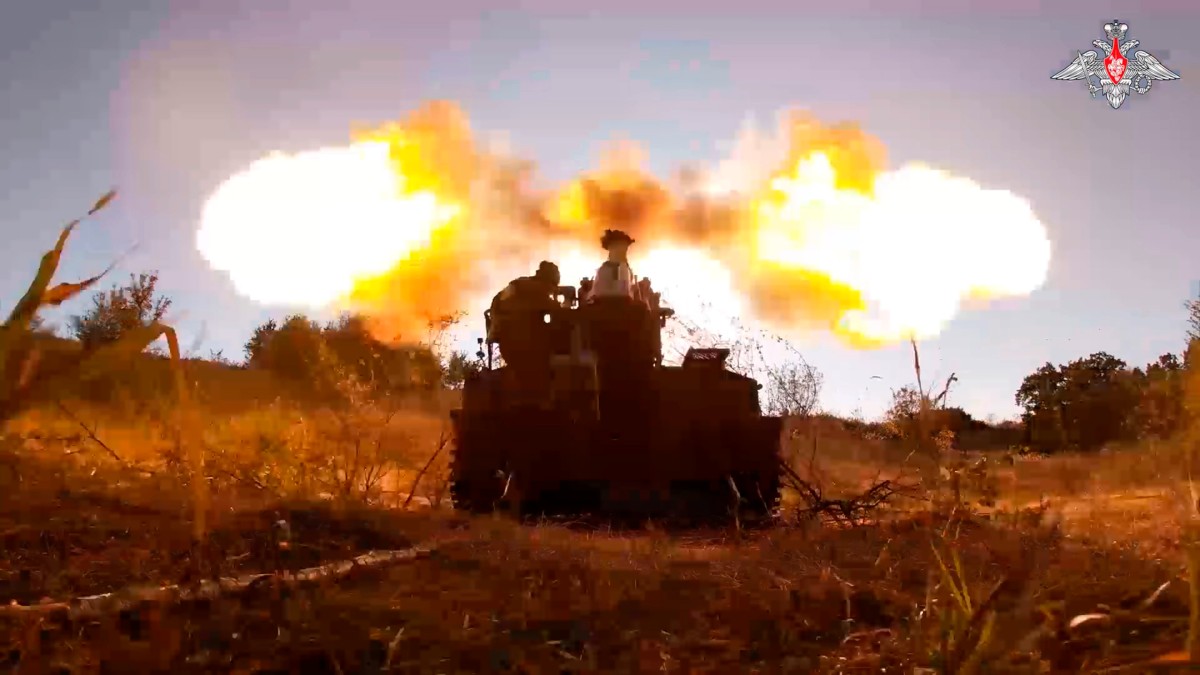
 "900 days and not over yet: Why India is best positioned to play peacemaker in Ukraine war")
The Ukraine conflict began on August 24, 2024. After over 900 days, nearly a dozen threats of use of tactical nuclear weapons, 500,000 casualties, and expenditure of many 100 billion dollars, there is no end in sight. There are some leaders in the West who are aggressively fuelling the war through rhetorical statements. The US-led West continues to support Ukraine with modern weapons and ammunition. As Western nations consider permitting Ukraine to strike deeper inside Russian territories, Russia has warned the United States that such thoughts were like playing with fire, and invoked the possibility of World War III and clarified, it would not be just limited to Europe.
One of the biggest issues for Russia to go into the war was the prospect of Ukraine joining NATO, which was like the Cuba moment for Moscow. NATO, which had expanded considerably east since the Warsaw Pact was dismantled in 1991, would have come on Russia’s border in case Ukraine were to join. This was a red-line for Russia.
Russia managed to successfully circumvent Western sanctions through increased oil and gas sales using alternative currencies. Russia has increased its war stores production, and has been importing arms from China, Iran, North Korea, among others.
While Global South has been recommending caution, India has repeatedly made it clear that “this is not an era of war, but it is one of dialogue and diplomacy”. Prime Minister Narendra Modi has recently made back-to-back visits to Russia and Ukraine acting as a pacemaker. What are the ground realities and how can India mediate?
The Budapest Memorandum
The Budapest Memorandum of 1994 prohibited Russia, the United States and the United Kingdom from threatening or using military force or economic coercion against Ukraine, Belarus, and Kazakhstan, “except in self-defence or otherwise in accordance with the Charter of the United Nations”. This resulted in these countries’ accession to the Treaty on the Non-Proliferation of Nuclear Weapons (NPT), and gave up their nuclear weapons. Russia reaffirmed this assurance in 2009.
Impact Shorts
More ShortsAfter the Russian occupation of Crimea began in 2014, Russian President Vladimir Putin claimed that the Revolution of Dignity had created a new political entity and any prior agreement with Ukraine was therefore void.
Annexation of Crimea
Elections in Crimea resulted in the ouster of pro-Russian Ukrainian president Viktor Yanukovych on 22 February 2014. Crimea is mostly populated by ethnic Russian majority. It sparked pro-Russian demonstrations in Crimea against the incoming Ukrainian government. Russian troops then entered and occupied Crimea, dismissed the elected Crimean government, and installed the pro-Russian Aksyonov government. A referendum was held under Russian occupation, and the result was overwhelmingly in favour of joining Russia.
Crimea was very important to Russia because the Russian Black Sea fleet was housed in the Island. Following the annexation, Russia built up its military presence on the peninsula and warned against any outside intervention. On March 17, 2014, Crimea’s authorities declared independence and requested to join Russia. Russia formally incorporated Crimea on March 18, 2014, as the Republic of Crimea and federal city of Sevastopol. It labelled the annexation as “self-determination” and accession.
The annexation was condemned by the United Nations General Assembly. The G8 suspended Russia from the group and introduced sanctions.
Minsk agreements of 2014
The Minsk agreements were a series of international agreements which sought to end the Donbas war fought between armed Russian separatist groups and Armed Forces of Ukraine, with Russian regular forces playing a central part.
In August 2014, Russia forced Ukraine to sign the first Minsk Protocol that was drafted by the Trilateral Contact Group on Ukraine, consisting of Ukraine, Russia, and the Organization for Security and Co-operation in Europe (OSCE), with mediation by the leaders of France and Germany in the so-called Normandy Format. The agreement failed to stop fighting.
Additional packages of measures, including a ceasefire, withdrawal of heavy weapons from the front line, release of prisoners of war, constitutional reform in Ukraine granting self-government to certain areas of Donbas and restoring control of the state border to the Ukrainian government, were introduced in Minsk II in February 2015. Fighting still did not end.
Amid rising tensions between Russia and Ukraine in early 2022, Russia officially recognised the Donetsk People’s Republic (DPR) and Luhansk People’s Republic (LPR) on 21 February 2022. Following that decision, on 22 February 2022, Russian President Vladimir Putin declared that the Minsk agreements “no longer existed”, and that Ukraine, not Russia, was to blame for their collapse. Russia then launched a full invasion of Ukraine on 24 February 2022.
Negotiating Positions before Russian Invasion
Shortly before the invasion, Russia demanded an international treaty to prevent Ukraine from ever joining NATO but also withdrawal of NATO from existing member states and reversal to the 1997 presence. This was rejected by NATO as it would go against its “open-door policy” and the principle of self-determination. NATO offered to improve communication with Russia and discuss missile placements and military exercises, as long as Russia withdrew troops from Ukraine’s borders.
Initial Peace attempts
There have been several rounds of peace talks since 2014 to prevent the possible Russian invasion of Ukraine. Post invasion, the first preliminary meeting was held four days after the start of conflict, on 28 February 2022, in Belarus. Many more meetings followed in March, including on March 10 and 14 in Antalya, Turkey.
The initial proposals were to declare Ukraine to be a neutral state, put a limit on its military, and list Russia and Western countries, including the US and the UK, as guarantors, obliged to assist Ukraine in case of aggression against it. The talks almost reached agreement, with both sides “considering far-reaching concessions”, but stopped in May 2022 due to a variety of suspicions.
Russian Position after Start of Invasion
Putin’s demands at the start of the invasion included recognition of Russia’s annexation of Crimea, recognition of the DPR and LPR as independent states, as well as “demilitarisation” and “denazification” of Ukraine but did not clearly specify the meaning of these postulates.
In September 2022, after Russia declared it had annexed the Kherson and Zaporizhzhia regions of Ukraine, the Kremlin wanted these additional annexations to be recognised before any peace plan.
In April 2023, Russian Foreign Minister Sergei Lavrov said that he wanted any peace negotiations to focus on creating a “new world order” to counter global hegemony of the United States. In January 2024, Putin again made statements which called for the overthrow of the Ukrainian government.
In May 2023, European officials reportedly criticized China’s peace plan as an attempt at “freezing” the conflict in place and splitting the West in pushing Ukraine to a ceasefire.
In a speech on June 14, 2024, Putin outlined Russia’s terms for a ceasefire. He said that Russia would not negotiate unless Ukraine handed over the provinces of Ukraine claimed by Russia: all of Donetsk, Luhansk, Kherson and Zaporizhzhia oblasts, including the parts Russia does not control.
Ukrainian Position
Two months before the invasion, Ukraine had dismissed the idea that declaring neutrality would prevent Russian aggression. They noted that Ukraine was a neutral country in 2014 when Russia occupied Crimea and invaded the Donbas. But in negotiations during March and April 2022, Ukraine was willing to consider a neutral status, wherein Ukraine would not join any military alliances or host forces of other nations on its territory, if it received security guarantees from its European allies. But reacting to Russian attacks on civilian targets later that year, the position was that there can be no ‘neutrality’ in the face of such mass war crimes.
In August 2022, Zelenskyy said that he would not agree to a ceasefire that would freeze the conflict while Russia occupied 22 per cent of Ukraine. In September 2022, after Russia proclaimed it had annexed large swathes of Ukraine, Zelenskyy signed NATO application papers. But there was no consensus within NATO for such admission.
On 3 October 2022, Elon Musk floated a controversial proposal on Twitter, arguing that Ukraine should permanently cede Crimea to Russia, which would be assured of its water supply from Ukraine, and that Ukraine should drop its bid to join NATO. The proposal was welcomed by Russia and rebuked by Ukraine.
In November 2022 President Zelenskyy proposed a multilateral peace conference, and gave a 10-point peace proposal. The main position was restoration of Ukrainian borders prior to the 2014 annexation of Crimea, full withdrawal of Russian military forces from Ukraine, prosecution of war crimes in the Russian invasion of Ukraine, and guarantees against future aggression.
In June 2023, Zelenskyy said that Ukraine was not ready to negotiate with Russian representatives unless Russia withdrew its troops. He repeated this refusal in January 2024.
In April 2023, Brazil’s President Luiz Inácio Lula da Silva suggested that Ukraine should “give up Crimea” in exchange for peace and Russia’s withdrawal from the Ukrainian territory it occupied after February 2022. Ukraine rejected his proposal to give up Crimea in exchange for peace.
In May 2023, UN Secretary-General António Guterres said peace negotiations to end the Russo-Ukrainian war were “not possible at this moment”, saying it was clear that Russia and Ukraine “are completely absorbed in this war” and “are convinced that they can win”.
At the same time, Brazilian President Lula da Silva said that the countries of the Global South, including Brazil, India, Indonesia and China “want peace”, but both Putin and Zelenskyy “are convinced that they are going to win the war” and do not want to talk about peace, so the war could be very long.
In a survey conducted by the Kyiv International Institute of Sociology (KIIS) between May 26 and June 1, 2024, 58 per cent of Ukrainians said they opposed concessions in negotiations with Russia, down from 80 per cent in May 2022. Clearly people are getting fed up, and the war fatigue is setting in.
Pope Francis said in an interview that Ukraine should not be ashamed to talk to Putin “before things get worse”, as “the word negotiate is a courageous word”. There have been indirect talks in Doha, Qatar to halt mutual strikes on energy infrastructure in Ukraine and Russia.
US and NATO Hardstand
The American military complex has been the greatest beneficiary of the conflict. Most NATO members have maintained a hard stand against Russia and have transferred a significant amount of hardware and ammunition to Ukraine. A few 100 billion dollars have been spent. They have not been encouraging peace talks. NATO has added three new members since the conflict began. NATO member’s defence budgets have gone up. NATO is likely to maintain an antagonistic stand against Russia for years to come. The Ukraine conflict has already been featured in the US presidential elections.
A poll of Germans conducted by the Forsa and published in January 2023 found that over 80 percent believe it is more important to end the war through negotiations than for Ukraine to win. So there is a difference of opinion between NATO and ordinary people. Figures are similar in France and Italy. Between May and October 2023, US public support for arming Ukraine in its war against Russia decreased.
India Best Positioned as Mediator
During PM Modi’s recent visit to Ukraine, President Zelenskyy had proposed a peace summit in India to push the plan for ending the Russia-Ukraine war. The Ministry of External Affairs clarified that India has always advocated constructive, solution-oriented, and practical engagement with all stakeholders to achieve a negotiated settlement to the conflict between Russia and Ukraine. PM Modi has already indicated India’s willingness to play a constructive role in the interest of peace. If this becomes a war of attrition, that’s going to kill a whole generation of young men.
Zelenskiyy is seeking to convene a second gathering of world leaders before the US presidential election in November, building on the momentum from a summit held in June. The purpose of the June meeting was to garner support from nations in the Global South for Ukraine’s position in its ongoing conflict with Russia, which has lasted for over two and a half years. Ukraine has expressed openness to including Russia in the process, though the Kremlin has repeatedly made clear that negotiations will not be on any Kyiv sponsored blueprint.
A potential gathering in India would be seen as a significant step forward for Kyiv, as India has thus far kept a neutral stand and sought end to war, and suggested sitting across the table.
The decision of when and how to commence peace talks is the prerogative of the two parties in the conflict. Clearly the first step is to effect a ceasefire. For this the NATO has to come on-board and convey to Zelenskiyy. The ceasefire would be at current holding positions. Thereafter will start negotiations. In view of the current hard stands, it will be a slow and long process. Red lines of both sides would have to be understood.
While it is too early to comment on the likelihood of such a meet, India is best positioned to be a mediator for many reasons. India is the accepted leader of the Global South. PM Modi has a global stature and is highly respected. India is the only major country having close relations with both Russia and US-led NATO countries. It has had good relations with Ukraine. India has no hidden agendas to embarrass or act against either side. China, the other major global power, is antagonistic towards the US and its allies.
India is a respected ancient civilisation. India is the world’s largest and very successful democracy. India is the fourth most powerful military power. India will soon be the third largest economy. India has traditionally believed and espoused the concept of “Vasudhaiva Kutumbakam” (The world is a family). The theme of the 2023 G20 summit in New Delhi was “One Earth, One Family, One Future”. Such an initiative would further propel India to the global high table.
The writer is former Director General, Centre for Air Power Studies. Views expressed in the above piece are personal and solely those of the author. They do not necessarily reflect Firstpost’s views.

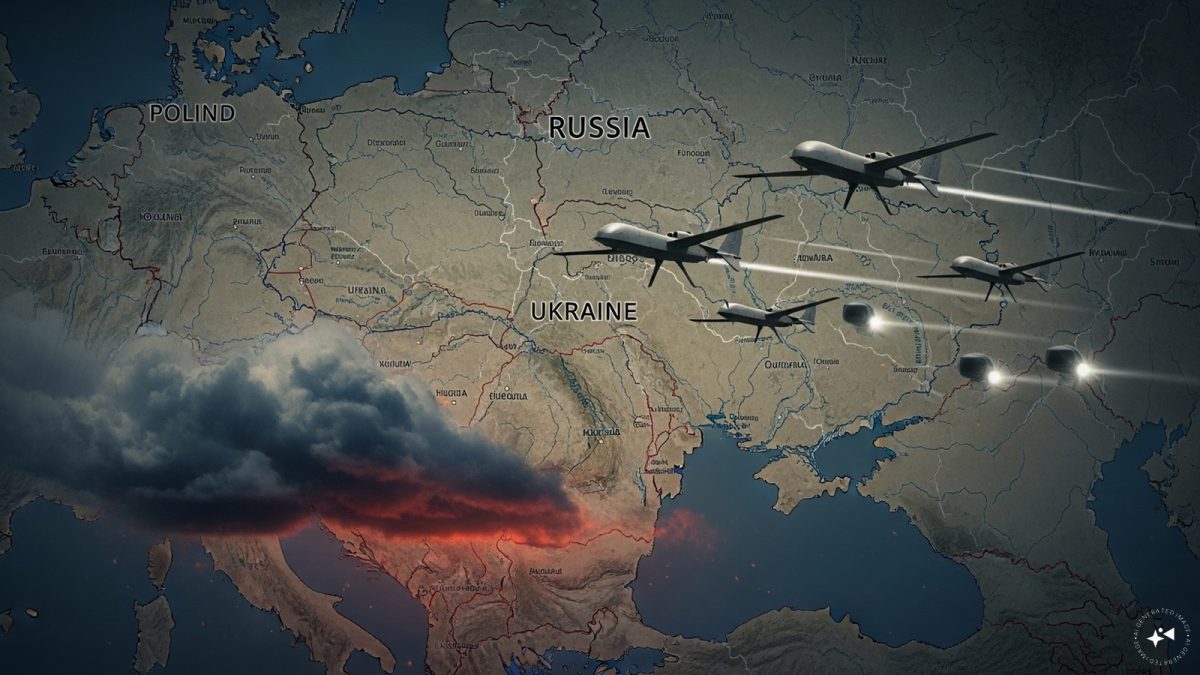 "Russian drones over Poland: Trump’s tepid reaction a wake-up call for Nato?")
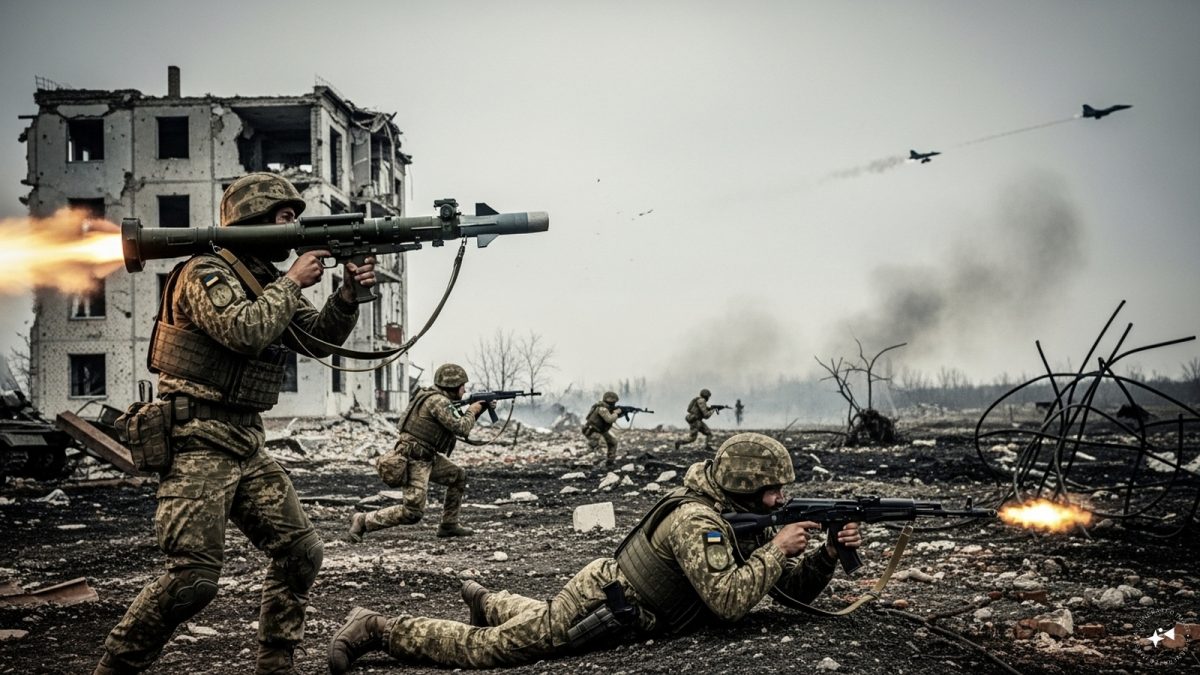 "As Russia pushes east, Ukraine faces mounting pressure to defend its heartland")
 "Why Mossad was not on board with Israel’s strike on Hamas in Qatar")
 "Turkey: Erdogan's police arrest opposition mayor Hasan Mutlu, dozens officials in corruption probe")
 "Russian drones over Poland: Trump’s tepid reaction a wake-up call for Nato?")
 "As Russia pushes east, Ukraine faces mounting pressure to defend its heartland")
 "Why Mossad was not on board with Israel’s strike on Hamas in Qatar")
 "Turkey: Erdogan's police arrest opposition mayor Hasan Mutlu, dozens officials in corruption probe")



