 "100 AI agents per worker: A productivity windfall for some, not all")
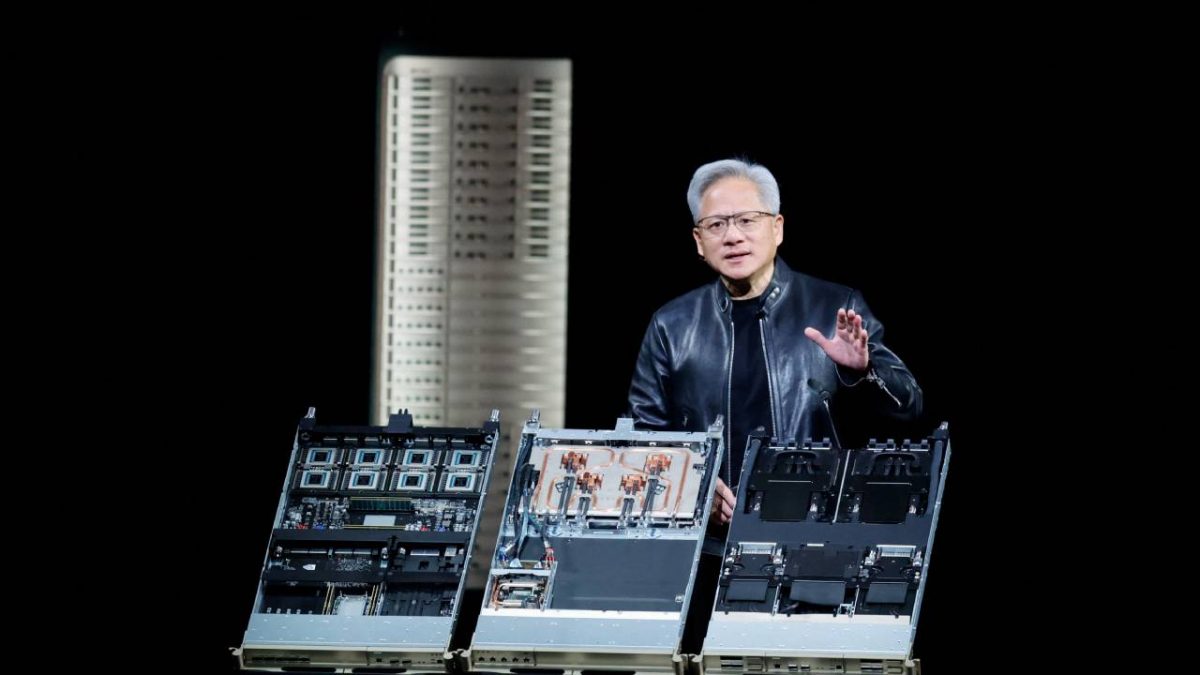
Jensen Huang’s recent projection that Nvidia could one day have 75,000 employees working with 7.5 million artificial intelligence (AI) agents is not a throwaway line. At the Nvidia GTC 2026 AI conference at San Jose, Huang framed it as a ten-year picture of one human paired with roughly 100 agents. That is a meaningful signal from a company that sits near the centre of the AI hardware stack, but it remains a picture drawn from Nvidia’s own operating world: one with capital, compute, and direct access to the infrastructure needed to push automation hard.
An agent is not a chatbot with a cleaner label. McKinsey describes AI agents as foundation-model-based systems that can act in the real world, plan, and execute multiple steps in a workflow. The move from ordinary generative AI to agentic systems changes the load on the whole AI stack. It means more continuous inference, more orchestration, and more dependence on the layers underneath the software. Nvidia’s GTC messaging reflects that shift. The company is no longer talking only about models. It is talking about the machinery needed to coordinate fleets of agents at enterprise scale.
The larger question is whether this model can spread beyond companies like Nvidia. The International Energy Agency says global electricity consumption from data centres is projected to reach around 945 TWh by 2030 in its base case, more than double current levels, with AI as the main driver of that growth. The International Energy Agency (IEA) also warns that grid connection delays, supply chain constraints, and the slow pace of power-system buildout can hold projects back. The agentic future is not only a software story. It is a power story, a grid story, and a capital story.
India makes the pressure clearer. The IEA forecasts India’s electricity demand will grow at an average of 6.3 per cent annually from 2025 to 2027, even before AI adds its own load. Reuters has also reported that data centres could lift their share of India’s electricity demand to about 2.6 per cent by 2030, up from 0.8 per cent in 2024. In a market already balancing industrial growth, household demand, and infrastructure strain, that is not a side note. It is the boundary line between digital ambition and physical capacity.
Quick Reads
View AllMcKinsey’s 2025 survey shows why the gains will not arrive evenly. It found that 88 per cent of respondents said their organisations use AI in at least one business function, while 79 per cent said they regularly use generative AI in at least one function. But McKinsey is careful about what “use” means: it ranges from early experimentation by a few employees to AI embedded across multiple business units. The same survey found that 23 per cent of respondents said their organisations are scaling an agentic AI system somewhere in the enterprise, while another 39 per cent are still experimenting. Broad adoption is real. Industrial-scale deployment is still limited.
That divide is visible across regions too. The IEA says the United States, China, and Europe will remain the largest regions for data centre electricity demand and that China and the United States together account for nearly 80 per cent of global growth through 2030. It also notes that Africa has the lowest data-centre electricity consumption per capita, while the United States has the highest by a wide margin. The productivity windfall Huang describes will not spread as a smooth global wave. It will cluster first where the grid is strong, capital is cheap, and the digital backbone already exists.
The semiconductor supply chain introduces a different kind of constraint. Taiwan-based TSMC’s own risk disclosures note that onshoring, friend-shoring, export controls, tariffs, and broader fragmentation of the technology ecosystem can disrupt supply chains, raise costs, and restrict market access. ASML, the Dutch company that dominates advanced lithography, has also stated that geopolitics and export restrictions remain ongoing business risks, with its most advanced EUV systems restricted from sale to China since 2019. A world that seeks to run millions of agents will rely not just on software and electricity but also on a semiconductor stack shaped by strategic rivalry, where manufacturing concentration and lithography control sit within active geopolitical fault lines.
The fragility extends further down the AI stack. The US Geological Survey reports that China accounts for about 99 per cent of global primary low-purity gallium production and that rebuilding supply outside China has been difficult. Gallium, while not a rare earth, is a critical material used in high-performance semiconductor manufacturing. It is only one input, but it reflects a broader pattern: the AI stack depends on a narrow set of materials and concentrated supply chains. A world that aims to run millions of agents will require reliable access to these minerals, along with fabrication capacity and industrial processes that remain unevenly distributed. Compute is not just code. It is industrial geography.
So the right reading of Huang’s projection is not celebration or dismissal. It is a warning about distribution. The 100-agent model will likely arrive first in infrastructure-rich firms and countries that already sit close to the compute economy, and there it may produce real productivity gains. But without parallel investment in grids, data centres, supply chains, and affordable access to AI infrastructure, the same model will widen the distance between those who can deploy agents at scale and those who cannot. The promise is real. So is the divide.
(Sreejith Sreedharan is a technology analyst and author. The views expressed in this piece are personal and solely those of the author. They do not necessarily reflect Firstpost’s views.)


 "Iran Israel War Live News: US, Iranian forces race to recover missing pilot from downed jet as Israel bombards Beirut")
 "One of two US crew members rescued after F-15E jet shot down over Iran, race to hunt second ongoing")
 "Seventh India-flagged LPG tanker crosses Strait of Hormuz")
 "UK-US ties may be beyond repair, PM Starmer told as Trump mocks him over lack of support in Iran War")
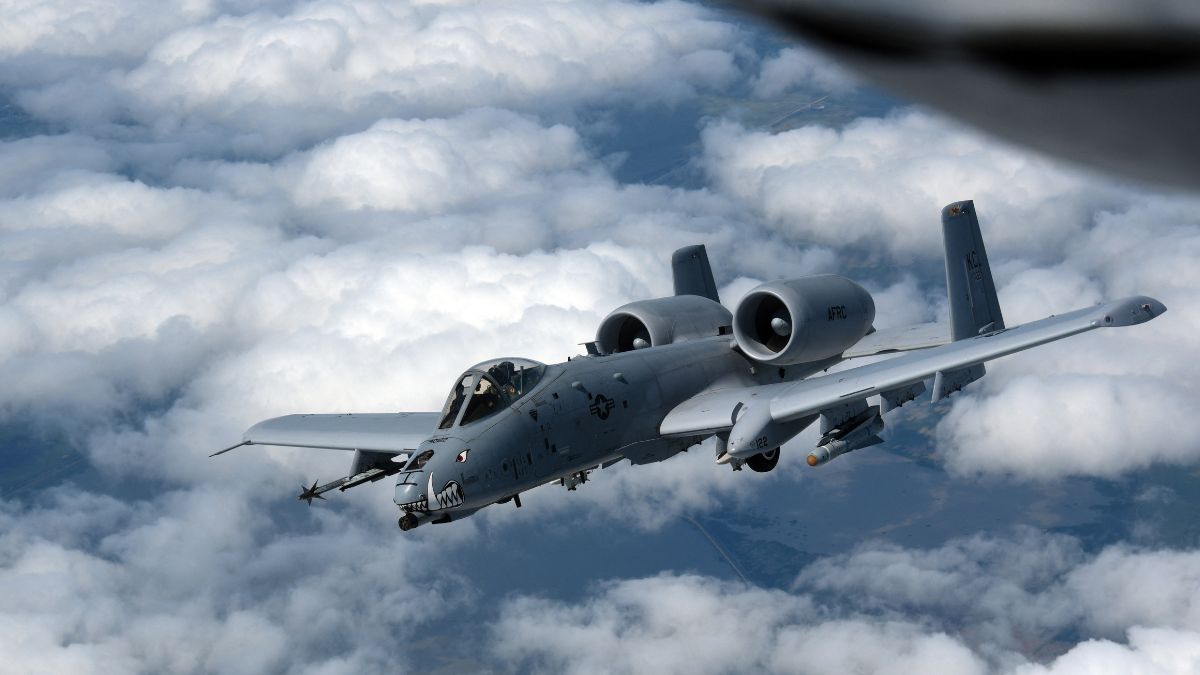 "Iran Israel War Live News: US, Iranian forces race to recover missing pilot from downed jet as Israel bombards Beirut")
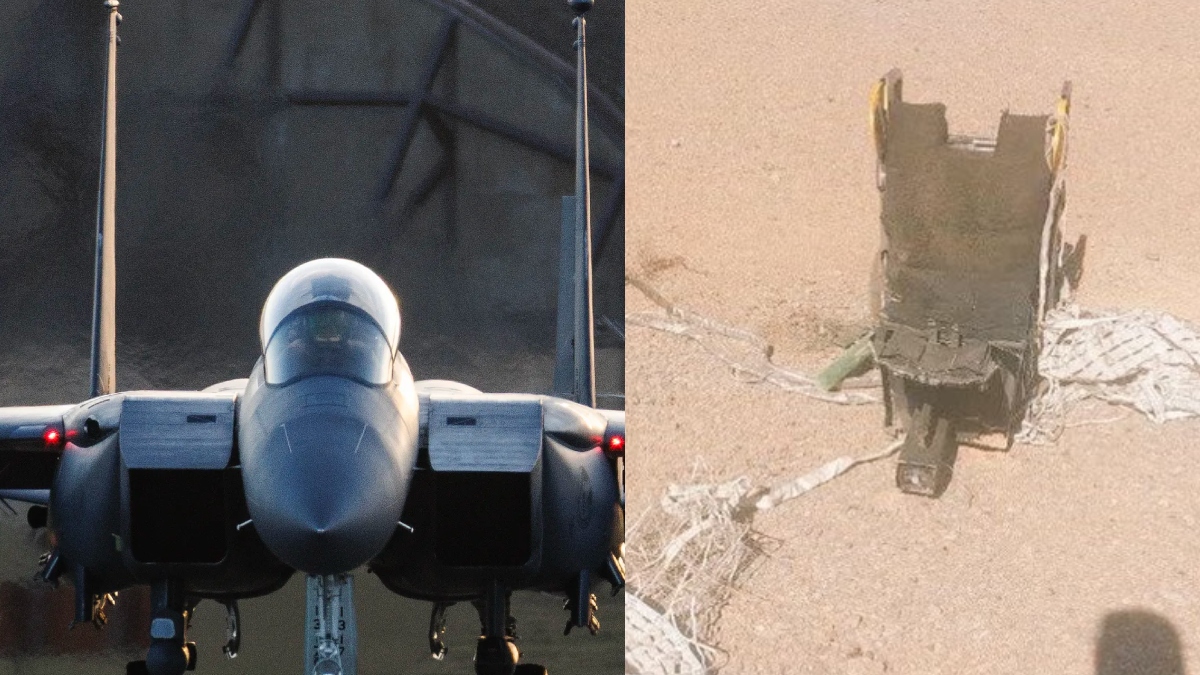 "One of two US crew members rescued after F-15E jet shot down over Iran, race to hunt second ongoing")
 "Seventh India-flagged LPG tanker crosses Strait of Hormuz")
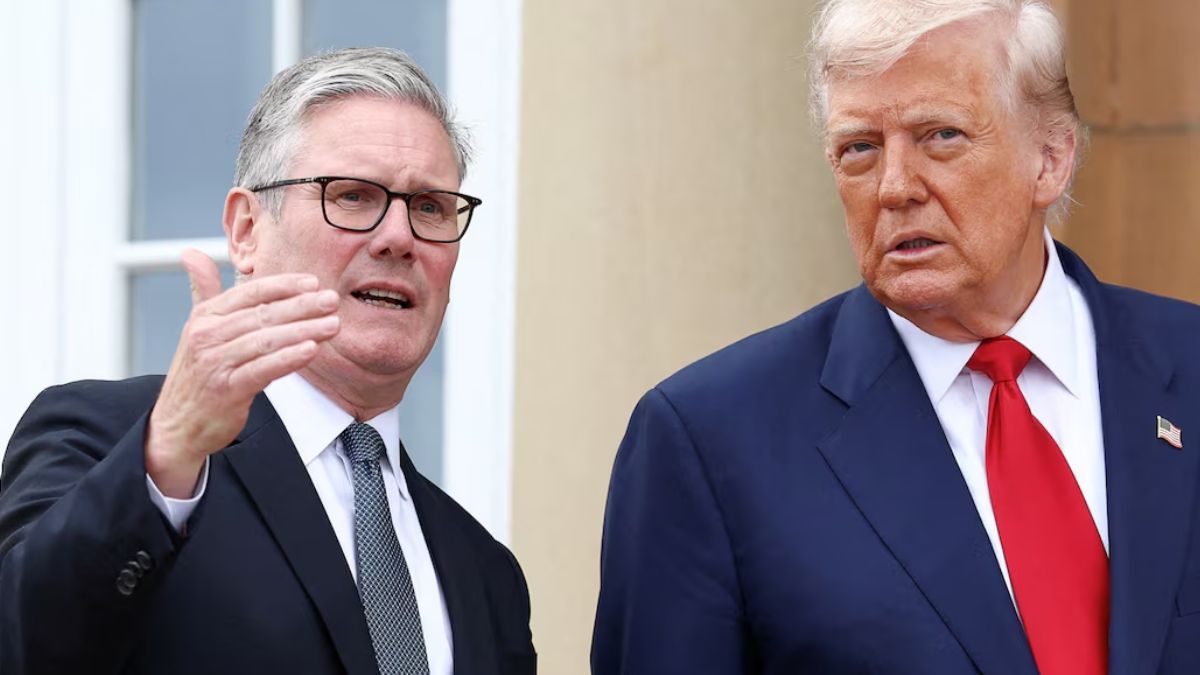 "UK-US ties may be beyond repair, PM Starmer told as Trump mocks him over lack of support in Iran War")