

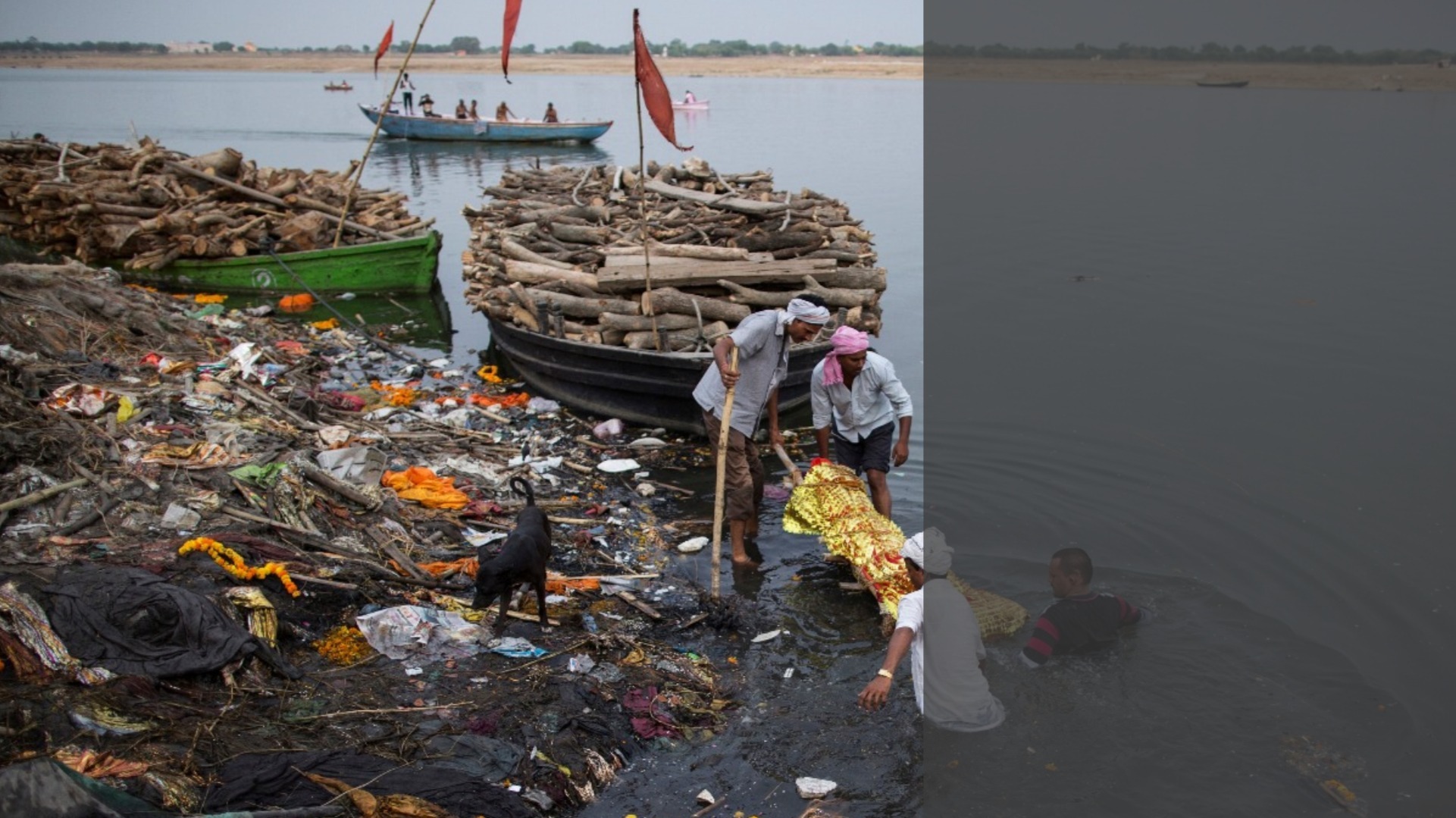
 "In Varanasi and Kanpur, a polluted Ganga might have a part to play in 2019 poll results")
Water, air and soil are all polluted in Uttar Pradesh, India’s most populous state; but no campaigner in this election season talks about it, and voters do only when reminded. By Joydeep Gupta “No political party wants to talk about the state of the Ganga because they are all guilty,” says Pradeep Manjhi. “We boatmen of Varanasi know this because we are on the river every day. That is why we do not accept all this talk of Modi_ji_ cleaning the Ganga.” In Varanasi, the parliamentary constituency represented by Prime Minister Narendra Modi, nobody thinks he can be defeated in the polling scheduled on 19 May. “But people now know that he does not keep his promises, especially to Dalits and Muslims,” says Ishtiaq Ansari, a resident who calls himself a supporter of the opposition Samajwadi Party. “I think his margin of victory will come down.” Prabal Sonkar was playing cricket in a wasteland, the only vacant plot between the Varanasi neighbourhood Phoolwariya and the railway tracks. “What else can I do? I am 25. I have completed my BA, I have sat for every recruitment examination, I have looked for a job everywhere, I have not got anything.” Has he heard of schemes by the outgoing BJP-led government to provide loans so that young people can start their own businesses? “Yes, of course I have heard of them. Modi_ji_ and other BJP leaders keep talking about the schemes all the time. So I checked with three banks. None of them will give a loan without a surety. My father is an auto-rickshaw driver. He does not even own the auto-rickshaw he drives. What will I offer as surety? I need a job.” [lq][caption id=“attachment_6503011” align=“alignnone” width=“1024”]
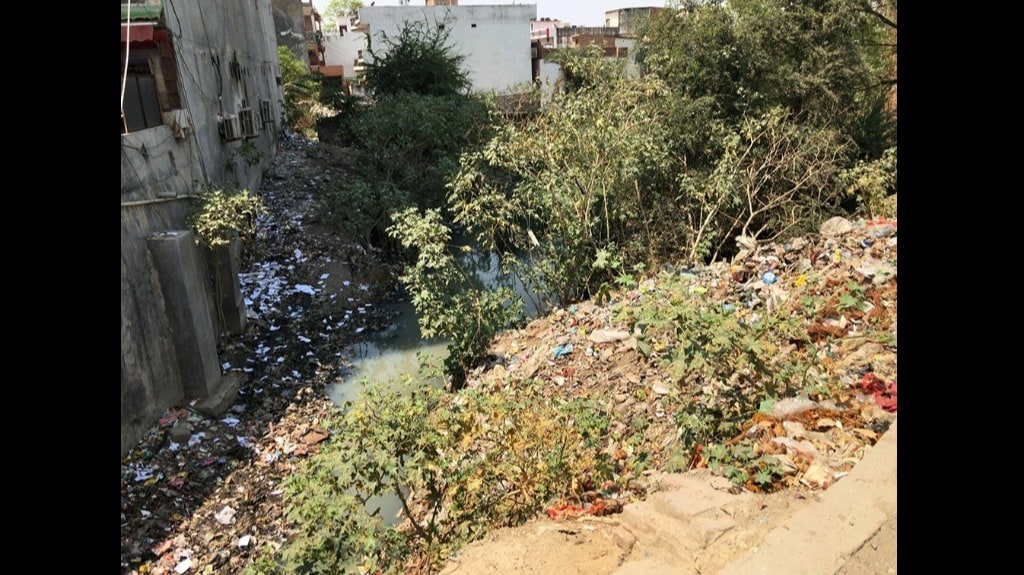
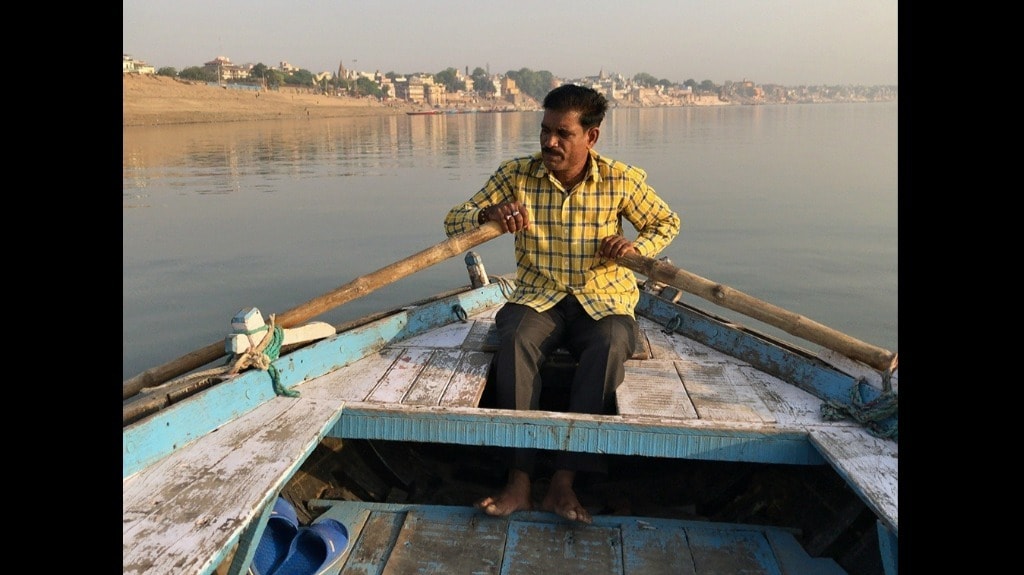 No political party wants to talk about the state of the Ganga because they are all guilty.[/caption][/lq] On the wasteland, the game has changed from cricket to football. The level crossing across the rail tracks has opened up after a long wait, and motorcycle riders take a short cut through the dirt tracks that divide the wasteland from the garbage dump of Phoolwariya. Pigs, goats and cows root among discarded plastic bags. Garbage of all kinds lies strewn around. Don’t the municipal authorities remove the garbage? “Who thinks of Phoolwariya?” responds Rampal, a vegetable seller taking the evening air atop his empty cart. “This is a place where we Dalits live, and so do the poor people among the Muslims. The BJP people know we will not vote for them. So they don’t come here. When Modi_ji_ comes to Varanasi to campaign, you’ll see he will go to the Ganga ghats and get photographed. He will talk to the rich people. He will not come here. Who cares about us?” Shail Bala qualifies as a first time voter from Phoolwariya, but says she cannot vote because she has not got her voter’s identity card. “They removed our names.” Who is they? “I don’t know.” How does she know her name has been removed? “I haven’t got my card.” Does she know that as long as her name is on the voters’ list, she can use another identity card and vote? “I didn’t know that.” So will she try to vote? “What’s the point? Modi_ji_ will win anyway.” Sitting on the porch of their home, her mother says, “I will vote. We have always been BSP (Bahujan Samaj Party) supporters. I will vote for the gathbandhan (alliance of the SP and BSP).” In Uttar Pradesh — the state with India’s highest population and which sends 80 representatives among the 543 elected to the lower house of India’s Parliament — the Samajwadi Party and the BSP are in an alliance to oppose the BJP. During the last general elections in 2014, the BJP won 71 seats from the state. In the middle of this year’s poll, the feelings indicate that the contest is more evenly balanced. Pradeep Manjhi and many of fellow Ganga boatmen in Varanasi are also planning to vote against the BJP, because, they say, the schemes for beautification of the ghats (riverside steps) in Hinduism’s holiest city keep displacing them from the mooring spots of their boats. “And after all this, the river is dirtier than ever. These BJP people just keep talking. When we tell them the river cannot be cleaned unless they get their sewage treatment plants working, there is no response. It was a lot cleaner during the (January-March) Kumbh Mela in Allahabad (officially called Prayagraj now) because they released water from Tehri (dam in Uttarakhand upstream). Now they have stopped the water again, and you can see that there’s not enough water to take away the garbage. The river doesn’t even flow.” [imgcenter]
Water, air and soil are all polluted in Uttar Pradesh, India’s most populous state; but no campaigner in this election season talks about it, and voters do only when reminded.
Advertisement

End of Article

 "Israel targets top Hamas leaders in Doha; Qatar, Iran condemn strike as violation of sovereignty")
 "Nepal: Oli to continue until new PM is sworn in, nation on edge as all branches of govt torched")
 "Who is CP Radhakrishnan, India's next vice-president?")
 "Israel informed US ahead of strikes on Hamas leaders in Doha, says White House")
 "Israel targets top Hamas leaders in Doha; Qatar, Iran condemn strike as violation of sovereignty")
 "Nepal: Oli to continue until new PM is sworn in, nation on edge as all branches of govt torched")
 "Who is CP Radhakrishnan, India's next vice-president?")
 "Israel informed US ahead of strikes on Hamas leaders in Doha, says White House")



](https://images.firstpost.com/wp-content/uploads/large_file_plugin/2019/04/1556029536_manjhi.jpg)
](https://images.firstpost.com/wp-content/uploads/large_file_plugin/2019/04/1556029554_kanpur.jpg)