

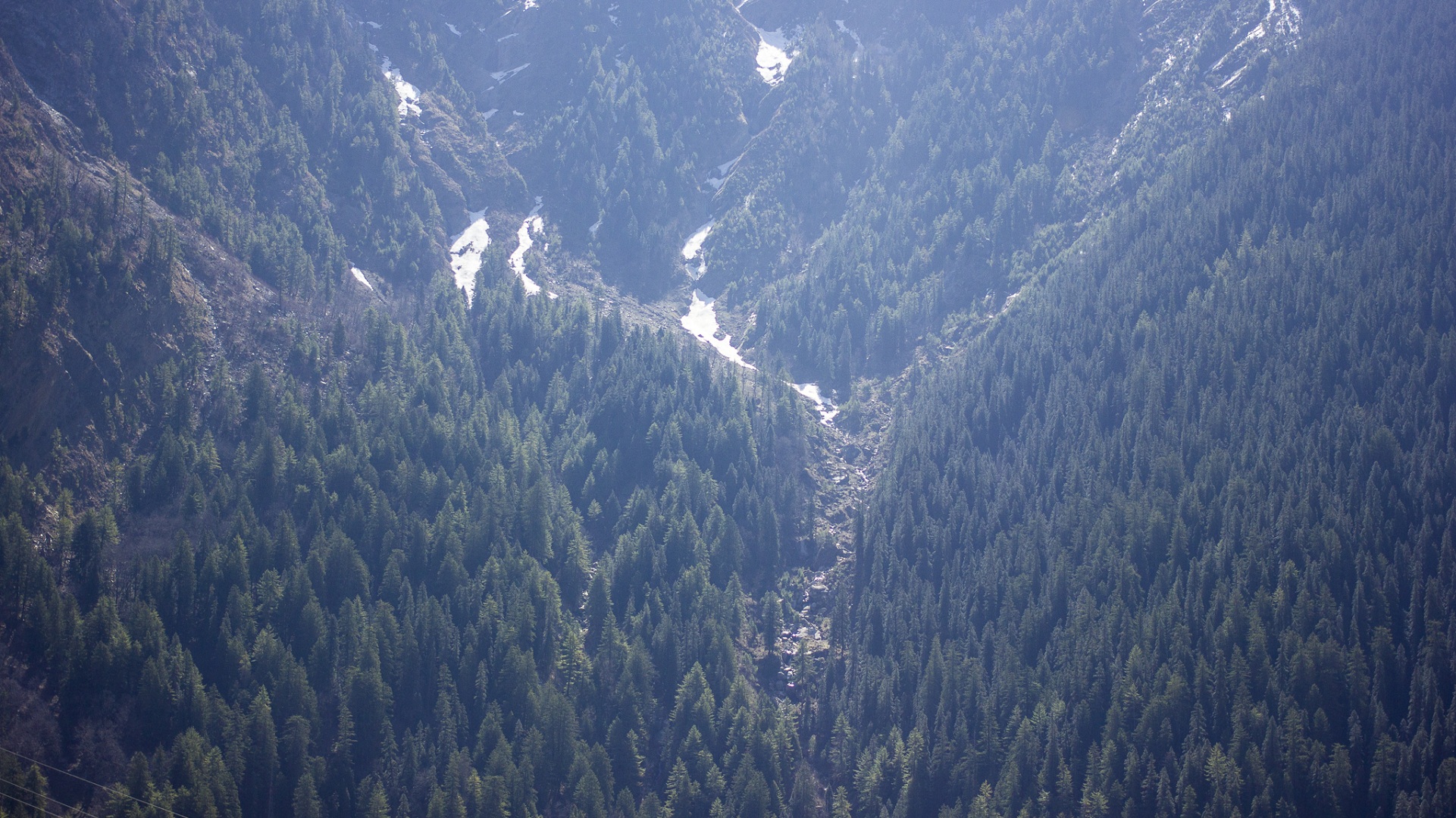
 "Char Dham Road Project: Stairway to heaven or highway to hell?")
“Do you know that apple trees need to sleep — and that too about 1,000 hours a year? If they get their quota of undisturbed sleep, we have ripe apples, probably the best in all of Uttarakhand,” said Mohan Singh Rana_,_ answering my question on indicators of a changing local climate. “Apple trees get their best sleep when it snows; the additional weight of snow helps them, almost like the heavy warm blankets that work for us. But recent times have witnessed untimely, prolonged and destructive hail storms. Hail not only disrupts the apple tree’s sleep, but also harms it physically.” Mohan Singh Rana is a resident of Sukkhi village that lies in the Bhagirathi Eco-Sensitive Zone (ESZ), on the edge of the Gangotri National Park. An ex-serviceman with the Indian Army, he is one of a group of villagers raising their voices against the design of the proposed Char Dham Highway Development Project that threatens to worsen the region’s ecological problems. [lq][caption id=“attachment_4870081” align=“alignnone” width=“1024”] 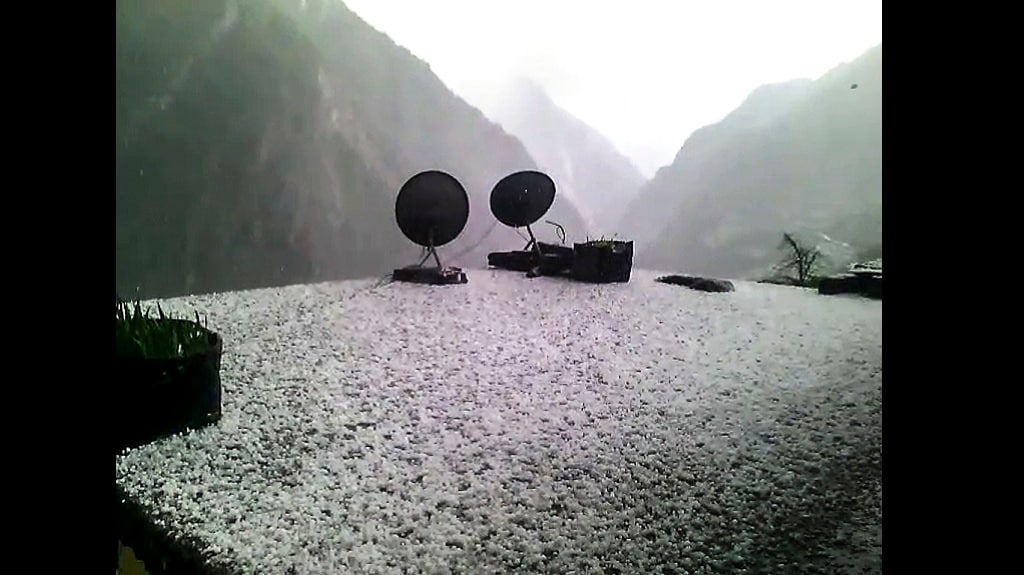 Recently we have witnessed untimely, prolonged and destructive hail storms[/caption][/lq] In the ecologically sensitive state of Uttarakhand, there has been a continuing effort to make the Chota Char Dham pilgrimage (covering Yamunotri, Gangotri, Kedarnath, Badrinath) more convenient and there has been substantial success on that front. The same Kedarnath valley that was devastated in 2013 by cloudbursts and ravaging floods, today witnesses 300 helicopter sorties daily, taking two hours to transport pilgrims to and fro from the shrine, all blessings and tickets for salvation received. This evolution of comfort has been in tandem with the degradation of the local environment. The Chardham Mahamarg Vikas Pariyojana or the Char Dham Highway Development Project is a 900-km-long two-lane highway, that will improve connectivity to these shrines on completion. The stated objectives of the project are to mitigate risk, reduce travel time and increase comfort for pilgrims.
One of the BJP’s major pre-poll promises in Uttarakhand, the Char Dham Highway Development Project has been steamrolled through bureaucratic corridors.
A pet project of Prime Minister Narendra Modi and one of the major pre-poll promises of the BJP in the state, it has been steamrolled through bureaucratic corridors and is being treated as top priority. However, it is interesting to note what has ensued in the process of this acceleration. The 900 km project has been broken down into 53 segments, all less than 100 km in length. This has allowed it to
silently slip between the rules requiring an Environmental Impact Assessment (EIA) — mandatory for road projects over 100 km in length. In the stretch along Sukkhi village, a bypass was proposed through the opposite mountain, making the current road that passes through the village redundant. This new proposed path is currently covered by a dense virgin forest that will have to be axed to make way for the highway. Villagers do not want the forest to be harmed, citing environmental reasons, and are hoping that the highway project just expands the existing road. Documents related to the road widening project, procured through an RTI by activists, and responses from the DFO office in Uttarkashi, mention the clearing of 3,595 trees for the project in the Dharasu-Gangotri stretch. Thereafter, in the
“Birendra Singh Matura vs MoEFCC, MoRTH, NHIDCL, BRO and the State of Uttarakhand” case, petitioners contested this number and submitted proof that tree markings in just the 15 km Bhaironghati to Jhala stretch crossed over 6,000 (within the the Bhagirathi Eco Sensitive Zone), not including the unmarked trees and shrubs falling within this same area that were slated to be cut. [rq][caption id=“attachment_4870101” align=“alignnone” width=“1024”]
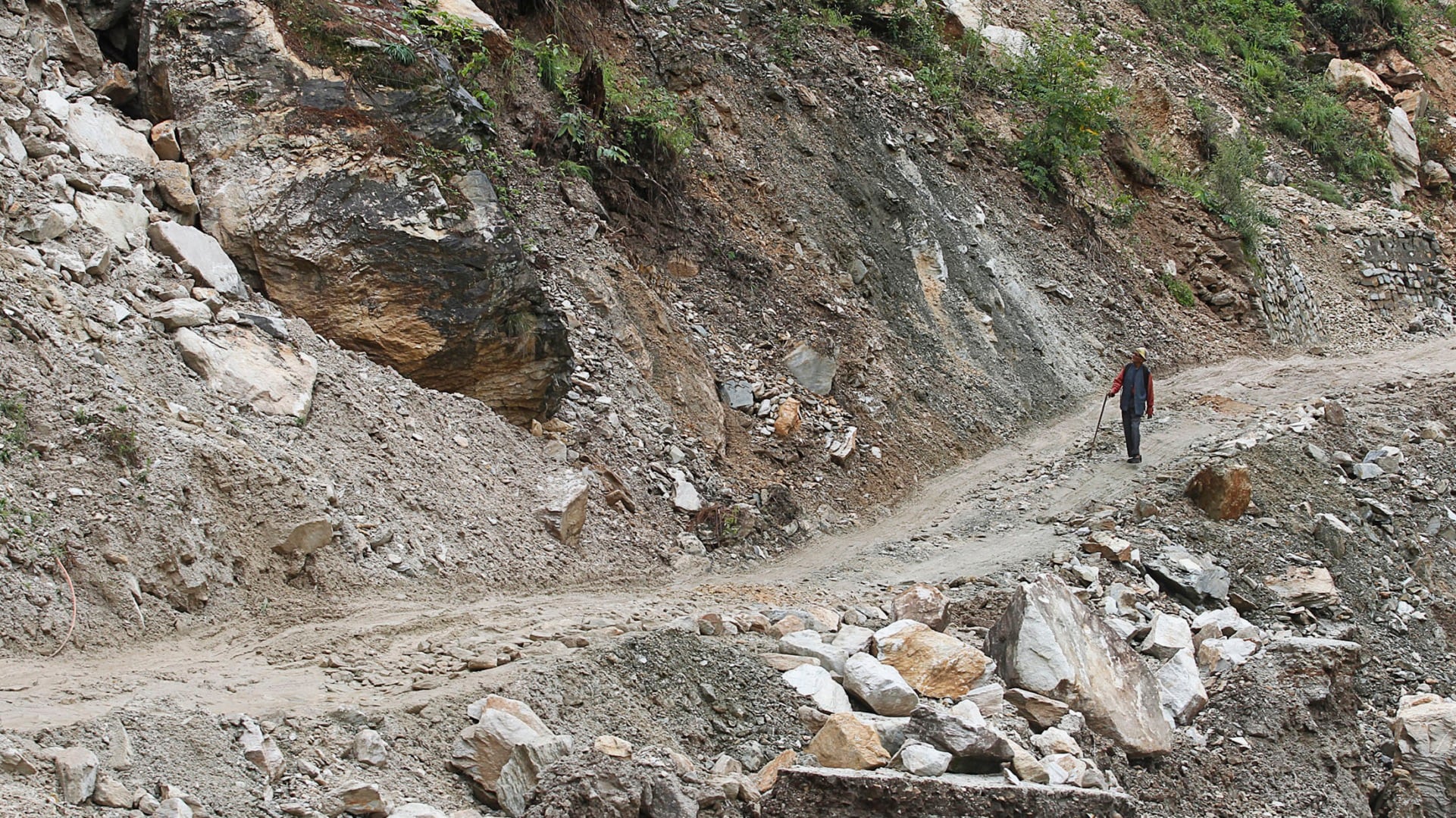
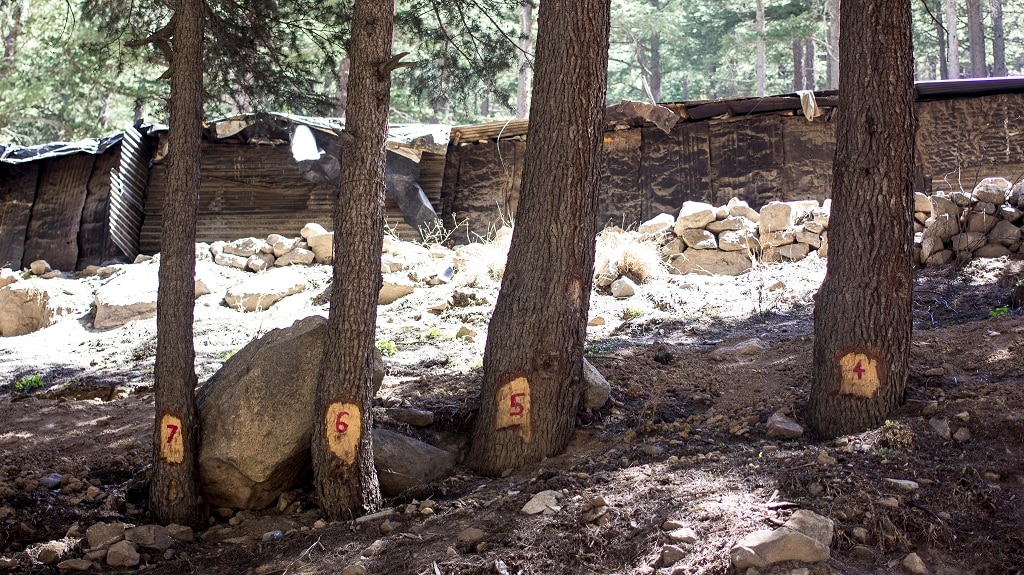 The DFO office in Uttarkashi, in response to RTI queries, mentioned the clearing of 3,595 trees for the project in the Dharasu-Gangotri stretch[/caption][/rq] Surveys done over time, including those by the Geological Survey of India, indicate that these slopes are extremely fragile and fall under seismic zones IV and V. New trees and shrubs had been planted here for the purpose of slope stabilisation by the National Environmental Engineering Research Institute (NEERI), as part of an existing undertaking for this area. But the new road project involves the cutting of some of these newly planted trees and shrubs, potentially further destabilising these slopes, creating a rather adverse situation for what aims to be an all-weather road. Work within the Bhagirathi ESZ has been currently put on hold, until a new Zonal Master Plan (ZMP) is created and approved. In the ongoing case in the National Green Tribunal between the ‘Citizens for Green Dehradun’ and the authorities involved in the project, the court has pointed out that adequate measures have not been taken and indiscriminate dumping of muck continues on riverbanks and mountain slopes. However, there has still not been any action on this illegal activity that threatens more than just road safety. Mallika Bhanot, an environmental activist from the state, shares that landslides have also substantially increased in the under construction areas because of unmindful cutting of the mountain at odd angles, improper treatment and excessive felling of trees. Recent pictures sent by her show that muck dumping continues on the slopes of the mountains. It is in one such spot, Naalupani, that a
bus fell into the gorge on 19 July. [lq][caption id=“attachment_4870191” align=“alignnone” width=“1024”]
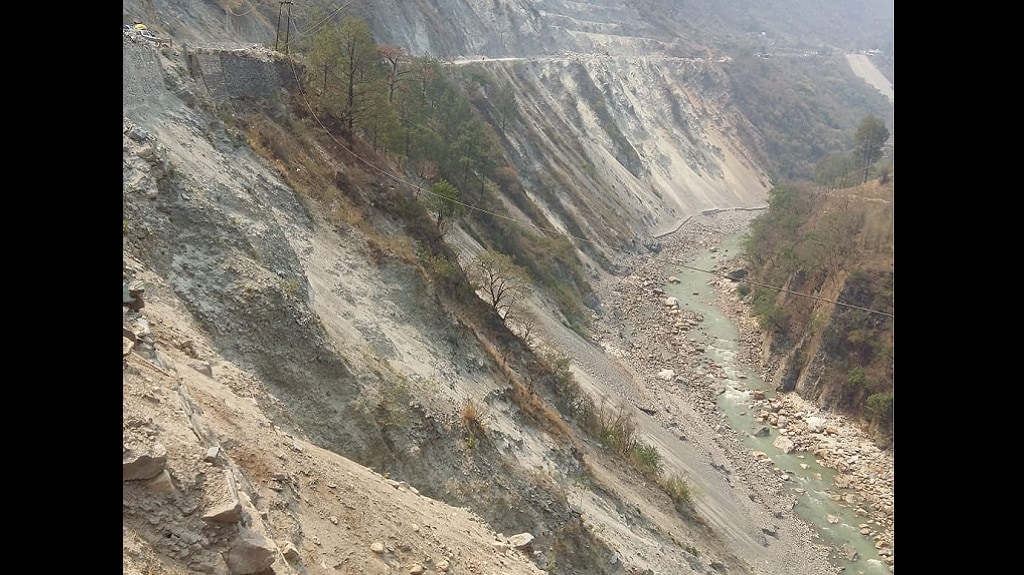 Landslides have increased in the under construction areas because of unmindful cutting of the mountain at odd angles, excessive felling of trees[/caption][/lq] This unmindful dumping of muck raises the river bed height, muddies the water and increases the frequency of cloudbursts,
making it dangerous in case of flooding. Having witnessed the role played by heavy sediments in the flash floods of 2013 that resulted in huge destruction across the state, one would expect the authorities to be extra careful. Midway through the 2018 monsoon, there have already been about a dozen cloudburst events across the state of Uttarakhand, according to a
report compiled by South Asia Network on Dams Rivers and People (SANDRP). This includes a massive cloudburst in Yamunotri, at a time when the state has received 13 percent less rainfall than normal. Is it possible to navigate through this increase in unstable climatic events on an “all-weather road” without addressing the reasons that are creating these situations and will continue to in the future? [imgcenter]

 "US ready to ‘impose costs’ on Russia if war in Ukraine drags on, says Hegseth")
 "US tells Hamas to stop violence against Gaza civilians and disarm 'without delay'")
 "China seizes 60,000 maps mislabelling Taiwan, omitting South China Sea islands")
 "Syria’s Sharaa pledges to honor Russia ties, seeks economic and military support in Kremlin visit")
 "US ready to ‘impose costs’ on Russia if war in Ukraine drags on, says Hegseth")
 "US tells Hamas to stop violence against Gaza civilians and disarm 'without delay'")
 "China seizes 60,000 maps mislabelling Taiwan, omitting South China Sea islands")
 "Syria’s Sharaa pledges to honor Russia ties, seeks economic and military support in Kremlin visit")



](https://images.firstpost.com/wp-content/uploads/2018/08/vlcsnap-2018-07-27-14h48m19s68.jpg)
](https://images.firstpost.com/wp-content/uploads/2018/08/IMG_8185.jpg)
](https://images.firstpost.com/wp-content/uploads/2018/08/naalupani.jpeg)
](https://images.firstpost.com/wp-content/uploads/2018/08/IMG_8031-1024-version.jpg)
](https://images.firstpost.com/wp-content/uploads/2018/08/Glacier-Comparison.gif)