 "Anwar Chitrakar, a folk artist from Bengal, captures vignettes of locked down lives through traditional art")
The small village of Naya Pingla in West Midnapore is approximately a three hour-drive away from Kolkata. In this village, almost every resident is an artist. Several walls of their mud houses are covered in paintings and all of them use the surname Chitrakar. They practice the ancient folk art of Patachitra; ‘pata’, derived from the Sanskrit word ‘patta’ meaning cloth, and ‘chitra’ meaning painting. Traditionally, these artists or Patuas travelled from one village to another, unfurling long cloth scrolls they’d paint while singing a ‘Pater Gana’, composition that explains the story of the painting. Over time, these travellers settled in Naya, painting on themes ranging mythological stories, societal issues, and commentary on current events. In 1980, Anwar Chitrakar was born into this community of practitioners keeping alive the oral-visual storytelling tradition. “I’ve been working since childhood,” he tells Firstpost. He started training under the guidance of his father Amar Chitrakar. Whenever his father stepped out of the house to go to the market or run some errand, Anwar would get to work and finish his father’s half-done paintings. “When my father returned, he wouldn’t be able to tell if he had finished it before leaving or if someone else completed it,” he recalls with a laugh. Sometimes, his father would realise and shout at him for doing that, and at other times, he’d appreciate that some of his work was being completed faster. “So secretly I’ve done a lot of work on my father’s paintings.” As he grew older, at the age of 12 or 13, he started realising that although his father, elder brother, and sister were hard at work all day, their home wasn’t running smoothly. “Then, a lot of challenging times came and I thought ‘no, I don’t want to make paintings only’”. And with his father’s blessing, he became a tailor, a job he kept at for 10 years. Eventually, he started noticing the growing interest of Kolkata’s art world in the Patuas. There was a handicrafts expo that brought the community much attention. Soon, people were visiting the village to better understand the art form and purchase their paintings. During this time, several people came to meet his father and took an interest in the family of artists. “I saw that they weren’t as interested in me as they were in my brother and sister. I’d feel really bad that I’m from a Chitrakar house but I don’t make paintings. Then I realised that working as a tailor is making me feel gloomy.” Anwar’s return to Patachitra was genuine and strategic. “I started thinking that I’m going to make paintings, but something slightly different and with my individual touch. So, whichever customer I show it to, whether they buy it or not, they’ll think that this painting is different. That’s the thought I started with.” [imgcenter]
 [/imgcenter] Anwar Chitrakar. Photo courtesy Emami Art Gallery. His individuality results from an amalgamation of tradition and modernity, reflected not just in his outlook, but his process as well. For instance, he makes natural colours in keeping with the Patua tradition. Turmeric and marigold lend the artist hues of yellow. White is extracted from the mud found inside nearby lakes. And black is taken from the ink of kerosene lamps. A total of eight colours is stored in coconut shells. When a colour is needed, bael-gum, which is collected and stored for years, is diluted with water and mixed into the colour, making it ready for use. But on the other hand, he’s also modernising his practice and is one of the few artists of the tradition who adds his signature to paintings. And while he still paints on the traditional cloth-paper scroll, he also uses newer surfaces like canvas, British paper, and Italian paper. “I’ve put in so much effort to make the paintings. So I think about what I can do to keep it intact for years. Depends on customer demands.” Soon after his return to painting, he noticed that Kalighat paintings weren’t being made anymore. “So I decided that since the Kalighat art practice is our tradition only, why not revive that?” The origins of the Kalighat Pat tradition can be found in the 19th century. During that time, as alternate modes of entertainment like radio, television, and cinema started reaching villages, people’s interest in the performances of the travelling Patuas started to fizzle out. Several artists then migrated to Kolkata and settled around the Kalighat area, making mud idols of Durga and other deities. Soon however, they started being influenced by their surroundings. They were exposed to the British paintings of the time and started copying those, but in their traditional style, with the amalgamation taking the shape of the Kalighat tradition. “So what’s created by mixing two different styles is Kalighat painting.” These artists observed the world of 19th-century Kolkata around them, and created satirical paintings about the behaviour of the Bengali babus, the British, and the zamindars who fawned over the British. “A lot of things like these that one couldn’t say directly out of fear, the Patuas could convey through paintings,” says Anwar. This idea of giving a voice to the vulnerable is also what he considers the role of art in society. “I think if you want to convey an important message to society and the painter doesn’t have the courage to say that, they can express their inner feelings through painting and hope to improve people.”
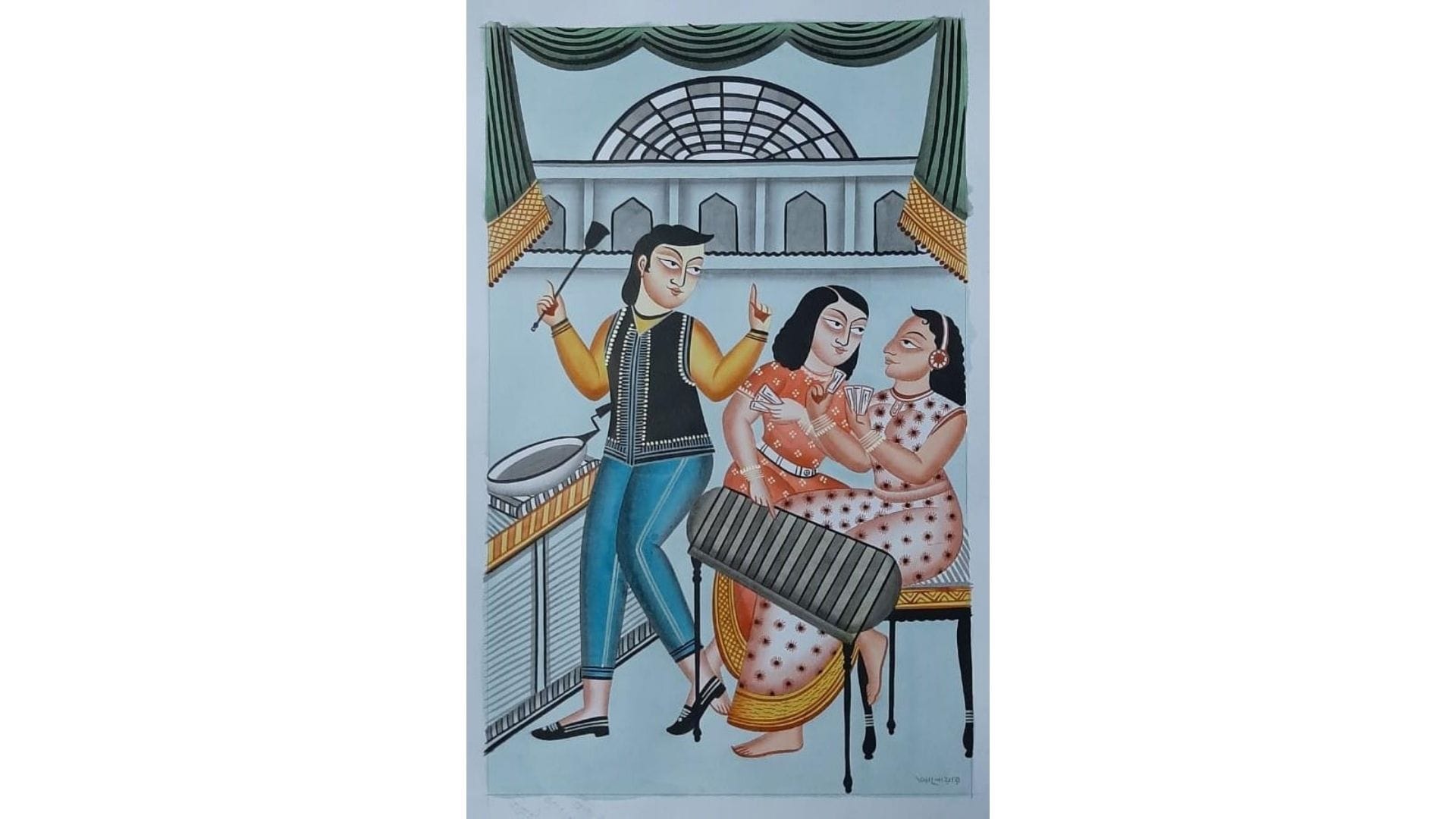
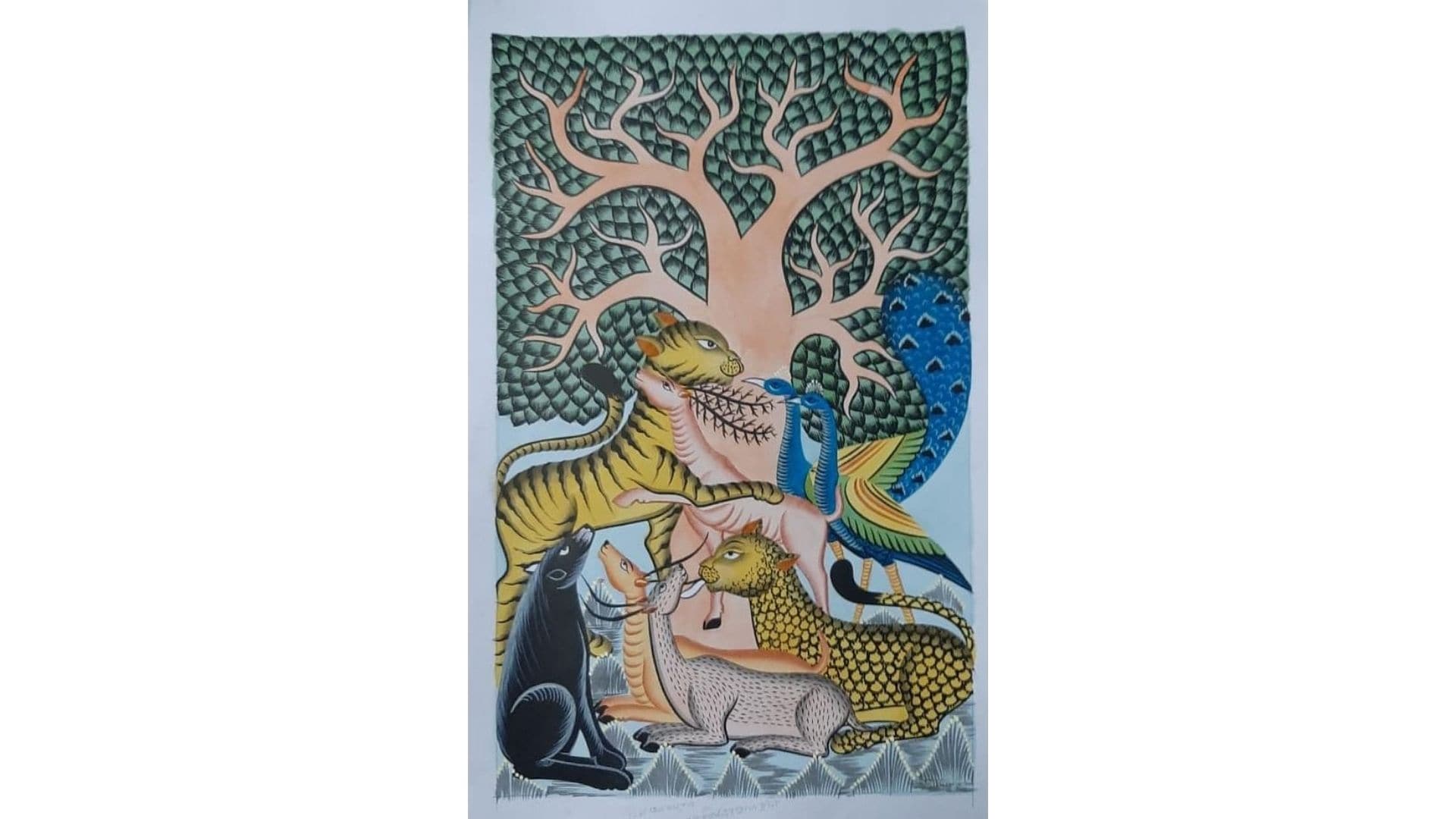
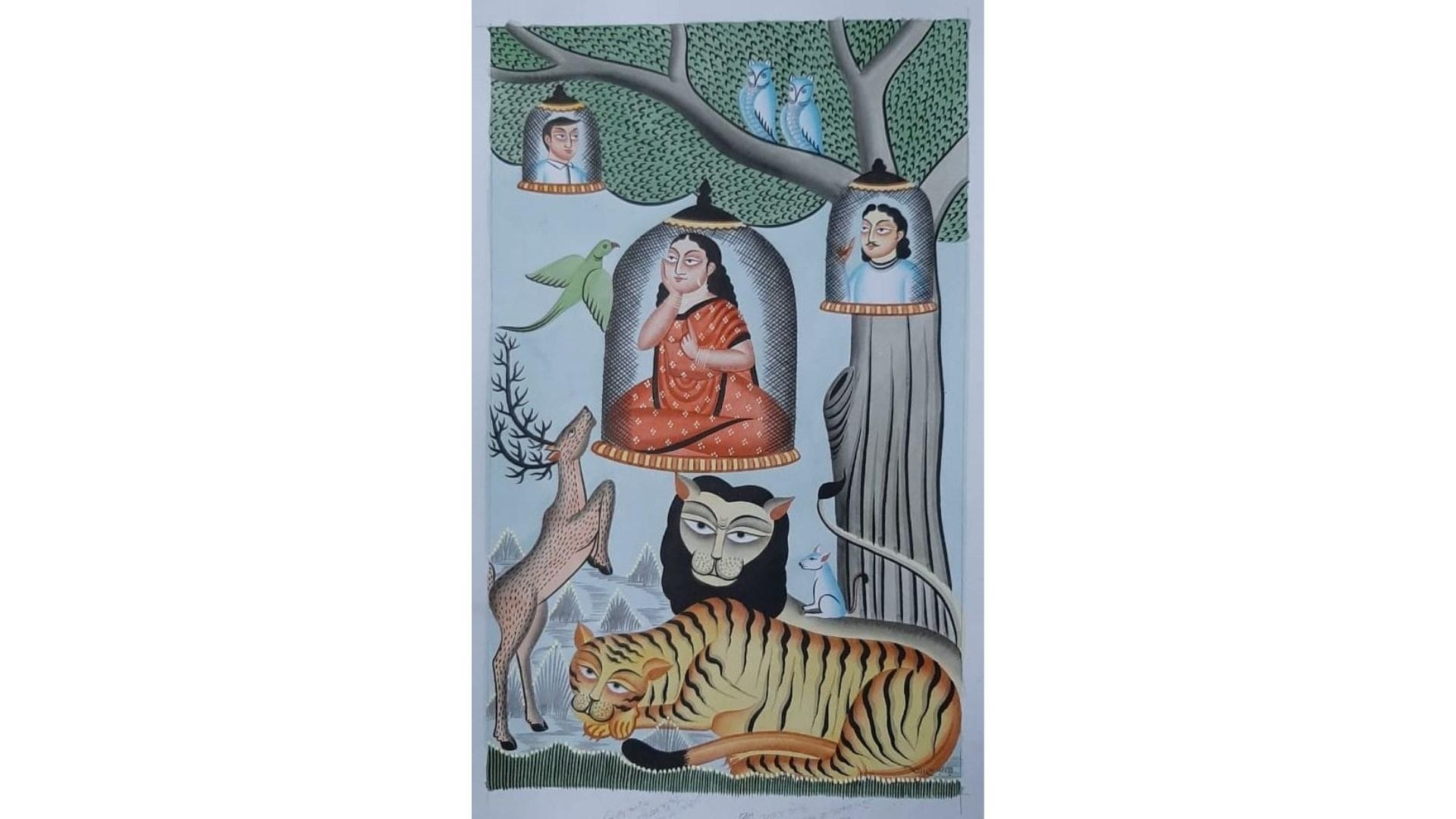
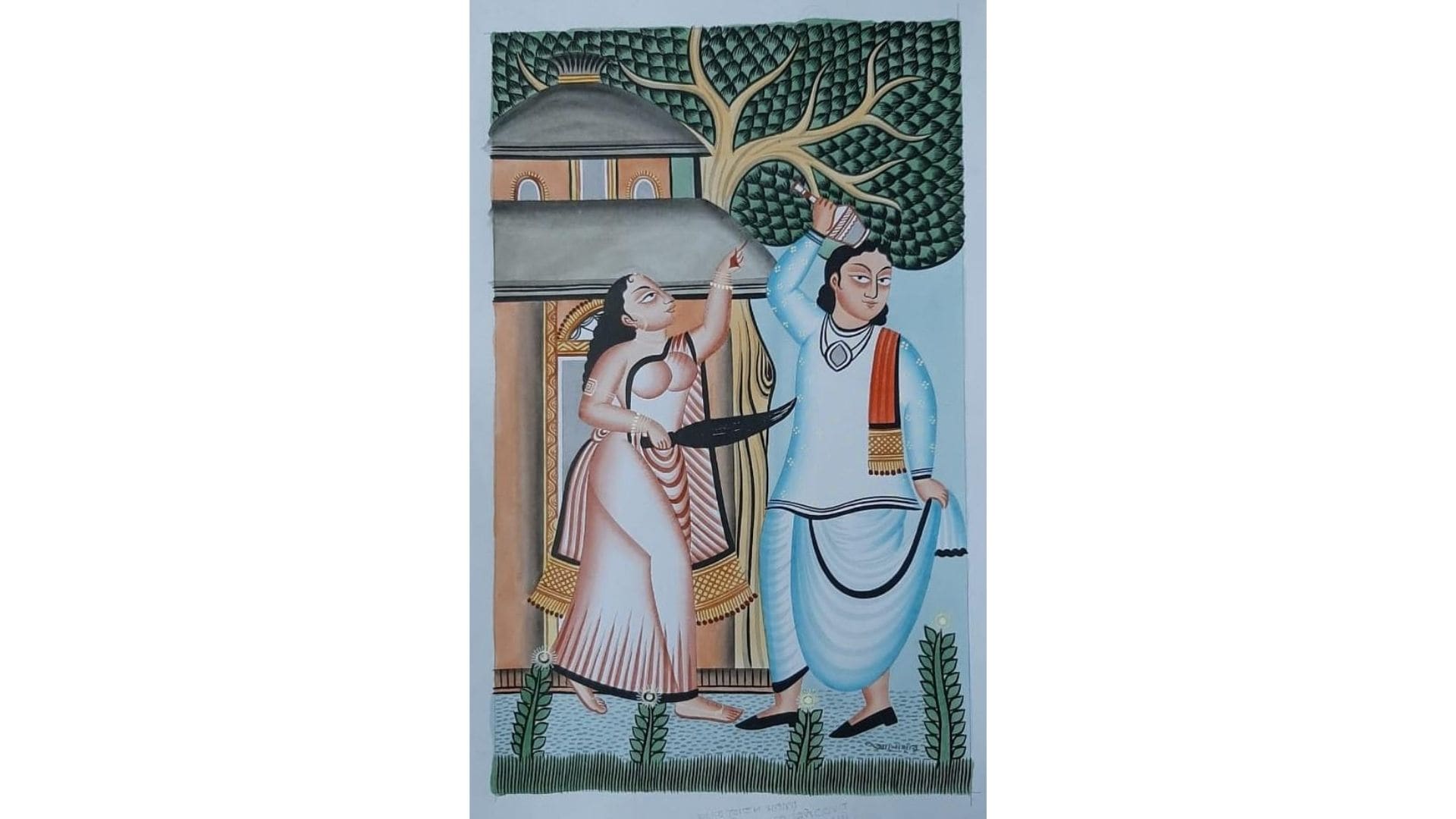
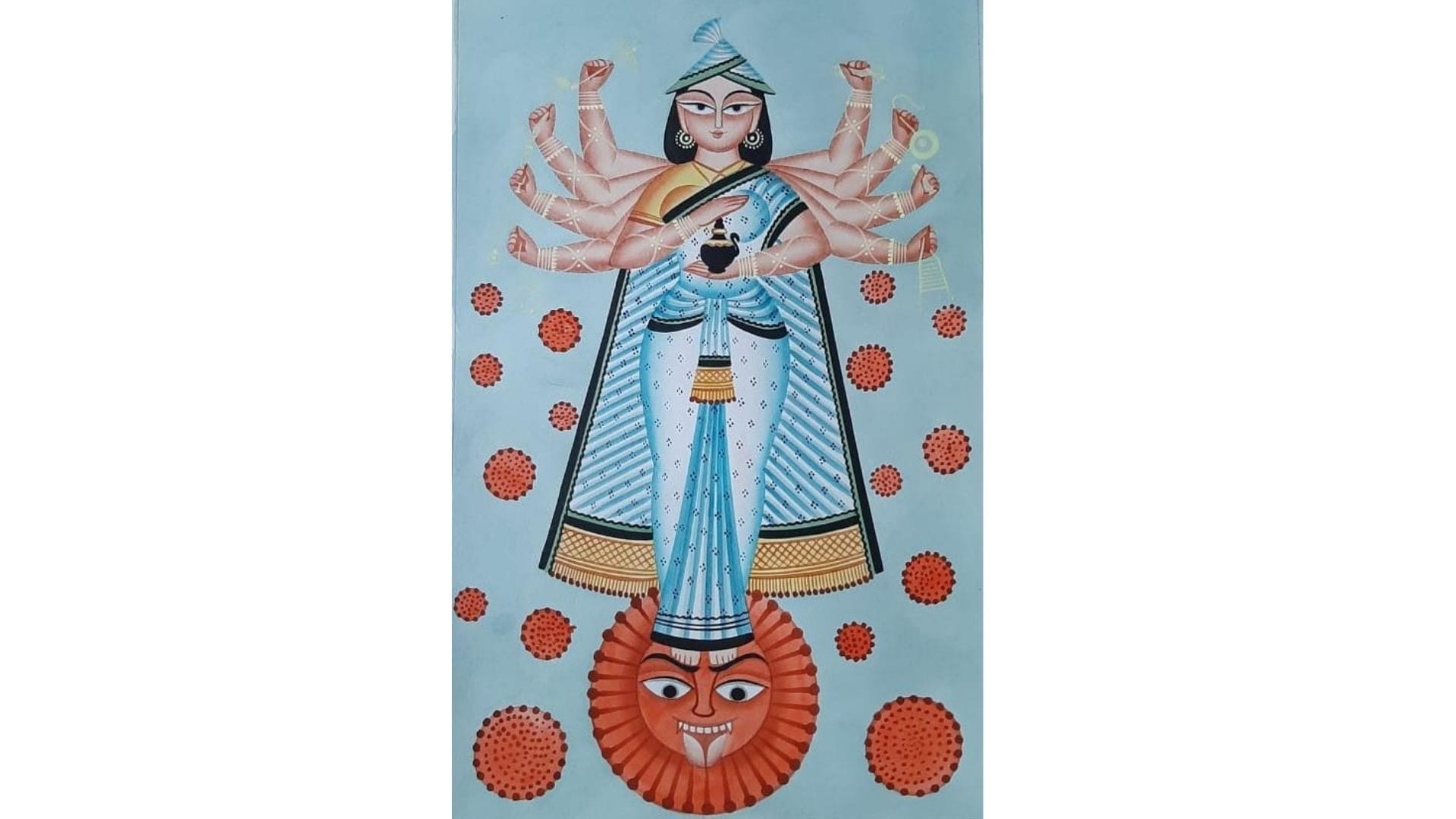
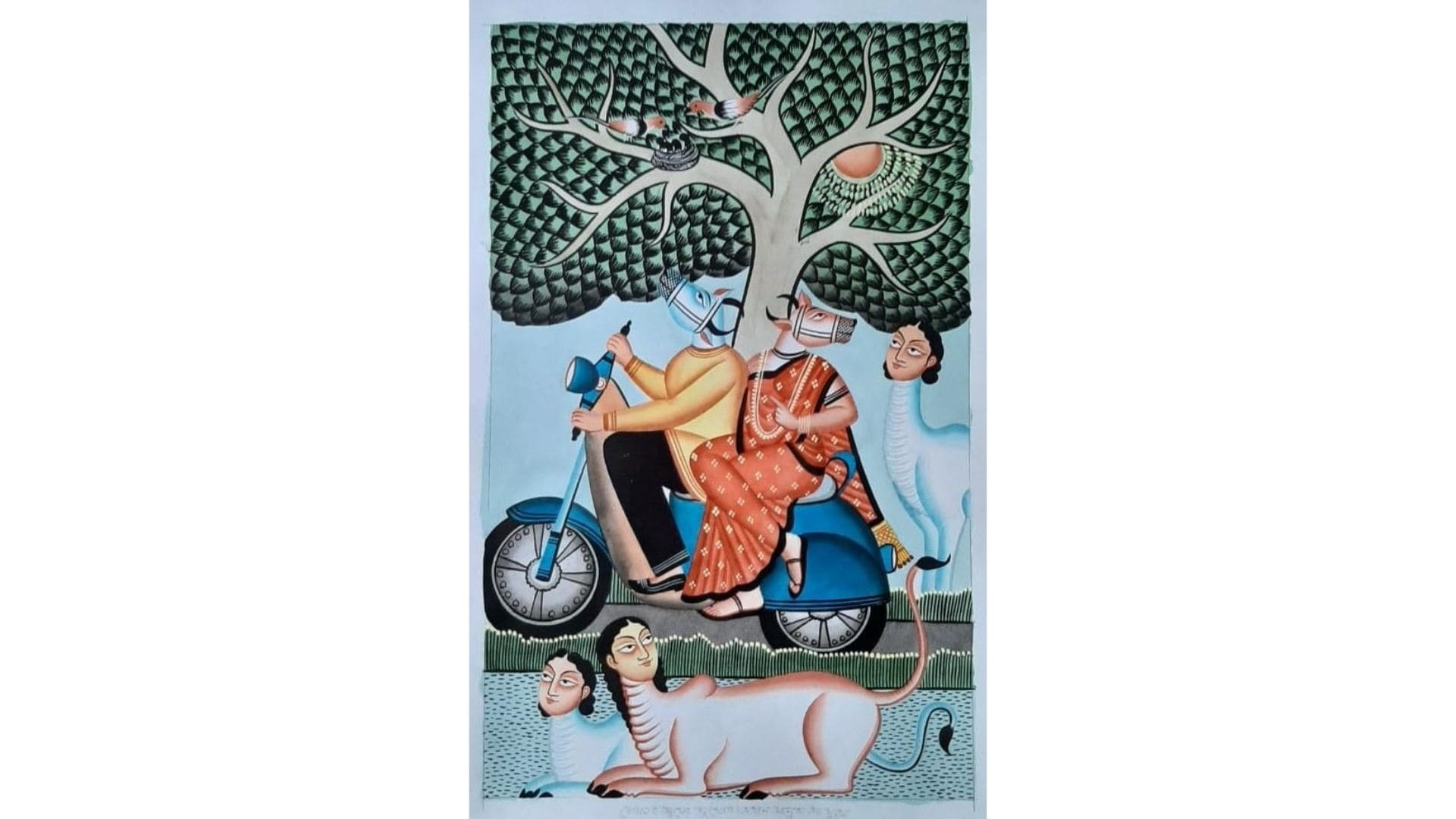
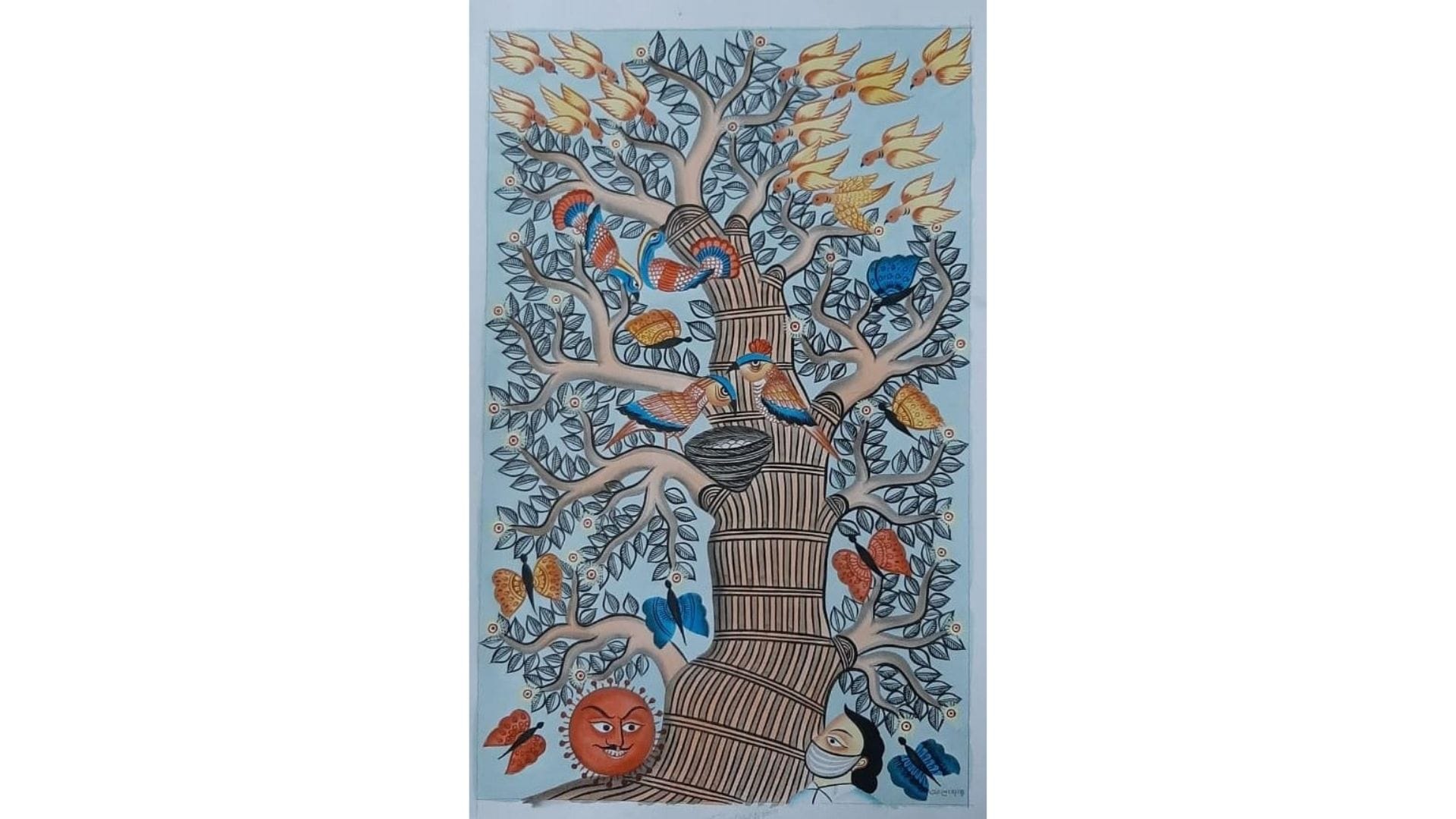
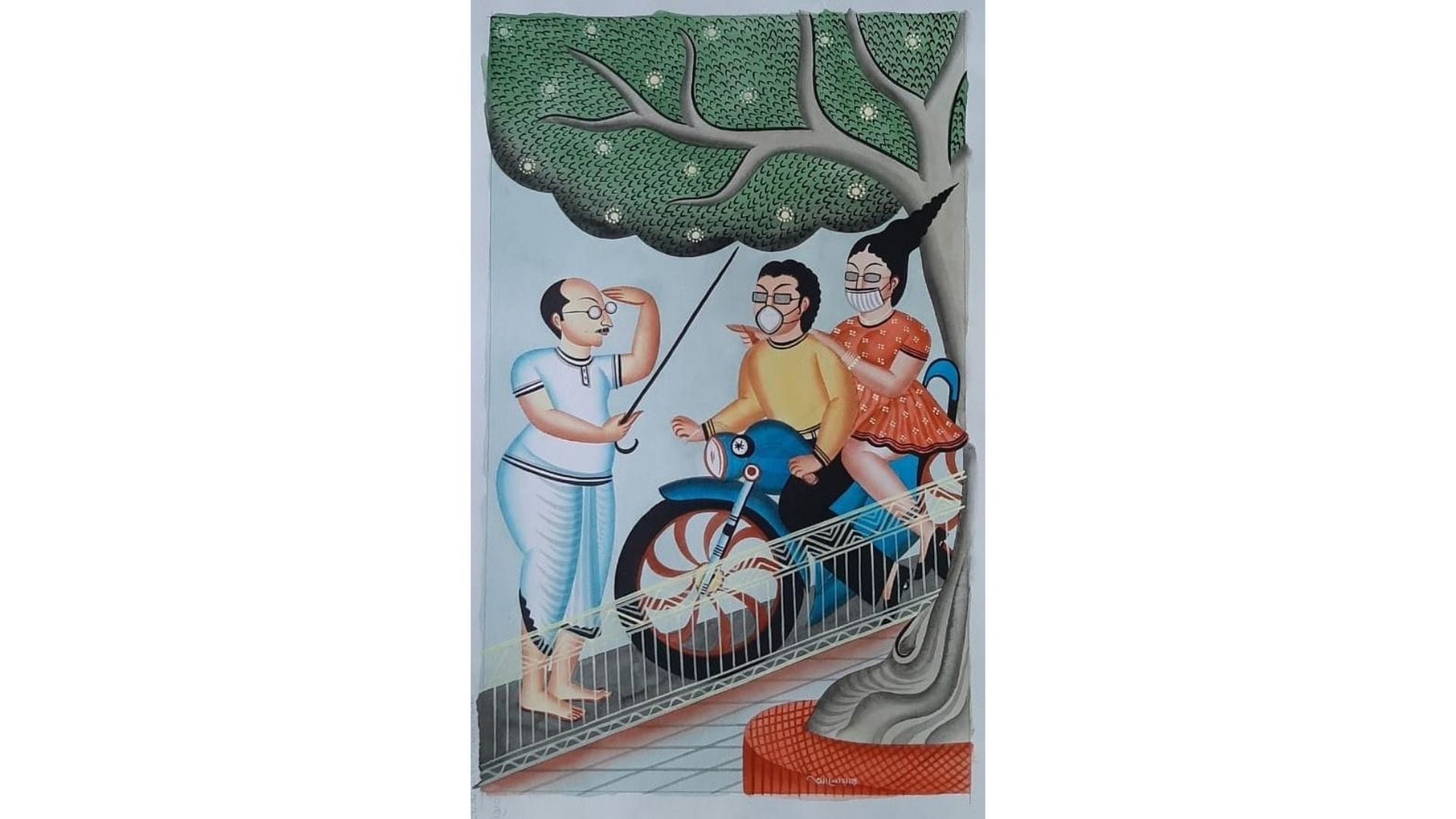
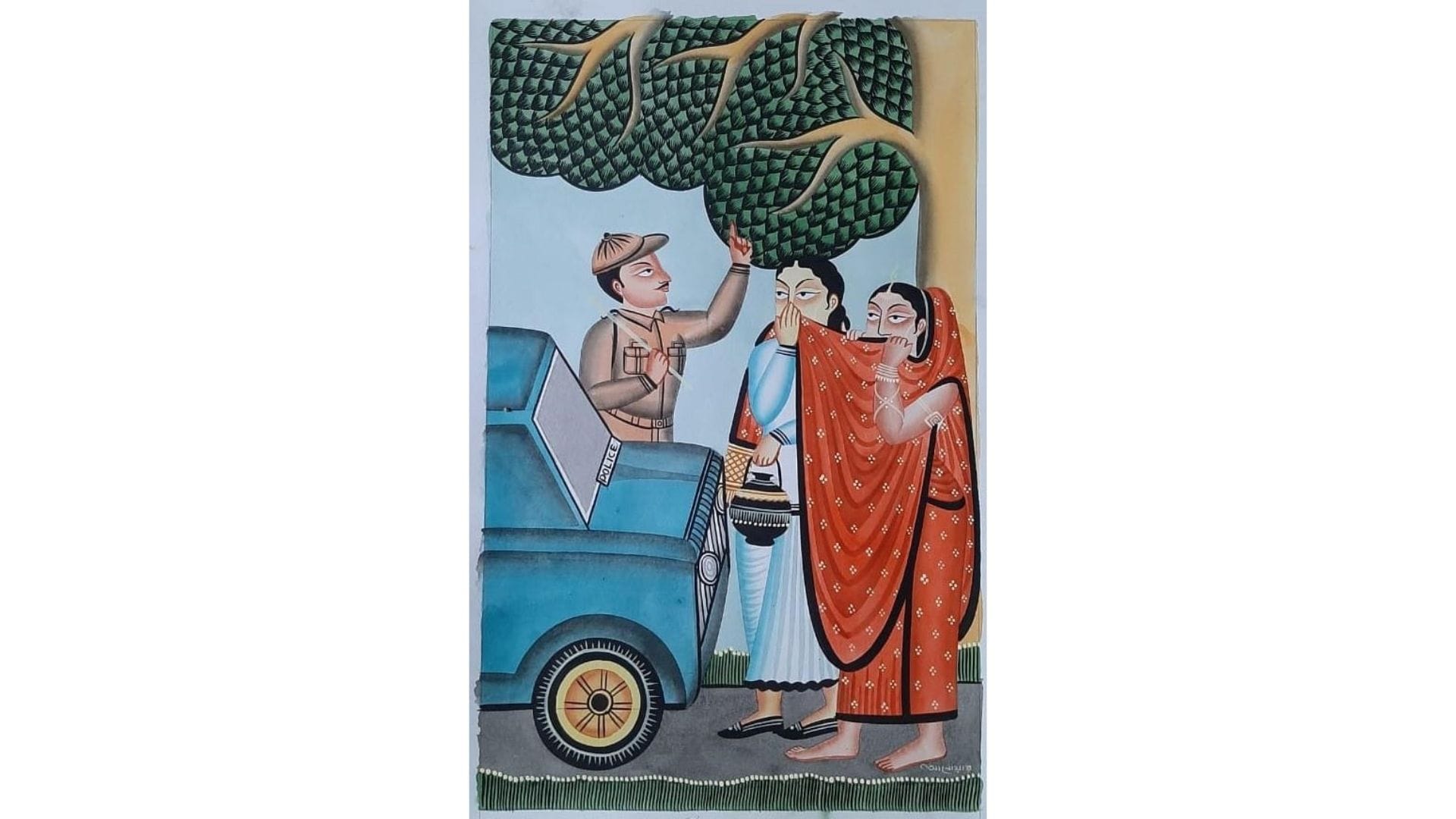
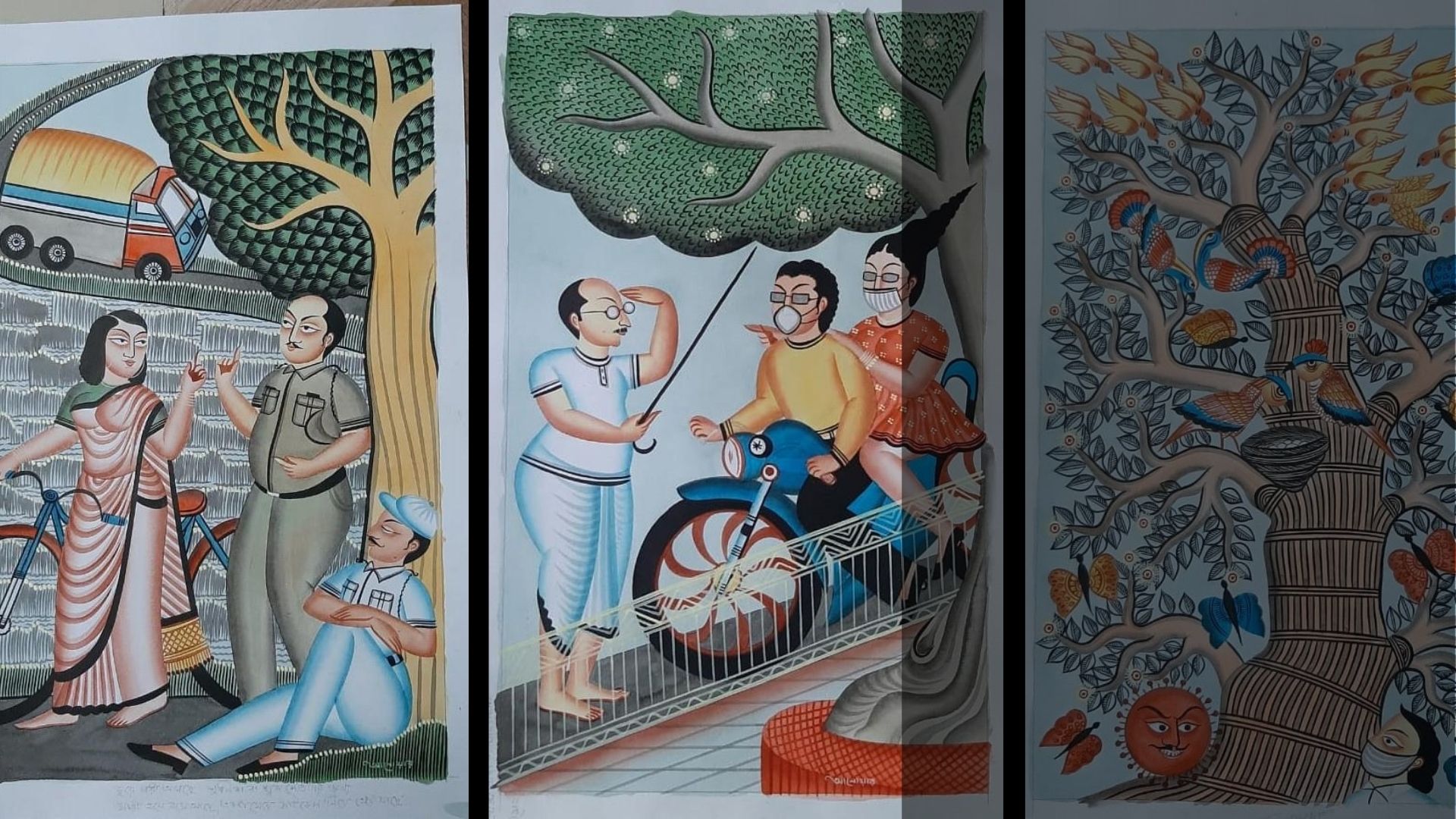
Over the years, his own paintings have spanned a range of topics, from traditional subjects like the depiction of Radha and Krishna to more contemporary issues like the Saradha scam, Maoist insurgency, HIV, child marriage, and surrogate mothers — often with a touch of humour. Recently, feeling trapped indoors because of the coronavirus lockdown, he couldn’t focus on his regular work. “So I thought I should do something that makes people think.” He then started work on a series of 13 paintings about the strange and transitionary nature of the lockdown. These were displayed as ‘Tales of our Times’, an online solo exhibition on the Emami Art Gallery website, from 5 to 31 July. In one of them, policemen are upset since there are no cars on the road and they can’t take any bribes. In another, a Bengali babu is amazed by alcohol-based sanitisers and is trying to show his wife the usefulness of wine. His works also acknowledge the benefits being reaped by the environment during this period, how stifling wearing a mask can be, and the isolation, boredom, and hope for a better future that several people are experiencing. “Patua art is always like this. If there’s some big event or something happens in the world, or if we want to give a message for the betterment of society, all these things keep coming up in the work of the Patuas.” Forging forward with this idea of outspokenness means that today, Anwar’s works are uniquely contemporary. They have been exhibited in major Indian cities and abroad, and are part of the collections of the Mumbai International Airport and London’s Victoria and Albert Museum, among others. The National Award recipient is grateful for returning to painting, because not being an artist meant breaking his family’s tradition. “I feel that my name is Anwar because I make paintings, otherwise what does Anwar even stand for?” And today, even as the lockdown has left folk artists struggling, what stays consistent is his pride. “Before, I used to feel really bad that I’m from a Patua family. Now, I’m proud that I’m from a Patua family.” *** See ‘Tales of the Times’ by Anwar Chitrakar below. All photos courtesy Emami Art Gallery. [imgcenter]