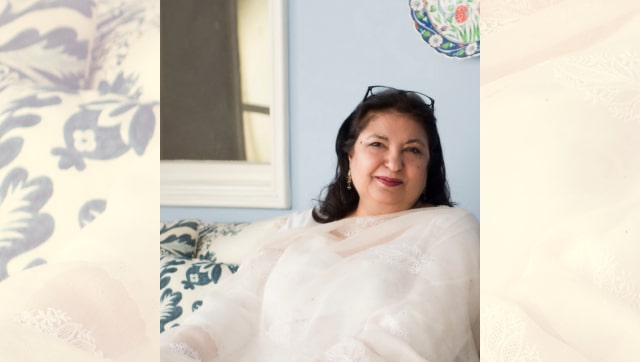
 "Work is Home: How Anita Lal's soft-skills-as-top-skills approach shaped leading homegrown luxury label Good Earth")
‘Top Notch’ is a fortnightly column where journalist and editor Namrata Zakaria introduces us to fashion’s elite and erudite club. *** I’ve been visiting Good Earth ever since they were a solo store at Gowalia Tank, the not-so-posh side of the Mumbai’s Kemp’s Corner Bridge. It must be more than 20 years ago that I had picked up a candle — a wooden tea-light actually — and it still remains unused in my home. The space was like an initiation into a world of beauty, a little bit like that first trip to Paris or to Prada, and I had saved a memento. Good Earth was, and remains, a museum of beautiful things. In its 25th year now, Good Earth has achieved cult status. It’s one of the country’s finest examples in homegrown luxury, making décor, dining and fashion products, soaked in India’s endless historical heritage and bountiful handmade styles, borrowing from Kashmir, Kashi and Kerala. With 10 stores in prime locations across India (no more Gowalia Tank) as well as a sumptuous web boutique that also doubles up as a top-class luxury lifestyle magazine, the store clocked in Rs 150-crore in its last financial year. “Oh, I don’t know numbers, I have no business sense,” says Anita Lal, Good Earth’s 72-year-old founder and creative director, and now one of the country’s leading tastemakers. “Crafts was my only passion. For the first 10 years we struggled until my son Siddhartha (CEO of Eicher, the makers of Royal Enfield) began dropping in once in three months to give us a more logical path of working. I’m just happy we don’t have to beg or borrow, and we can put our profits back into the business or in bonuses.” Lal, a hobbyist potter, turned entrepreneur rather accidentally. Her husband Vikram (founder and former CEO of Eicher Motors) changed his mind about opening a motorcycle showroom at Gowalia Tank, so Anita (beloved as simply A.L.) decided to take on the property herself. She didn’t know it was social entrepreneurship then, as it was decades before it would become a buzzword in business circles, but she wanted to train village ‘kumbhars’ or potters in modern design and sell their work.
Good Earth is the primary example of how an Indian company can turn craft into a luxury item.
It is a lesson for governments, the textile ministry and crafts councils in giving native handmade and hand-tooled techniques a contemporary language and making a modern, functional product. “Craft is actually a very practical thing. It first has to fulfill a function and then give joy. I’m a great fan of Laila Tyabji’s Dastkar, but there is a niche market for expensive craft products too which was untapped. If you think about it, craft was always promoted by the royals and the nobility, and then became popular for the others. It needs patronage. How will a villager know what a city shopper needs, he will only know what a villager needs. Mapu (Martand Singh, India’s pioneering textile specialist) opened my eyes to our textile heritage. He even helped me pick the name ‘Good Earth’,” Lal says. [caption id=“attachment_9396321” align=“alignnone” width=“640”]
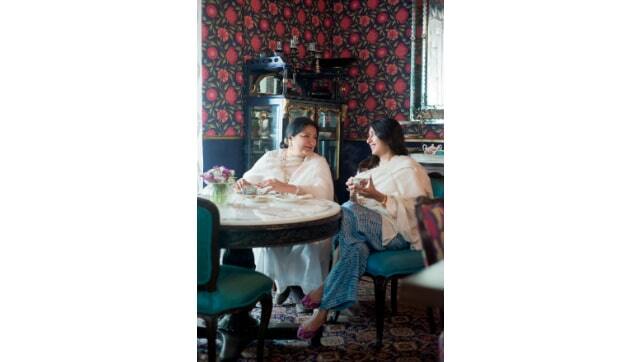 Anita Lal with her daughter, Simran[/caption] The stores mirror much of Lal’s personality and aesthetics. Not only are the objects sumptuous, the store spaces are an ambient journey, a sensory experience. You can smell a Good Earth store (Lal’s favourite is its signature neroli) and enjoy its vivid walls and opulent interiors just as well. “There was a young woman who came from across the building at Kemp’s Corner. She said she came there often even though she couldn’t afford to buy anything, just because it made her happy,” Lal recalls. “I started making candles for her, because I didn’t want to exclude anybody. I have a deep desire to make people happy.” Good Earth is also, and very importantly, a women-led and women-run enterprise. One wonders if this laudatory effort is a conscious decision. At the many events the store has hosted, Lal is welcoming but shy, always introducing the guests to “the girls”. These are heads of finance, design, marketing and what have you, but Lal insists they run the shops as they like. “Right now, we do have one male — our head of IT, Dinesh,” she laughs. “Working mostly with women wasn’t a conscious decision, it was just our culture. I found that our women employees had a warmer and more humane approach towards their work. And over the years, we just came to be like this.” The soft-skills-as-top-skills approach comes from Lal herself. The staff is welcome to bring children to work, or take off to visit their grandmothers. When Sangeeta Chakraborty, their head of finance, put in her papers in 2016 saying her husband had transferred to Singapore, Lal asked her to continue working for Good Earth from Singapore. “All she needed was a laptop. So, she would take it to the park and watch her little son play while going over our finances. They have now returned from Singapore and she continues with us,” she adds. Good Earth, in 25 years, has raised the bar by making a world-class, made-in-India product. It has taught much to consumers as well as retail watchers. What has it taught its founder? Any lessons in leadership, enterprise, brand management? “Making relationships and maintaining them,” Lal says. “We don’t separate home from work.”