Shehnaz: A Tragic True Story of Royalty, Glamour and Heartbreak, chronicles the life of a woman who survived domestic abuse, partition, familial estrangement, and what seemed like a glamorous life in Bombay long enough to live through love and companionship. At one point on the cusp of being cast as Anarkali in K Asif’s Mughal-E-Azam (1960), Shehnaz’s is a story of what could have been, but for a man in her life. Her daughter and author of the book Sophia Naz spoke to Firstpost on how the book came about, tracing her mother’s history, and the emotional cost of putting it all together. The original article came out in Dawn. Could you tell us about the journey from that point to the book? Why did you want to write that article; what prompted you to? The idea of writing a book about my mother was something that I had wanted to do years ago, but had consigned to the back-burner. However, in 2018, Jahanzeb Hussain, my editor at Dawn, became intrigued by photos I had posted on social media, and commissioned the original article for Mothers’ Day. It went on to be one of the most popular articles published in Dawn that year, republished in Scroll and The Wire, and referenced in The Indian Express. Suddenly, my inbox was flooded with emails from women who said they or a loved one had a similar experience and urged me to write a book about my mother’s life. It was also a time when the #MeToo movement became front and centre in the consciousness of many women. My friend, poet Linda Ashok, introduced me to the literary agent, Kanishka Gupta, who pitched my book proposal to Penguin, and before long I had a book deal. In the Dawn article, you did not name anyone. Were you until then, to an extent, being protective of this aspect of your life? Although I have revealed the painful details of the abuse my mother suffered in the book, I haven’t named her first husband or my half-siblings. This was a deliberate choice not only to protect the privacy of everyone concerned, but to keep the focus on the victim rather than the perpetrator.
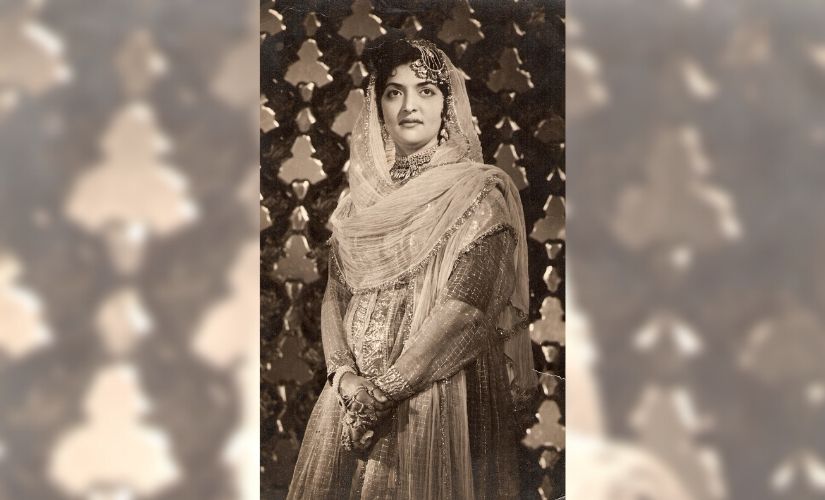 Shehnaz on the sets of Mughal-e-Azam[/caption] Her inner life in Pakistan was defined to a great extent by the separation from her first born children, an old wound that would occasionally scab over, but never heal, and she would hide it in public. So in that sense, there was a kind of similarity in the dichotomy between the private and public spheres, but of course, there is a huge difference between being in a loving marriage while nursing an intractable wound of memory, and separation and the nightmare of abuse that she had fled. This story cannot be told without, perhaps, burning a few bridges further. Was that ever a question you grappled with? What led you to being decisive about it all? Those bridges were burned a long time ago, and not from my end. In the end, I overcame any residual reticence because I could not continue putting up a face about the erasure of my mother’s story. In more ways than one, this is a MeToo story, told after its time. What does it offer the reader and at what personal cost have you poured yourself into it? Has it been worthwhile, and why? You are right in pointing out that at its heart, Shehnaz is a MeToo story, and I do situate it in the greater context of the MeToo movement at the conclusion. Shehnaz is one woman’s difficult, but redemptive path in life. However, her struggle for self-determination also draws from her unique heritage – Muslim women who ruled in their own right, — and yet, is thoroughly modern in its desire for freedom from an overlord. Numerous historians have pointed to the rise in feminist thought in tandem with movements of political independence, and I do believe that my mother’s struggle for agency, which began in pre-Partition India, is also in some ways a personal parallel to the momentous upheavals, which would follow. [caption id=“attachment_8189721” align=“alignnone” width=“825”]
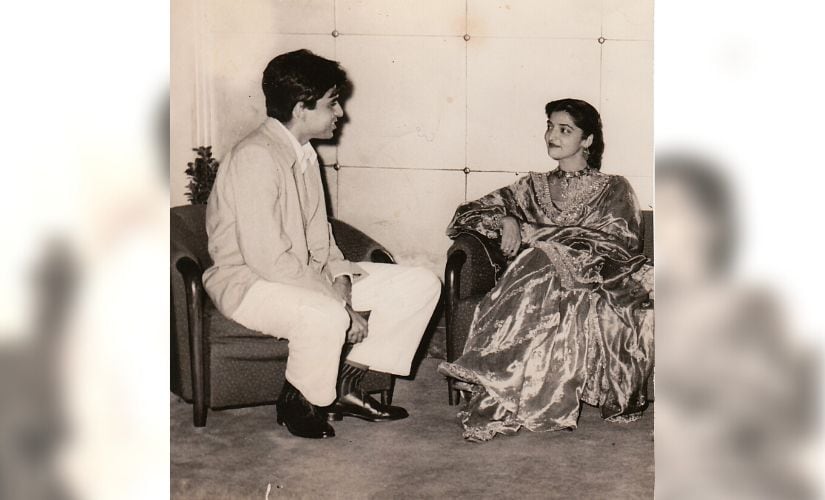 Shehnaz and Dilip Kumar at The Taj, Bombay[/caption] Dredging up all that had been buried for so long took a huge toll. At times, I would find myself shaking with anger; at other times, I would feel physically ill and unable to eat or sleep, but my predominant emotion was rage, rage that there was no possibility of redress for what had been inflicted on my mother. Yet, I do think that it was worthwhile because one woman’s story, — even though the details may be specific and unique — gives voice to many others who may have had similar challenges and situations.
Sophia Naz's new book captures the story of her mother Shehnaz — a life of royalty, showbiz, crippling trauma
Manik Sharma
• April 3, 2020, 11:35:16 IST
‘Shehnaz’ chronicles the life of a woman who survived domestic abuse, partition, familial estrangement, and what seemed like a glamorous life in Bombay long enough to live through love and companionship. The late yesteryear actress’ daughter Sophia Naz speaks to Firstpost on how the book came about, tracing her mother’s history, and the emotional cost of putting it all together.
Advertisement
 "Sophia Naz's new book captures the story of her mother Shehnaz — a life of royalty, showbiz, crippling trauma")
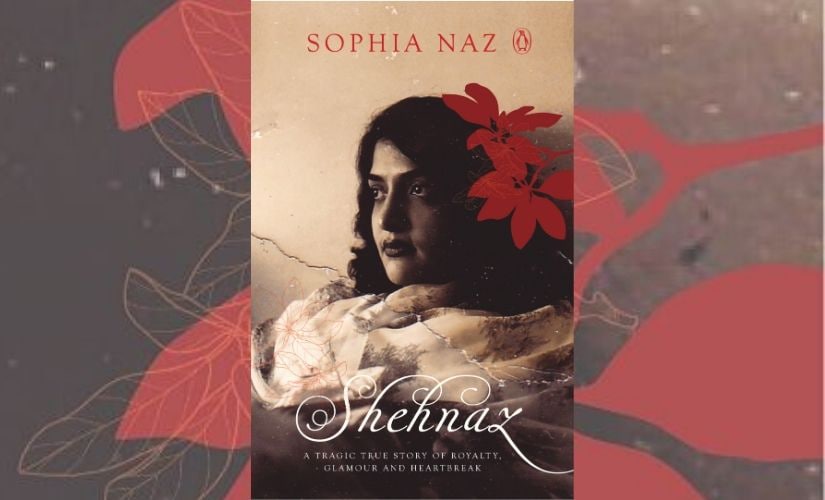
How does one go about ‘researching’ their own parents’ lives? What did it tell you about your mother and the life she’d had away from your eyes, and around you? What makes that process difficult? For the most part, the source of knowledge about my mother’s life were the anecdotes she had shared with me, as well as the diaries she kept. I was aware of the existence of her diaries — had seen her writing in them. but had not read their content until after her death in 2012. Reading them was an especially traumatising experience. It’s one thing to have your parent paint a picture of their life in broad brush-strokes, fleshing out an incident or a scene as they see fit, and completely another to read the agonising details of their mental and physical devastation at the hands of their spouse. Reading the diaries made me relive what happened to her from the perspective of a woman as well as that of a daughter. Aside from the source material generated by my mother, I focused my research on her closest confidants, both for corroboration for the material in the book, and for any insights and anecdotes they could recall. My research continued for over a year, making several trips to Bombay and Bhopal from California. In Bhopal, I had the good fortune of meeting Malik Sikandar, a historian who had amassed a vast trove of archival and anecdotal information about my family, and was unstinting in his generosity in sharing it with me. You mention repeatedly, that your mother had to ‘keep up the appearances’. Why do you think she continued to do it? Apart from the fact that she didn’t have any support from her birth family, there was also social conditioning — I don’t think one can discount the immense power of the norms that society instills in women. The so-called “honour” of individual males, family, clan and society in South Asia still resides in the bodies of women, and it will take a lot more struggle to dislodge this monstrous misplacement. Could you, through memory, outline the contrast in her life in Pakistan and Bombay? What would especially change for her, and what wouldn’t? Her life in Bombay (very different from the city known as Mumbai today) was outwardly glamorous and inwardly hellish, while in Pakistan, except for the upheavals caused by the 1971 war, she led a placid domestic life with a happy second marriage. Like India, Pakistan is a big and varied country, and social life in a city like Karachi, particularly in the ’60s and ’70s, was quite cosmopolitan and similar to what she was accustomed to in Bombay, barring the celebrities. India, the land of her birth, would always be home for her though. Once, during her many crossings of the border, a customs official at Wagah asked her which country she preferred, Pakistan or India? Her reply was telling: “Pakistan is my sasural (in-laws’ place) and India my maika (own home)”. While my mother had a deep sense of faith, she also missed the plurality of the India she grew up in, missed celebrating Holi and Diwali with her friends. [caption id=“attachment_8189701” align=“alignnone” width=“825”]
End of Article