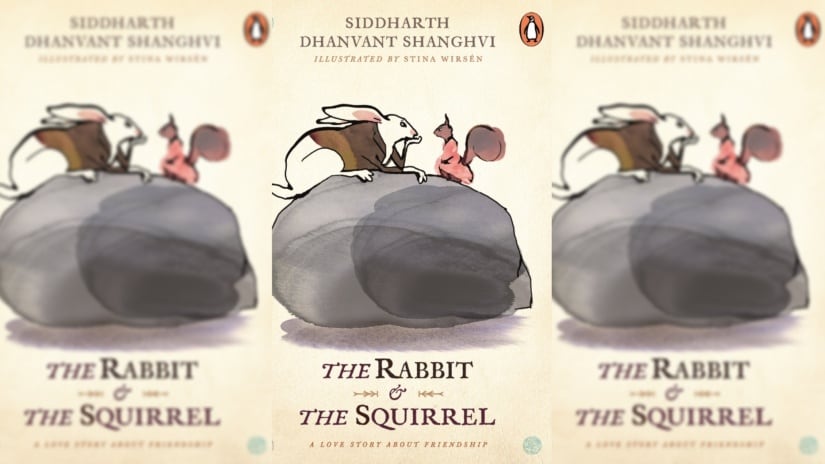
 "Siddharth Dhanvant Shanghvi on The Rabbit & the Squirrel, writing about friendships and love")
The Squirrel’s greatest joy is dancing in the forest with the Rabbit – her beloved friend and equal of heart. Thus begins a modern day fable which marks the return of author Siddharth Dhanvant Shanghvi, nine years after The Lost Flamingoes of Bombay, inspired by the Jessica Lal murder trial. The Rabbit & The Squirrel contains many elements which made the writer famous in the past – elegant turns of phrases, a firm hold over narration and a heartwarming story which stays with you long after you’ve finished reading. Only 59 pages long, it packs a punch over and above its weight. Shanghvi is in fine form reeling the readers in with a tale of love, friendship and loss. In this conversation with Firstpost, the author speaks about the process of writing this book, how illustrations found their way into its story and his love for the sea. You mention that The Rabbit & the Squirrel was originally made for a friend, as a series of cards and photographs. How did it turn into an illustrated book? Last year, I was staying at the Stockholm home of my friends Stina Wirsen and Pompe Hedengren while they were abroad. When I returned to the apartment one night, the front door key failed. The locksmith I called was hopeless – he used a blowtorch to fire a hole through their door. On their return, to distract them from how I’d turned out to be the house guest from hell, I told them a story. This was The Rabbit & The Squirrel, a fable I wrote for a friend some years ago. On finishing, Stina had tears down her cheeks. ‘Can I illustrate this for you?’ she asked. Stina is Sweden’s most acclaimed and loved children’s book writer and illustrator. ‘Yes,’ I said, gratefully. ‘Yes.’ I was filled with relief she had not risen to strangle me, this door destroying guest from Goa. [caption id=“attachment_5281521” align=“alignnone” width=“825”]
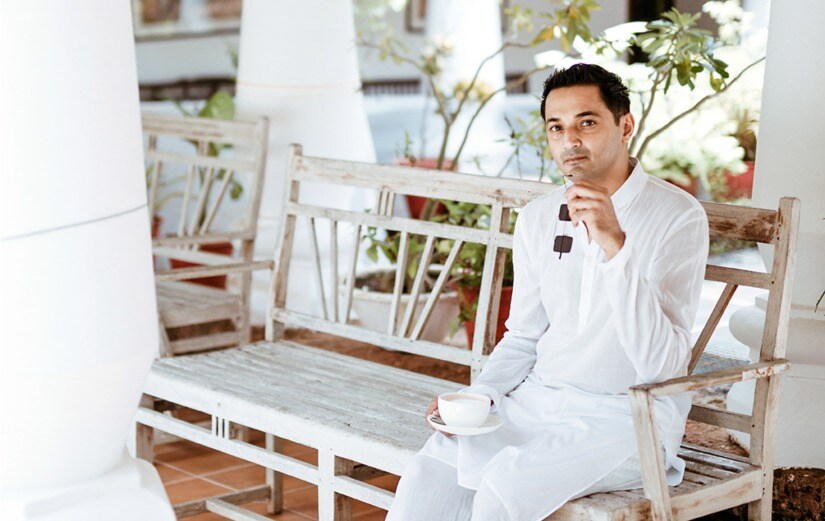 Siddharth Dhanvant Shanghvi. Photograph by Shekhar Karambelker[/caption] This is your first book after The Lost Flamingoes of Bombay in 2009. How have the intermittent years shaped you as a writer? Restraint. Economy. Precision. The usage of animals as characters reminds me of Animal Farm. Why did you choose them to be the protagonists to take your story forward? What a great question, I wish I could answer this clearly, directly. But as with such things, these little stories, they arrive whole, unbidden. Perhaps the characters were secret codes for a friend and I, to express things we might dare not say to each other otherwise. The illustrations by Stina Wirsen take the narrative forward in delightful ways. How did the collaboration come about, and what was the brief given by you for them? Stina, a close friend, is also an artist whose work I have collected, and shown at Sunaparanta. I handed her this story, and she brought it to life with electric genius, her vigor and tenderness. Her illustrations give oxygen to the story, and her approach was from the inside out – as if she had illustrated the book first, and I only gave the words later. No one truly loved ever leaves you, says a character in the book. Your debut, The Last Song of Dusk was about the love of Anuradha and Vardhaman. The Lost Flamingoes of Bombay was built on the love and affection of Zaira and Samar. The Rabbit & the Squirrel, well, is about their story. Would you agree that the central premises of your books are love and friendship? Yes, absolutely. It is strange to me that not enough writers take ownership of these themes in their work. Many writers want their books to be classified as ‘political fiction’ perhaps to pass muster as “serious”. Of course, it is crucial to write about war and oppression, caste and religion – these are important, valuable themes.
But equally valid are questions around what makes our everyday life endurable. Because even without war and tyranny, life when you meet it plainly and truthfully is awful.
The loneliness-soaked hours of the train ride home from work. The earth-shattering realisation that loving someone does not immunise them from leaving you. Without love and friendship, we’d be a planet of lemmings, jumping off the cliff, no one quite knowing why.