

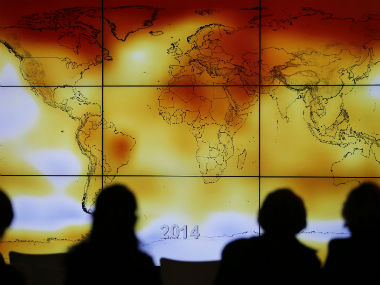
 "Red alert: Why we need to act now to counter the challenges of climate change")
The current drought affecting
330 million people, the heat wave that is gripping most cities and falling water tables in Delhi, Gurgaon, Bangalore and other parts of India are all indications of what we could expect from our future as humans continue to burn massive quantities of fossil fuel, encroach green spaces to build ever-growing concrete cities. Water tables are declining at alarming rates of 1-1.2 meters a year in the major metros as well as other parts of India. The
ratio of trees to humans has fallen to 1:7 in Bangalore as against the desired level of 8:1 i.e. there is one tree for seven humans as against a requirement of eight trees for one human. April 2016 has set the
record on fire as being the hottest month globally and the seventh month in a row. The multiplicity of such ecological stressors could cause a systemic fall in the architecture of our modern life. Our food and water supply, quality of the air we breathe and weather conditions that make life livable are under threat from risks of climate change and resource depletion. Our reckless high carbon progress and complete disregard for natural resources is taking us towards the brink of ecological and economic collapse. [caption id=“attachment_2818710” align=“alignleft” width=“380”] The relentless burning of fossil fuels has led to the tremendous increase in atmospheric concentrations of carbon dioxide. Reuters[/caption] Exponential growth in population has put and is putting enormous pressure on an already depleting natural resource base while the process of conversion of resources to economic goods has created vast amounts of pollution leading to climate change. The scale of these challenges is unprecedented, especially for a highly populous and developing country like India. These challenges will continue to grow as we keep emitting huge amounts of carbon dioxide every year. This relentless burning of our greatest nonrenewable resource, fossil fuels, has led to the increase in atmospheric concentrations of carbon dioxide from
285 parts per million (ppm) in 1850 to
400 ppm in 2015. This has resulted in the warming of the planet and Earth’s average surface temperature has already gone up by around 0.85° Celsius as compared to pre-industrial levels. Taking cognisance of this alarming rise in the temperature, global leaders have been meeting every year, now for over two decades, to decide on what conscious actions each country can take to reduce their emissions. The latest Conference of Parties (COP 21), held in December 2015 in Paris, is considered to be a landmark event in the history of global climate change discourse. It is so because countries have come to an agreement, with many non-legal binding elements, to reduce their national carbon emissions starting from 2020. If they successfully meet their mitigation targets, which have never happened before, then it will restrict the global warming and
temperature rise to 2.7° Celsius. Intergovernmental Panel on Climate Change (IPCC) considers an increase of 2° Celsius as the maximum safe limit to avoid dangerous repercussions of climate change. With April 2016 recording 1.1° Celsius above the baseline 1951-1980 average, has global warming reached a new normal of increase in temperature of 1.1° Celsius or is it a temporary phenomenon caused due to weather conditions? The science of climate change is complex. There is huge uncertainty involved in the predictions done by models on global temperature rise. There are a set of scientists who believe the target to limit atmospheric concentration to 450 ppm is optimistic and could trigger a
potential snowball effect which can take the temperature rise well beyond 2° Celsius. They advocate for a maximum atmospheric ppm level of 330-350 in order to avoid the irreversible process of the temperature rise. No one knows for sure when the climate tipping points would be crossed. But if we continue emitting carbon the way we have done so far, then breaching the tipping points could be just a matter of time. With an already warmer planet and shrinking natural resource base, it is in our interest to reduce the atmospheric concentration from current levels of 400 ppm to 350 ppm. What this means, in terms of changing our world and lives, is beyond what we have seen in the global climate change discourse. A conscious mitigation effort, as seen in the Paris agreement, would only reduce the extent of increase in ppm levels or at best stabilise them at higher levels. But to bring it down requires some serious and mass scale redesigning of the systems in which we live. Our transportation choices, what we eat, buy, throw, consume everything would need to undergo systemic redesigning, in fairly quick time. But first, this change has to begin in our minds. If we fail to take it as a personal responsibility and consider climate change as a personal issue, rather than seeing it only as a universal issue, then all policy measures at global or national levels would be futile. This becomes particularly important since we not only face risks of global climate change but also of running out of local natural resources. While non-renewable resources like minerals, metals, and fossil fuel are bound to deplete because they don’t regenerate, even the renewable natural resources like water, biodiversity, timber etc are under severe depletion. Our disregard for conservation of natural resources poses an immediate clear threat to the sustenance of the human kind and economy. In order to understand how humans have created an impact on Earth, let us take a look at some of the irrefutable facts. 1) Human being’s population in 1800 was 1 billion. In 2015 global population has crossed 7 billion. We have grown by 7 times in 200 years, doubling ourselves in every 30-35 years. Which other species has followed this trajectory in this time? 2) Fossil fuels are formed over millions of years of biogeochemical process. They are derivatives of ancient sunshine and biomass buried underneath Earth’s surface. We are burning about millions of years of ancient sunshine in 250 years through industrialisation. And we are not finished yet. 3) According to the International Union for Conservation of Nature, rapid consumption of natural resources over the past 50 years has resulted in considerable, and to a large extent, irreversible loss of ecological diversity. 18,788 species out of 52,017 so far assessed are
threatened with extinction. 4) Since 2000,
6 million hectares of primary forest have been lost each year. 5) Every day species’ extinctions are continuing at up to 1,000 times or more the natural rate. With the current biodiversity loss, we are witnessing the greatest extinction crisis since dinosaurs disappeared from our planet 65 million years ago. 6)In most places groundwater tables are depleting faster than their regeneration rate.
Delhi’s groundwater is estimated to be depleting 1 meter a year on average.4000 borewells have gone dry in one month in
Bangalore, an increase by 12 times compared to last year. Growth for the sake of growth is the ideology of the cancer cell, says author Edward Abbey in The Second Rape of the West. This quote provides perspective into the human paradigm responsible for our current ecological crises. Ideally,these indications should be enough to stimulate our common sense in believing that immediate actions are to be taken. Until we work at changing our paradigms and belief systems, we are merely doing window dressing with the hope of expecting systemic change. Degrowth in atmospheric concentration levels can be achieved, only if we take cognisance of current reality, build harmonious consensus and start putting our act together. We have enough time to act but none to waste. The author is an Associate Fellow, Earth Science Climate Change division at TERI. All views are personal.
The science of climate change is complex and to tackle this, we need a paradigm shift at a personal level. But are we as humans contributing enough to counter the challenges the crisis has put forth?
Advertisement
End of Article

 "Charlie Kirk, shot dead in Utah, once said gun deaths are 'worth it' to save Second Amendment")
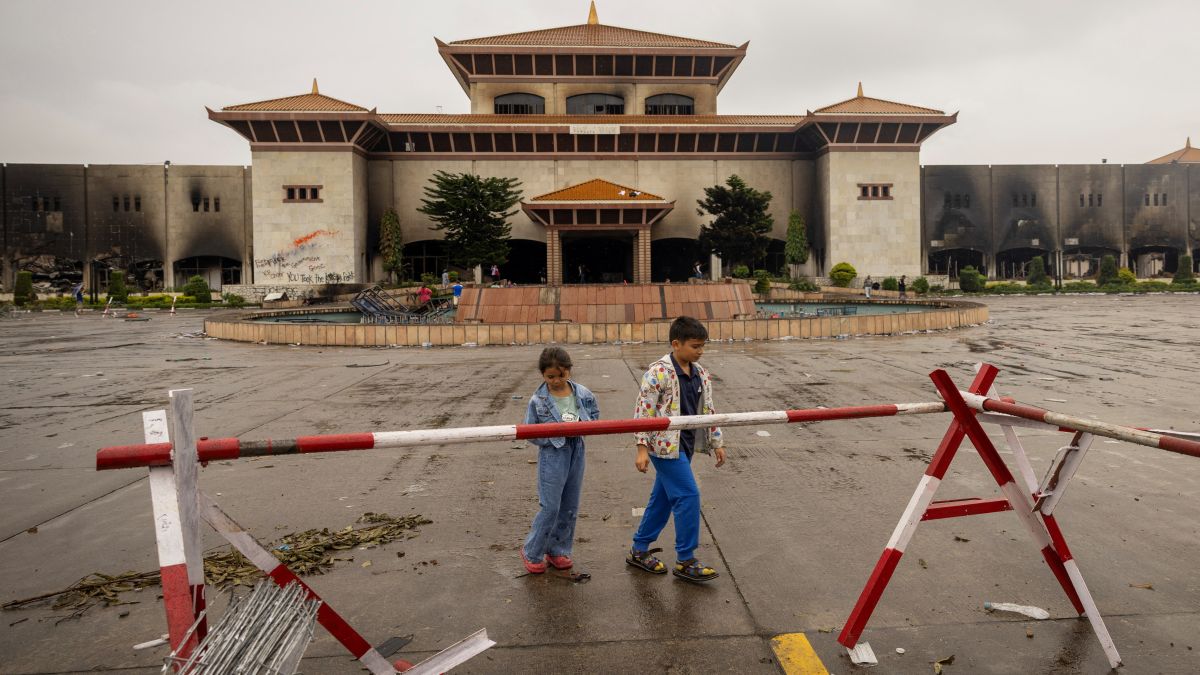 "From governance to tourism, how Gen-Z protests have damaged Nepal")
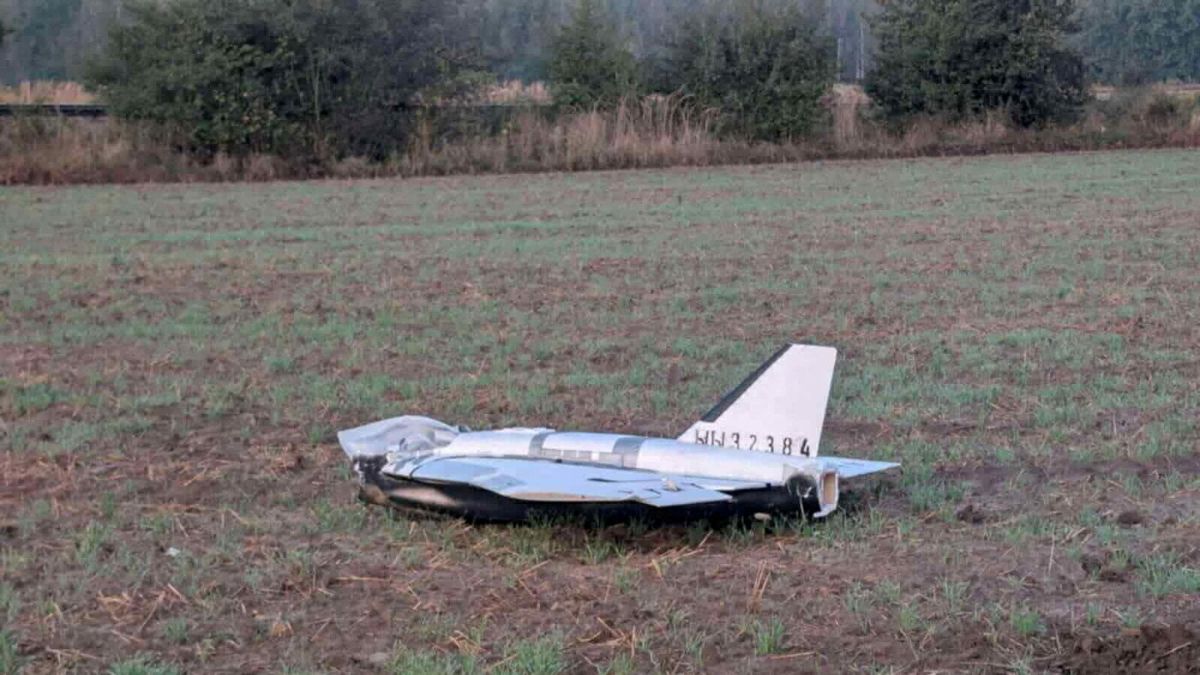 "Did Russia deliberately send drones into Poland’s airspace?")
 "Netanyahu ‘killed any hope’ for Israeli hostages: Qatar PM after Doha strike")
 "Charlie Kirk, shot dead in Utah, once said gun deaths are 'worth it' to save Second Amendment")
 "From governance to tourism, how Gen-Z protests have damaged Nepal")
 "Did Russia deliberately send drones into Poland’s airspace?")
 "Netanyahu ‘killed any hope’ for Israeli hostages: Qatar PM after Doha strike")



