

 "Lack of medicines, patient privacy and support: Why is India not helping the mentally ill?")
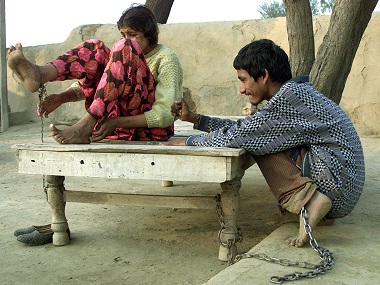
For more than two decades, Poonam and Naresh have worried about their daughter Aditi who is diagnosed with paranoid schizophrenia, a mental illness generally manifested through delusions, hallucinations and emotional disconnectedness. From early childhood, Aditi used to keep to herself, engaging with only one or two people. In late adolescence she started showing full-blown signs of mental illness. Aditi used to feel that everyone in school was plotting against her. She often complained that the shopkeeper of the local grocery store kept trying to inject her with something as she had discovered that he was leaking sensitive information to a terrorist group. With time, the nature and frequency of her hallucinations and delusions increased, and while her peers went off to college, Aditi’s parents struggled to find a diagnosis and treatment for their only daughter. It wasn’t easy considering the mental health sector in India faces acute shortage in terms of services and human resources, with only 43 state-run mental hospitals, and three psychiatrists and 0.47 psychologists per million people in India (private institutions are numerous, but they do not always have legal registration and aren’t adequately monitored). Aditi was fortunate enough to receive the right combination of medication and support-system to address her issue. [caption id=“attachment_2895806” align=“alignleft” width=“825”] 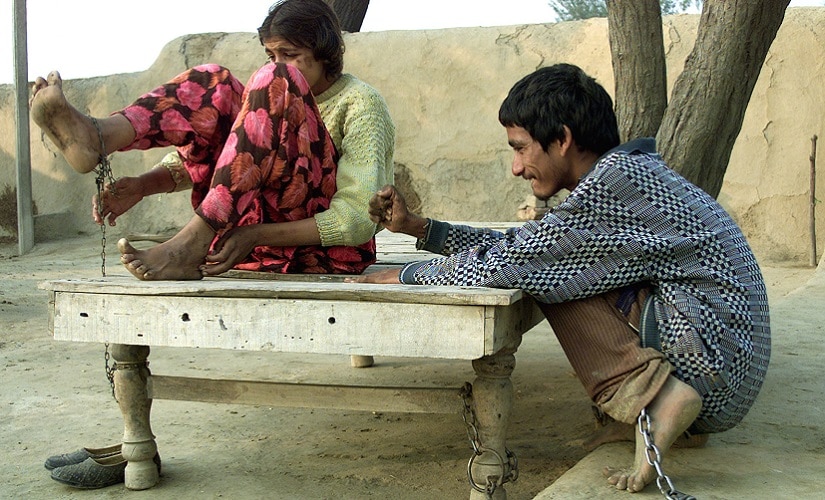 File photo of Kuldeep Kaur (left) and her brother Gursaheb Singh. The siblings who are mentally disturbed, were kept chained at home. Their mother says that they became mentally disturbed after they saw their father shot dead in front of them by terrorists in 1991. She is unable to afford treatment for them and she chains her children so they do not leave the house and go missing. Reuters[/caption] When Aditi turned 26 years old, relatives advised her parents to get her married. “What will happen to her after you two are gone? Marriage will give her some security. Even you two will be relieved,” they said. Some warned, “Don’t tell them anything about her ‘problem’. No one wants to marry an ‘insane’ person!” Poonam and Naresh did not even take offence to these statements – years of bearing the stigma had numbed them to these insensitive remarks. Aditi did not marry. There were no takers – most families turned away the moment they heard the girl was diagnosed with a mental disorder; some agreed to the match but demanded a lot of money in return. Today, Aditi is 45 years old. Poonam is 73 years old and Naresh is 75. Their friends are enjoying retirement, while Poonam and Naresh are constantly in a state of worry: who will take care of Aditi when they are no longer around? She isn’t like the others. She will always need to be cared for. What could her life turn out to be like after they’re gone? Could she end up on the streets? According to Geriani et. al. (2015), caregivers of people diagnosed with schizophrenia have moderate to high levels of burden which impacts their overall quality of life. While psychological distress is present in majority of the caregivers of patients with schizophrenia, there is a statistically significant association between age of the caregiver and psychological distress ( Syed et.al., 2013). Last year, USA passed The Achieving a Better Life Experience (ABLE) Act which allows families to set aside money that can be used tax-free for a disabled person’s expenses without losing government benefits. It is estimated that six million individuals and families will benefit from the creation of such accounts. ‘Qualified disability expenses’ include basic living expenses that can improve the life of the disabled person. The distributions are eligible for education, housing, transportation, health and service fees. India still has a long way to go in order to get mental healthcare right. India spends only 0.6 percent of its total health budget on mental illness, according to the World Health Organization’s (WHO) Mental Health Atlas of 2011. While the Persons with Disability Act, 1995, (PWD, 1995) proposes various schemes and assistance programmes to provide equal opportunities, protection of rights and enable full participation for people with disability, all the three pillars of our democracy – the legislative, the executive and the judiciary – continue to ignore the human rights of people diagnosed with a mental illness. According to Math et. al. (2011), mentally ill patients face more discrimination that those with physical disabilities. Even the PWD Act does not have any special reservations for mental disability. Many people with long-standing mental illness also have progressive cognitive deficits which makes it a taxing effort for them to go to government offices to avail the benefits. Patients with disability due to mental illness have to get a disability certificate in order to avail the benefits. The certificate displays the patient’s private information, thereby putting them at risk for breach of confidentiality and misuse. Since many patients are dependent on the caretakers to obtain the certificate, it means they must disclose all health-related information to them, even if they do not wish to do so. The concerned officials should address these ethical issues to preserve client confidentiality and autonomy. Many people with mental illness do not come forward to uphold their rights for fear of stigmatisation and discrimination ( Karkal et. al., 2014). Another major hurdle to cross for accessing benefits is lack of awareness among people with disabilities and their caretakers. Kashyap et.al. analysed 285 mentally ill patients who were certified as disabled between 2006 and 2008 in Mangalore, Karnataka. They found that 99.4 percent of the people with disabilities from rural areas had not availed any benefits other than the disability pension. According to Ratnaboli Ray, the founder of Anjali, a mental health rights organisation in Kolkata, mental hospitals are run as prisons. “Even the trained staff lack empathy,” she was quoted as saying by The Guardian. After decades of ignoring the long-standing issue of mental health, in 2014, India proposed its first ever Mental Health Care Bill to repeal the existing Mental Health Act, 1987. When this policy was introduced, it was applauded for sounding extremely progressive and sensitive, but even at the time of its conception, doubts were raised on its successful implementation. The policy drew attention to the largely-neglected needs of the care-givers, recognising the need for a caregiver to receive monetary and tax benefits. Two years later, the bill is still stuck in the legislative process. The rights of persons with disabilities due to mental illnesses continues to be neglected by the health sector as well as by policymakers. We have a very long way to go before we can banish the stigma and discrimination associated with mental health, but we can definitely make progress by borrowing a page or two from US President Barack Obama’s healthcare reforms that encourage a holistic approach to treatment, with easy access to specialists. It is high time we wake up from our slumber. India can no longer afford to let the burden of mental ill health continue to grow unchecked. When will we enable the disabled people in our country to live an ‘abled’ life? When will we get our Act together? The writer is a counsellor and psychotherapist based in Mumbai. She runs The Silver Lining, an organisation that addresses issues related to mental health.
India can no longer afford to let the burden of mental ill health continue to grow unchecked, we need to enable our disabled people to live an ‘able’ life.
Advertisement
End of Article

 "Charlie Kirk, shot dead in Utah, once said gun deaths are 'worth it' to save Second Amendment")
 "From governance to tourism, how Gen-Z protests have damaged Nepal")
 "Did Russia deliberately send drones into Poland’s airspace?")
 "Netanyahu ‘killed any hope’ for Israeli hostages: Qatar PM after Doha strike")
 "Charlie Kirk, shot dead in Utah, once said gun deaths are 'worth it' to save Second Amendment")
 "From governance to tourism, how Gen-Z protests have damaged Nepal")
 "Did Russia deliberately send drones into Poland’s airspace?")
 "Netanyahu ‘killed any hope’ for Israeli hostages: Qatar PM after Doha strike")



](https://images.firstpost.com/wp-content/uploads/2016/07/Mental-health-Reuters-825.jpg)