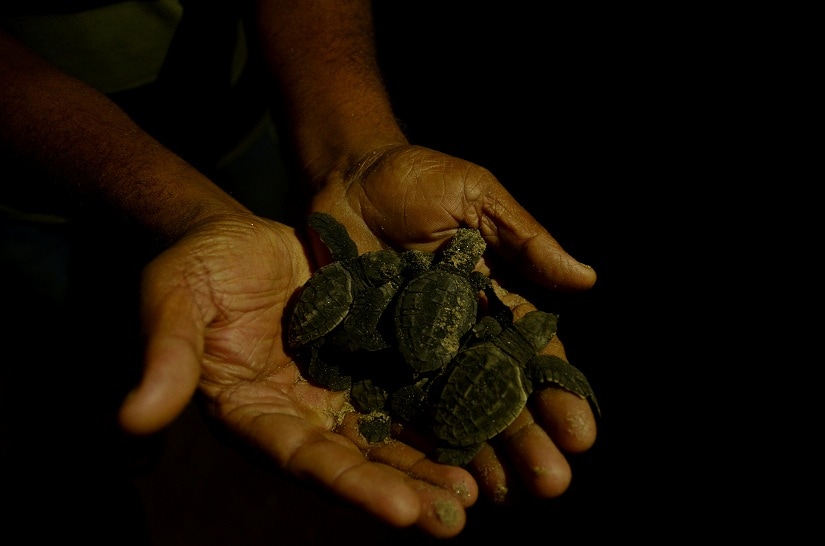
The mass nesting of millions of endangered sea turtles — the Olive Ridleys — in Odisha’s Ganjam is a well-known phenomenon, attracting thousands of tourists to this place every year during February-March. The hatching of Olive Ridley eggs alongside the Rushikulya rookery is a rare sight. Every March, the hatchlings emerge from the eggshells, and you see the surreal sight of small turtles scampering across the beach. Earlier, the effort to protect the turtles was a joint endeavour, between the forest department and local villagers. However, after an unlikely photo ‘controversy’ last year (where a villager was seen ‘dancing’ with a turtle), the forest department has posted ’no entry’ signs even for the inhabitants of the area. On a recent visit to the beach, we found that the villagers were concerned as the district awaited the mass nesting. [caption id=“attachment_4430545” align=“alignnone” width=“825”]
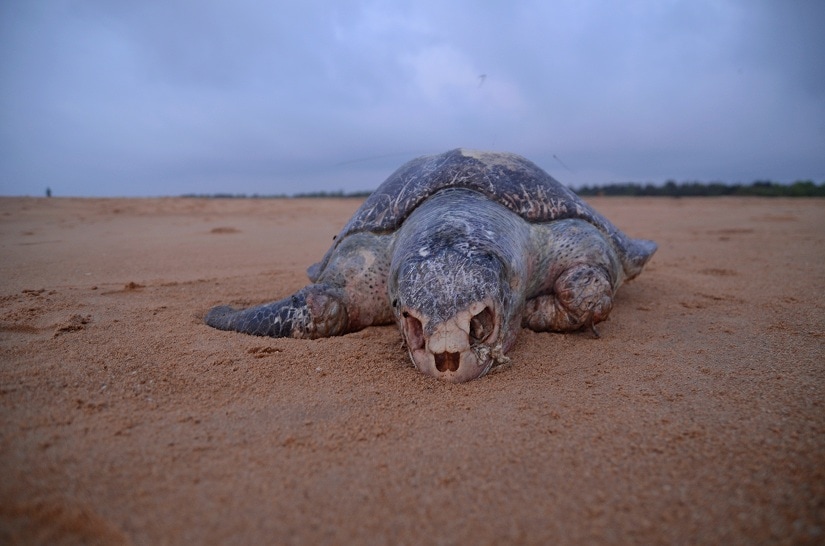 A dead mother turtle; she was injured while making her way back to the sea after laying eggs. All photos by Satwik Paul[/caption] [caption id=“attachment_4430565” align=“alignnone” width=“825”]
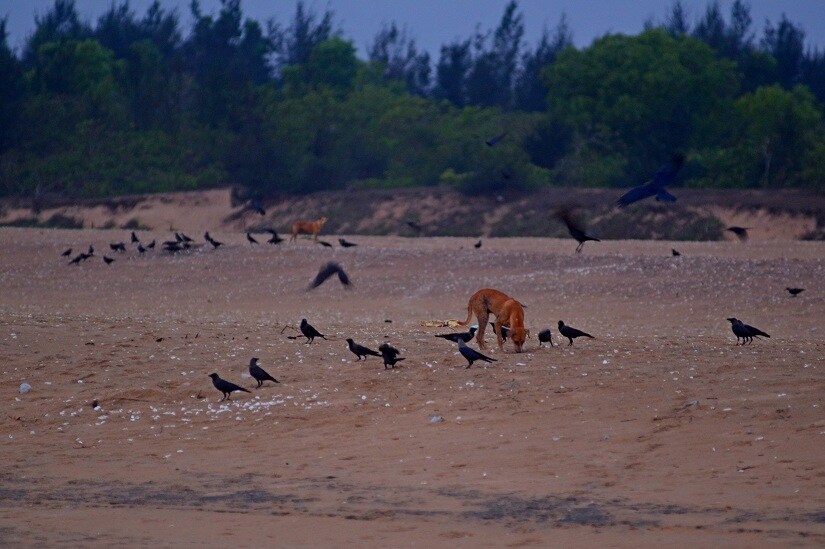 A dog digs up egg pits[/caption] The arrival of the Olive Ridleys for nesting is called ‘arribada’ in the Odia language. While females of most species are known to guard their eggs, the Olive Ridleys dig a pit in the sand and lay their eggs. (Right before arriving at the beach, they wait in the water close to a kilometer from the sand and come ashore when it is dark.) They cover up the pit in which the eggs are laid before heading back to the sea. These eggs are often dug up by dogs and eaten by crows. The forest officials try their best to keep them away, though. This year the number of hatchlings may touch an unexpected number of over 40 lakh. The Forest Department, Ganjam district, has recorded the arrival of over four lakh mother turtles during this season’s nesting. Due to some untimely rain, the sand temperature had gone down and the mass hatching was expected to take place between 13-16 March, a forest official had told us. [caption id=“attachment_4430571” align=“alignnone” width=“825”]
 Broken egg shells[/caption]
 Turtle flipper prints in the sand[/caption] The stricter rules this season are a consequence of last year’s row over the photo of the villager and the turtle. Krishna, a staffer with the Forest Department, told us, “Two men were even detained for interrogation as the picture had taken the researcher and wildlife conservation communities by storm.” *** The hatchlings are attracted to the light right after they emerge from their shells. It is often observed that instead of walking towards the sea at night, they approach the nearby villages seeing the lights. This is when the villagers get hold of the turtles and release them with care into the sea. Along with the Forest Department officials, there are also a number of NGOs who have been working hard to make the nesting a hassle-free process. [caption id=“attachment_4430597” align=“alignnone” width=“825”]
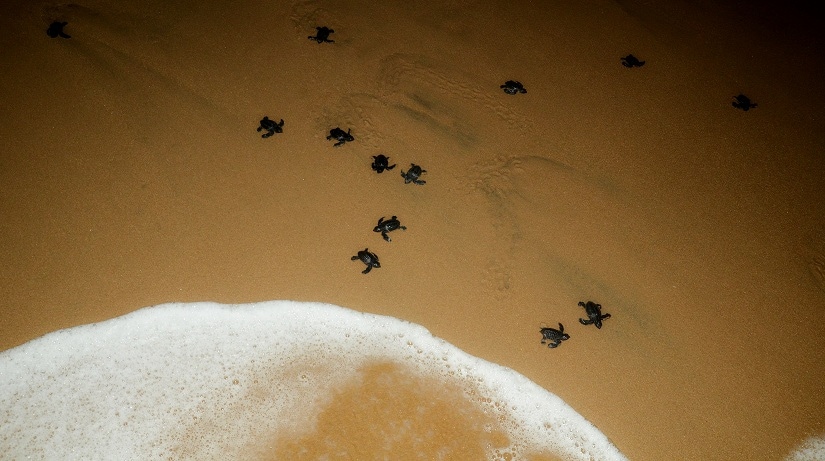 Group of hatchlings crawling towards the sea at midnight[/caption] [caption id=“attachment_4430601” align=“alignnone” width=“825”]
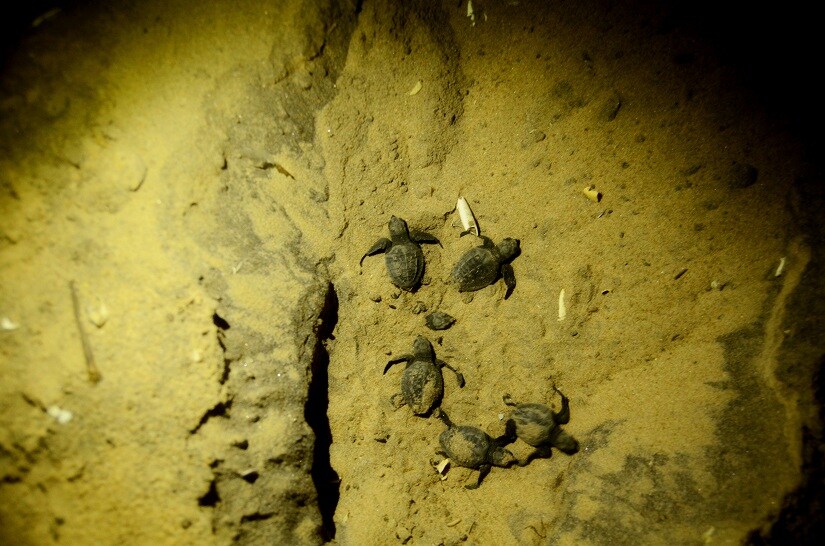 Hatchlings emerge from the sand pit[/caption] Munna, has been volunteering at the turtles’ mass nesting event for the past three years now. He said the hatchlings took up to 45-50 days to emerge from their eggs, and it was essential to monitor them round-the-clock during this crucial time. “There are four camps set up by the Forest Department, yet a number of villagers would also step in and help these turtles crawl towards the sea. We feel it is our moral duty to save this endangered species,” Munna explained. Though the locals are often accused of allowing tourists and outsiders enter the beach through their houses and villages in exchange for money, the villagers themselves maintained that they understand the sensitive nature of the phenomenon and one exception — the photo incident — (which they say is wrong representation) has barred them from doing what they have for years. [caption id=“attachment_4430603” align=“alignnone” width=“825”]
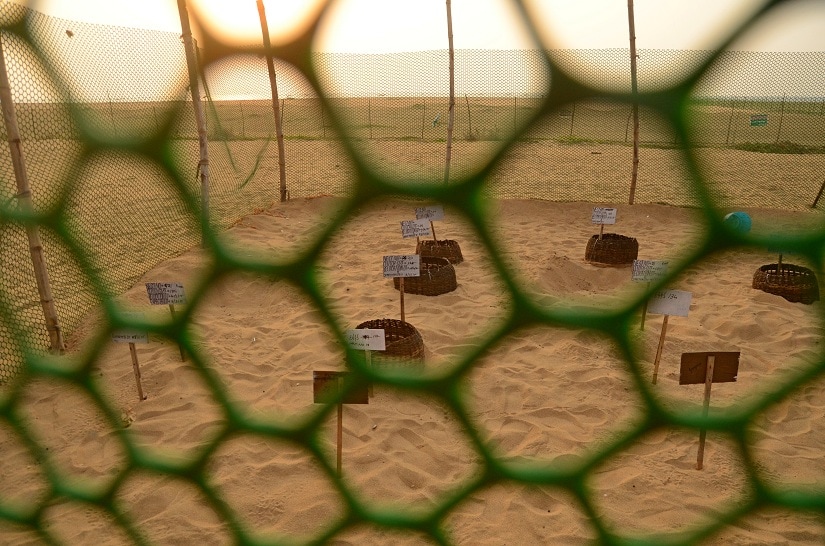 Eggs protected by the Forest Department[/caption] [caption id=“attachment_4430605” align=“alignnone” width=“825”]
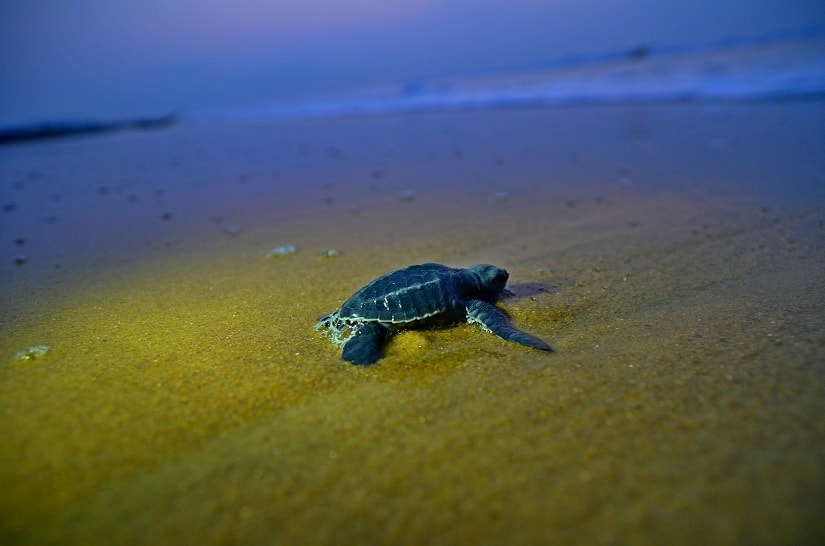 A turtle moves towards the sea[/caption] “From what we know, the picture that was published was requested by a photographer and the two men involved were also held guilty,” said Saudamini, a Puranabandha local whose family sells dried fish. “But that hasn’t changed anything for us as we still feel equally involved in the nesting process. Even if the tourists arrive, we make sure they don’t step on the turtles. Also, we ask them to view from a distance and not step onto the beach to photograph the turtles.” [caption id=“attachment_4430591” align=“alignnone” width=“825”]
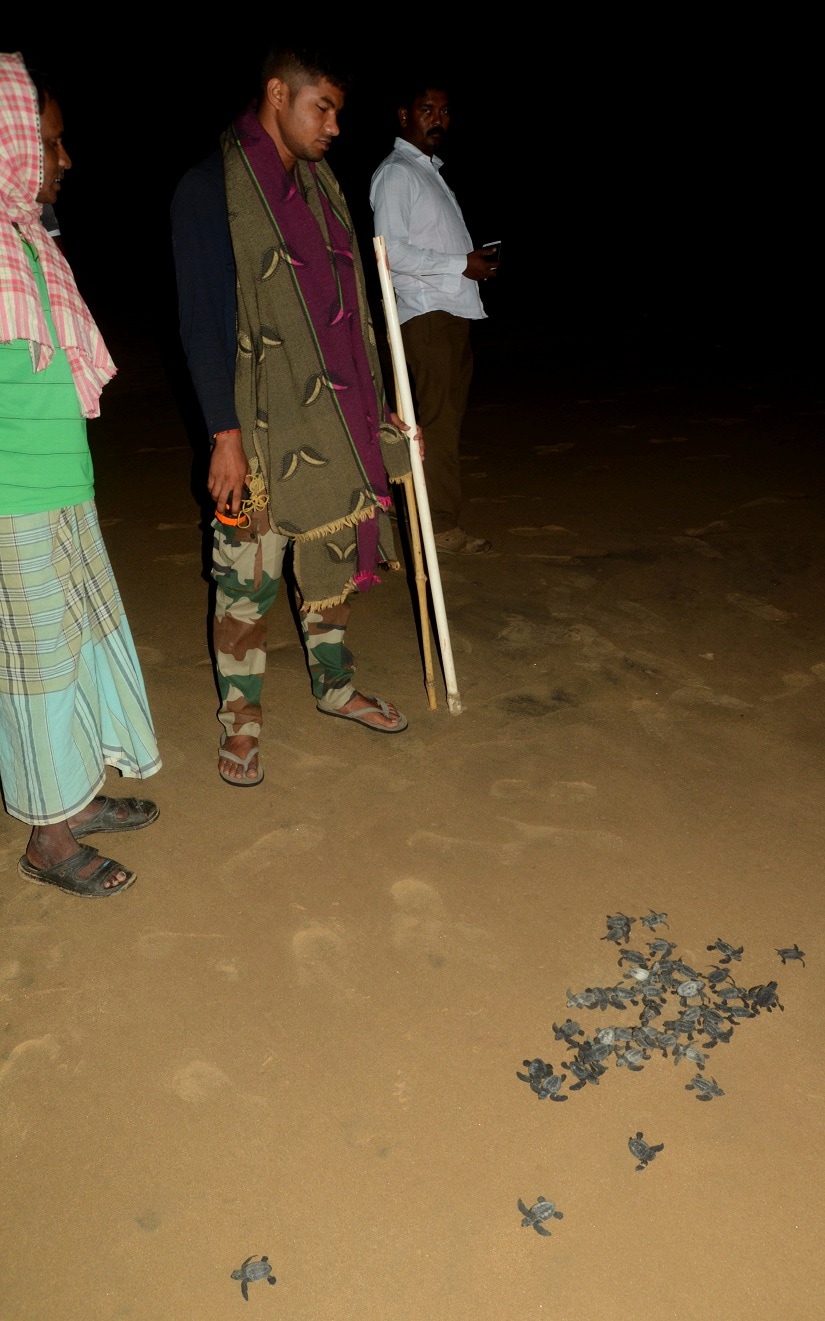 Villagers and forest office volunteers protect the hatchlings round the clock. This picture was taken at 3 am[/caption]
Inside the Olive Ridley turtles' annual mass hatching in Odisha's Ganjam district
Satwik Paul
• April 18, 2018, 15:30:34 IST
During this time of the year, the mass nesting of millions of endangered sea turtles — the Olive Ridleys — takes place in the coastal region of Ganjam district
Advertisement
 "Inside the Olive Ridley turtles' annual mass hatching in Odisha's Ganjam district")
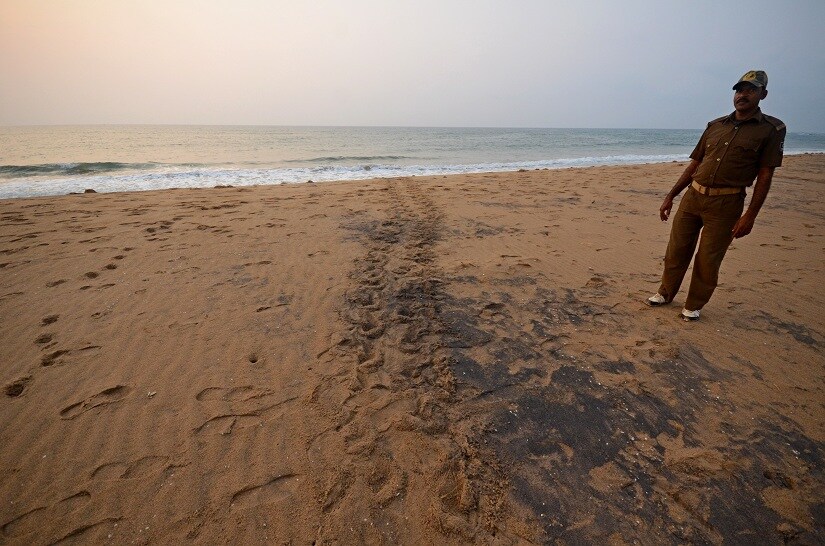
On our arrival at the beach, what we first found was the fencing. In order to protect the area from illegal turtle traders and intruders, the Forest Department fenced the entire five-km stretch of the beach with net fencing. As mentioned earlier, this year even the villagers themselves have been reportedly barred from entering the beach as per the Forest Department’s protocols. The fencing this year was extended by two km in order to streamline the arrival of tourists and villagers. “In order to ensure that human presence does not affect the process of nesting, we took a number of precautions. Also, last year a large number of Olive Ridleys laid eggs around the un-fenced area, so this year we decided to extend the fencing,” said DFO Ashish Kumra Behra.
[caption id=“attachment_4430581” align=“alignnone” width=“825”]
End of Article