Mutta maala is a simultaneously exquisite and laborious dish. This intricate, noodle-like preparation, is made out of egg yolks, which are dripped through a wooden spoon with a bamboo ladle into a coconut shell with a hole in its centre. It is similar to Fios de Ovos, a Portuguese dessert. Mutta maala is one of the many dishes that form a part of The Family Table
, a cookbook about the Mappila cuisine of Kerala written by Aysha Tanya. The writer-photographer, who also co-founded The Goya Journal, belongs to the Arinhal Karuvantevalappil family from Punnad, which is part of the Mappila community (the Muslims of the Malabar). This is a family that is extremely proud of its culinary traditions, many of which have been passed down for generations, says Aysha. “However, a lot of the older recipes are being lost, and we felt that documenting these recipes for the future generations of AK (Arinhal Karuvantevalappil) cooks was of utmost importance,” she says in an interview with Firstpost. [caption id=“attachment_7166351” align=“alignnone” width=“825”]
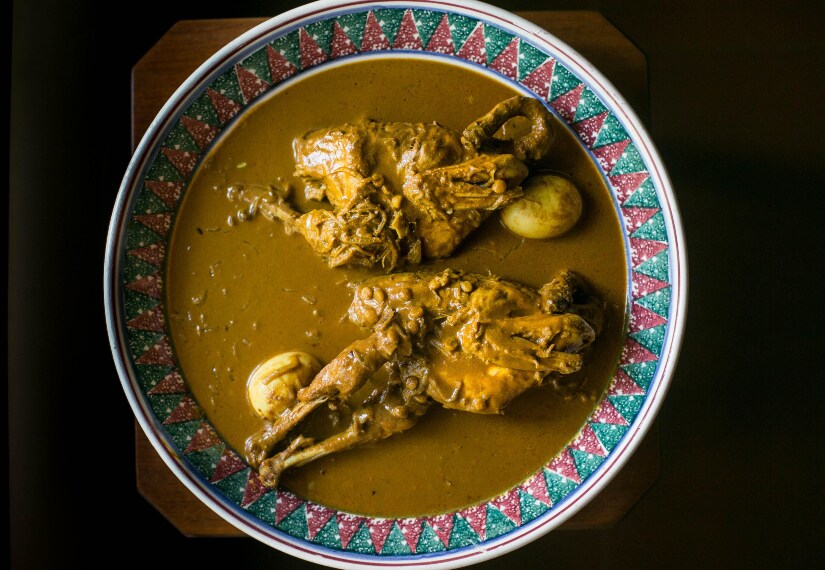 Photograph by Aysha Tanya[/caption] Putting together
the book
allowed the family to spend a number of afternoons cooking and learning from each other, she says. “A group of volunteers from the family tested every recipe in the book to ensure that it could be replicated in any kitchen around the world. Some of the more complex recipes, the ones that aren’t made on an everyday basis, were demonstrated by a family elder, and family members who were keen to learn these recipes were encouraged to attend,” she explains. From the introduction to the book, we learn that the Mappila community, and her family specifically, doesn’t use more than a handful of ingredients. They are especially fond of eggs, plantain and coconut, and the spices they love most are cinnamon, cardamom and cloves. Steamed rice, rice-based mains and snacks form the backbone of the cuisine. As is evident from the example of mutta maala, Mappila food is influenced by the culture of the Portuguese, Dutch and British colonisers. The food is also a testament to the centuries of trade Kerala enjoyed with the Middle East. “Chattipathiri (a sweet and spicy layered pastry) has elements that are similar to the Moroccan pie with layers of delicate pastry, Pastilla. Alsa/aleesa bears similarities to the Arabic harees cooked in the Levant and the Persian Gulf,” Aysha informs.
Photograph by Aysha Tanya[/caption] Putting together
the book
allowed the family to spend a number of afternoons cooking and learning from each other, she says. “A group of volunteers from the family tested every recipe in the book to ensure that it could be replicated in any kitchen around the world. Some of the more complex recipes, the ones that aren’t made on an everyday basis, were demonstrated by a family elder, and family members who were keen to learn these recipes were encouraged to attend,” she explains. From the introduction to the book, we learn that the Mappila community, and her family specifically, doesn’t use more than a handful of ingredients. They are especially fond of eggs, plantain and coconut, and the spices they love most are cinnamon, cardamom and cloves. Steamed rice, rice-based mains and snacks form the backbone of the cuisine. As is evident from the example of mutta maala, Mappila food is influenced by the culture of the Portuguese, Dutch and British colonisers. The food is also a testament to the centuries of trade Kerala enjoyed with the Middle East. “Chattipathiri (a sweet and spicy layered pastry) has elements that are similar to the Moroccan pie with layers of delicate pastry, Pastilla. Alsa/aleesa bears similarities to the Arabic harees cooked in the Levant and the Persian Gulf,” Aysha informs.
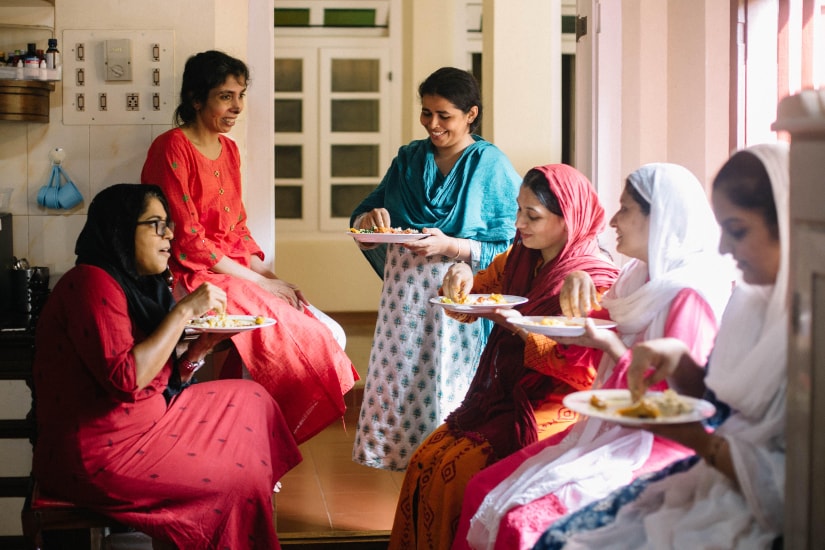 Photograph by Aysha Tanya[/caption] As food culture (especially recipes) and writing about food is increasingly finding space online, one might ask what significance cookbooks hold today. To this, Aysha says, “Cookbooks are of utmost importance because they not only show us a slice of what life looked like for a certain people in a certain time and place — how they cooked, ate, what their culinary philosophies were — but they also prove an important means of understanding the ‘other’ in times of communal unrest and fear.” This seems extremely important in the case of the Mappilas; Aysha says their cuisine is not extensively documented. “I think
Ummi Abdulla
(the woman credited with putting the cuisine on the map with her several cookbooks) has dedicated her long and illustrious career to bringing the Mappila cuisine to the rest of the world, but I think we still have a long way to go before it receives the attention it deserves,” she says. [caption id=“attachment_7166361” align=“alignnone” width=“825”]
Photograph by Aysha Tanya[/caption] As food culture (especially recipes) and writing about food is increasingly finding space online, one might ask what significance cookbooks hold today. To this, Aysha says, “Cookbooks are of utmost importance because they not only show us a slice of what life looked like for a certain people in a certain time and place — how they cooked, ate, what their culinary philosophies were — but they also prove an important means of understanding the ‘other’ in times of communal unrest and fear.” This seems extremely important in the case of the Mappilas; Aysha says their cuisine is not extensively documented. “I think
Ummi Abdulla
(the woman credited with putting the cuisine on the map with her several cookbooks) has dedicated her long and illustrious career to bringing the Mappila cuisine to the rest of the world, but I think we still have a long way to go before it receives the attention it deserves,” she says. [caption id=“attachment_7166361” align=“alignnone” width=“825”]
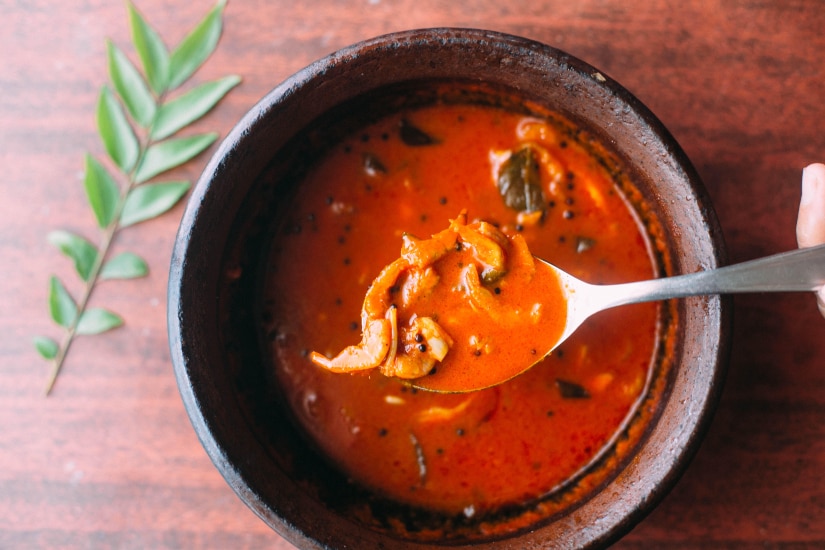 Photograph by Aysha Tanya[/caption] Reading about Mappila food gives one the sense that both the cuisine and cooking culture are women-driven. “That’s true. The men are definitely passionate about the cuisine, but the skill and knowledge lies with the women,” Aysha explains. To Aysha, the beauty of the cuisine lies in its ability to make everyday meals thoughtful and indulgent in small ways. “Whether it’s the traditional chicken fry that is finished with a smattering of ghee, or the pathiri, a rice-based flatbread eaten for dinner, that gets a quick dip in coconut milk, each dish is a gentle reminder that even the everyday deserves to be celebrated,” she says. Also read — Bakri Eid feasts from across India: Mappila cuisine to Bohri tradition, a celebration through food
Aysha Tanya's Mappila cuisine cookbook offers a glimpse into community's centuries-old food traditions
Neerja Deodhar
• August 22, 2019, 10:14:28 IST
Motivated by the need to preserve the recipes of the Mappila cuisine, some of which are being lost, writer-photographer Aysha Tanya set out to write a cookbook. The Family Table is a look into how the cuisine was moulded by trade with the Middle East and the simplistic-yet-indulgent nature of many of its dishes
Advertisement
 "Aysha Tanya's Mappila cuisine cookbook offers a glimpse into community's centuries-old food traditions")
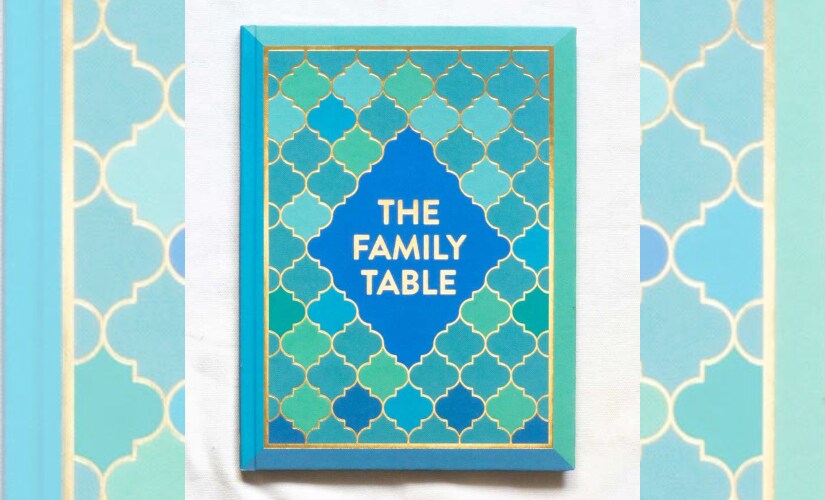
In the introduction to the book, she also mentions that one of the major decisions while researching involved understanding which version of a dish must be included. But how easy or difficult is this? “It is a contentious issue for sure, since there’s no ‘right’ version, but we have tried in certain instances to use the versions that are easier and more suited to a modern kitchen,” she explains. As is the case with many cuisines, the most seasoned cooks in her family don’t rely on precise measurements. “Instead, they rely on their senses — their eyes and their hands — to get a feel for how much of an ingredient is to be used, which makes them wonderfully self-reliant cooks, but terrible recipe sharers!” she says. Still, measuring ingredients is integral to the process of preserving recipes – a task she had to undertake for some generations-old dishes. “One of the things I enjoyed about helping put the book together is that I got a chance to cook many of the recipes I otherwise wouldn’t have had the courage to. But because I was photographing a few of them alone in my kitchen in Bengaluru, I had no choice but to roll up my sleeves and make them myself,” she says. The dishes from the Mappila cuisine that she makes regularly at home are a simple mutton stew, a fiery fried chicken and ghee rice. The goat head curry, which she describes as velvety and rich, is a recipe that is dear to her. “It is definitely an acquired flavour, but it is an important reminder that our community has practiced nose-to-tail long before it became a fad,” she says. [caption id=“attachment_7166371” align=“alignnone” width=“825”]
End of Article