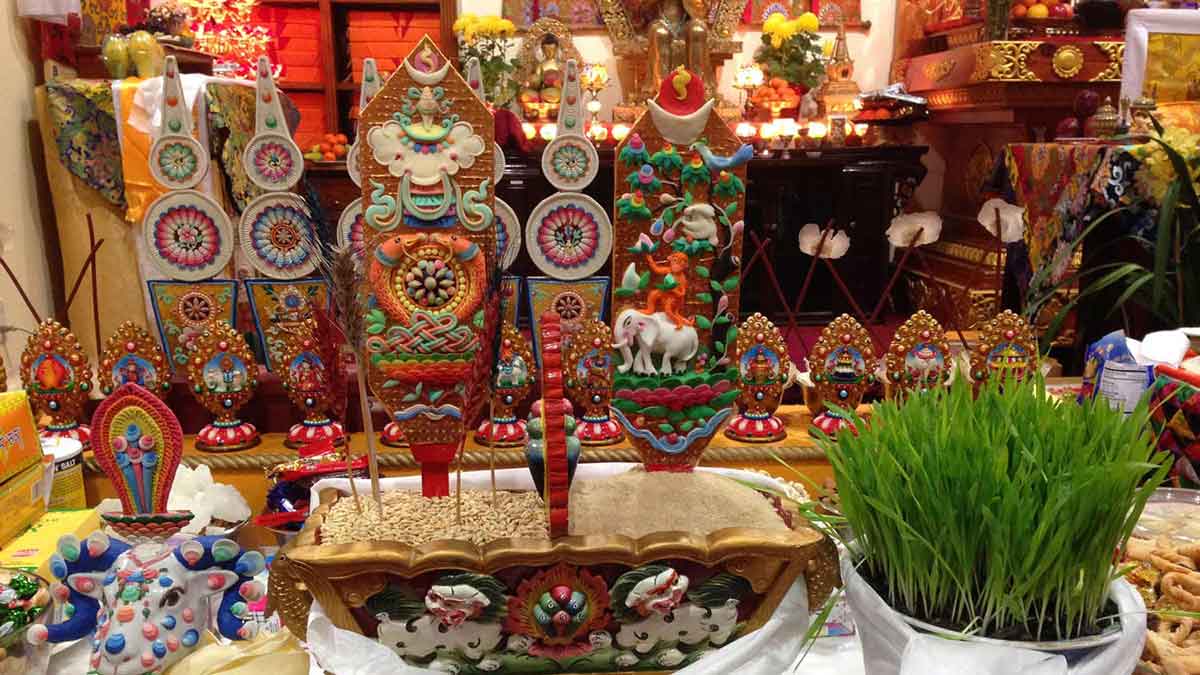
 "When the Himalayas welcome the lunar new year: Losar in India")
Each year between late January and February, much of the world turns its attention to Lunar New Year celebrations. While the occasion is often associated with East Asia, several communities across the Himalayas also follow lunar calendars and mark the new year in their own distinct ways.
For many Himalayan Buddhist communities in India, that new year is Losar.
The word “Losar” simply means “new year.” Rooted in Tibetan Buddhist tradition and shaped by older agrarian practices, it marks the beginning of the lunar calendar used across Tibetan-origin and Himalayan communities. In India, Losar is observed in regions such as Ladakh, Sikkim, Darjeeling, parts of Arunachal Pradesh and Himachal Pradesh, as well as within Tibetan diaspora settlements in metropolitan cities.
Different communities such as Tibetan, Bhutia, Sherpa, Monpa and Ladakhi groups observe it with variations in language, dress and detail. The rhythm of preparation and renewal, however, remains recognisable.
Preparing for the new year
In Kalimpong, Deki Choden Bhutia explains that preparations begin days before the first day of the new year.
One of the earliest rituals involves symbolically driving out negativity from the home. Small balls of flour are shaped to embody misfortune or “demons.” A small piece of cloth from each family member’s clothing is added to the mixture, along with a spoonful of the soup, a way of gathering whatever the year has carried with it.
“You have to chase the demon from the house,” Deki Choden Bhutia explains.
The flour forms are cast out before the meal is eaten, a deliberate act of clearing. Only after this ritual expulsion does the family sit down for guthuk, a special noodle soup associated with the final days before Losar.
Quick Reads
View AllInside the guthuk are also small rolled balls known as kauri. Each contains a hidden object like coal, butter, chilli, wood, stone or paper. When family members pick one from the dish, what they discover inside is said to reflect a trait that may shape their year ahead. Coal might suggest stubbornness or a “black heart,” cotton purity, chilli sharpness or cleverness. The ritual often draws laughter, but it carries a layer of reflection as well.
This period of preparation echoes what is widely observed as Gutor: a time dedicated to cleaning homes, settling unfinished tasks and restoring order before the new year formally begins. The emphasis is not just on celebration, but on readiness.
On the following day, attention turns to the altar. It is cleaned and refreshed. Prayer flags are replaced with new ones. Khapse — deep-fried pastries shaped into knots and twists — are prepared in advance and arranged carefully. Dry fruits and other offerings are placed at the altar, ready for the first official morning of Losar.
The first three days
While Losar can span over two weeks, the first three days are considered most significant.
“The first day, you stay at home,” says Lopsang Tshering Bhutia, Deki’s husband. He now lives in Kolkata for work but returns each year for Losar, as many who live away from home make an effort to do. The day begins early. There is bathing, prayer, and new clothes, often the only guaranteed new set of the year in earlier times.
Parents bless their children with tika on the forehead, offering khada (ceremonial scarves) and money. Families visit monasteries to light butter lamps and make donations. Food is offered to monks and, where possible, to those in need.
On the second and third days, families visit relatives and neighbours. “You never go empty-handed,” Lopsang notes. Gifts often include alcohol, milk, and prepared food. At each house, guests are welcomed again with tika, khada, and shared meals.
Traditional dishes anchor the celebration: khapse, pheja (butter tea), changu (fermented rice drink), and dheysi, a sweet rice preparation often made with rice from local villages. Shops typically close, and communities gather in extended celebration.
Community and memory
For many, Losar is also deeply tied to childhood memories.
When he was younger, Lopsang remembers gathering in groups of seven or eight children, dressed in new clothes, going door to door singing blessings. In return, they received money and khada, dividing the money evenly among themselves later. “We would use it to watch movies, buy food, or play cards,” he says. “Mostly we were just happy because of the new clothes.”
These details of the singing, the shared money, and the excitement around new clothing reveal Losar not only as a ritual but as a feeling of community. It binds households to one another through visits, food, and exchange. It marks the importance of indulging in and building a sense of communal sharing.
Losar beyond one region
Historically, Losar reflects a Himalayan world that was interconnected long before contemporary borders took shape. Monasteries, trade routes and seasonal migration linked valleys across what are now different nations. The lunar calendar structured agricultural and religious life across this terrain.
Following the Tibetan diaspora in the mid-20th century, Losar also became part of global community life. Today it is marked not only across Himalayan India but in diaspora communities in Nepal, Bhutan, the United States, Canada and Switzerland, among others. Monasteries host cham dances, community halls fill with prayer and song, and visits stretch across neighbourhoods as the new year is welcomed..
For Indian readers unfamiliar with Losar, it is also a reminder that lunar calendars are not distant or foreign systems of time. Within India itself, multiple communities mark the year through lunar or lunisolar cycles, structuring ritual, harvest and celebration accordingly.
Losar begins with preparation: cleaning the home, removing symbolic evil, and decorating the altar. It continues through prayer, food, visits, and blessings. And it ends, as many new years do, with the quiet dismantling of offerings and a reminder that renewal is both ritual and routine.

 "Iran War News Live: Azerbaijan withdraws envoys from Iran after drone strike on its airport")
 "'Hopeful not confident': Finnish President on a peace deal between Russia and Ukraine")
 "Decision to attack Iran taken after Modi had left the shores, says Israeli foreign minister")
 "Why US has given India a 30-day waiver to buy Russian oil")
 "Iran War News Live: Azerbaijan withdraws envoys from Iran after drone strike on its airport")
 "'Hopeful not confident': Finnish President on a peace deal between Russia and Ukraine")
 "Decision to attack Iran taken after Modi had left the shores, says Israeli foreign minister")
 "Why US has given India a 30-day waiver to buy Russian oil")