 "What it would actually take to fix Hollywood's problem with older women")
Earlier this week, we showed you the numbers: in 2025, only 4 women over 45 played leads in Hollywood’s top 100 films, compared to 31 men. The Oscars keep celebrating older actresses, but the industry keeps refusing to hire them.
The question now: what would it actually take to fix this?
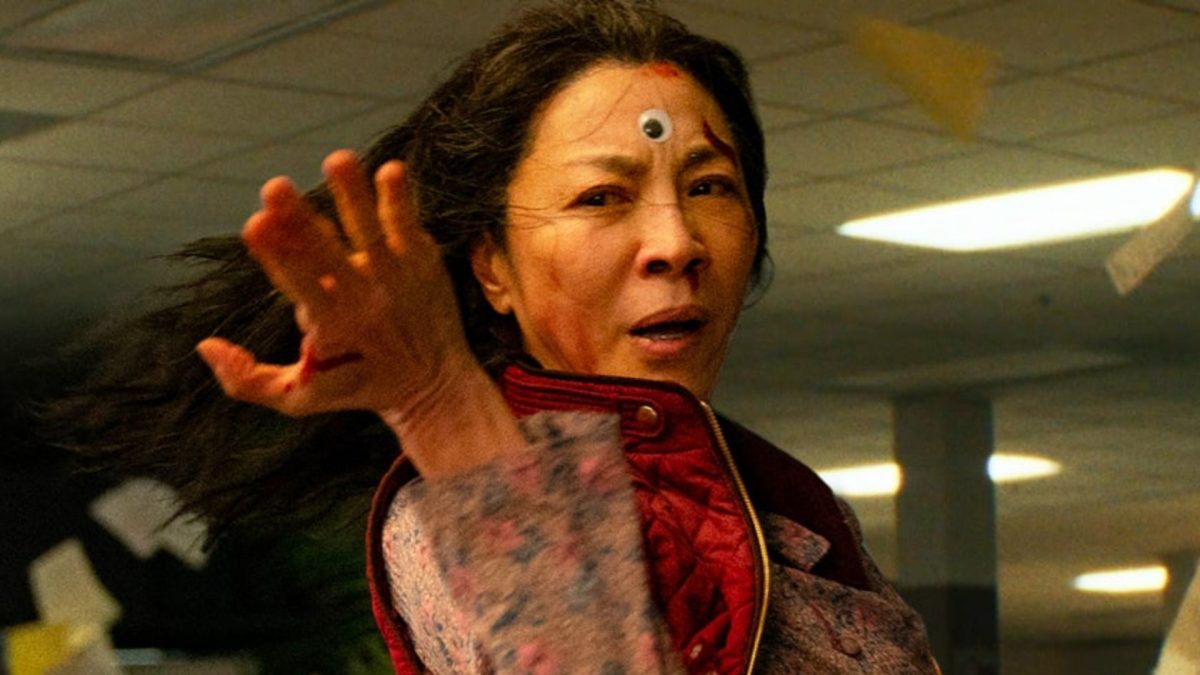
When Amy Madigan won her Oscar at 75, the standing ovation felt earned. When Michelle Yeoh declared at 60 that women are never “past their prime,” it felt like a rallying cry. But feeling good and fixing the problem are not the same thing.
The Oscars have made it clear: audiences will show up for older women. Everything Everywhere All at Once, Weapons, and The Substance weren’t niche art films. They were cultural moments. So why does Hollywood keep acting like casting a woman over 50 in a lead role is a radical experiment?
The answer isn’t just ageism. It’s a series of structural barriers that need to be dismantled one by one. Here’s what actually has to change.
Fix the pipeline: Fund women over 40 to write
Only 12% of US feature films released in 2025 were written by women over 40. You cannot have complex roles for older actresses if the people writing those roles aged out of the industry a decade earlier.
The fix isn’t complicated: production companies and studios need to actively fund and greenlight projects by women over 40. Not as diversity initiatives. As standard practice. Elizabeth Kaiden of The Writers Lab, which supports female screenwriters over 40, has proven the talent exists: the industry just wasn’t looking for it. Chloé Zhao directed Jessie Buckley in Hamnet and Frances McDormand in Nomadland. The pattern is clear: when women direct and write, the age range of female characters expands. More women in decision-making positions means more roles, period.
End the cosmetic tax
The Substance made the quiet part loud. Demi Moore plays a middle-aged TV star who injects herself with a serum to create a younger version of herself and watches that younger self take everything she’s lost. The film works as horror precisely because it literalizes what the industry already demands. Moore’s character chooses the serum since she’s been discarded, and not out of vanity. By the end, her body is destroyed trying to maintain the illusion of youth.
And then Moore was nominated for an Oscar at 62 and praised for “not looking her age.” The compliment revealed the trap the film had just spent two hours dissecting. The phenomenon of “wealthy ageing” means spending enormous amounts on procedures just to stay employed. The Substance showed us the horror of that bargain. The industry’s response was to compliment Moore for upholding it.
Quick Reads
View AllFrances McDormand has publicly refused this bargain. She doesn’t dye her hair or get cosmetic surgery. But McDormand can afford that choice because she’s Frances McDormand. For actresses without three Oscars, the pressure to “maintain” is often the price of staying visible.
The fix requires a cultural shift. Casting directors need to stop reflexively coding “older woman” as “must look younger than her age.” When Alicia Malone of Turner Classic Movies says, “It is extremely rare to see a woman in her 60s in the lead role, especially one who is allowed to look her age on screen,” that rarity is the problem. Make it unremarkable, and you’ve solved it.
Rewrite the romance rules
A study of over 400 romantic films found male leads were on average 4.5 years older than their female co-stars, nearly double the real-world age gap in marriages. But the problem goes deeper.
Men in their 60s are routinely cast opposite women in their 30s and 40s. Women over 40 are told they’ve “aged out” of romantic roles entirely. Helen Mirren has called the trend “not only unrealistic but also detrimental to the careers of middle-aged actresses.” The fix here is straightforward: cast age-appropriate romantic pairs. If a 55-year-old man is the lead, his love interest can also be 55. Why is this “revolutionary”?
Part of the problem, as USC professor Lan Duong points out, is that films are still made to satisfy the male gaze. “It’s often a very heterosexual, patriarchal male gaze. And it’s often directed at young, mostly nubile women’s bodies.”
But audiences have proven they’ll accept relationships that reflect reality. The industry needs to stop treating age-appropriate casting as a “risk” and start treating it as a baseline.
Change who gets to decide
“We don’t have enough movies about women to begin with, let alone women over 45,” says Melissa Silverstein, founder of Women and Hollywood. And the “we” doing the deciding is still overwhelmingly male. In 2025, women directed only 16% of the top 250 grossing films. Women over 40 directed even fewer. If the people greenlighting projects don’t see older women as viable protagonists, those protagonists won’t exist.
The solution isn’t just “hire more women.” It’s “give women power.” Put them in positions where they can greenlight projects, allocate budgets, and make casting decisions. Frances McDormand didn’t just star in Nomadland; she produced it. That’s not a coincidence.
When Dr Stacy L Smith notes that women have longer career spans in arthouse films, she’s pointing to a key fact: those films are more likely to have female directors and producers. The power structure determines the output.
Make it the norm, not the exception
Hollywood has learned to produce exceptions —prestige projects with A-list older actresses that generate Oscar buzz. What it hasn’t done is make casting older women unremarkable. Amy Madigan waited 40 years between Oscar nominations. That wasn’t bad luck. It was scarcity. The fix is volume. More roles, more films, more scripts. Not two or three prestigious projects a year, but dozens of films across all genres, from comedies, thrillers, action films, to romances, where women over 50 are present.
What success actually looks like
The Oscars have done their part. They’ve proven that older women can deliver performances worthy of recognition. They’ve shown that audiences respond to these stories.
Now the industry needs to do its part: not just celebrate these women once a year, but actually employ them. Fund their scripts. Greenlight their projects. Cast them without requiring them to be boxed into roles of mothers or mentors. Make it normal, make it unremarkable. Make it the default. That’s what it would actually take.


 "Iran War Live Updates: Iran’s intelligence minister ‘assassinated’ in strike, Israeli defence minister says")
 "IRGC, Basij, Quds and more… Inside Iran’s complex military power")
 "After Larijani, Israel claims killing Iran’s intelligence minister")
 "Inside Qeshm Island, Iran’s underground ‘missile city’")
 "Iran War Live Updates: Iran’s intelligence minister ‘assassinated’ in strike, Israeli defence minister says")
 "IRGC, Basij, Quds and more… Inside Iran’s complex military power")
 "After Larijani, Israel claims killing Iran’s intelligence minister")
 "Inside Qeshm Island, Iran’s underground ‘missile city’")