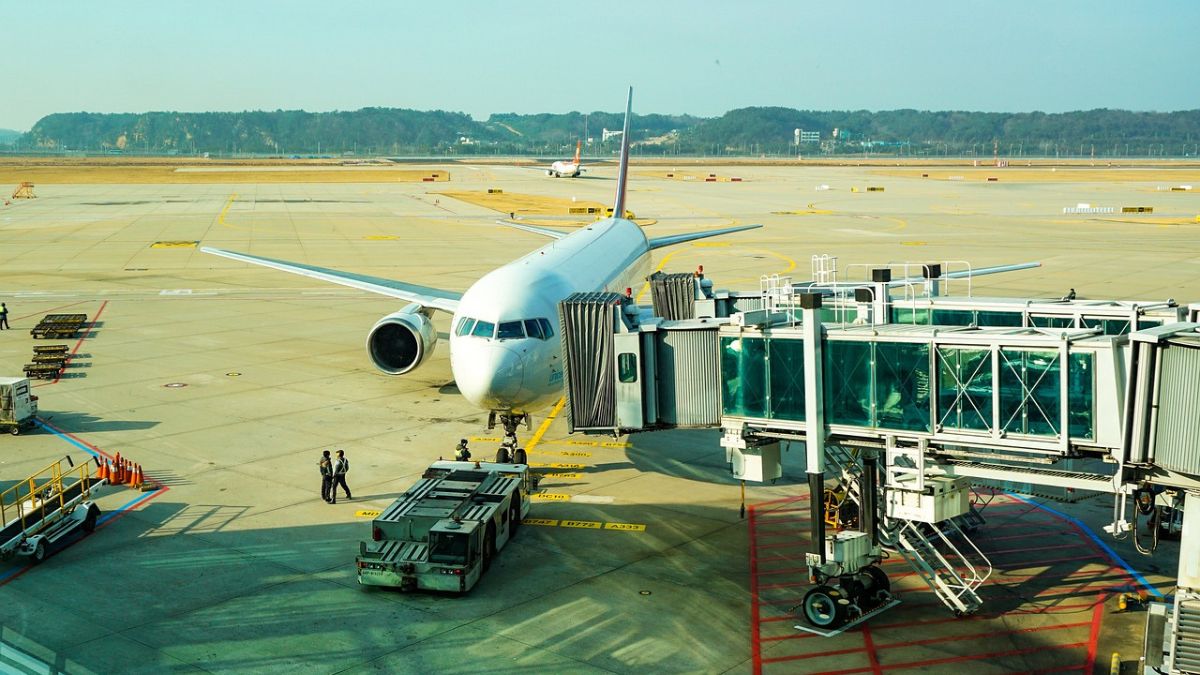
 "What happens when you walk the aerobridge but don't board your flight")
This might sound a bit unreal, but it does happen: You scan your boarding pass at the airport, walk down the aerobridge, and for whatever reason you do not take your seat - perhaps you feel unwell, or you panic, or there is a last-minute issue.
What many passengers do not realize is that, at that point, you may no longer be allowed to turn around and walk back into the terminal. No, we aren’t kidding!
Here’s what happens when you step into the aerobridge but don’t board your flight.
Once your boarding pass is scanned, you are officially recorded as boarded
When your boarding pass is scanned at the gate, the airline’s system registers you as having boarded the aircraft - even if you are still physically in the aerobridge.
From that moment, the flight’s final passenger count is being reconciled. Even the security records reflect that you have entered the secure departure stream.
For international departures, exit control processes may already be aligned with your departure.
Airlines operate under strict security rules requiring an exact match between boarded passengers and checked baggage. If you are recorded as boarded and then disappear, that becomes a security issue, not merely a customer service matter.
Why you cannot simply walk back: You’re kept inside the aerobridge!
Under international aviation security standards set by the International Civil Aviation Organization, airlines must ensure positive passenger–bag matching. In simple terms: a passenger’s checked luggage cannot travel unless that passenger is on board.
If you decide not to board after entering the aerobridge, airline or airport staff will usually ask you to wait while the situation is assessed, confirm whether you have checked luggage, coordinate with ground handling to offload any baggage, and update passenger manifests and security systems.
You are not being detained in a criminal sense. However, you cannot simply leave until procedures are completed. In some cases, if the aircraft doors are already closed and paperwork finalized, resolving the issue can take time.
Quick Reads
View AllIf the aircraft pushes back and departs before the discrepancy is identified - which is rare but operationally possible - the situation becomes more complex administratively. Records must then be corrected after arrival.
Why airlines take this seriously
Modern aviation security was significantly tightened worldwide after the attacks of September 11 attacks.
On the morning of 11 September 2001, four commercial passenger aeroplanes were hijacked - two planes were flown into the Twin Towers of the World Trade Center in New York City, one plane struck the Pentagon in Arlington, the fourth plane, United Airlines Flight 93, crashed into a field in Shanksville after passengers attempted to overpower the hijackers.
Since then, passenger accountability, baggage reconciliation, and secure-zone controls have become non-negotiable parts of flight operations.
Even something that feels minor - stepping into the aerobridge and changing your mind - can trigger multiple mandatory checks.
The bottom line
If you enter the aerobridge and then decide not to fly, inform a member of staff immediately. Do not attempt to walk back on your own.
You may be required to wait while your baggage status and boarding record are corrected. In some cases, this can delay departure. You are unlikely to be “stuck until the flight lands”, but you can be held in the secure boarding area until all safety and security procedures are properly resolved.
In aviation, once you step beyond the gate scanner, you are part of a tightly controlled system - and stepping back out is not as simple as it sounds.


 "Watch | Afghanistan releases video showing strikes on Pakistani targets")
 "'Left wing, woke company': Trump orders government to stop using Anthropic amid battle over AI use")
 "US backs Pakistan's 'right to defend itself' against Afghanistan's Taliban forces")
 "This Week in Explainers: How India-Israel ties enter a new phase after PM Modi’s visit")
 "Watch | Afghanistan releases video showing strikes on Pakistani targets")
 "'Left wing, woke company': Trump orders government to stop using Anthropic amid battle over AI use")
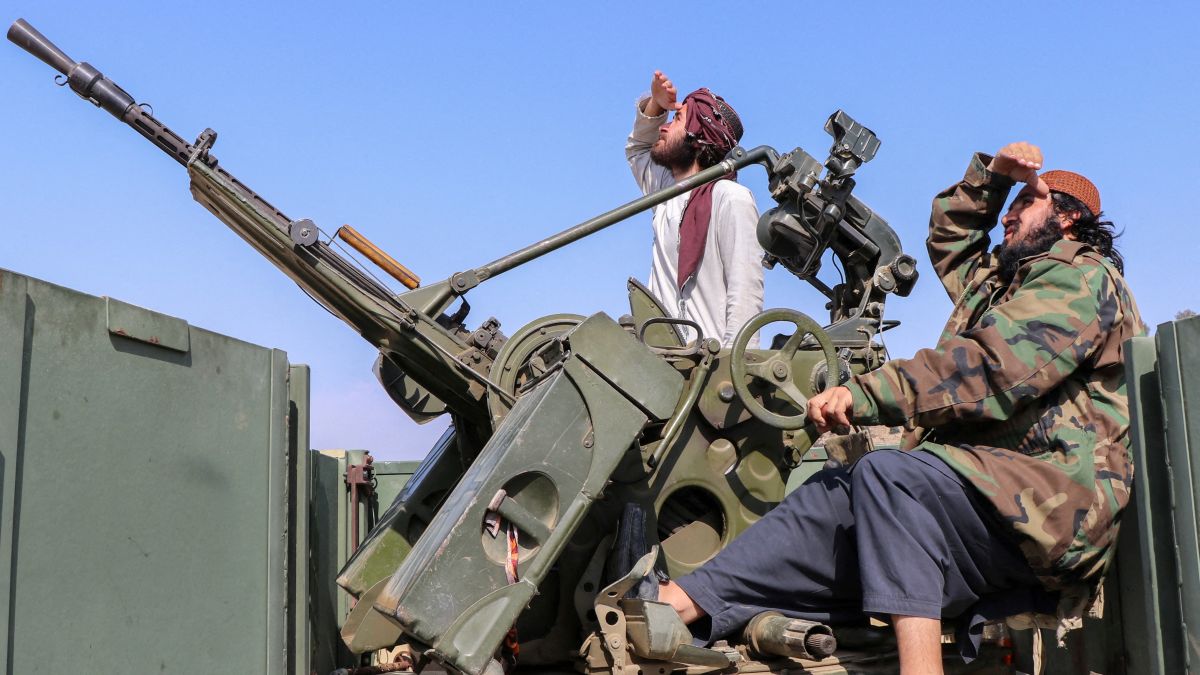 "US backs Pakistan's 'right to defend itself' against Afghanistan's Taliban forces")
 "This Week in Explainers: How India-Israel ties enter a new phase after PM Modi’s visit")