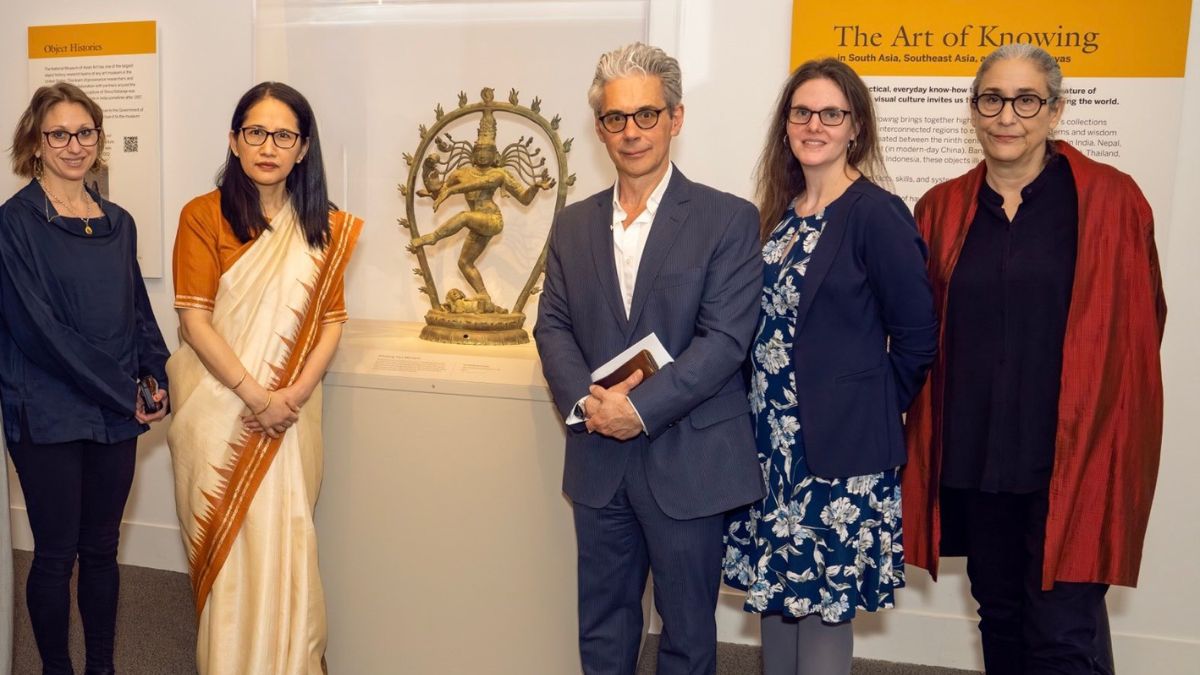
 "The 3 stolen Indian idols the Smithsonian is finally returning. Photo credit: X/@IndianEmbassyUS")
In a significant step towards restoring India’s cultural heritage, the Smithsonian’s National Museum of Asian Art has announced it will return three ancient bronze sculptures that were illegally removed from temples in Tamil Nadu decades ago.
Provenance research confirmed the artefacts were taken between the 1950s and later entered the international art market through questionable channels.
Here’s everything about the three statues being returned.
1. Shiva Nataraja (c. 10th century, Chola period)
One of the most iconic forms of Lord Shiva, the Nataraja depicts the deity performing the cosmic dance of creation and destruction.
The statue dates to around 990 CE and was originally worshipped in a Tamil Nadu temple. It’s considered a masterpiece of Chola bronze artistry.
This particular idol was traced back to a temple in Thanjavur district and was later acquired by the museum through a New York gallery using questionable documentation.
2. Somaskanda (12th century, Chola period)
The Somaskanda sculpture represents Shiva seated with Parvati and their son Skanda (Murugan), symbolising familial harmony and divine unity.
It belongs to the 12th century Chola era and was photographed in a Tamil Nadu temple in the 1950s, helping establish its origin.
It was likely taken away from the temple in present-day Tiruvarur region.
The statue is regarded as a classic example of South Indian temple bronzes used in rituals and processions.
3. Saint Sundarar with Paravai (16th century, Vijayanagar period)
This sculpture depicts the revered Tamil Shaivite saint Sundarar along with his consort Paravai.
The statue dates to the 16th century (Vijayanagar period) and is linked to a temple in Kallakurichi district. It represents the Bhakti movement and devotional traditions of South India.
Quick Reads
View AllLike the others, it was identified through archival photographs from the 1950s, confirming it had been removed unlawfully.
Provenance research finally confirmed they were stolen
Museums like the Smithsonian Institution have been actively reviewing the history of objects in their collections.
Detailed research matched the bronzes with old photographs from Tamil Nadu temples (1950s). This proved the idols were illegally removed and exported
Per laws, once ownership is clearly disputed and verified, museums are under pressure to act.
Global push for returning looted artefacts
There’s a growing international movement pushing museums to return items taken during colonial periods or through illegal trade.
Countries like India, Greece, and Nigeria have been demanding restitution
Institutions are now prioritising ethical collecting and transparency
Returning artefacts is increasingly seen as the right thing to do, not just a legal obligation.
Anuj is a senior sub-editor (lifestyle desk) at Firstpost who covers food, travel, health, and fitness, mostly because they’re all excellent excuses to leave the house. Powered by coffee, he spends his downtime airplane-spotting and exploring spirituality, hoping one day to understand both turbulence and the universe.